This project started off in December last year with a simple request. Balla Balla Community Centre in Cranbourne East was moving into new premises at Clyde North and was planning an open day in March to celebrate this move. The centre’s management had reached out to me to plan and organize an interactive art activity for the event to mark this occasion.
Balla Balla Community Centre together with the Cultural Historical Association of Rodriguans and Mauritians (CHARM) has been a great support in my art career and I have had the privilege to work with them in several Australia Day events. The centre had not only facilitated these works but has been displaying them on its walls since their inception.
Although, time-poor with my work commitments and frequent interstate travel, this was a request I could not turn down.
The Brief
Since opening its doors in 2007, Balla Balla community centre had been providing various services to the local communities of Cranbourne and Clyde such as venue hire, information, photocopying, faxing, health and wellbeing programs, and arts & crafts workshops to name a few. The shifting of premises was triggered by the need to provide space for the construction of a new hospital being built in its original location.
The new location of Balla Balla community centre was the Selendra community hub building in North Clyde which was constructed in 2017 and was providing similar services to their local community.
Balla Balla centre’s management wanted to use the open day to acknowledge their past and announce their presence and services to their new neighbourhood and build upon the existing clientele. They wanted the artwork to reflect this evolution and connect with the multicultural and diverse community in the region and in turn improve community access and participation.
The Work Begins
While discussing the project, I came to know that the white wall that the proposed artwork was going to be hung used to be a feature wall that was initially painted black. Though the change of colour was driven by the need to give the space a clean and spacious feel. I envisage using this fact to establish a connection between the ‘old’ and the ‘new’ centre.
Australia is home to one of the world’s oldest continuing cultures. The Aboriginal people are traditional custodians of the land and have inhabited this land for more than 60,000 years. The colonization of the land by British Settlers in the 18th century changed the social demographics of the population and established a dominant culture based on Western European values.
Today’s Australian society reflects the British penal history and subsequent waves of migrants from all over the world who have adopted their cultural roots to suit the new environment, climate, and resources of the country. The uniqueness of the land, its flora and fauna, and the generally egalitarian approach of the society have led to the development of a unique Australian vernacular with distinctive pronunciation and lexicon. I wanted to capture these salient features of our society to establish the overall context of the artwork.
Clyde North is one of the rapidly growing areas in the City of Casey and is a microcosm of the city’s general population trends. The mostly middle-class dwellers consist of people belonging to diverse ethnic backgrounds. Exploring and researching this theme further, I found out that nearly 280,000 people call the City of Casey home, and this population cohort represents people belonging to more than 150 cultures, speaking 140 languages with nearly 42% of them born overseas. The artwork needed to connect with this rich cultural heritage and showcase the uniqueness of various cultures and how they contribute to the overall richness of our society.
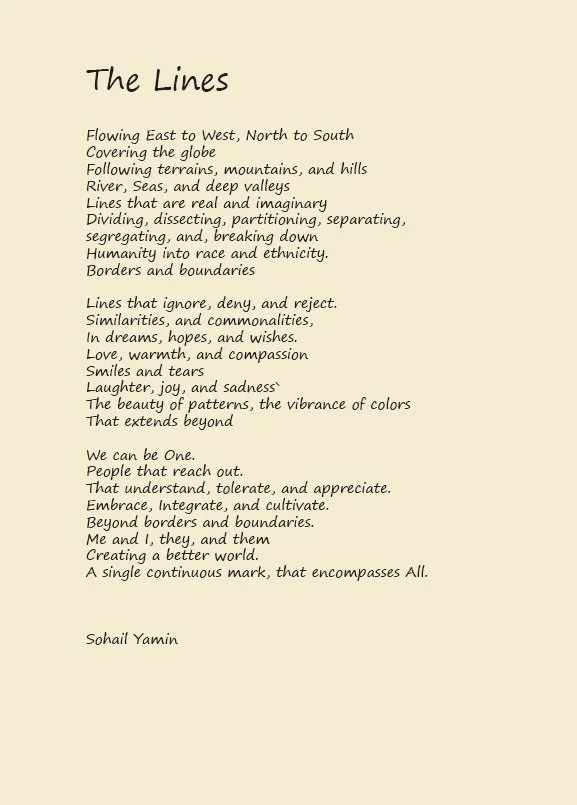
People tend to have biases depending on their upbringing, religious beliefs, cultural backgrounds, ethical viewpoints, and linguistic interpretations. As humans, we are wired to fare the unknown and as a result, we tend to look at differences rather than the similarities that exist between us. I wanted the iconography of this artwork to focus on these commonalities and bring the viewer’s attention to the global nature of our community.
First-generation migrants are typically nostalgic about their home countries as they evolve and adapt to their new environment. Therefore, one of the goals of the artwork I set for myself was to find a way to tap into and represent the uniqueness of various cultures and find a way to showcase how this richness fosters creativity, and innovation and contributes to society.
The Artwork
Whether it’s the number of likes on our ‘socials’, or a photograph somewhere, we all love being acknowledged!
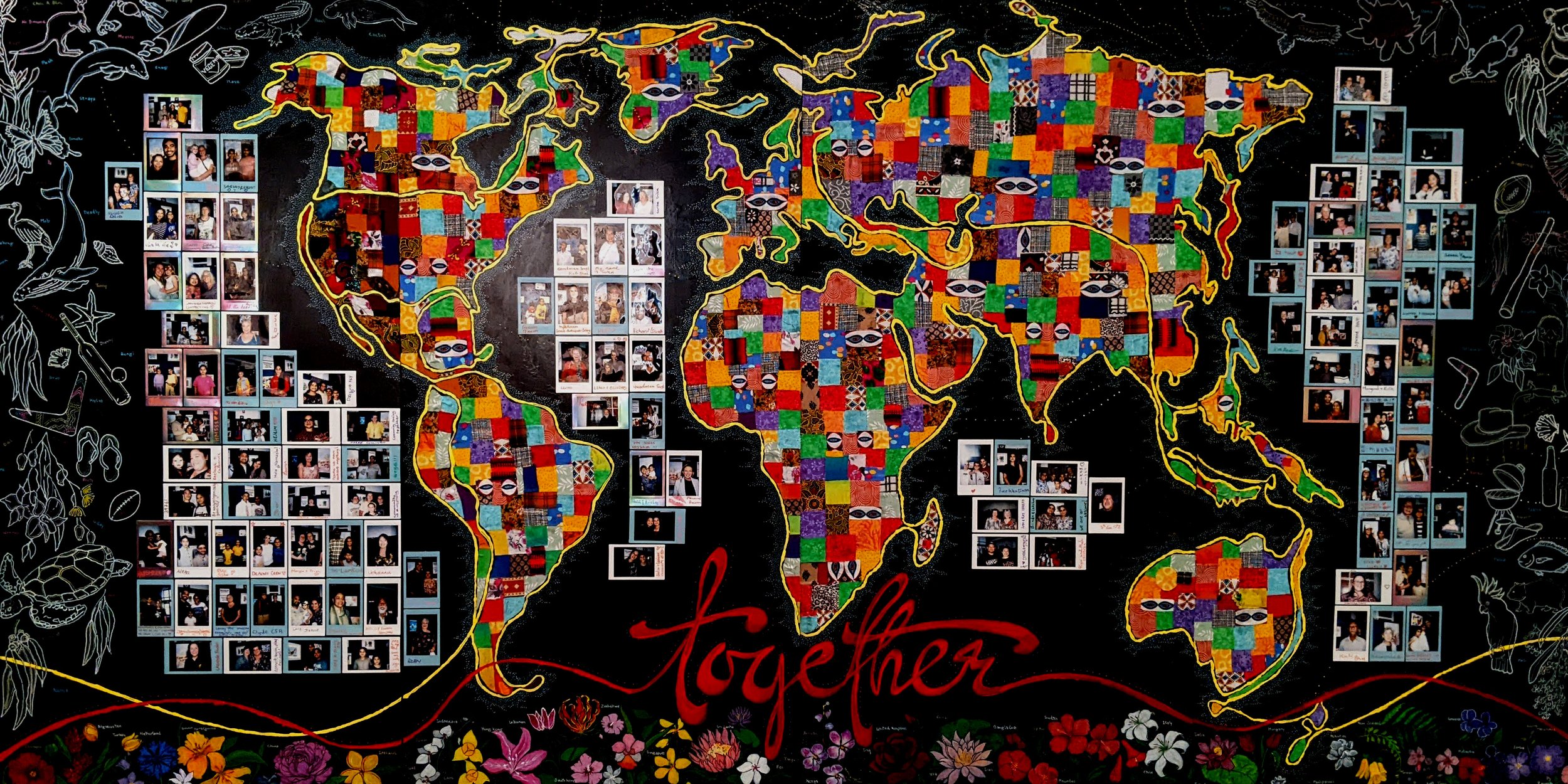
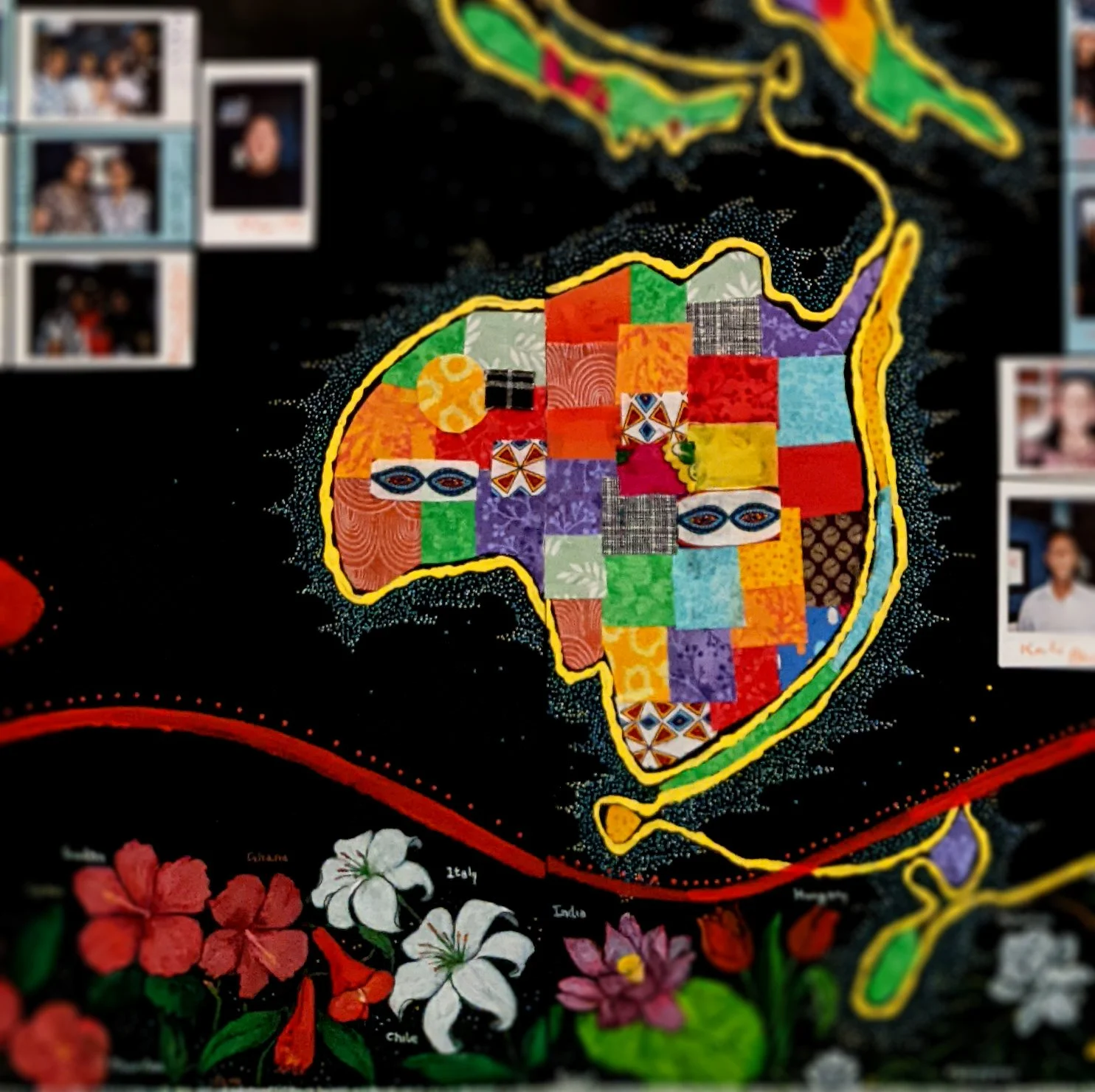
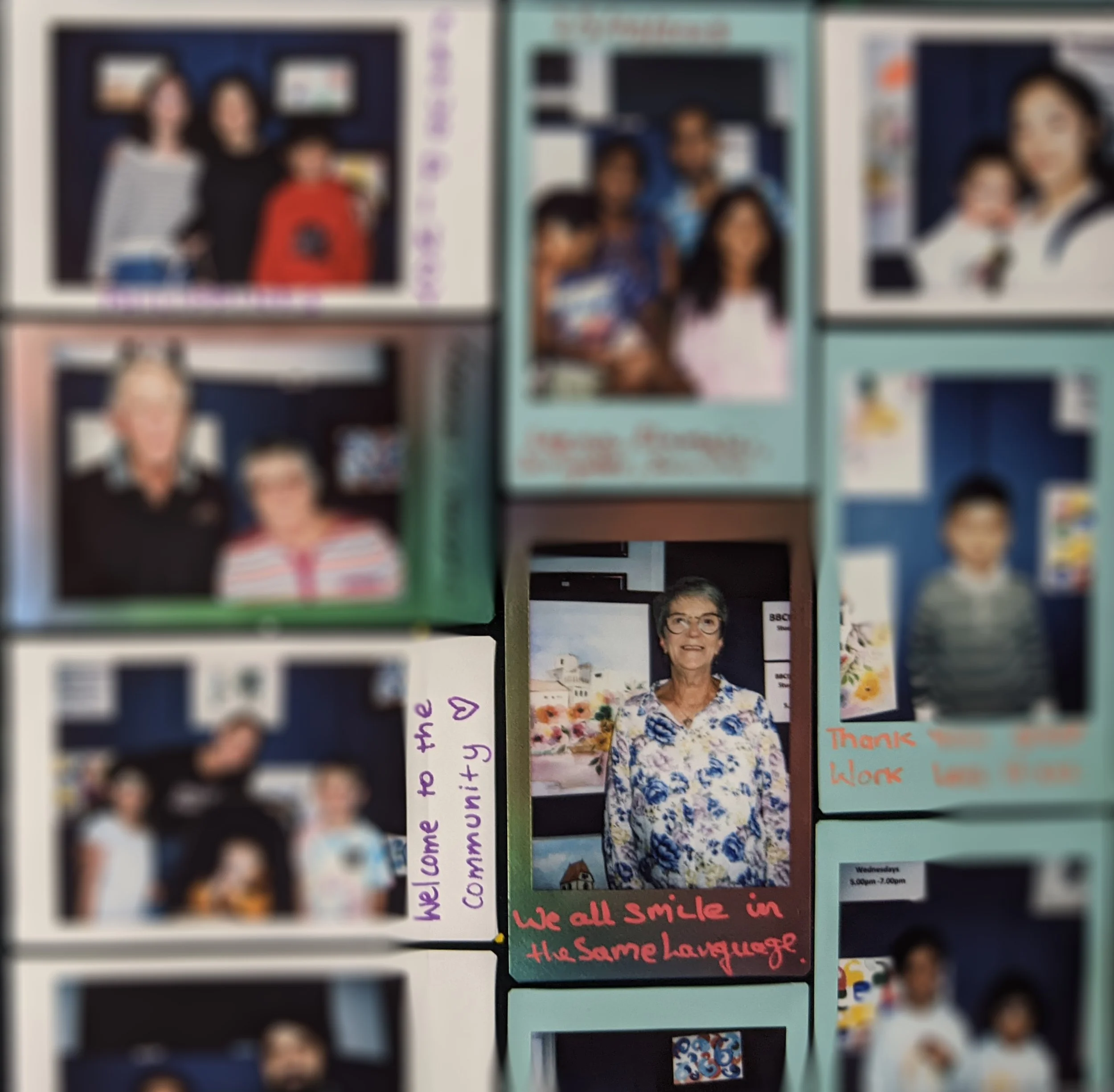
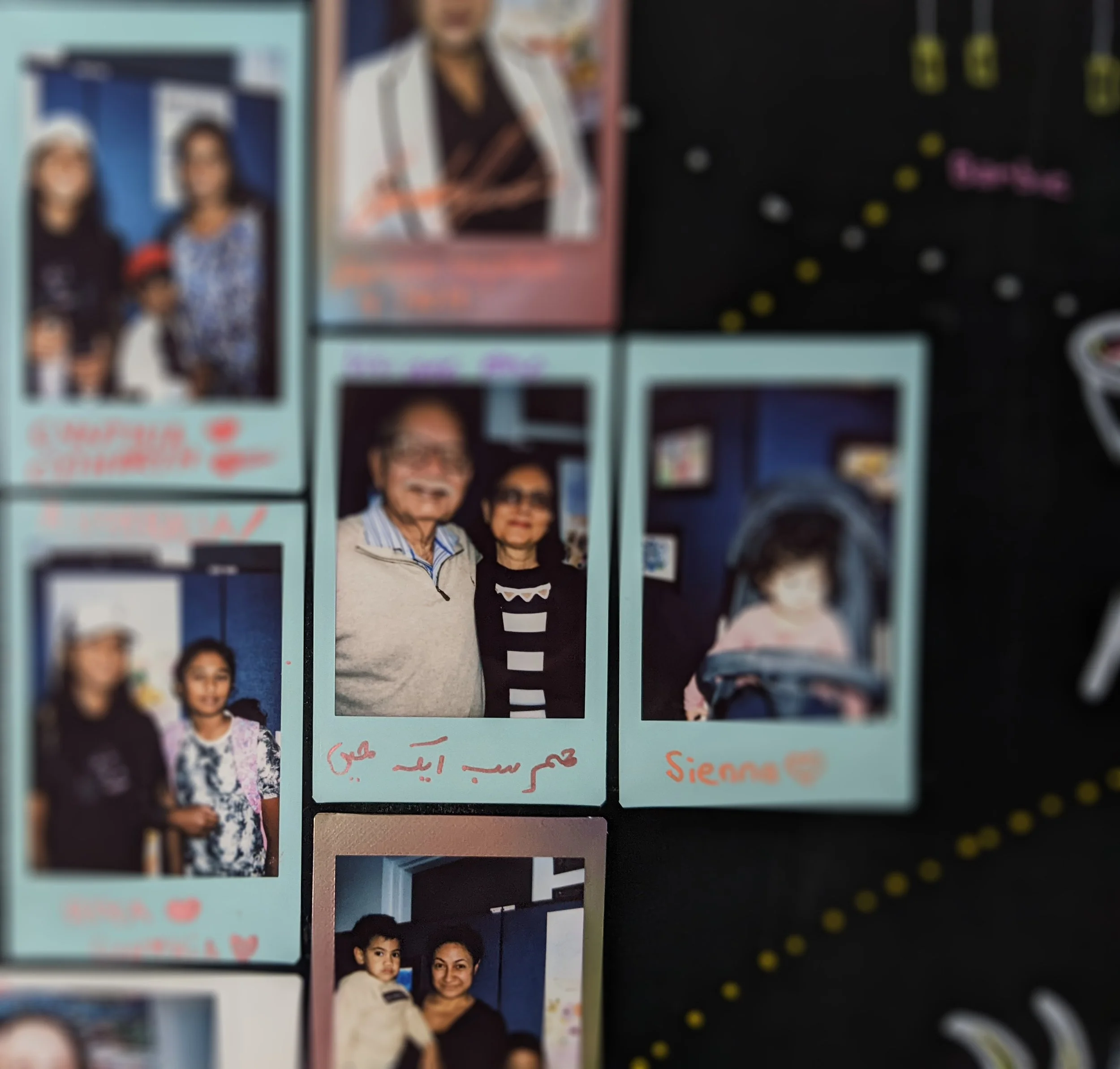
This zest for acknowledgment and display needs to be balanced with the concerns about identity fraud. To me, photographs taken with polaroid cameras provide a happy balance between these two requirements. These are clear enough to form a record and convey the artistic intent, but not sharp enough to raise privacy issues. I, therefore, decided to use Polaroids snaps as a tool to improve participation and community engagement.
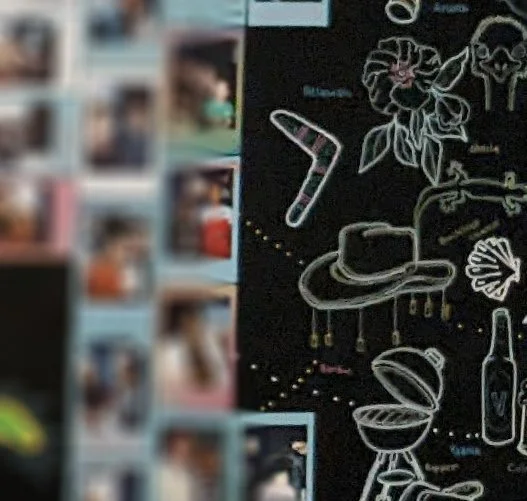
The black background of the piece is intended to provide a historical perspective between the ‘old’ and the ‘new’ and bring out and enhance other visual components.
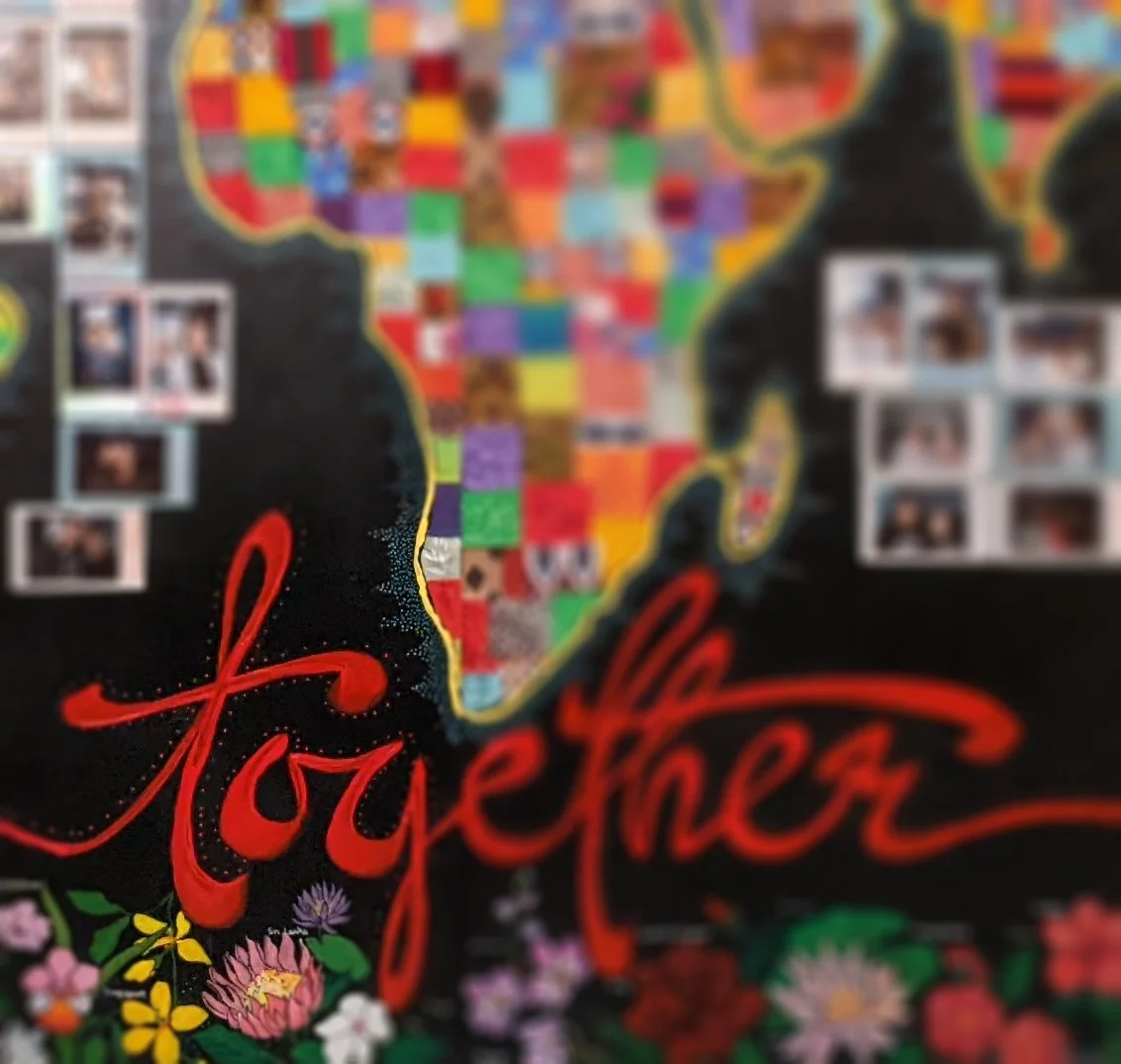
A single continuous line outlining the globe and the word ‘Together’ is intended to simplify the key message of the piece and focus the attention of the viewer toward the global nature of the community we live in and the need for global connectivity.
The outer edges of the land boundaries have a band of multi-shade blue dots to signify the importance of water for our land and people and to create an illusion of sunlight glitter reflecting off the water’s surface.
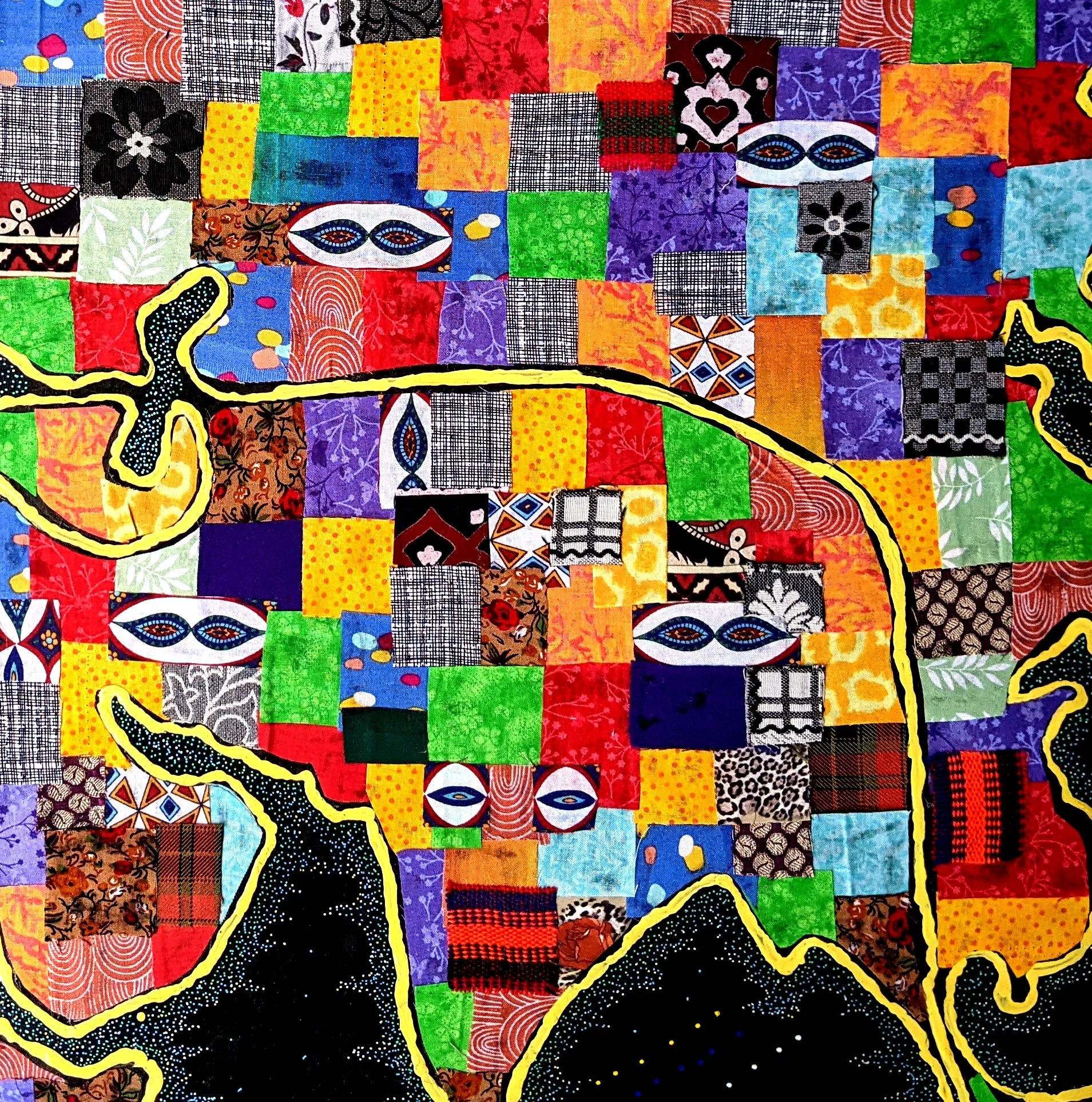
The inner areas of the world map have patches of colorful cloth glued to the panel. This is not only intended to bring colour and texture to the artwork but also signifies the vibrant canvas of people from various backgrounds and walks of life that inhabit our globe. The use of similar cloth patterns along both sides of the ‘line’ is intended to bring focus on commonalities between the people.
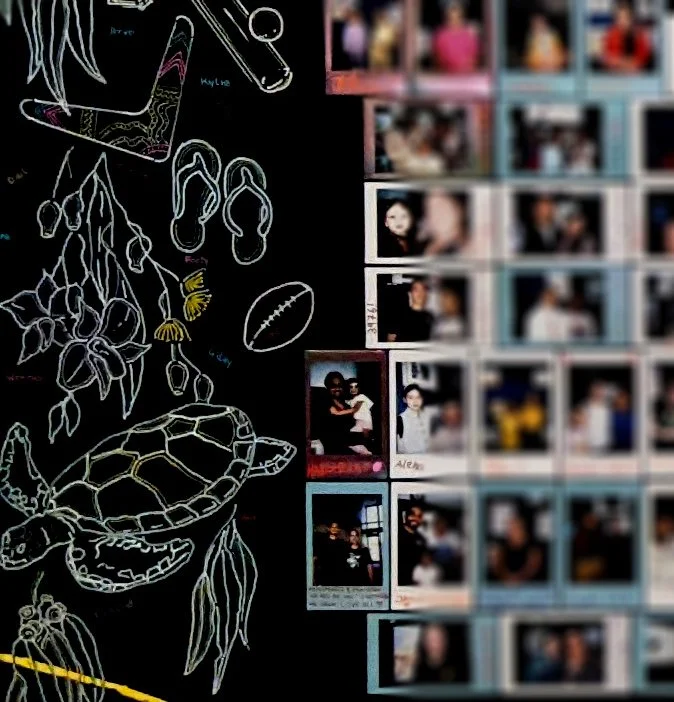
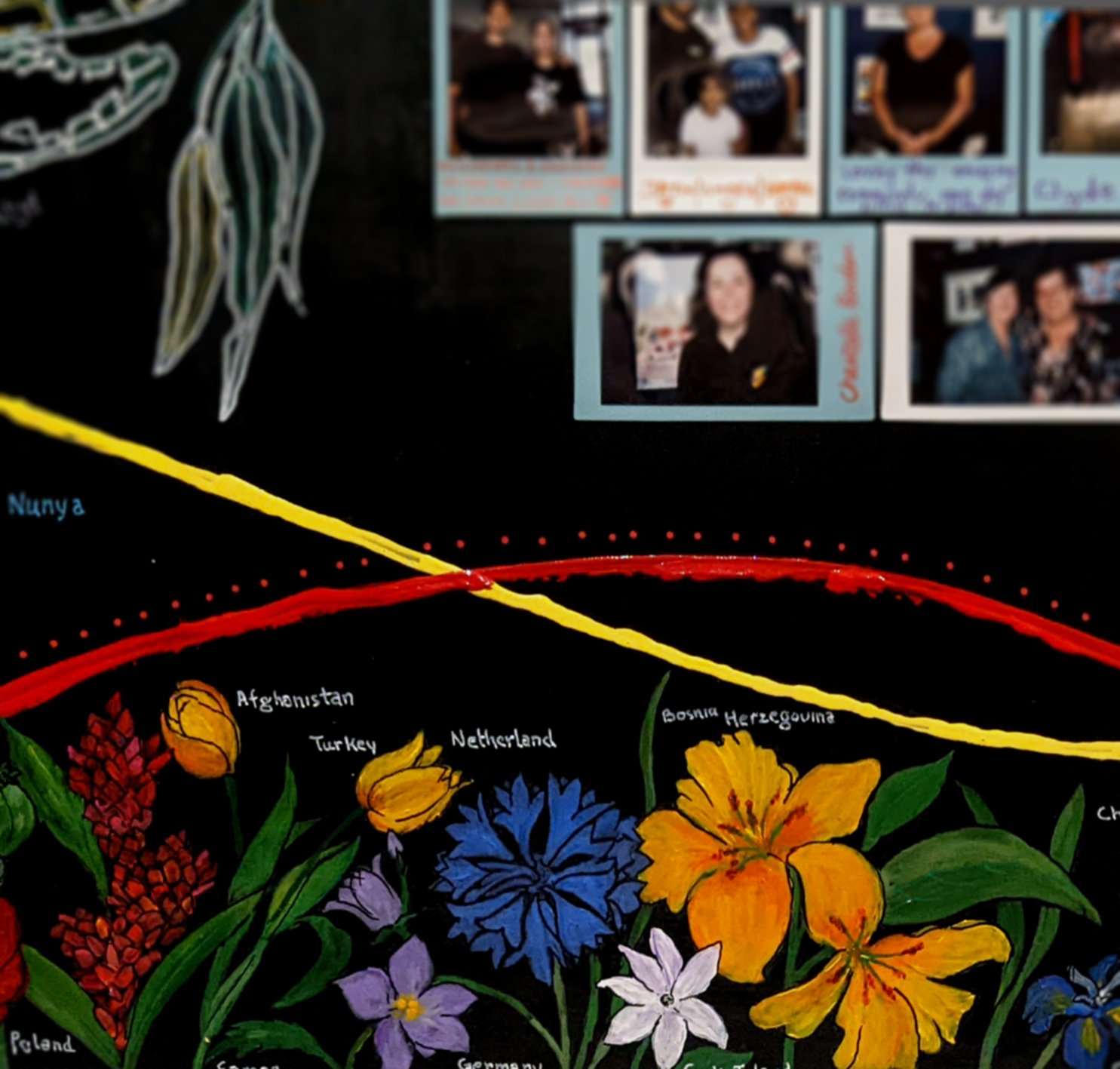
Both the sides and the top of the panel are covered with images of typical Australian icons specific to Australia. The minimalistic representation of emblems associated with Australia and infills of words in indigenous languages and popular ‘Australian English’ slang are intended to provide a context for this artwork and signify the connection of the people with our land.
Most countries have a collection of symbols that identify them as a nation and floral emblems, or State flowers have been used for this purpose for centuries. I have used this symbology to represent the different communities living in the City. The bottom band of the artwork showcases the national flowers of various countries from around the world, whose people now call the City of Casey home. The intent of this’ bouquet’ of flowers is to establish a connection between our diverse communities with their homeland and highlight how the uniqueness of each culture contributes to the overall richness of the society.
Celebrations
While this artwork took more than a hundred hours of research and execution, the success of any interactive artwork is bound to the engagement and participation of the people on the day the event takes place.
Based on my past experiences with similar activities, I was apprehensive that I may struggle to get 100 people to participate and be photographed, and in my mind had thought up a few strategies to fill in the blank spaces with other materials if this was to eventuate.
I was pleasantly surprised by the outcome on the day. People were very responsive to the concept and were appreciative of the meaning behind the artwork and keen to participate. I collected 110 photographs, many of them of families who participated as a group. People signed their photographs and wrote lovely messages, a few in their native languages which is a delight.
I hope as time passes the message behind the artwork finds a place in people’s memories and that each time they come and visit the centre and look at their photograph in the artwork, they remember the messages of inclusion and integration.