Tweet with Sticks
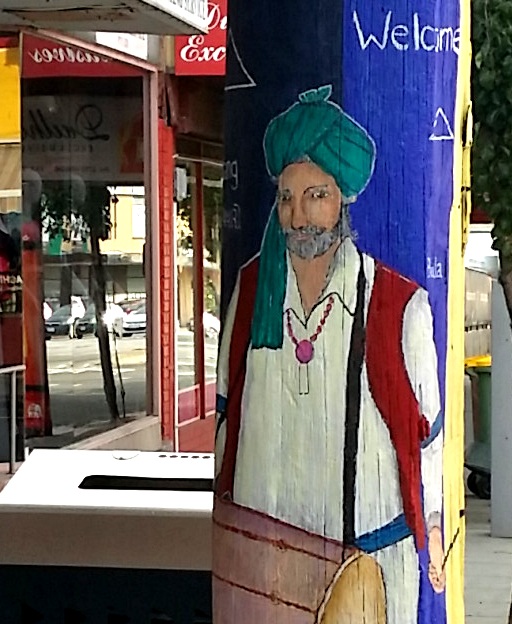
In many respects, the ‘Dhol’ (Indian drum) with its hollow wooden barrel and animal hide stretched over its open ends, and the humble ‘Dholwalah’ (drum beaters who sounded the drums) who carried the instrument slung around the neck are relatable to ‘Twitter’ of our times. A long-lost cousin of sorts; this ‘tweet with sticks’ had the same function for the Mughal establishment of yesteryears as any sane or deranged president or politician of our times.
While today the ‘Dhol’ is mostly associated with folk music, Bhangra dance, wedding parties and religious processions, the ‘Dhol’ and ‘Dholwalahs’ played an important part in shaping the history of the sub-continent.
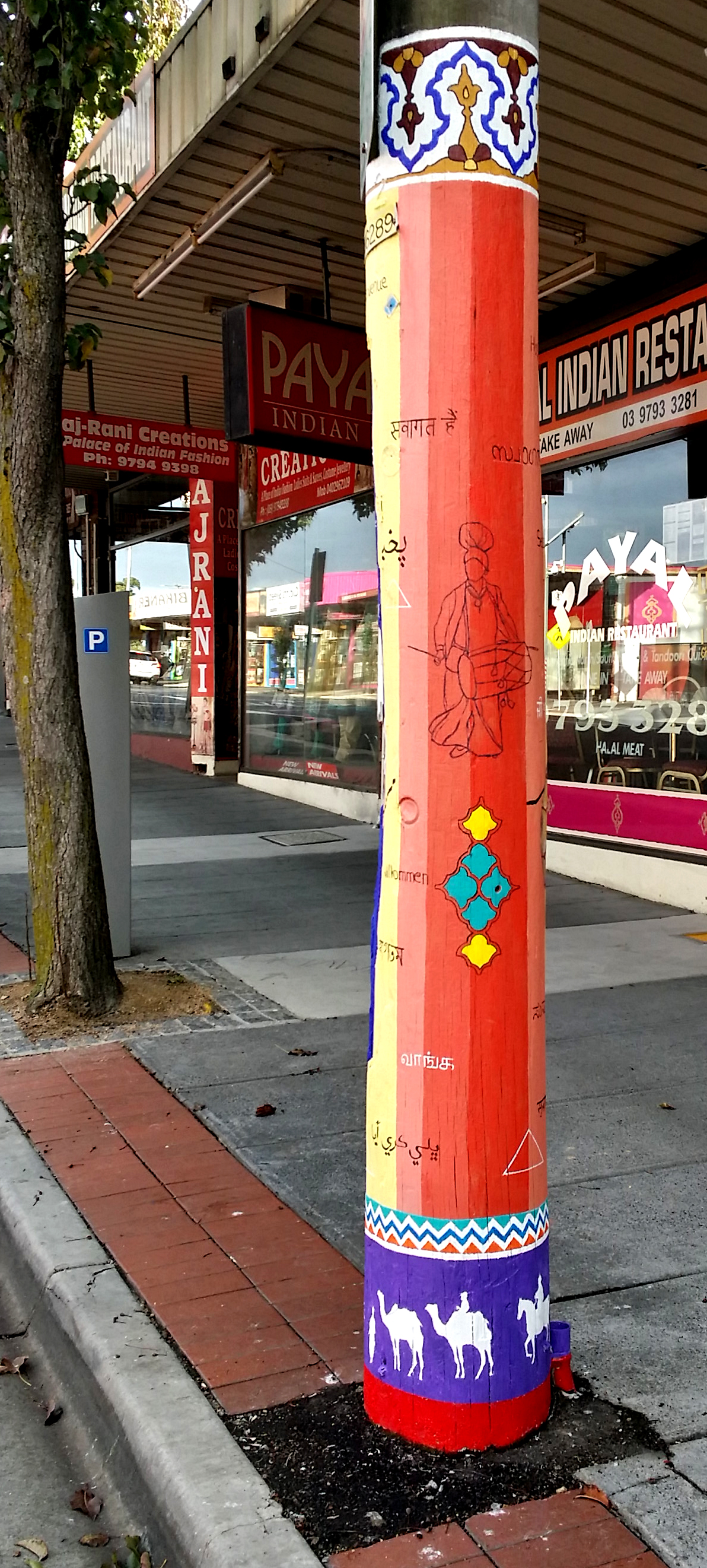
In his book ‘Delhi-The unknown tales of a city’; R.V. Smith dedicates a whole chapter to the drummers of Delhi and writes “In the medieval day they (Dholwalahs) were employed in large numbers to act as messengers. They had a code, of course, and this was communicated in a sort of relay until the message reached all the cities and towns in a radius of several hundred miles. Sometimes, the message warned of an impending attack and sometimes it gave news of a court proclamation that the emperor was journeying and would need fresh horses at such and such a place. And so every time the drums beat across the miles, people knew something important was afoot. During the 1857 uprising it was either the lotus or the chappatis carried by runners secretly at night that warned most villages and towns that the revolt against the British was to break out soon. Wherever the symbols could not be carried the message was passed on by the beat of drum”
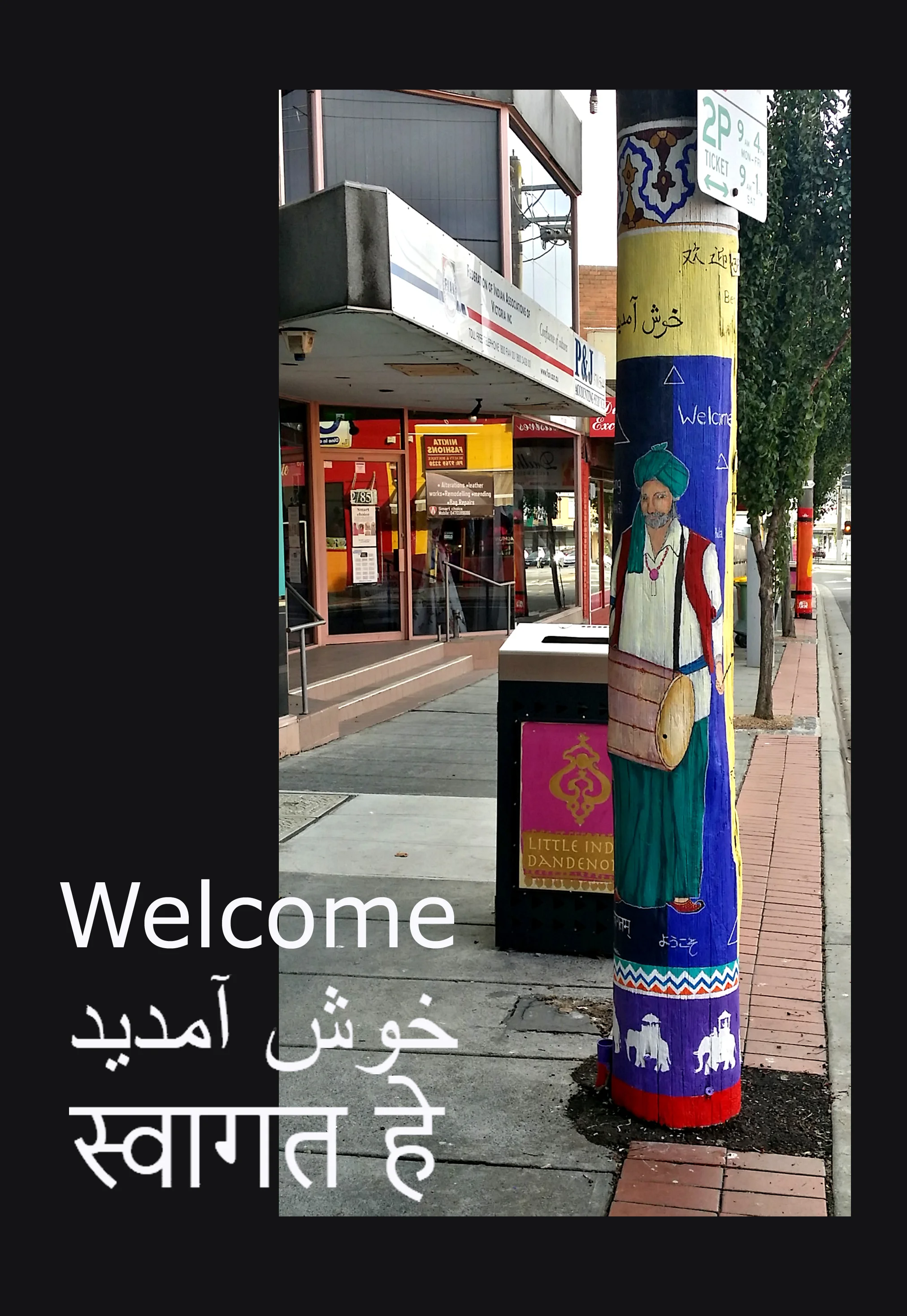
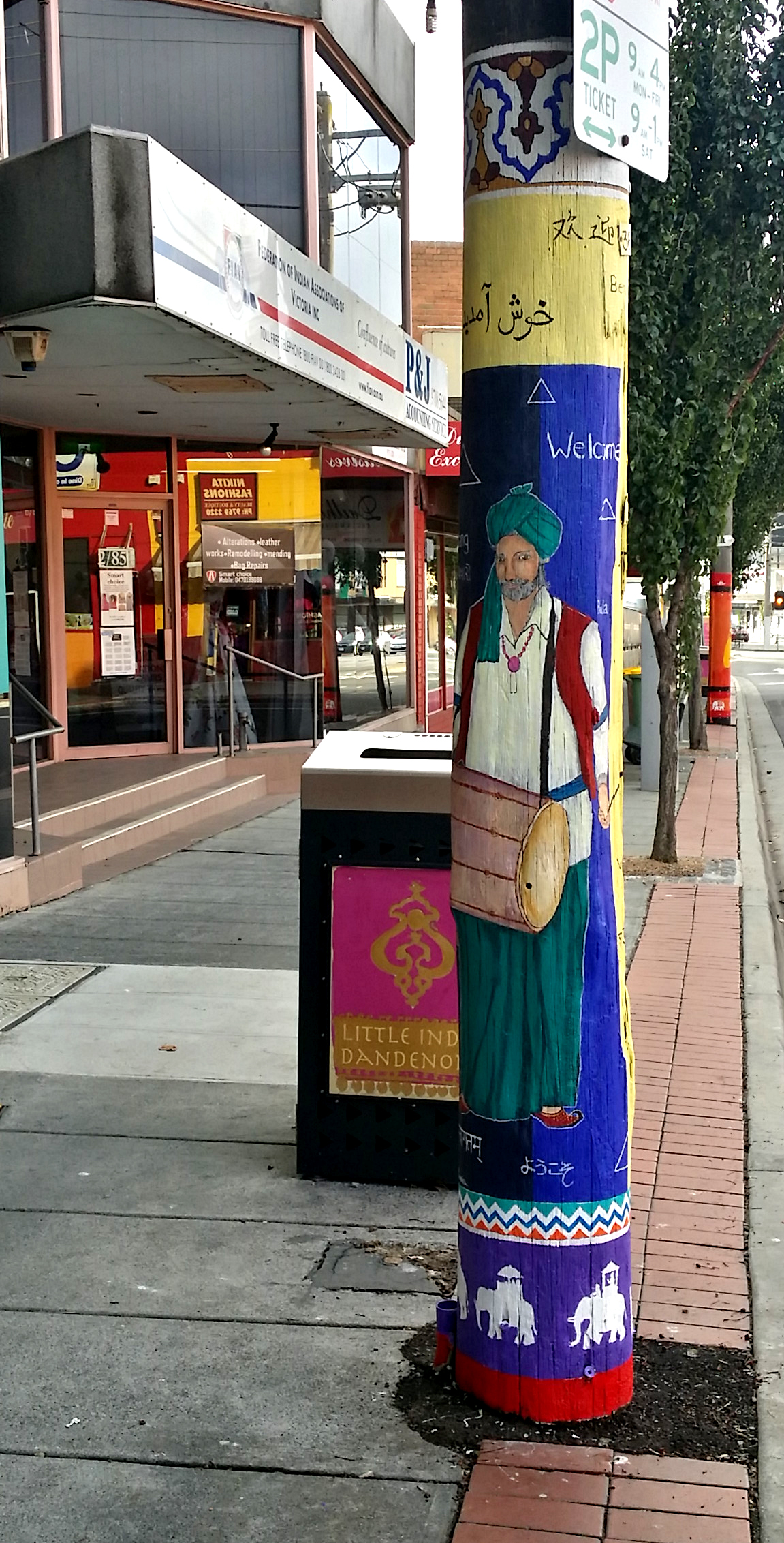
Now fast forward a few centuries into the present. In this artwork, I have used the drumbeaters as symbols for proclamation -albeit not for or by a person of prominence, but an announcement or a ‘tweet’, if you will, aimed at welcoming the travelers who visit the Little Indian prescient.
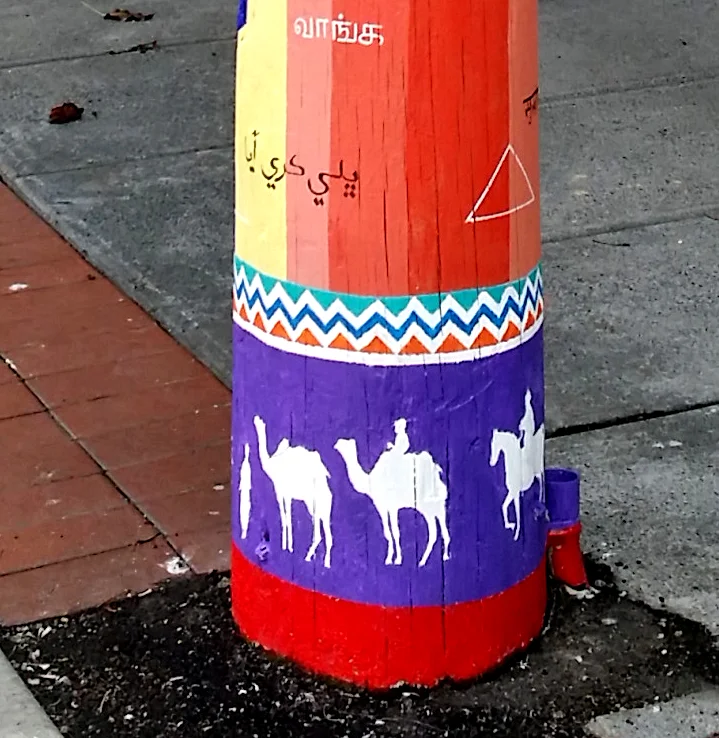
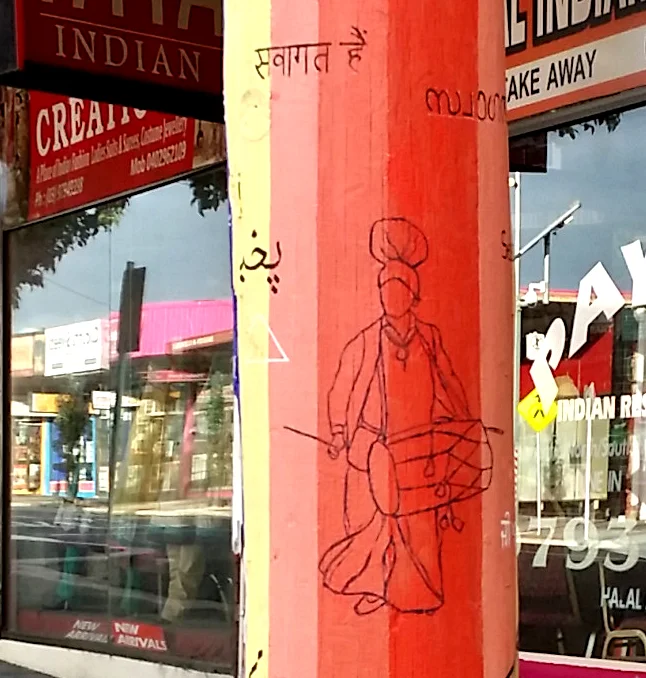
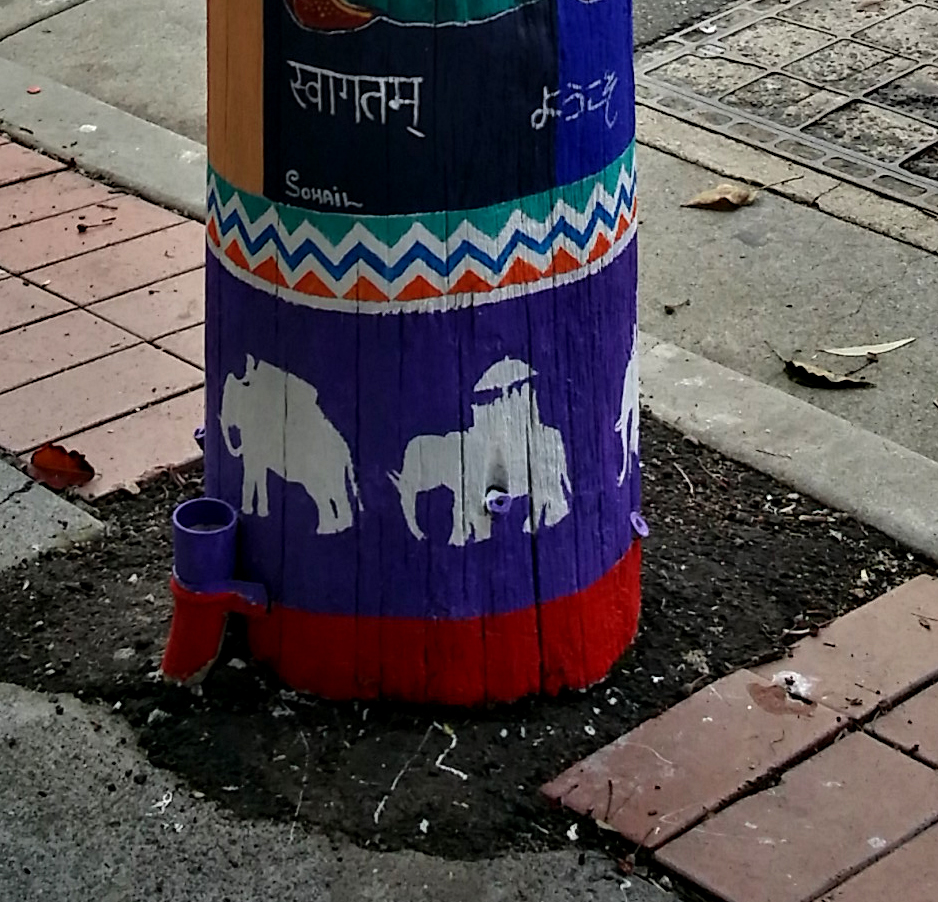
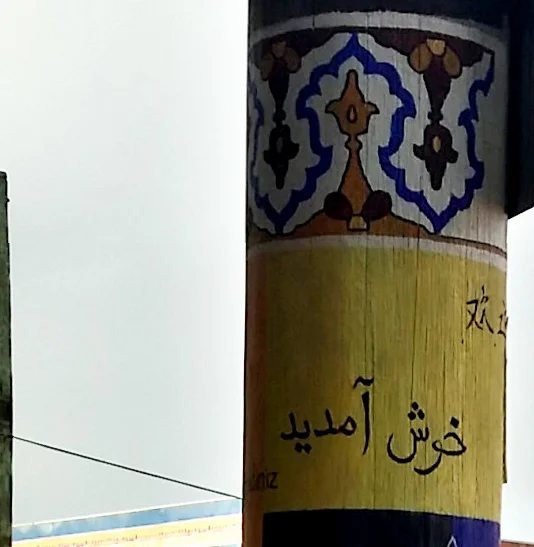

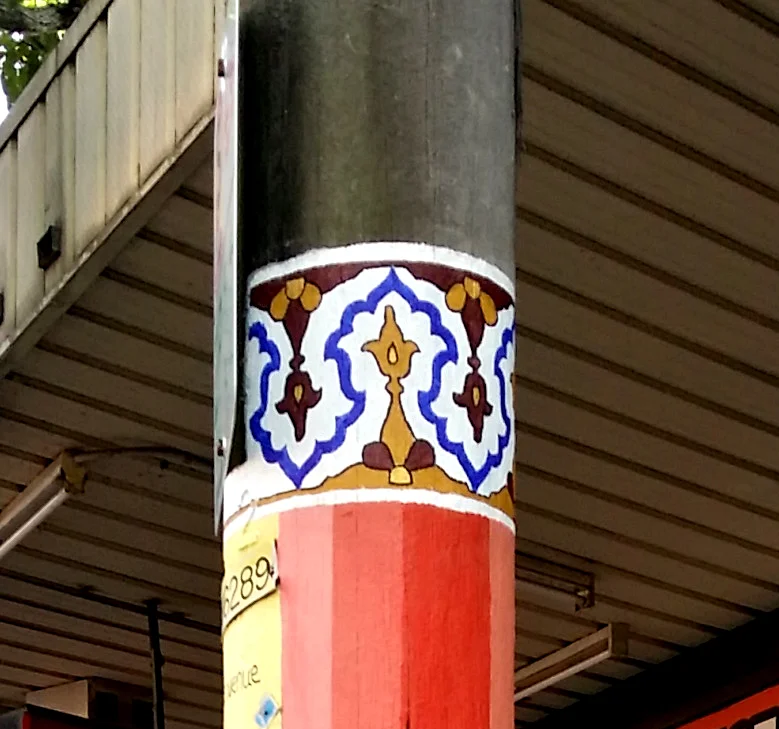
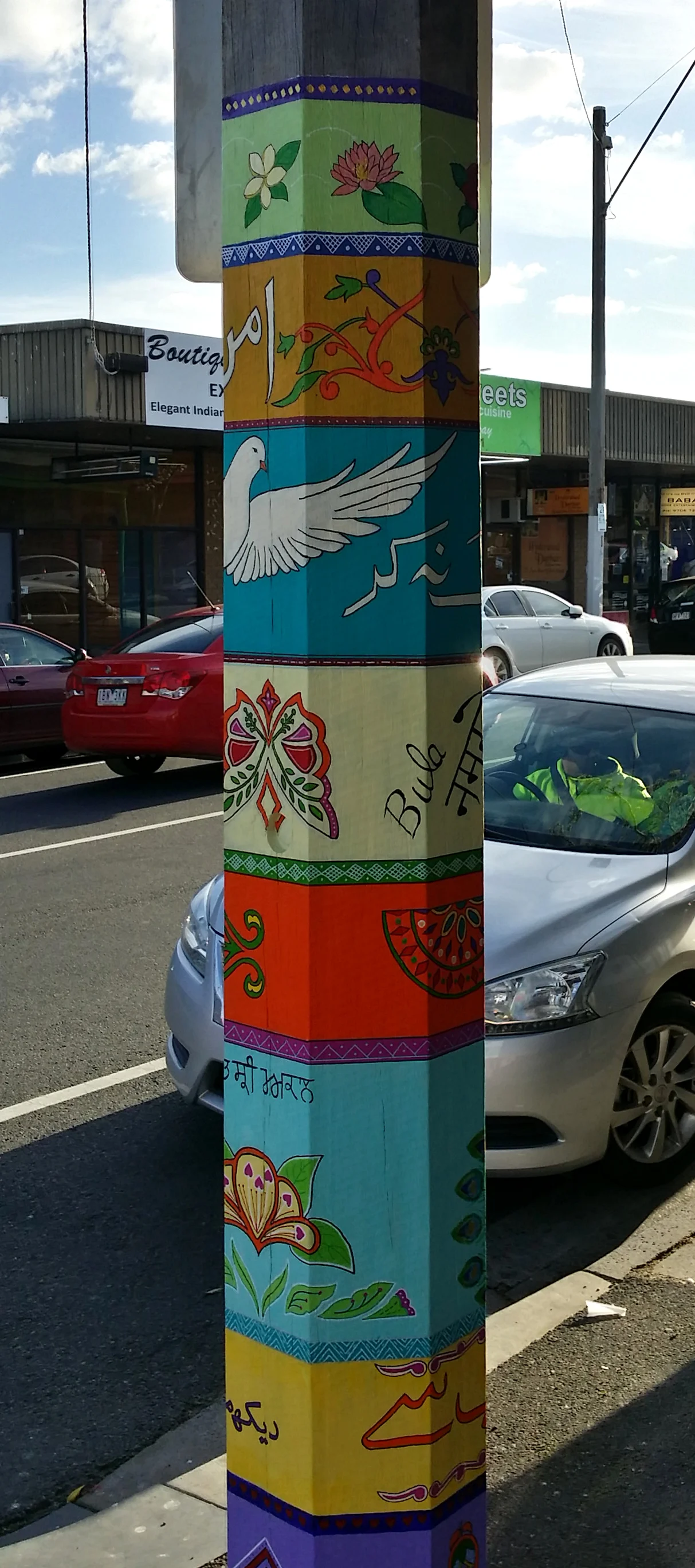
The narrative around the historical background is reinforced by different motifs on the art work. The top band depicts a typical marble floral inlay design and similarly the mosaic pattern at the back is inspired by geometric tiled pattern common of the period.
The bottom bands depict the elements of journey and travel. The silhouette images of the lower purple band depict a royal caravan with rows of elephants, horse and camels (journey) and the winding pattern on top is aimed at representing waves, travel and motion. The choice of colors for the bands was not only driven by the overall aesthetics of the piece but by using different colored zigzag lines my intention was also to universalize the welcome message to include all who have come to the country (ochre), by water/boats (aqua) and air/planes (light blue).
Welcome, khush aamdeed, savaagat he
Though over the years a lot of customs and traditions in the subcontinent have evolved or eroded away; fortunately, the customs around hospitality and honoring of guest is very much alive to this day. Travelers passing through the sub-continent cannot help but notice this fact. According to one traveler, “The countryside seems populated with people willing to drop everything to help an unknown foreigner find his destination or to serve him tea.”
Hospitality is valued by Muslims, Hindus and Sikhs alike. In Pakistani Islamic culture, the guest is considered a blessing from God, and in neighboring India the slogan “Atithi Devo Bhava” (guest is god) defines the importance of the guest for the host.
Folks take great efforts to make sure that the guest are happy and provided for. Often the host will offer best dishes, sweets and fruits to their guest then they would consume themselves. In some countryside areas, a guest of one family is considered a guest of the whole street or village. Many restaurants owners and shopkeepers even refuse to take money from foreigners.
These cultural traits are evident in people even when they move away from their homeland and settled in other countries. Case in hand, while I was busy painting the pole, a Sikh gentleman who owns a shop in the area became a silent admirer of my work and offered to provide me chai and soft drink and refuse to take money when offered.
I have tried to highlight this cultural trait in the pole artwork by writing ‘welcome’ in several regional and international languages. The initial plan was to cover all 23 regional languages spoken in the region but unfortunately my patience with Dr Google and the time run out and I settled with covering a dozen languages only.
Epilogue
This commissioned public art is part of Stage 2 of the Indian Cultural Precinct revitalization works that have been sponsored by the City of Greater Dandenong and is aimed at enlivening the streetscape and showcase the color and vibrancy of the culture of sub-continent. I hope the people will appreciate and enjoy this piece as long as it last not only for its aesthetics but also the message it aims to convey.