
• +Works
    • Arabic Abstractions II
    • Mechanical Imprints
    • Arabic Abstractions
    • Emerging Artist Space
    • Group Shows
    • ARTIST STATEMENT
    • CV
    • CONTACT
  • +Conversations
Menu

Sohail Yamin

Conversations With Colour
  • +Works
  • +Exhibitions
    • Arabic Abstractions II
    • Mechanical Imprints
    • Arabic Abstractions
    • Emerging Artist Space
    • Group Shows
  • +ABOUT
    • ARTIST STATEMENT
    • CV
    • CONTACT
  • +Conversations

In Search of Mona Lisa

November 19, 2022

Imagine. The year is 1911, you are a handyman (or perhaps just a petty criminal) who has been asked to put some glass cases around some famous artwork at the art gallery. You had planned to steal a portrait of a Lady painted by Leonardo da Vinci that hangs on the museum’s wall. Sometimes during your work, you undo a heavy wooden frame and slid the painting under your clothes and try to exit through the side door. Your plan of a clean escape with the loot is almost foiled by a locked door, but you somehow manage to con an innocent passing plumber to help you open the locked door, and successfully make your lucky escape. It had taken nearly 26 hours before the theft is detected and by that time you are on your way to your homeland, Italy.


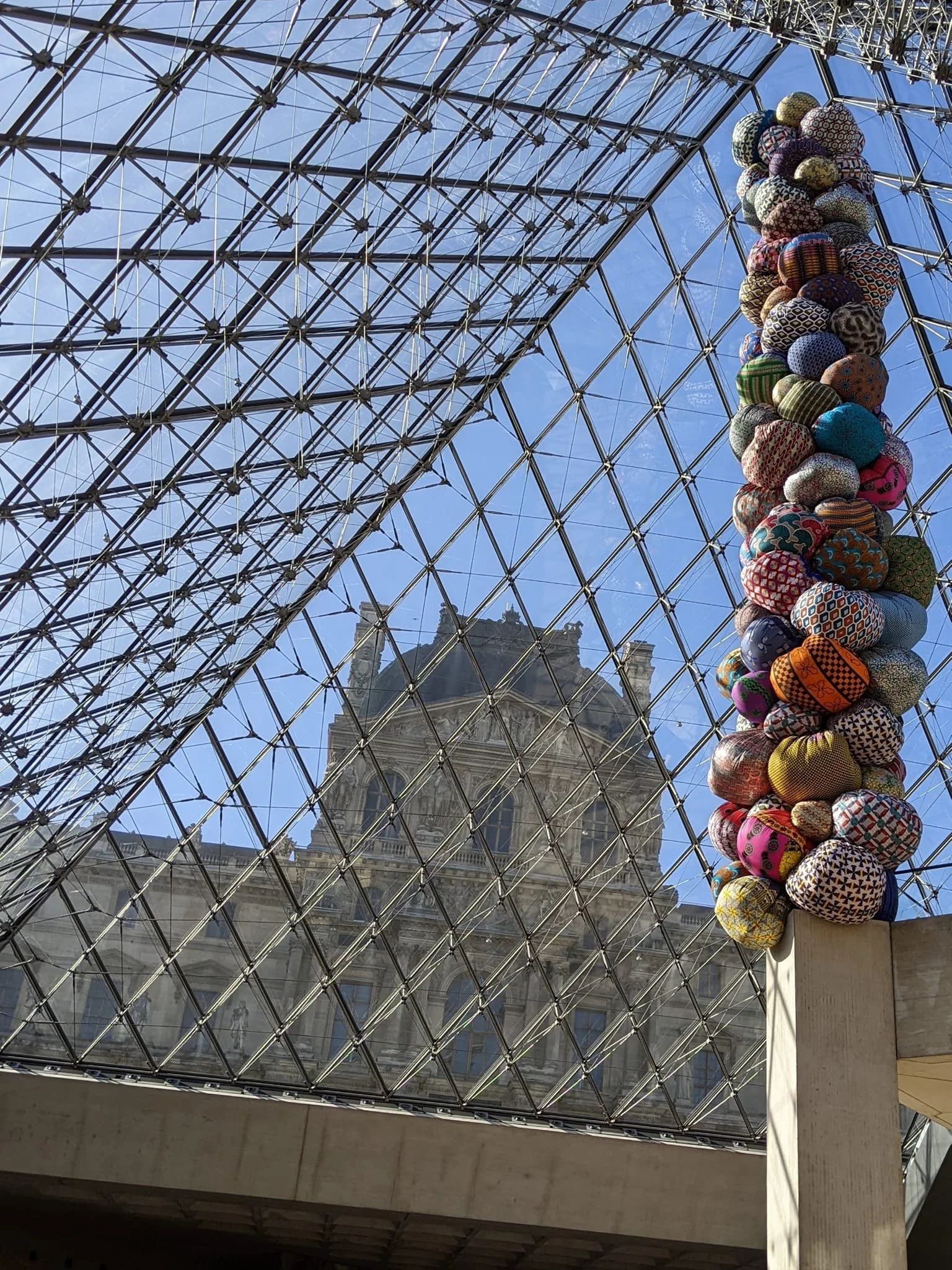
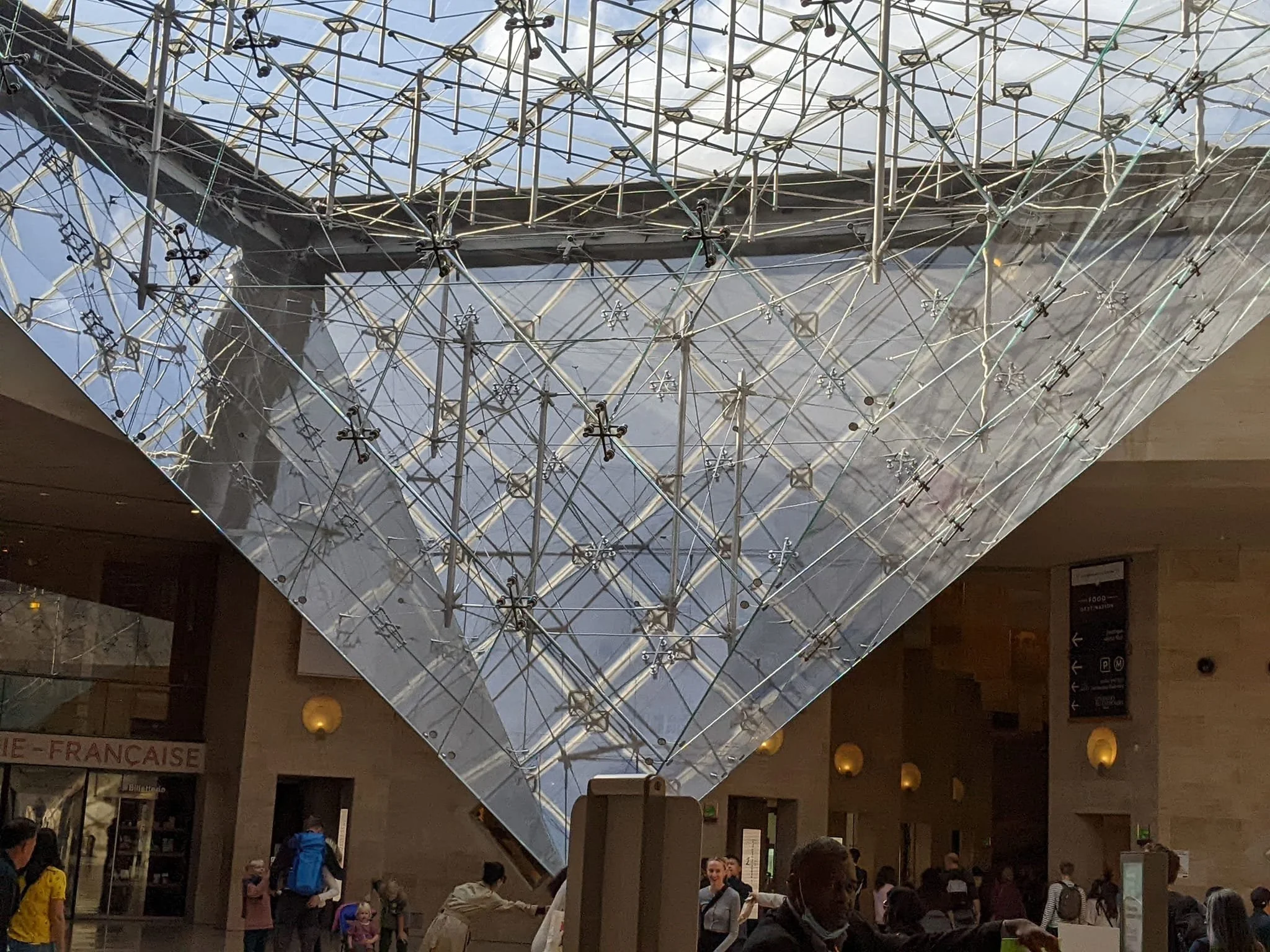
The painting is Leonardo’s Mono Lisa, and the museum is ‘The Louvre’ in Paris which is considered the largest and most visited art museum in the world.  

While the painting is recovered within two years as the perpetrator tries to offload his loot to a gallery for half a million lire. The theft and subsequent recovery of the painting causes a media frenzy which has made this painting one of the most recognized piece of art in the world. According to a conservative estimate (…remember beauty lies in the eyes of the beholder!), this single work of art is worth about US $800-$900 million today.   

The Louvre

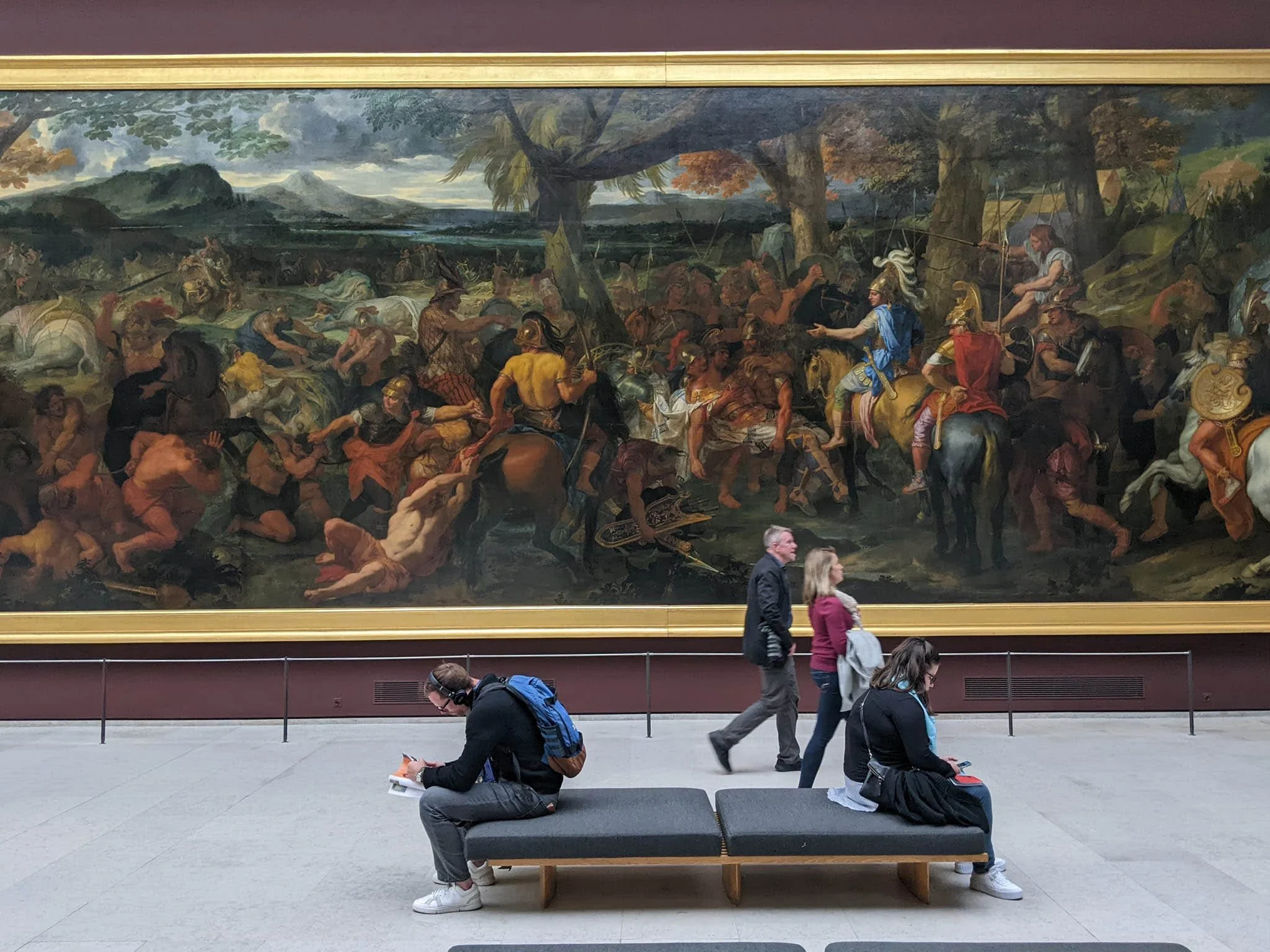
When we were planning our overseas trip, I was adamant that we needed to visit the Louvre. Although the idea met with some resistance initially, ‘the powers-that-be’ eventually give-in to my wishes and we bought our online tickets for the exhibition.  Note to would-be visitors, it is difficult, if not almost impossible to get the tickets on the day, you may have to wait in the queue for hours to get the tickets and then another few to get into the gallery.

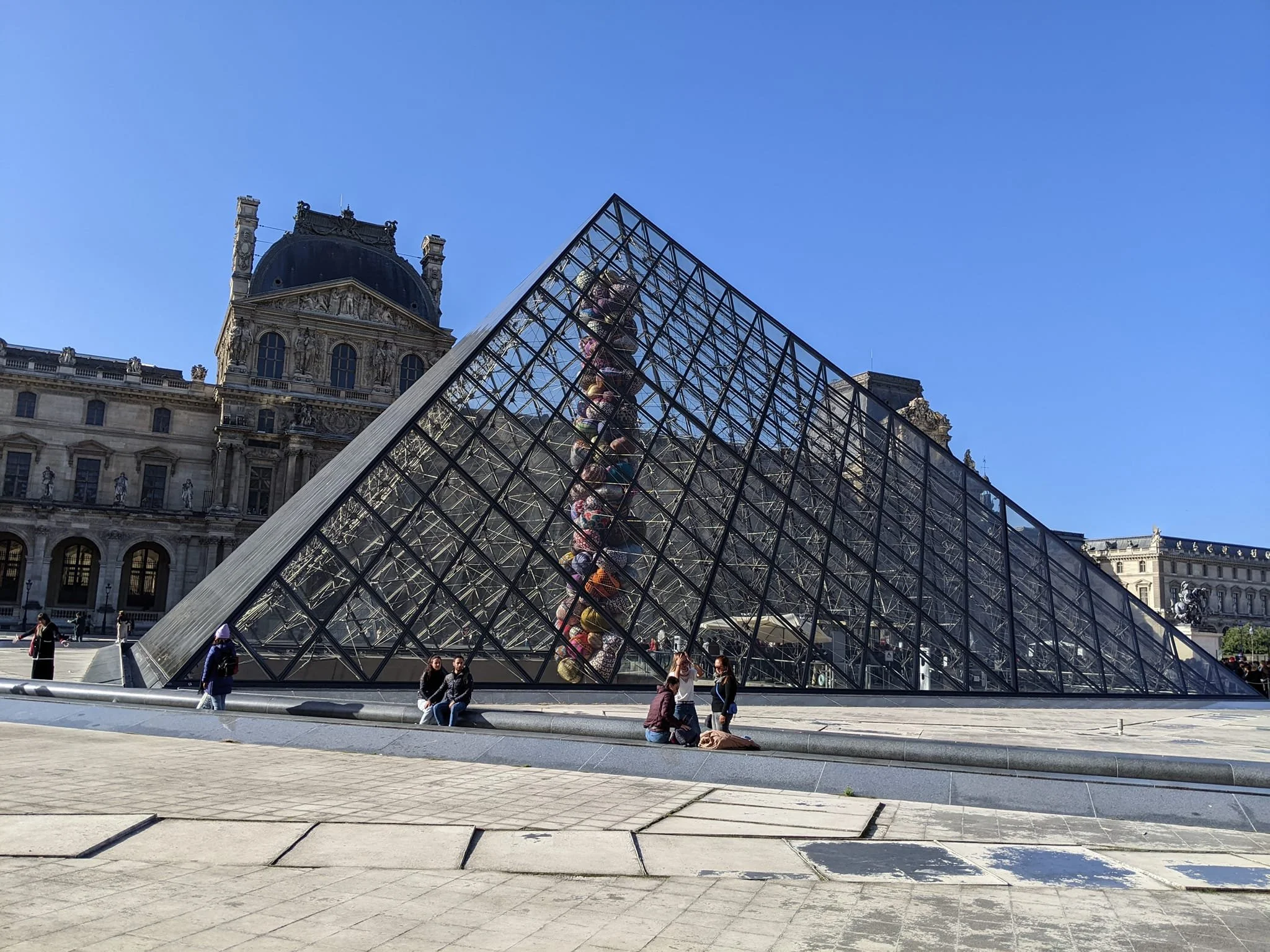
The queue through the glass pyramid gate is long, as the visitors are ‘released’ every half hour. Nearly 15,000 visitors from all corners of the world, visit each day and sending people in batches is the only way to manage the crowd. My initial estimate was that we would need about 3 hours for the visit and was contemptuous of some American tourists whom I overheard saying ‘we should be able to cover this in an hour, tops an hour and a half at best’, and guess what, we were both wrong!
View fullsize 1.jpg
View fullsize 2.jpg
View fullsize 3.jpg
View fullsize 4.jpg
View fullsize 5.jpg
View fullsize 6.jpg

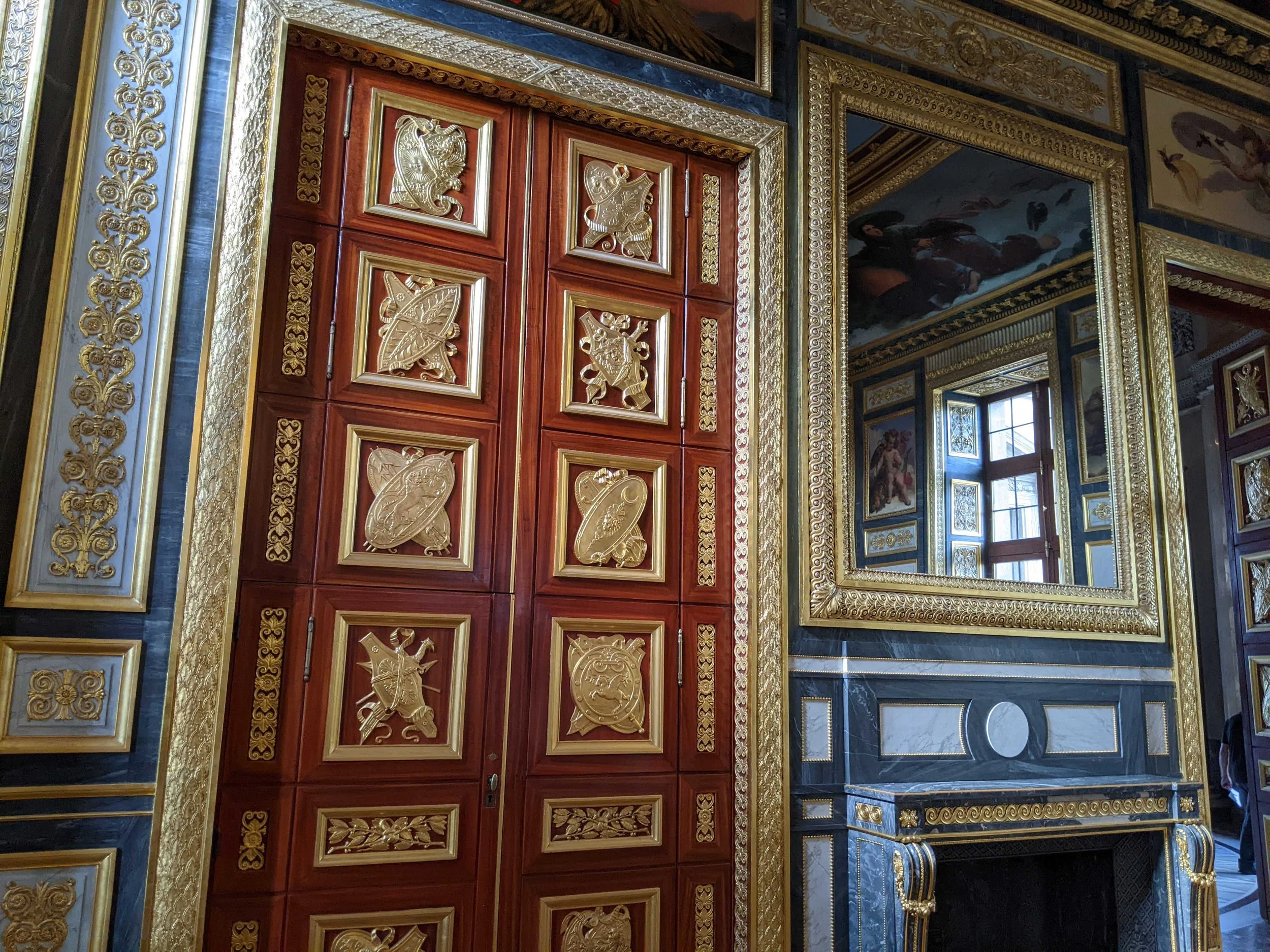
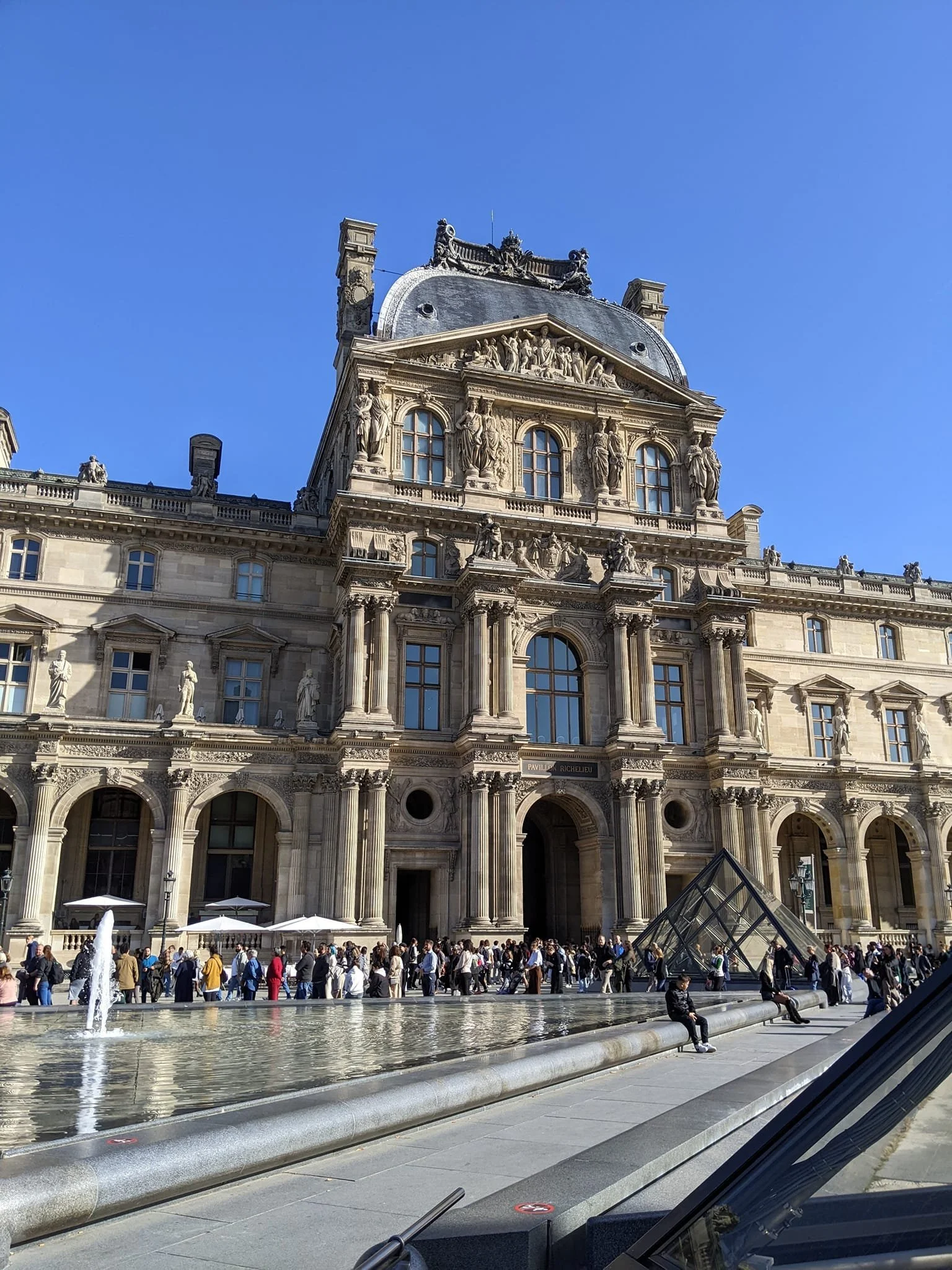
The Louvre was originally built as a fortress in 1190 and was later converted into a palace. Like many buildings of its time, it grew over the years as new buildings were added to the complex.  When the royal palace moved to Versailles, the Louvre became the home to various art academies and offered regular exhibitions of its members' works.

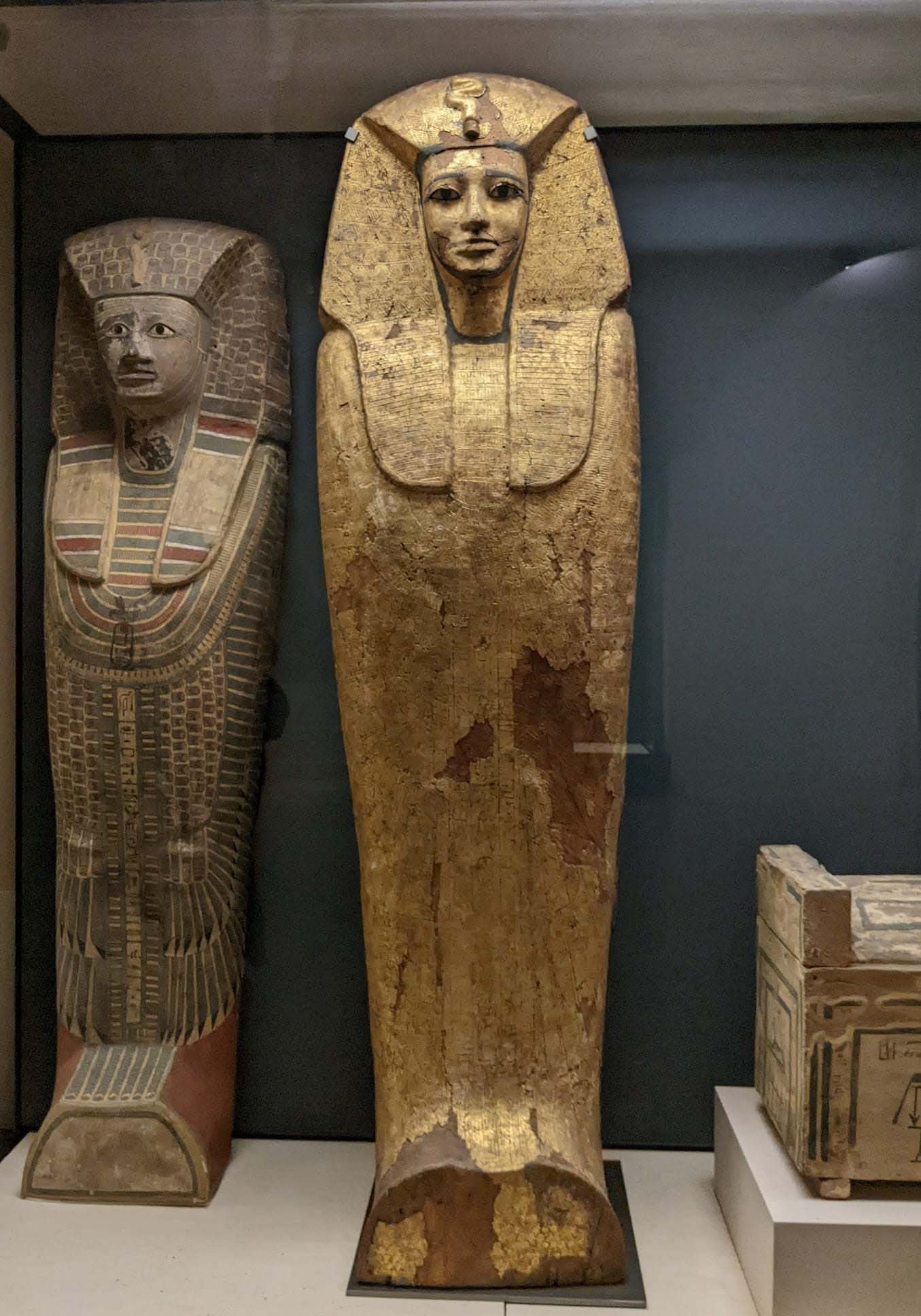
After the French revolution, the building was converted into a gallery in 1793. Napoleon expanded the collection and renamed it Musée Napoléon. He added war spoils from the conquered lands of Belgium, Italy, Prussia and Austria to the museums’ art collections. After the abdication of Napoleon, some 5000 art pieces were returned to the originating country however a few hundred artworks and especially rare artefacts from Egypt still remained.

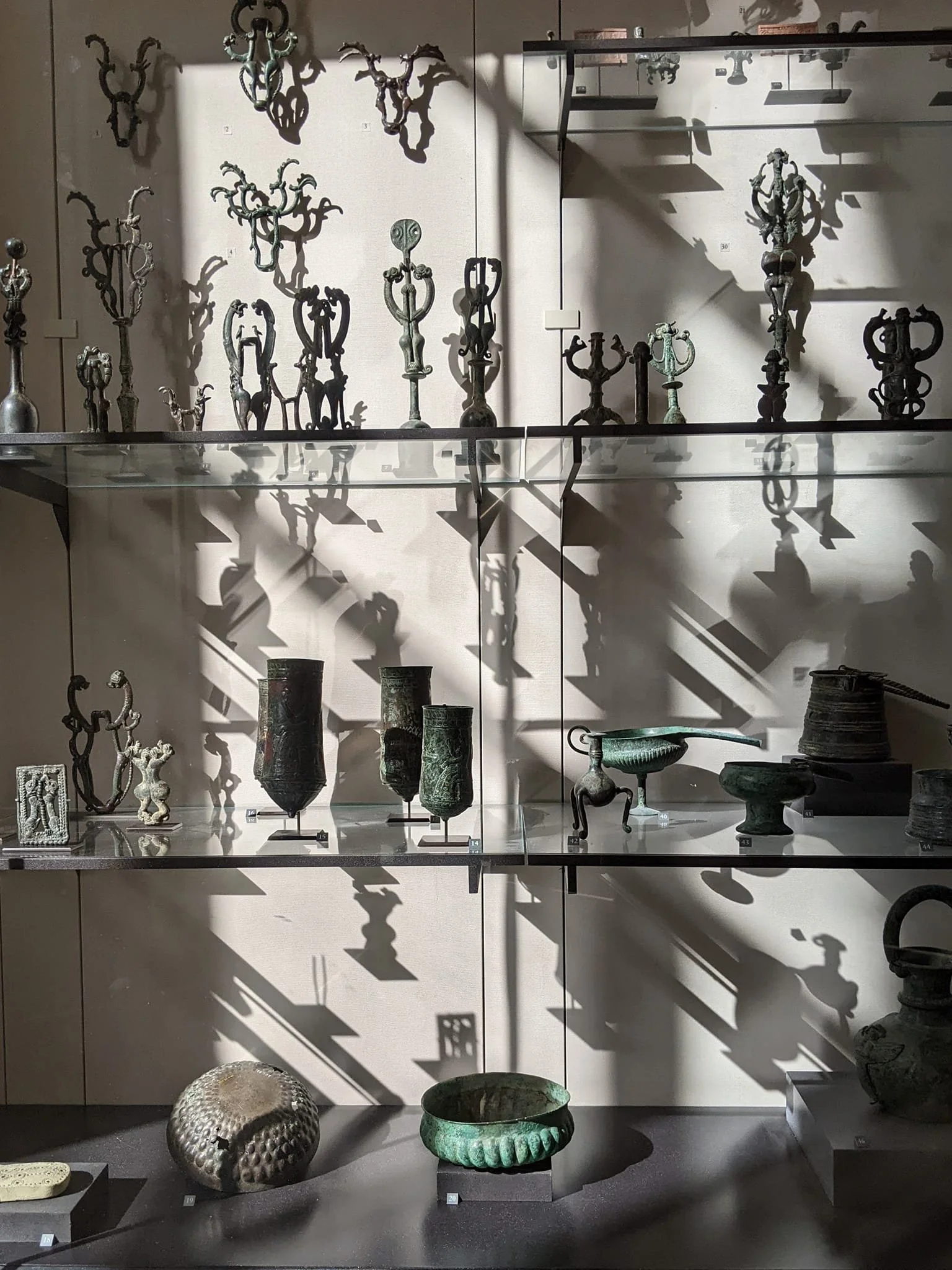
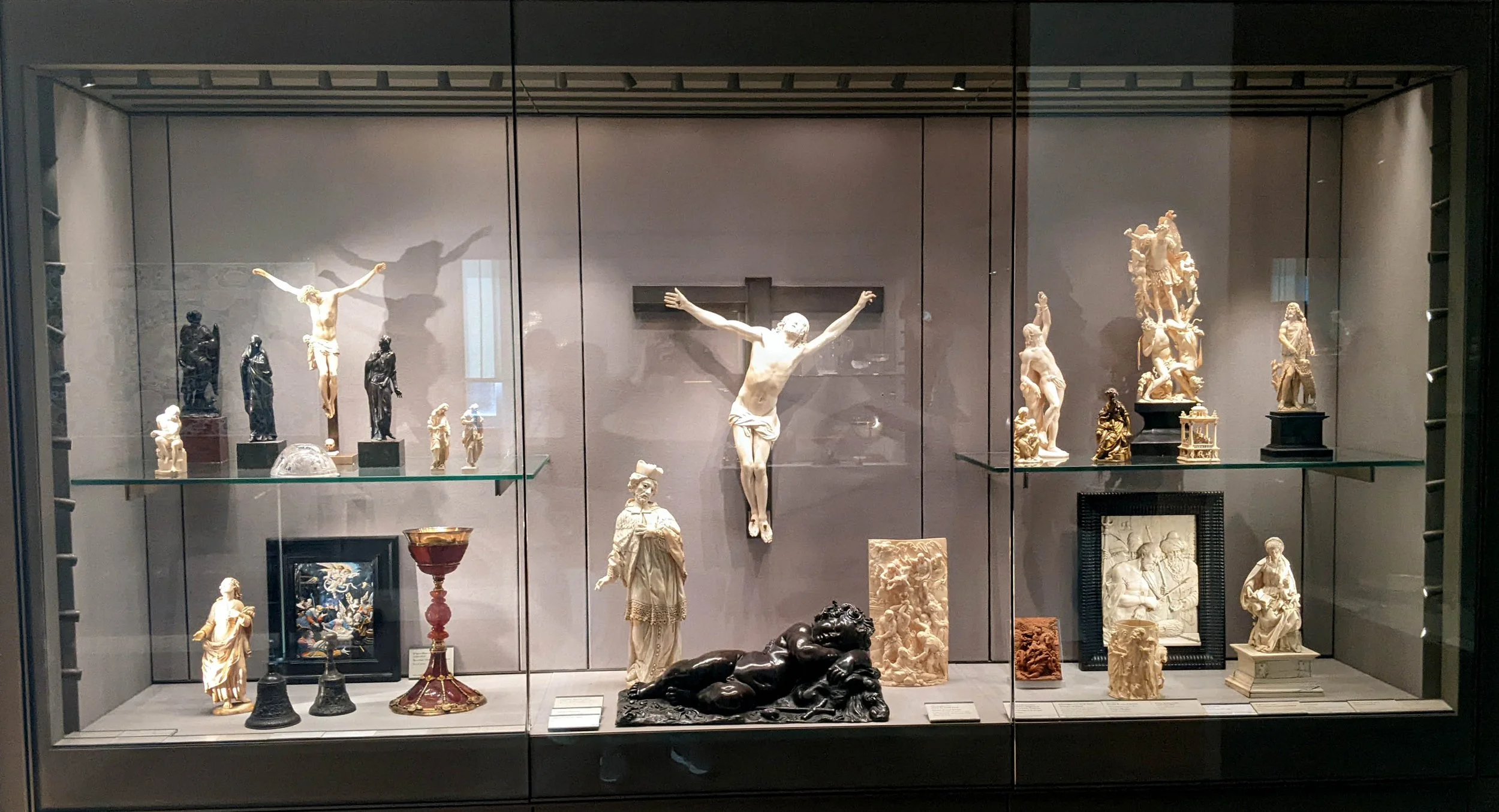
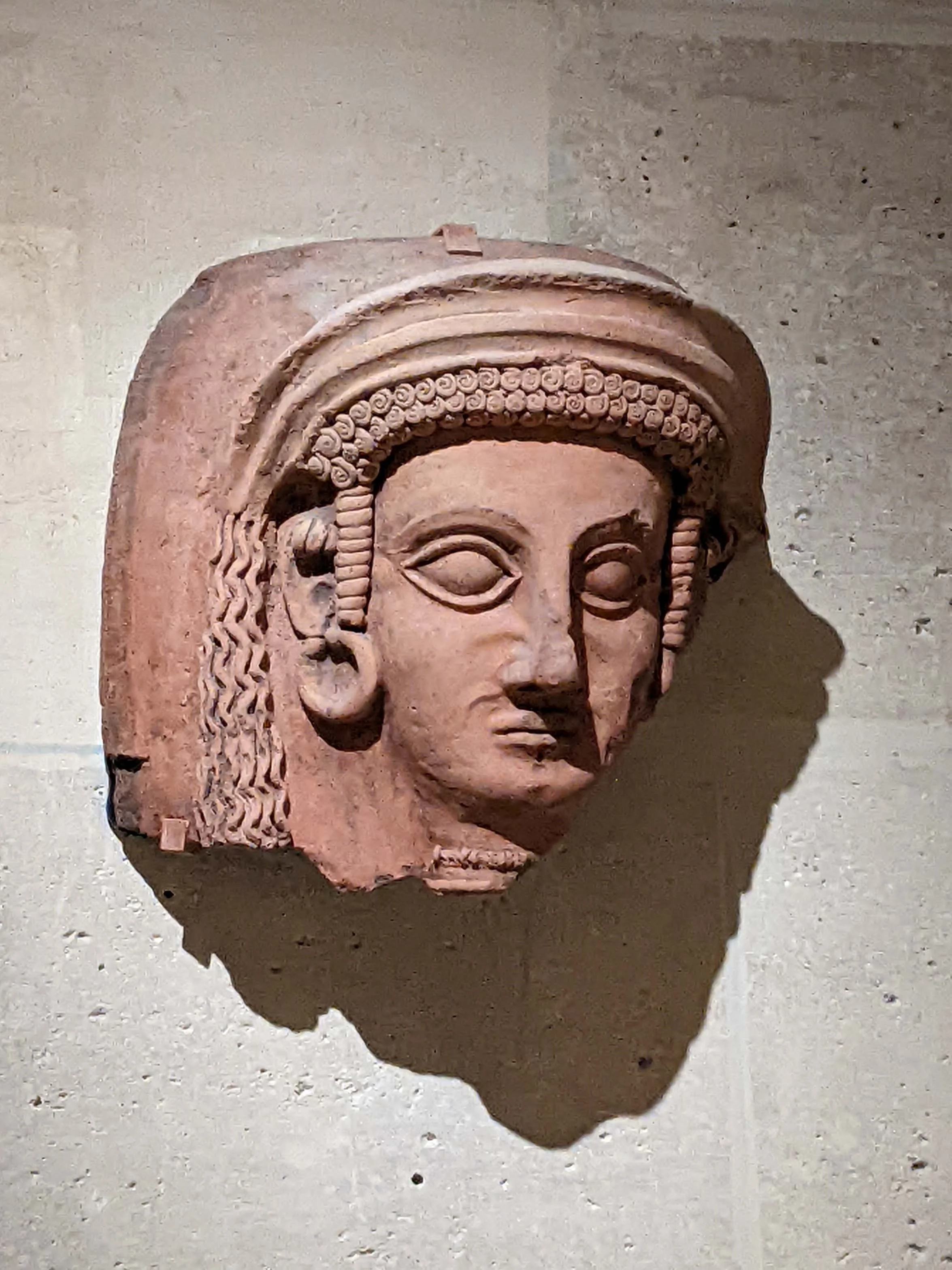
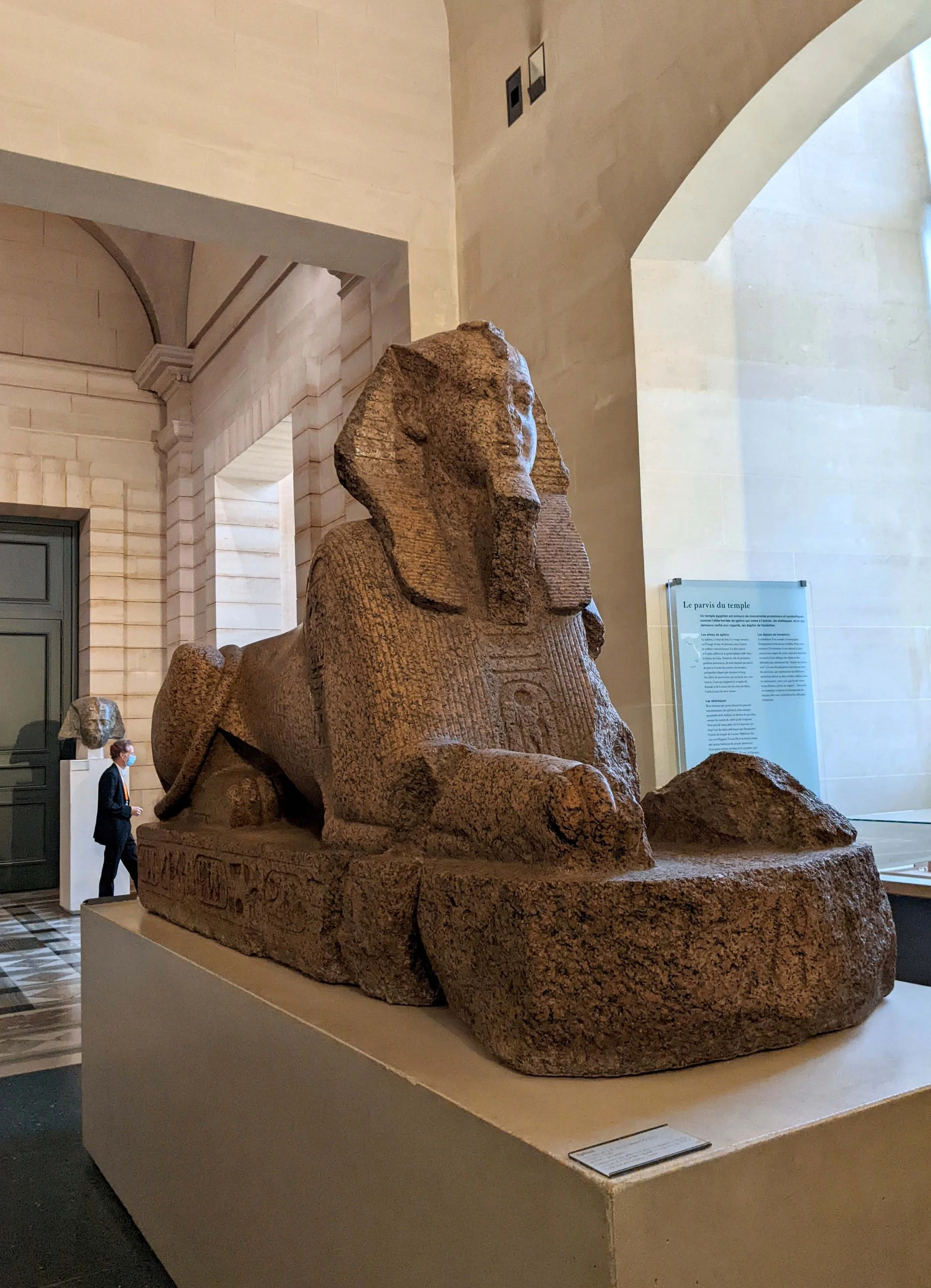
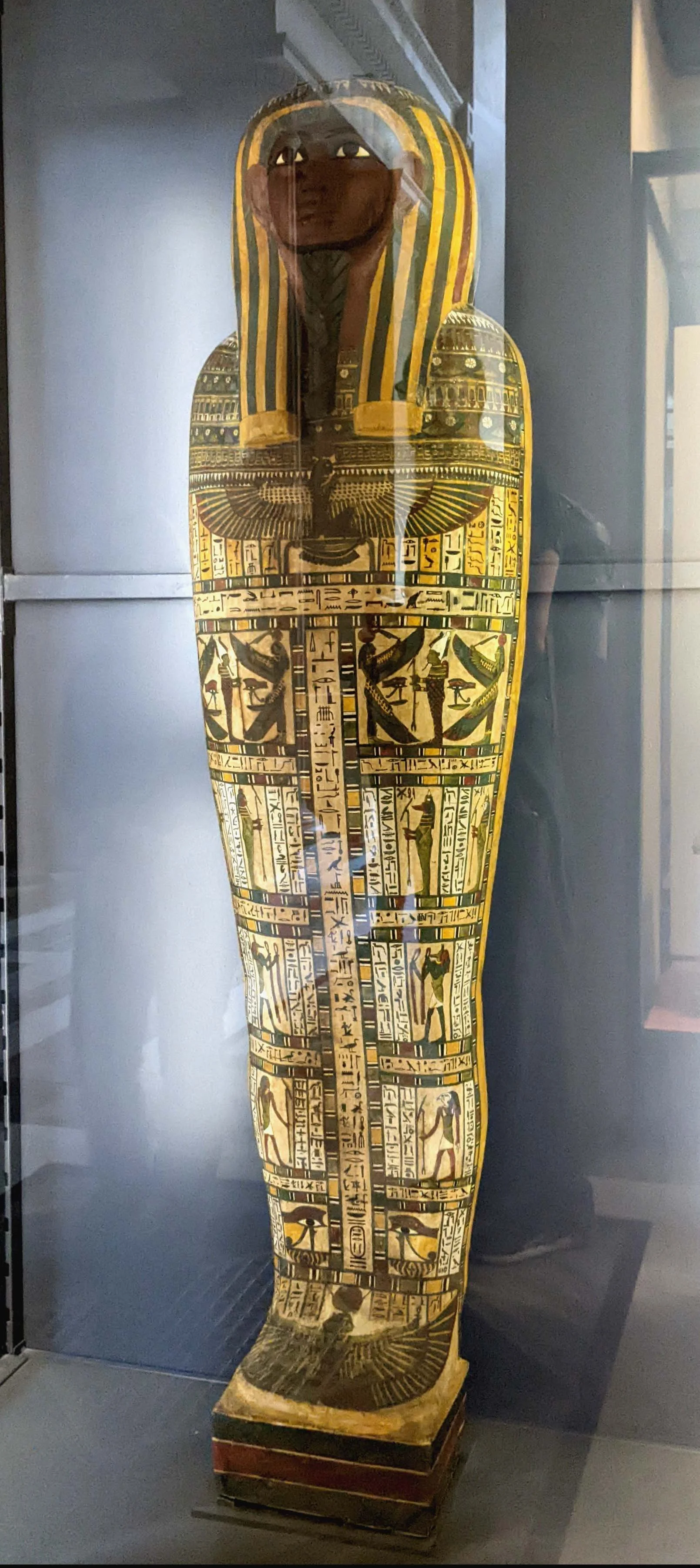
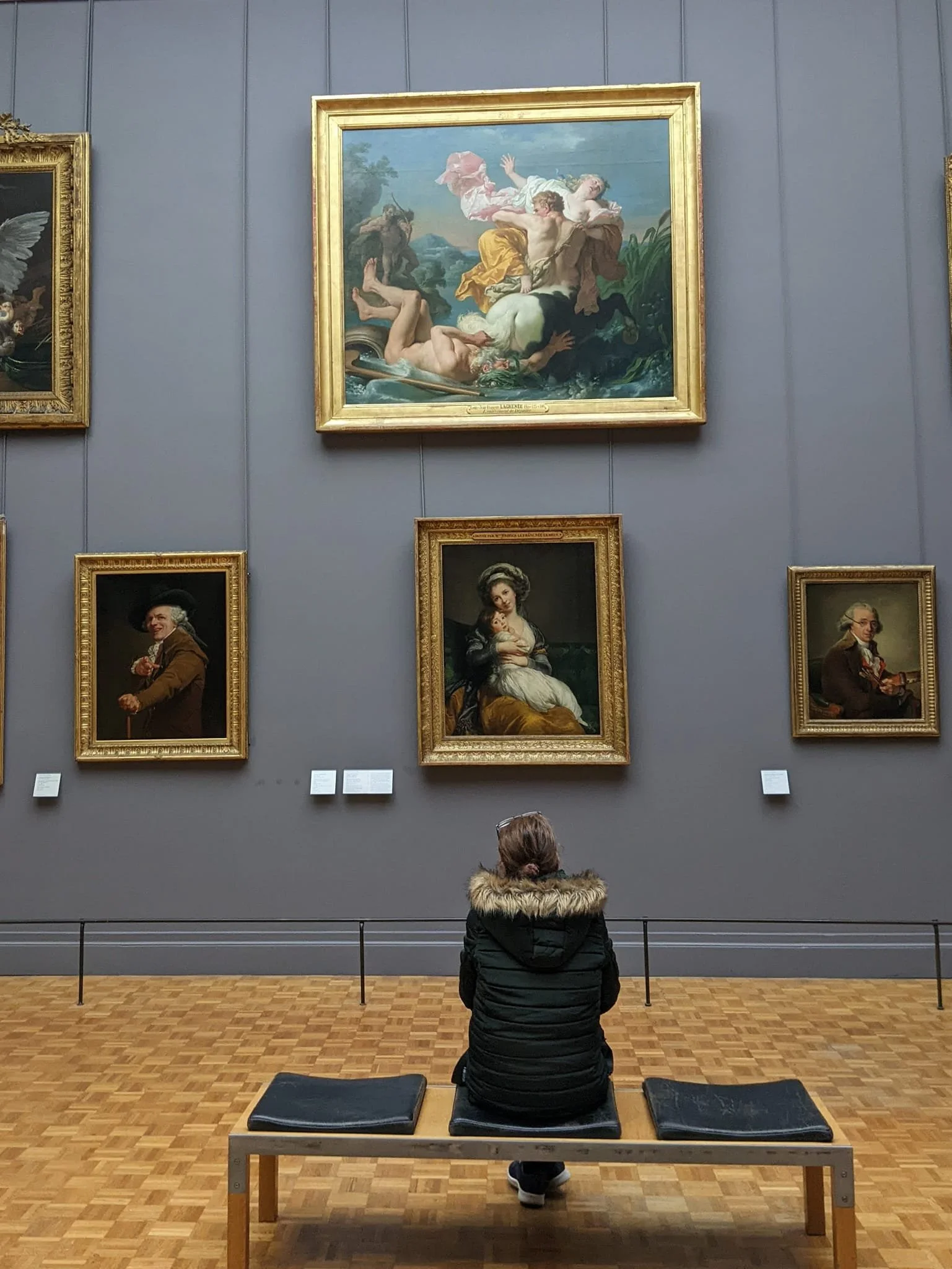
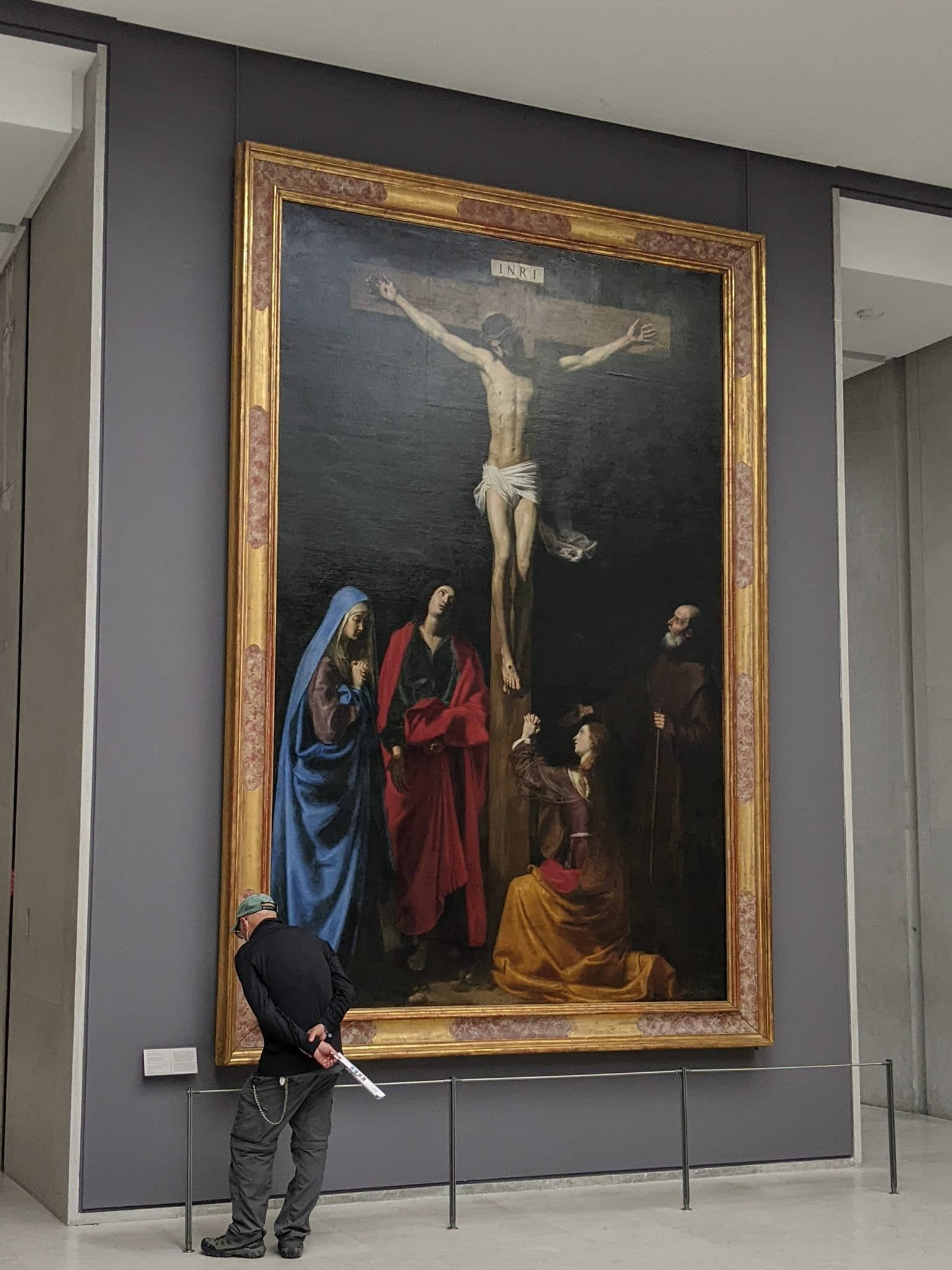
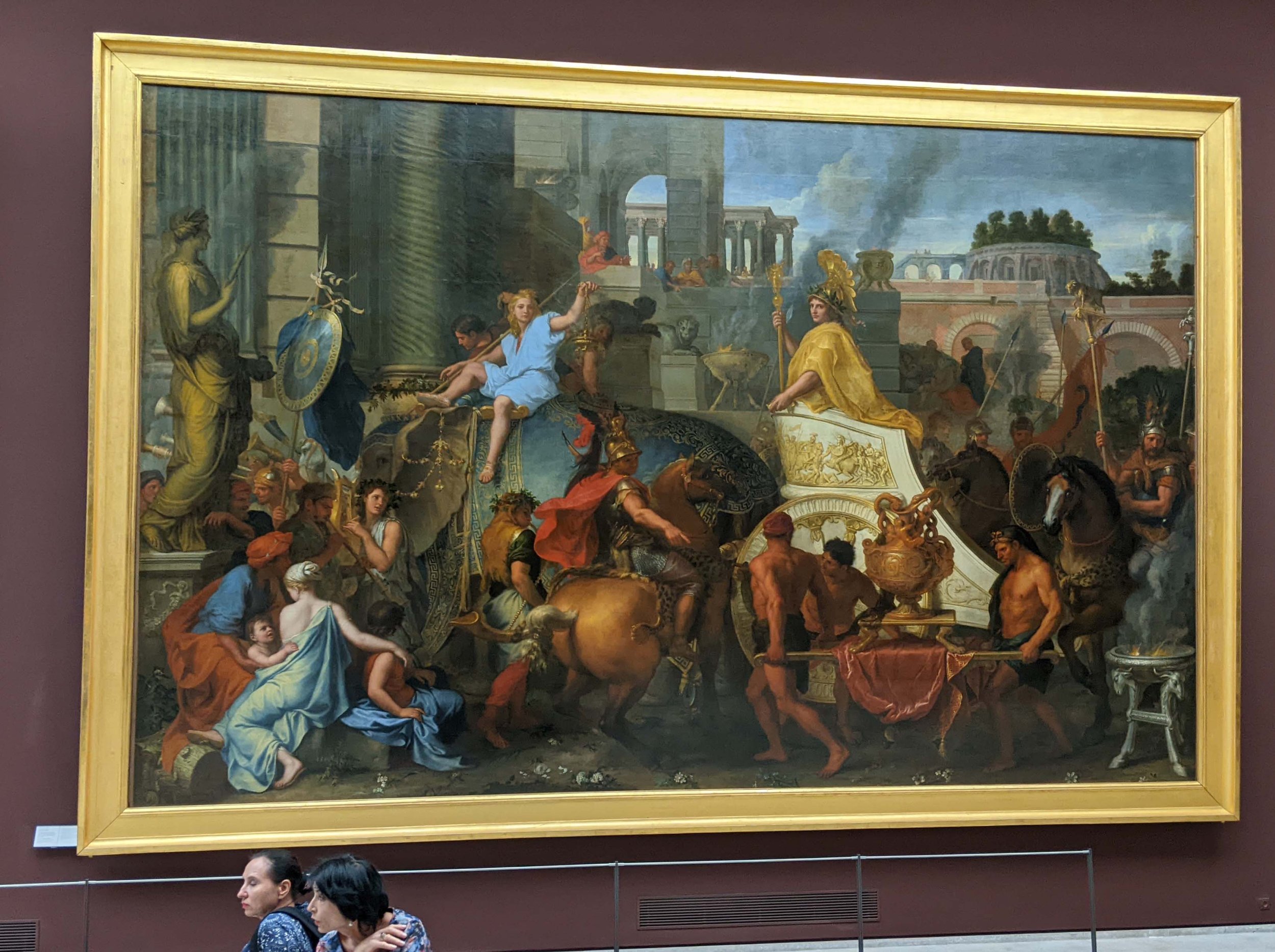
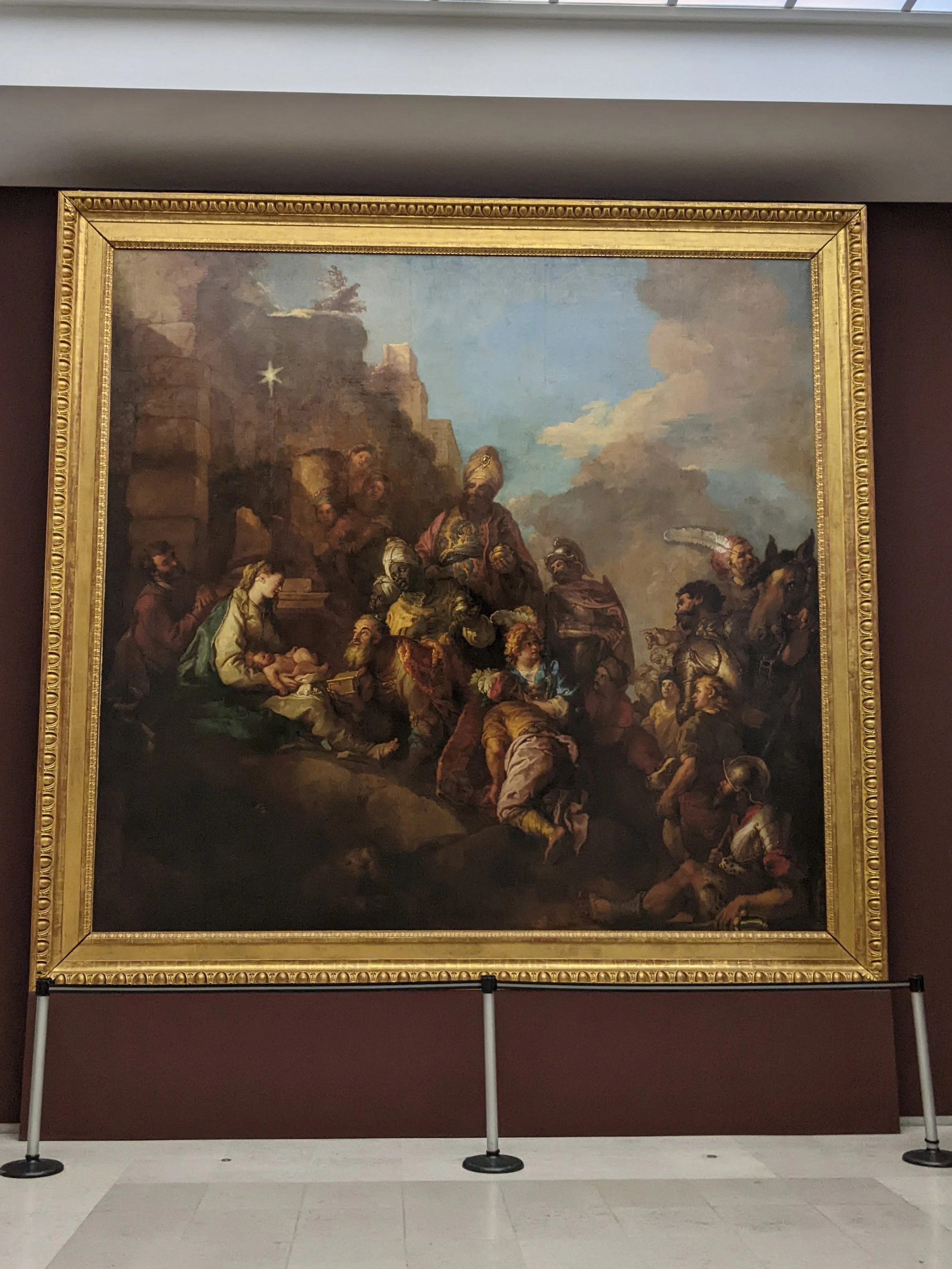
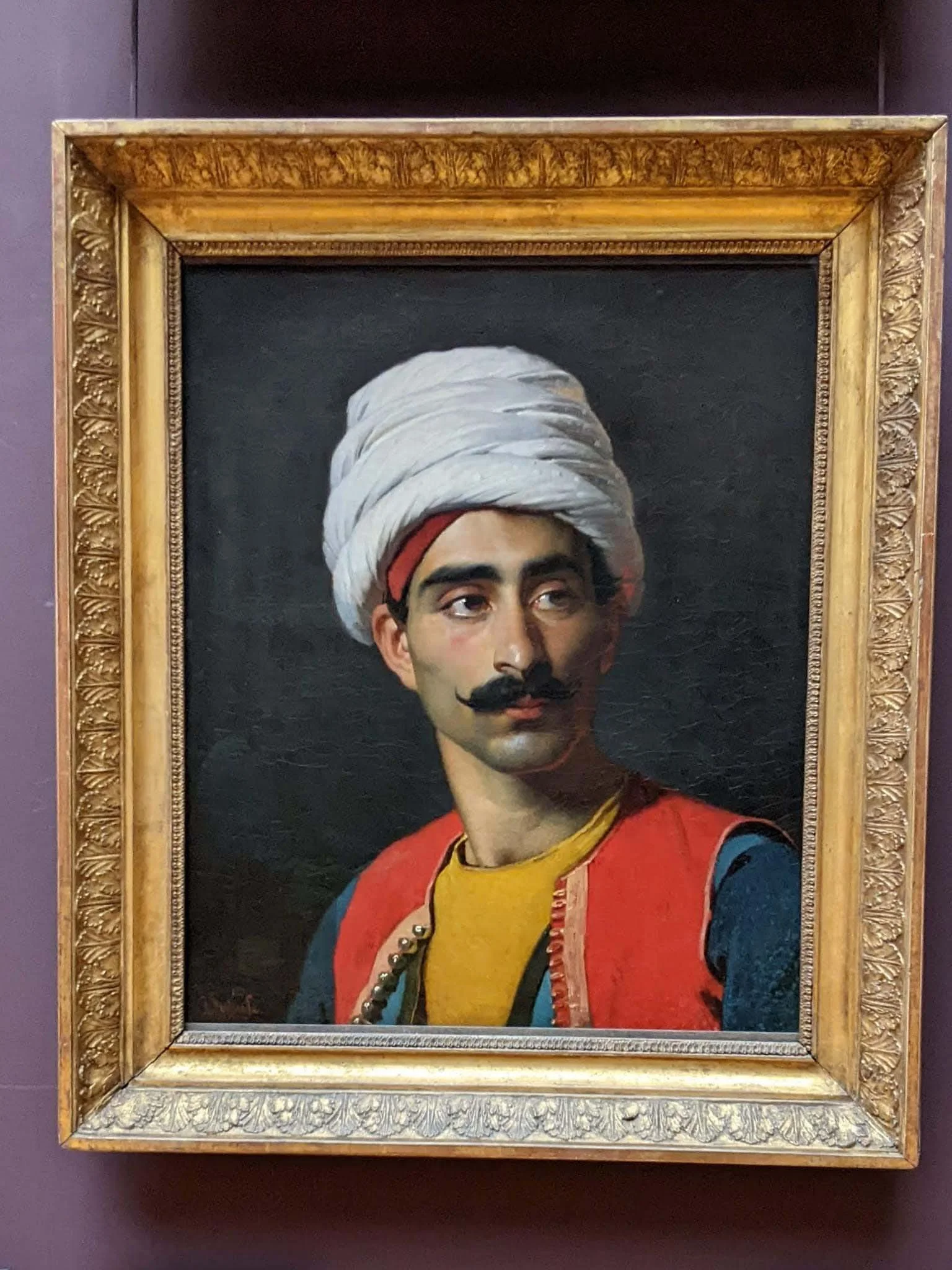
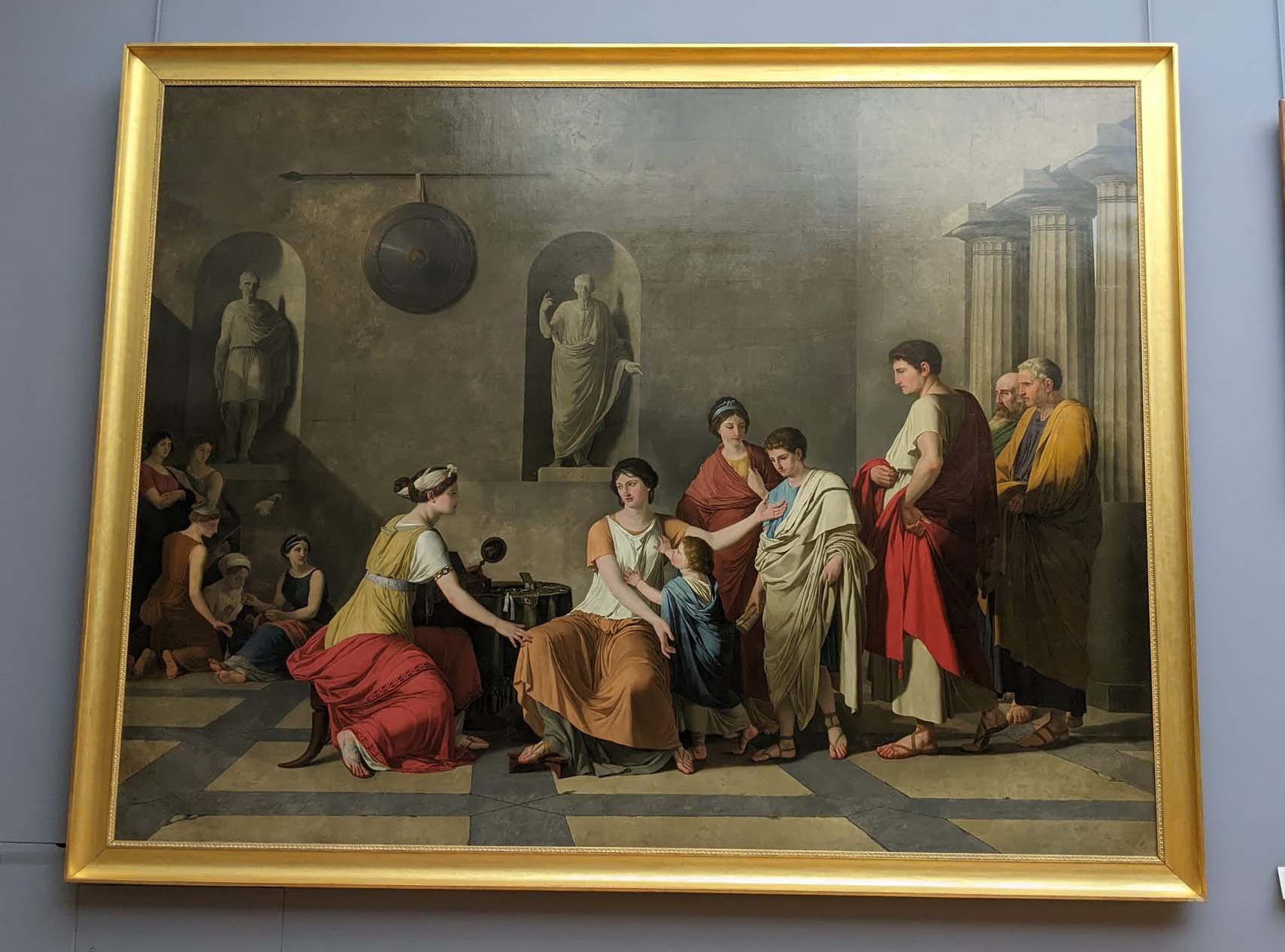
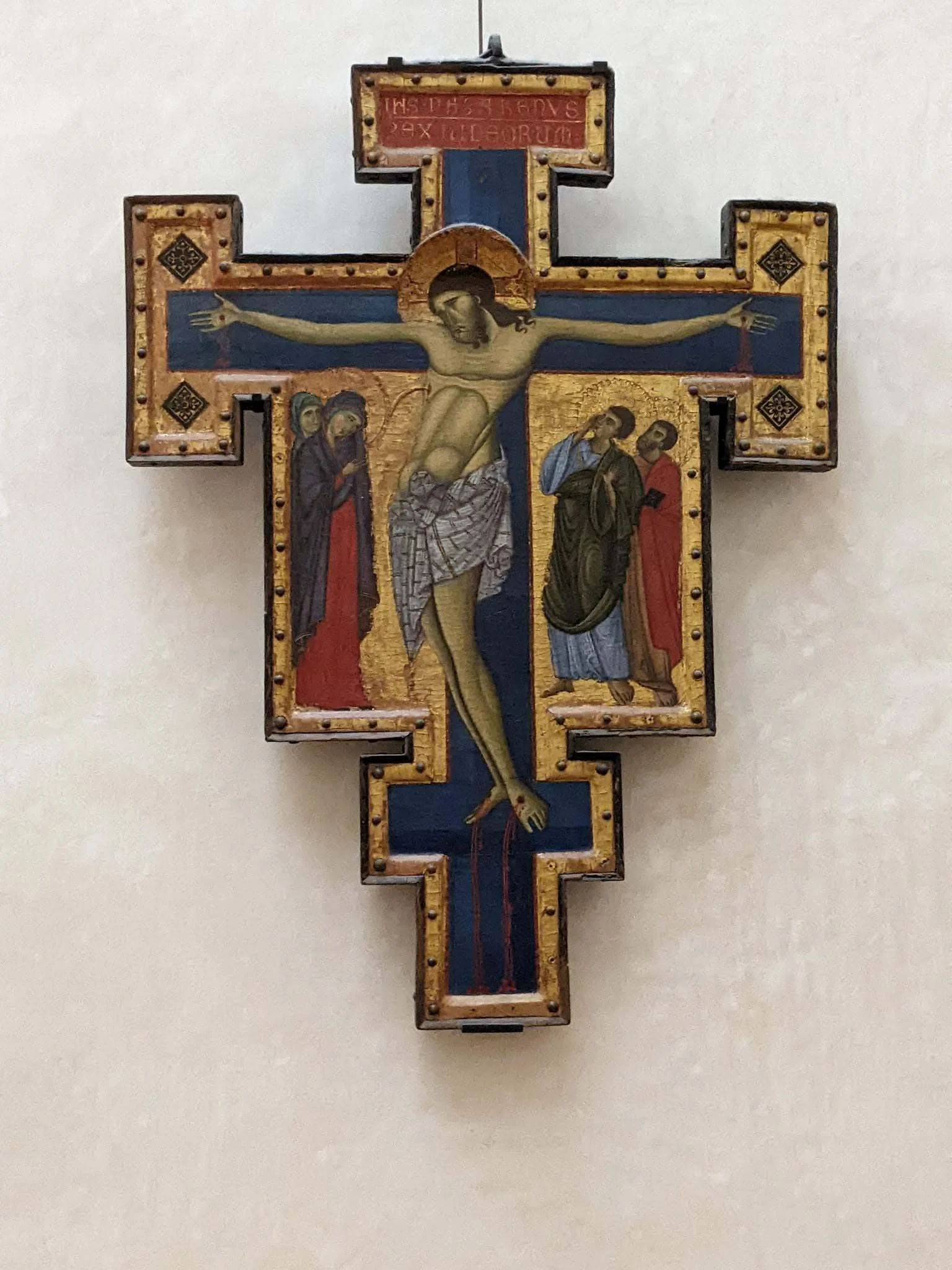
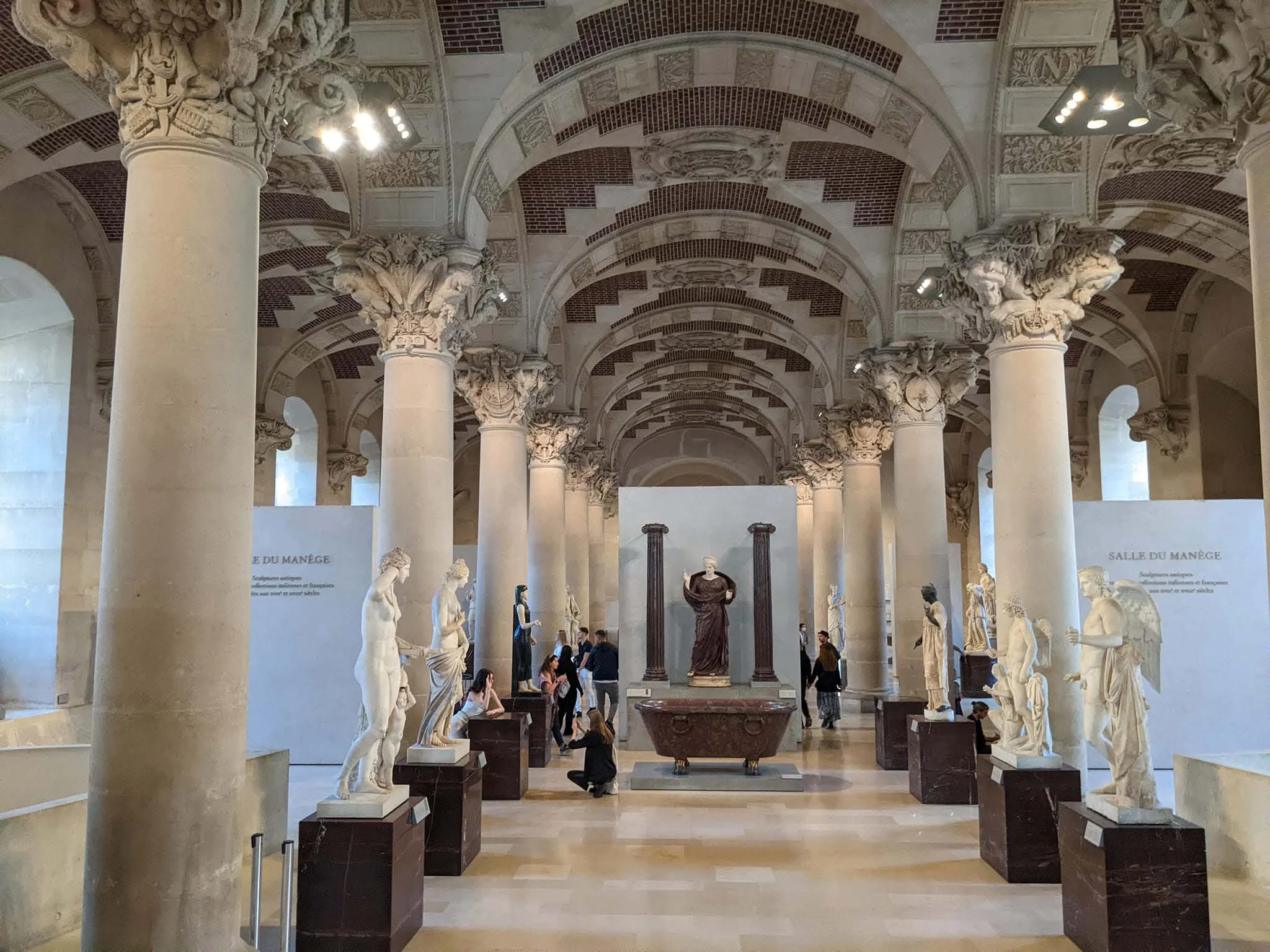
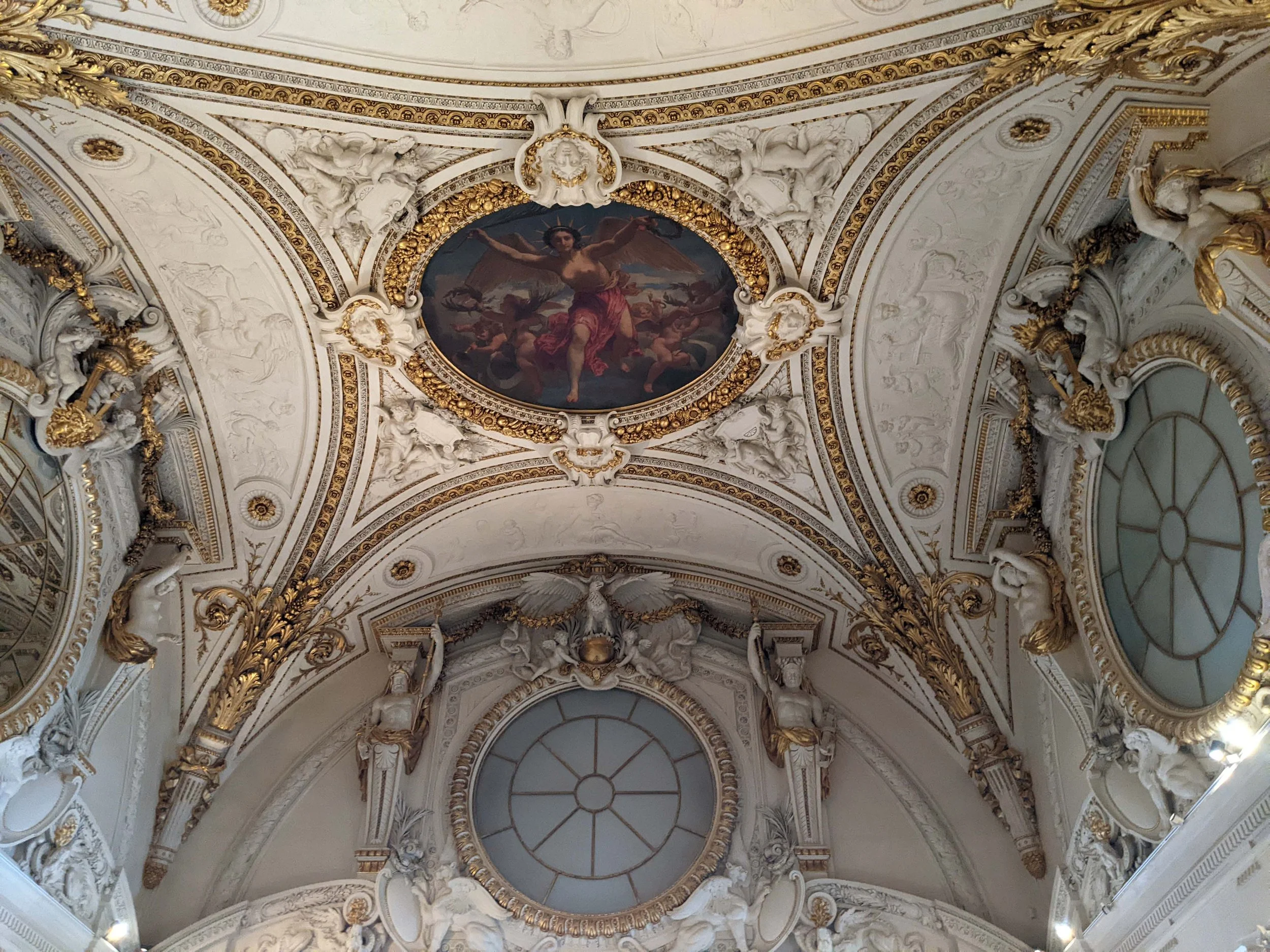
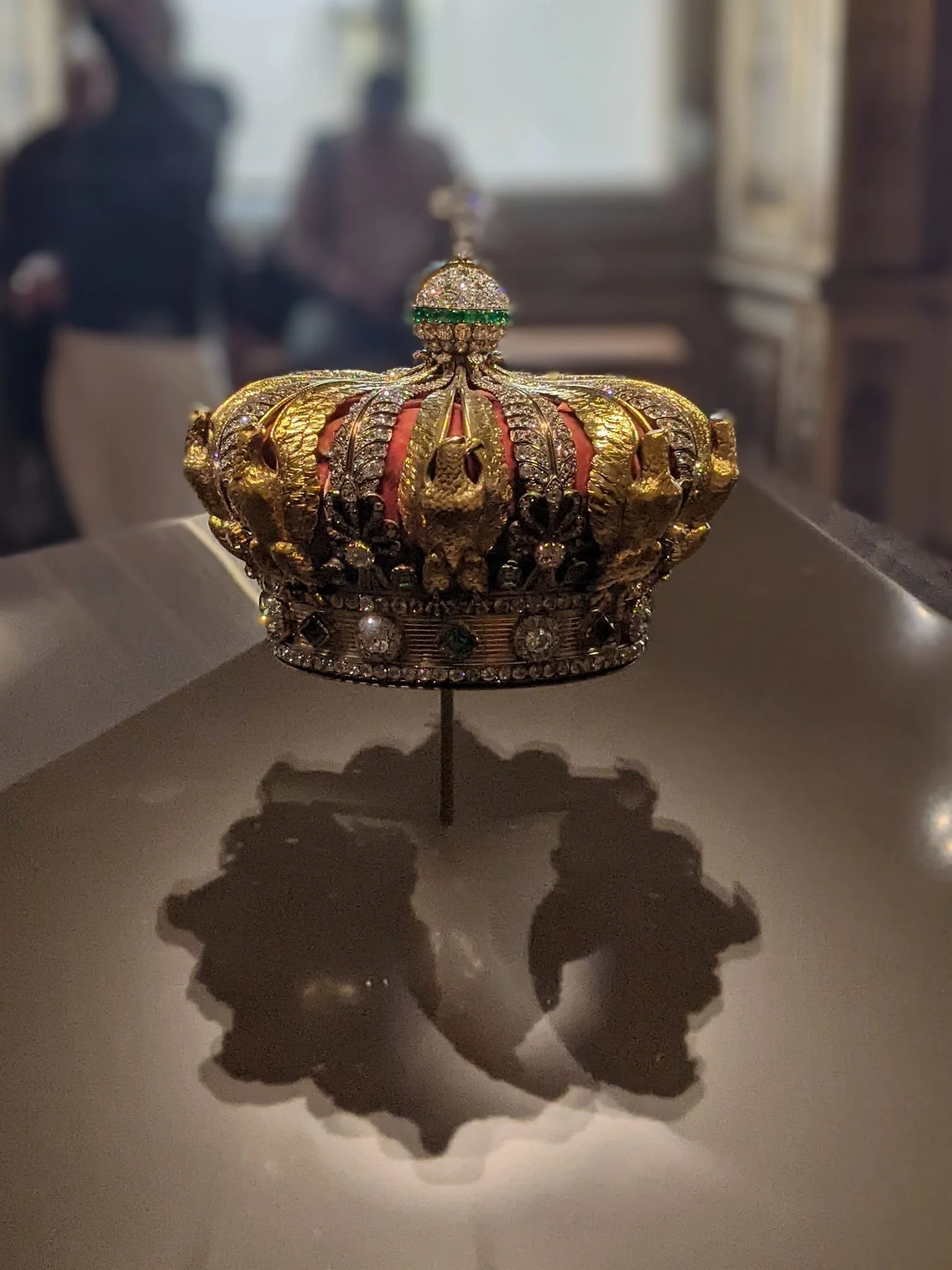
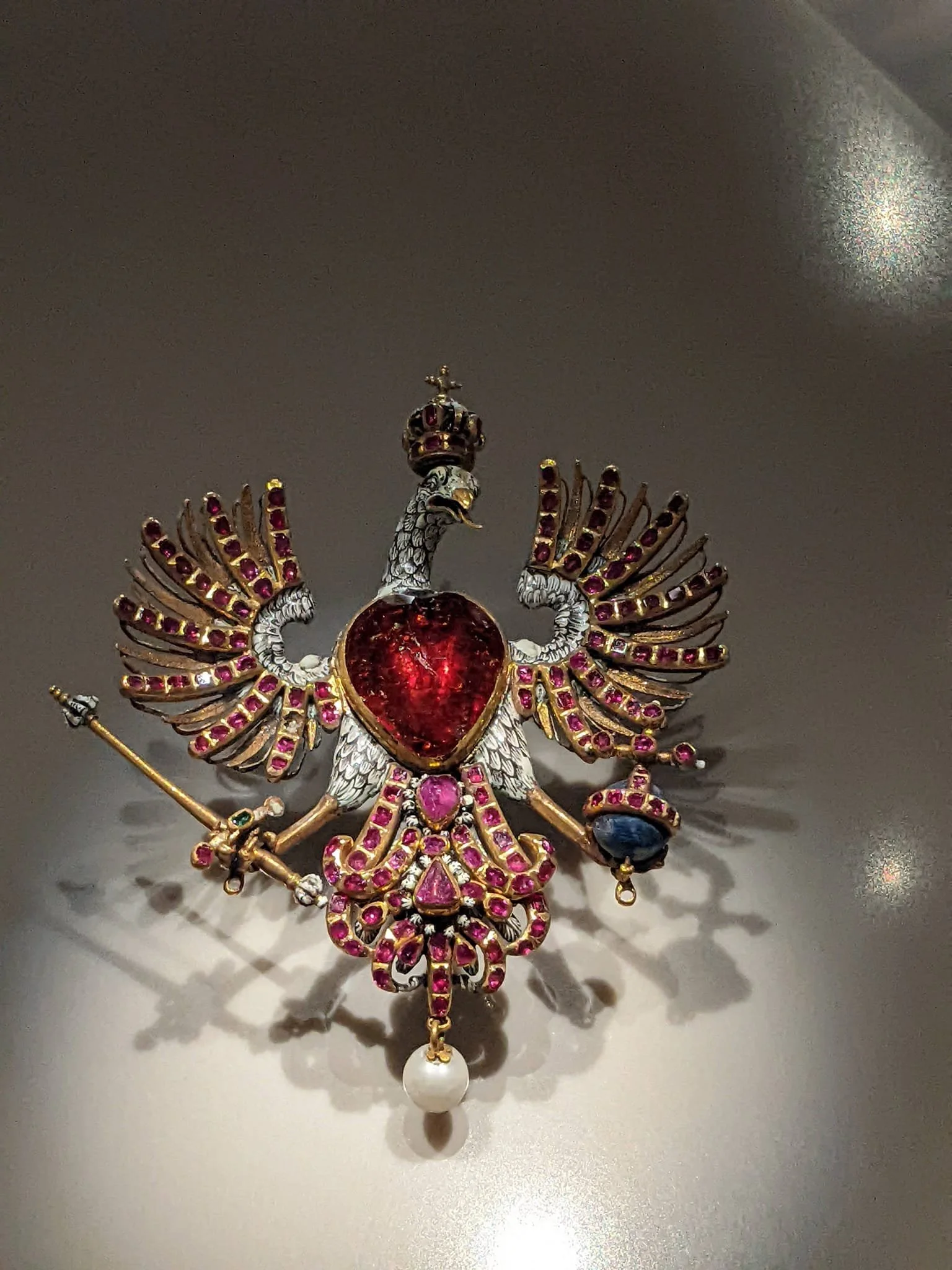
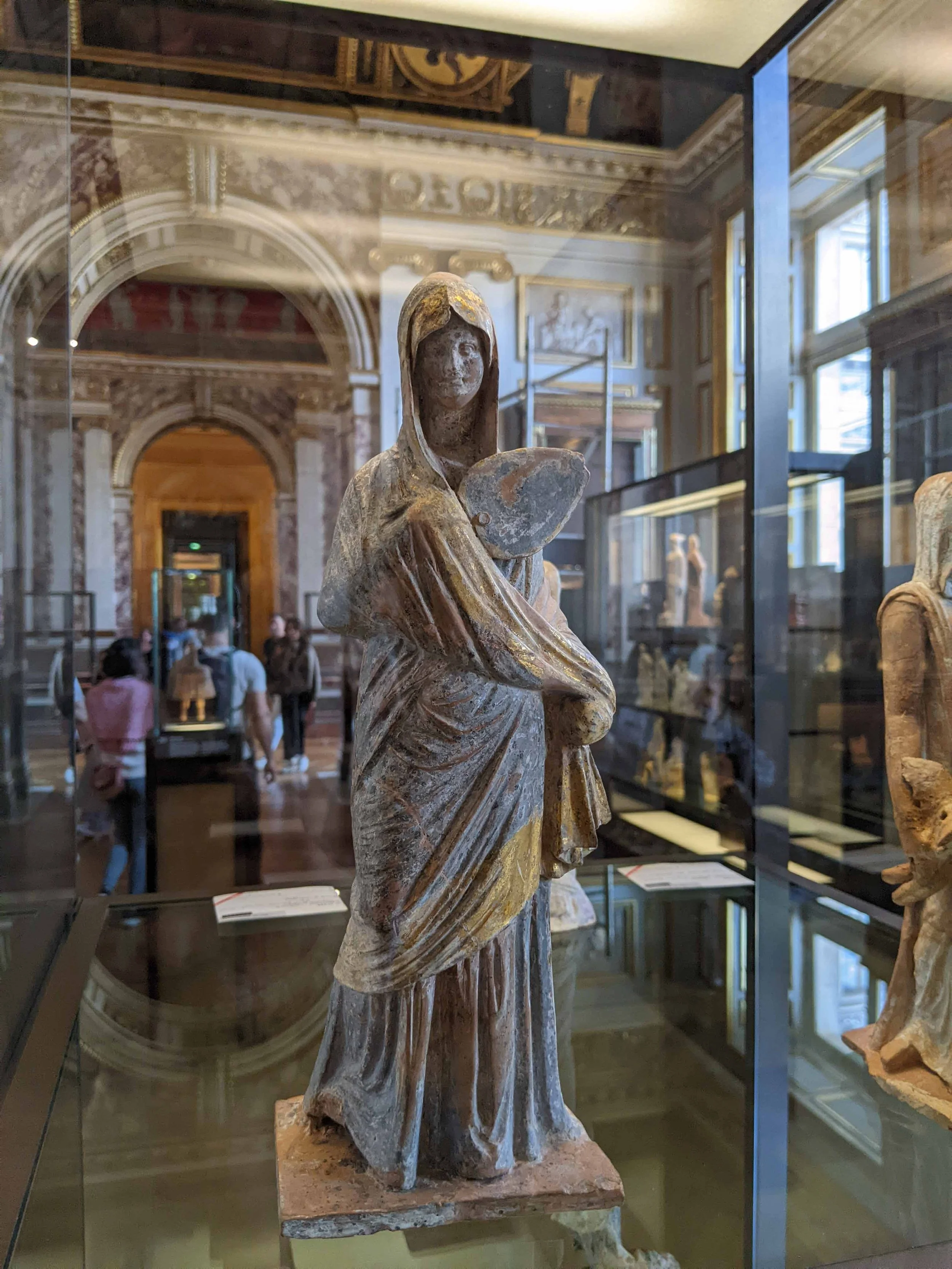
The current Louvre collection includes Egyptian antiques, ancient Greek and Roman sculptures, paintings by the Old Masters, crown jewels and other artefacts from French nobles. The works cover the period from the sixth century B.C. to the 19th century A.D.
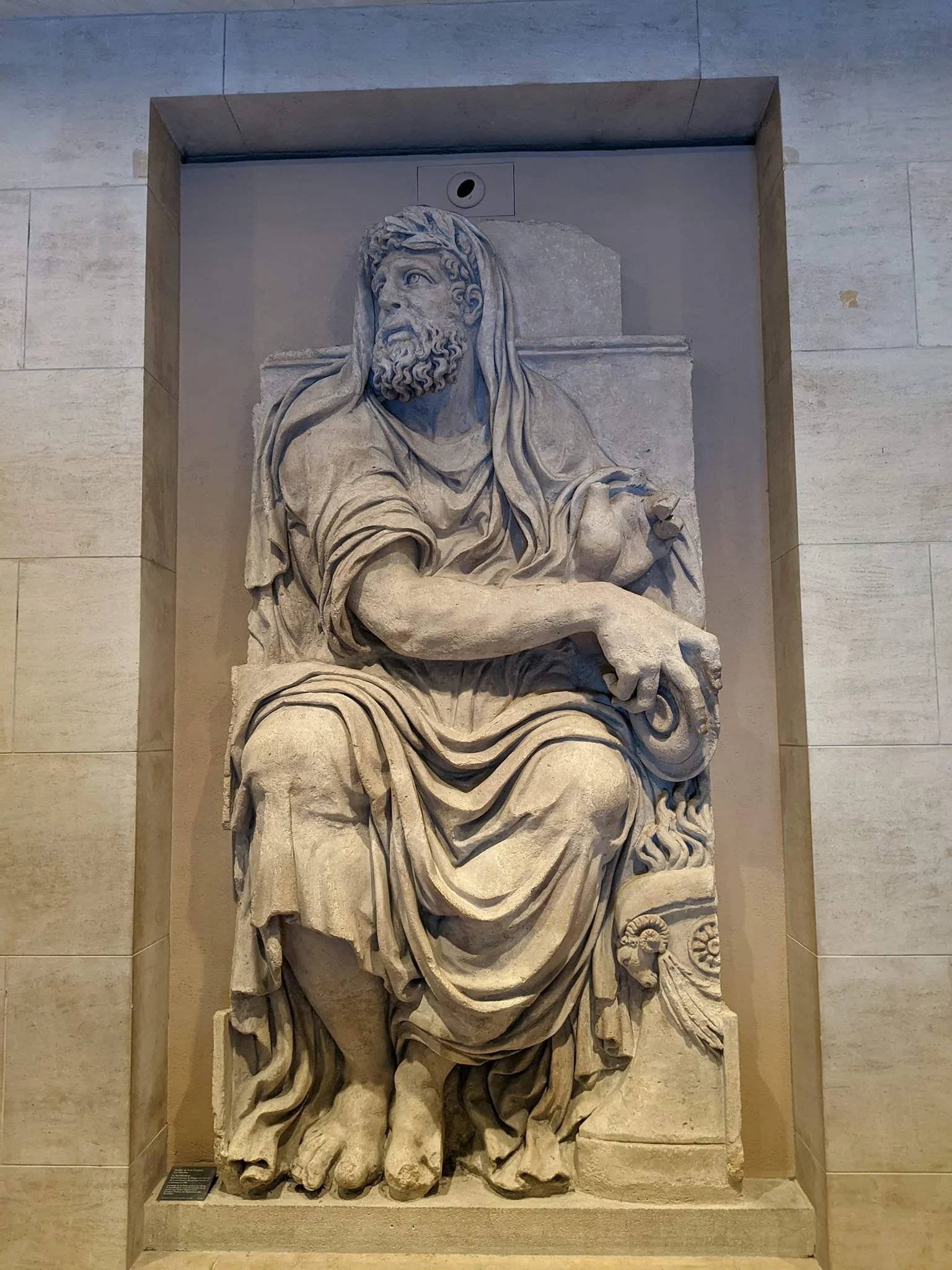
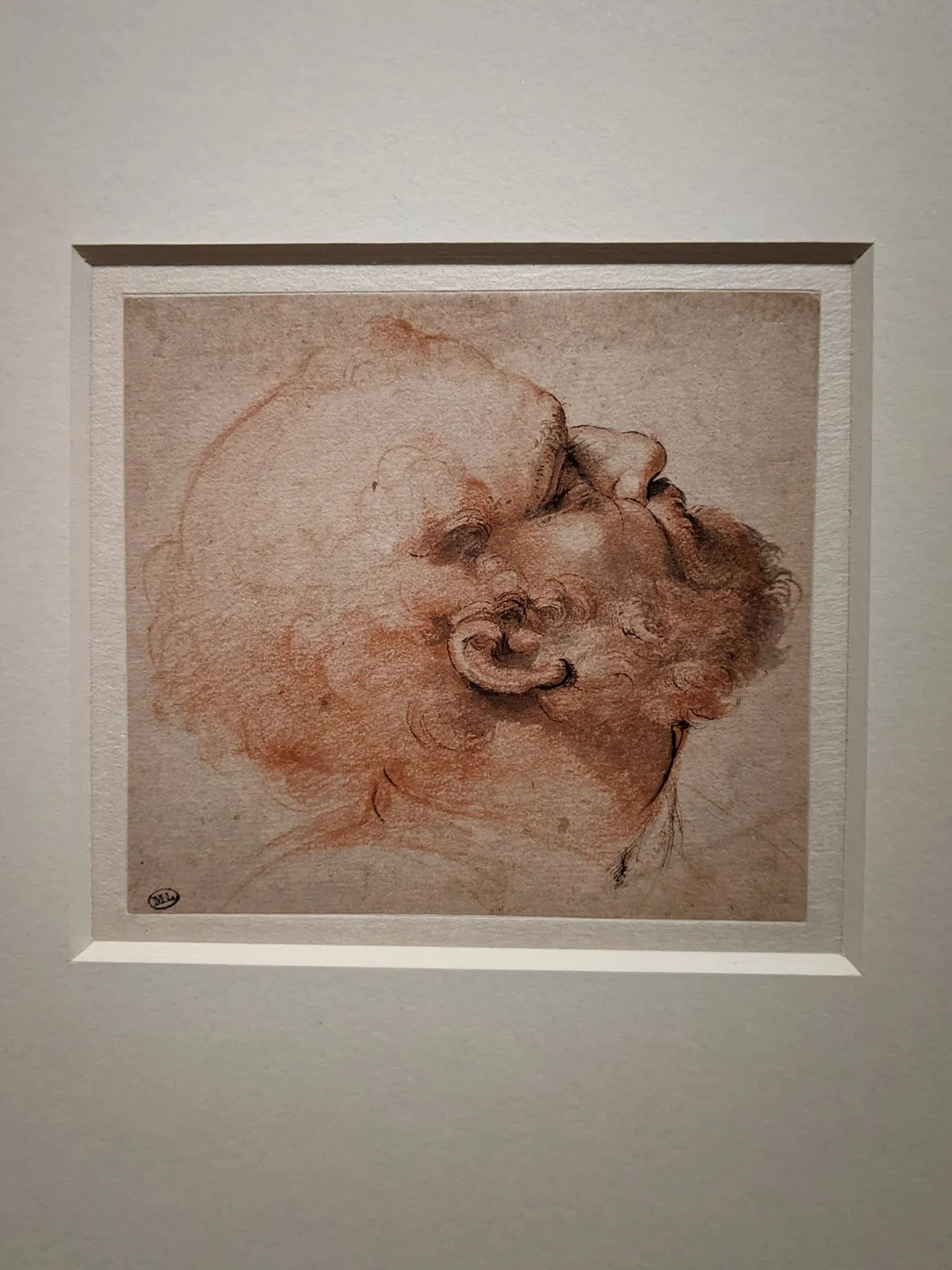
View fullsize 1.jpg
View fullsize 2.jpg
View fullsize 5.jpg
View fullsize 7.jpg
View fullsize 13.jpg
View fullsize 25.jpg
View fullsize 30.jpg
View fullsize 23.jpg
View fullsize 24.jpg
View fullsize 8.jpg
View fullsize 9.jpg
View fullsize 10.jpg
View fullsize 17.jpg
View fullsize 15.jpg
View fullsize 20.jpg
View fullsize 21.jpg
View fullsize 22.jpg
View fullsize 29.jpg
View fullsize 27.jpg
View fullsize 28.jpg
View fullsize 32.jpg
View fullsize 37.jpg
View fullsize 34.jpg
View fullsize 38.jpg
View fullsize 36.jpg
View fullsize 39.jpg
View fullsize 42.jpg
View fullsize 35.jpg

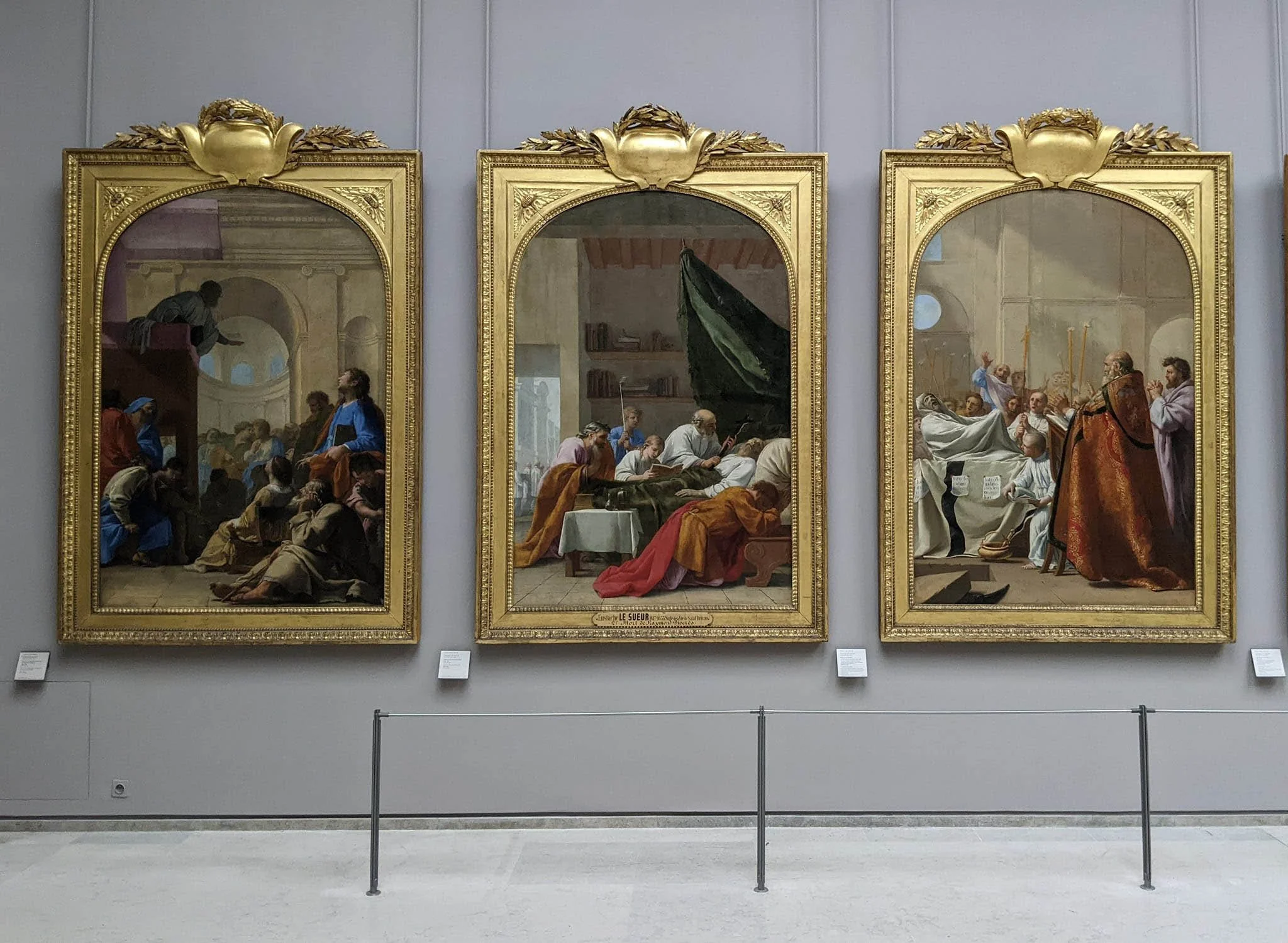
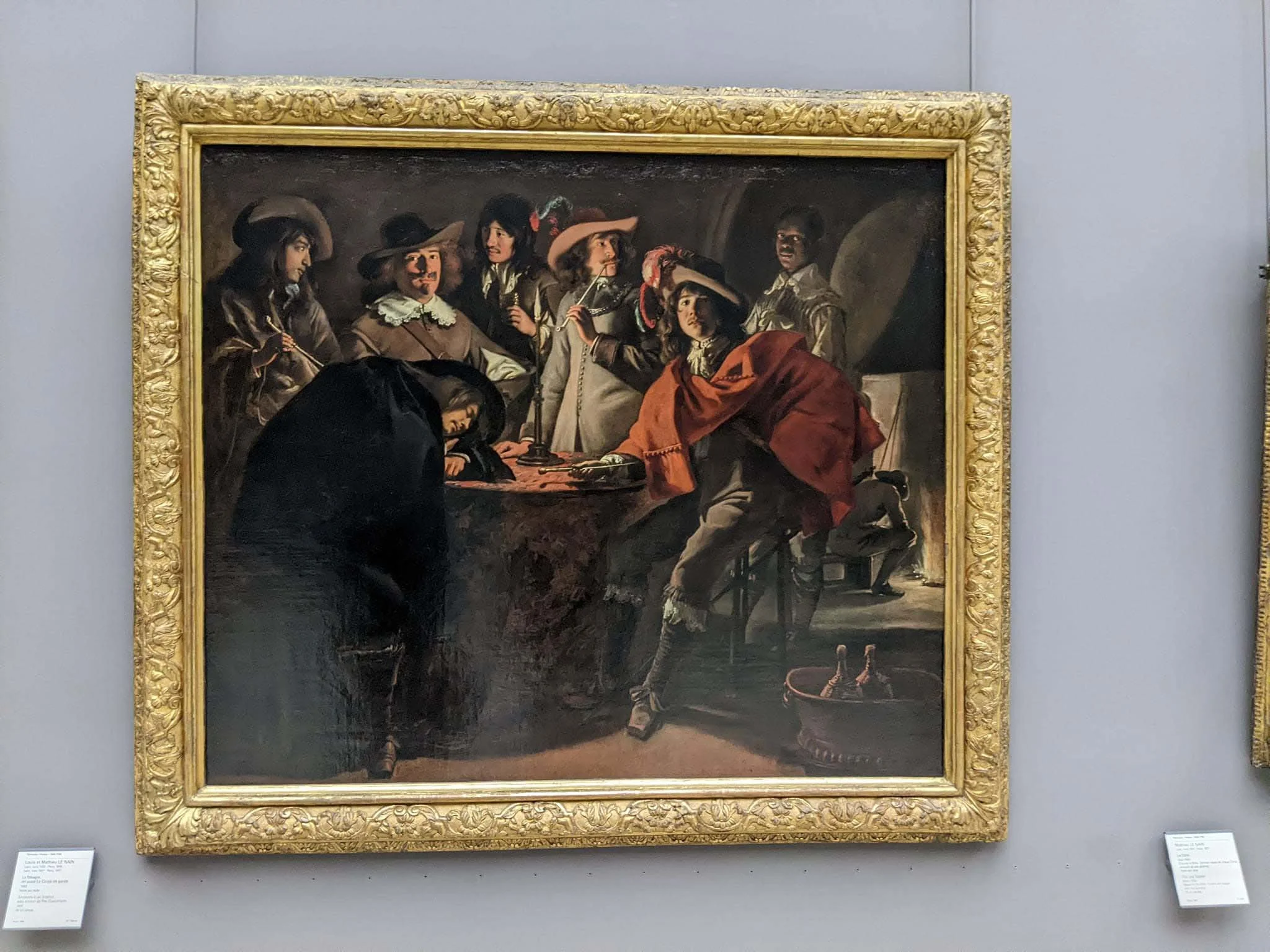
While about 35,000 artworks are on display at any given time, most of its half-a-million-plus collection is locked up in storage. If one was to spend an average of 30 seconds to see each piece, one would need 291 hours to have a glimpse of it all! Maybe that’s the reason most of the nameplates are in French only; instead of being dual language (…museum authorities, take note this is a complaint, not a compliment!).

Covering an area of 66,600 square meters, 4 main levels and more than 400 rooms, the Louvre is staffed by more than 2000 employees. In addition to the main exhibition in Paris, the museum also collaborates with other overseas art galleries and some of its treasures travel around the world to such varied destinations as Fine Arts Museums of San Francisco, Iran’s National Museum, and the Louvre Abu Dhabi.

Searching for Mona Lisa

We had been in the museum for nearly 4 hours, and we were getting tired, as we started to ‘glide’ through the never-ending rooms. Our sore legs and back started to take over and frankly, trying to decipher the French write-ups for the painting was not helping the cause. Our focus soon reverted to finding Mona Lisa. After all, visiting Louvre and not seeing the Mona Lisa would perhaps be classed as ‘criminal negligence’ in the tourist guidebooks. 

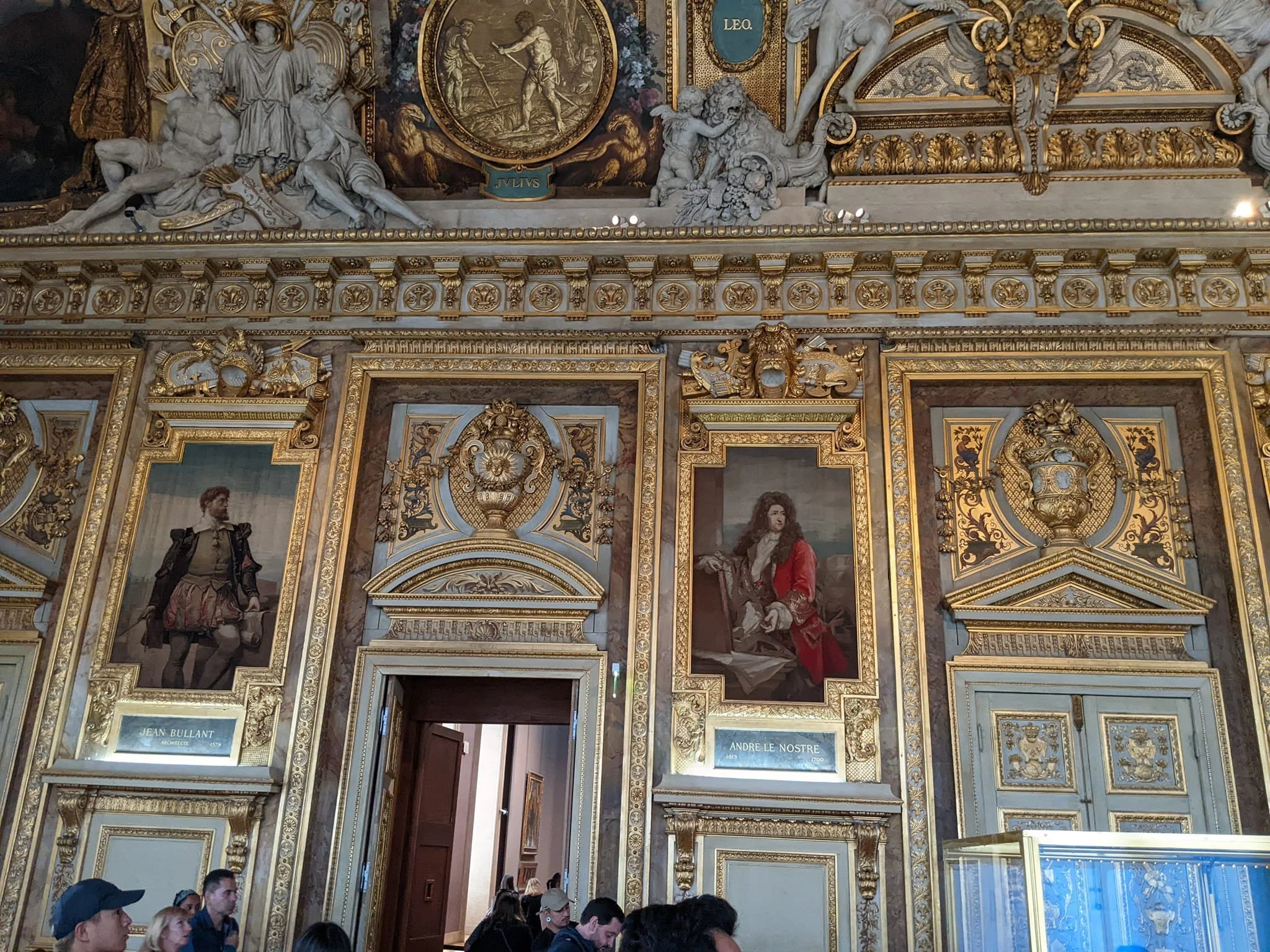
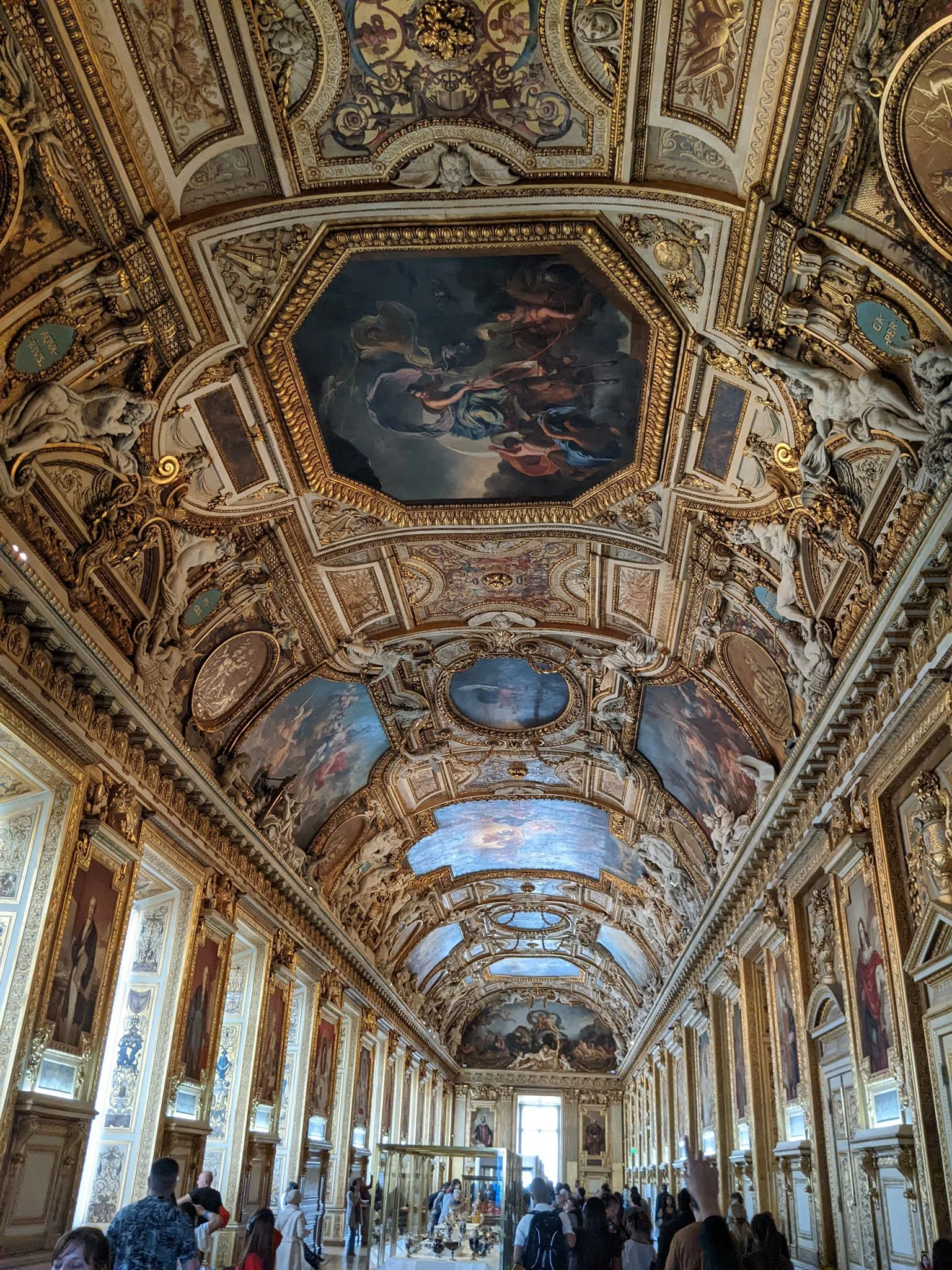
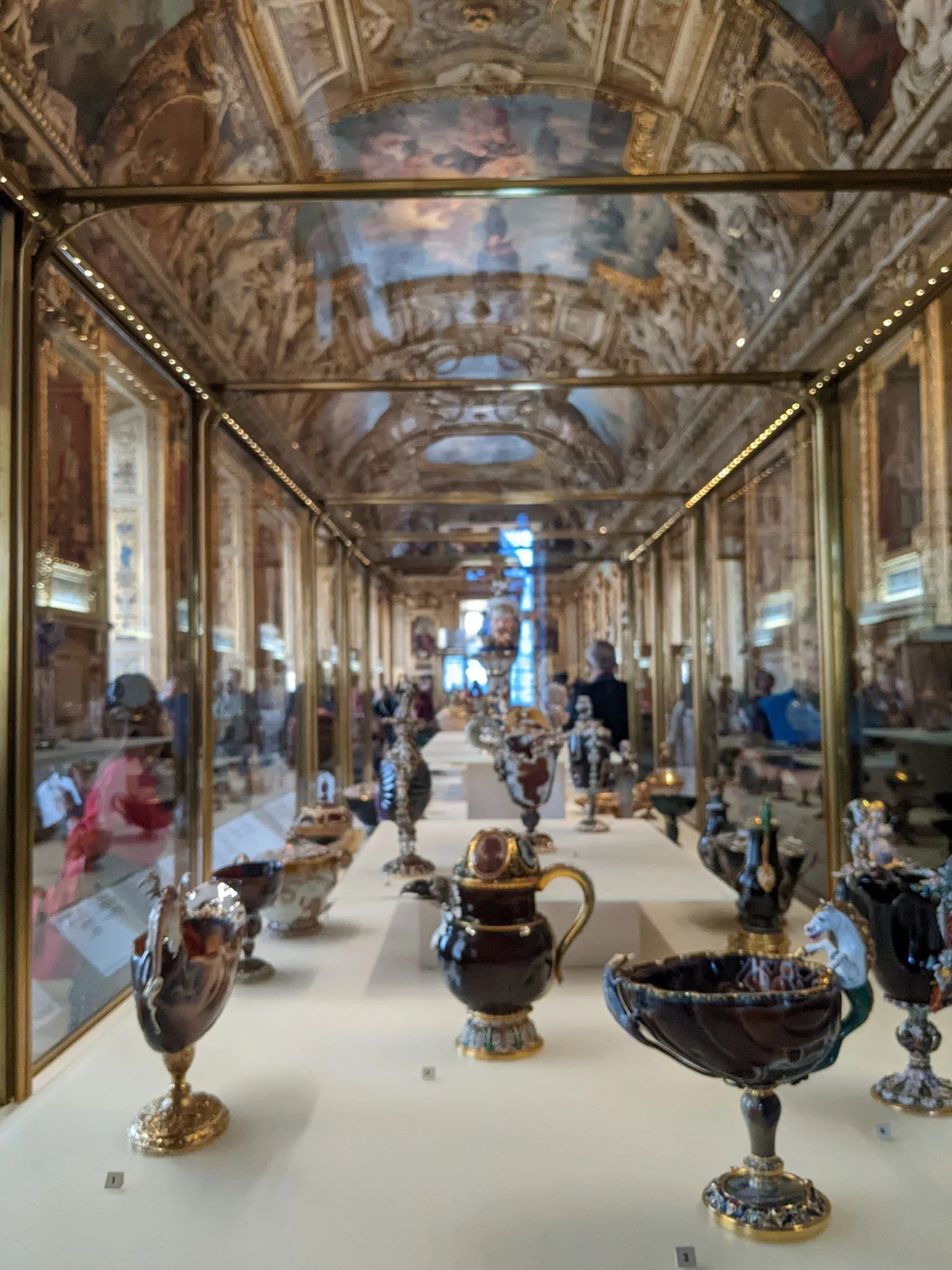
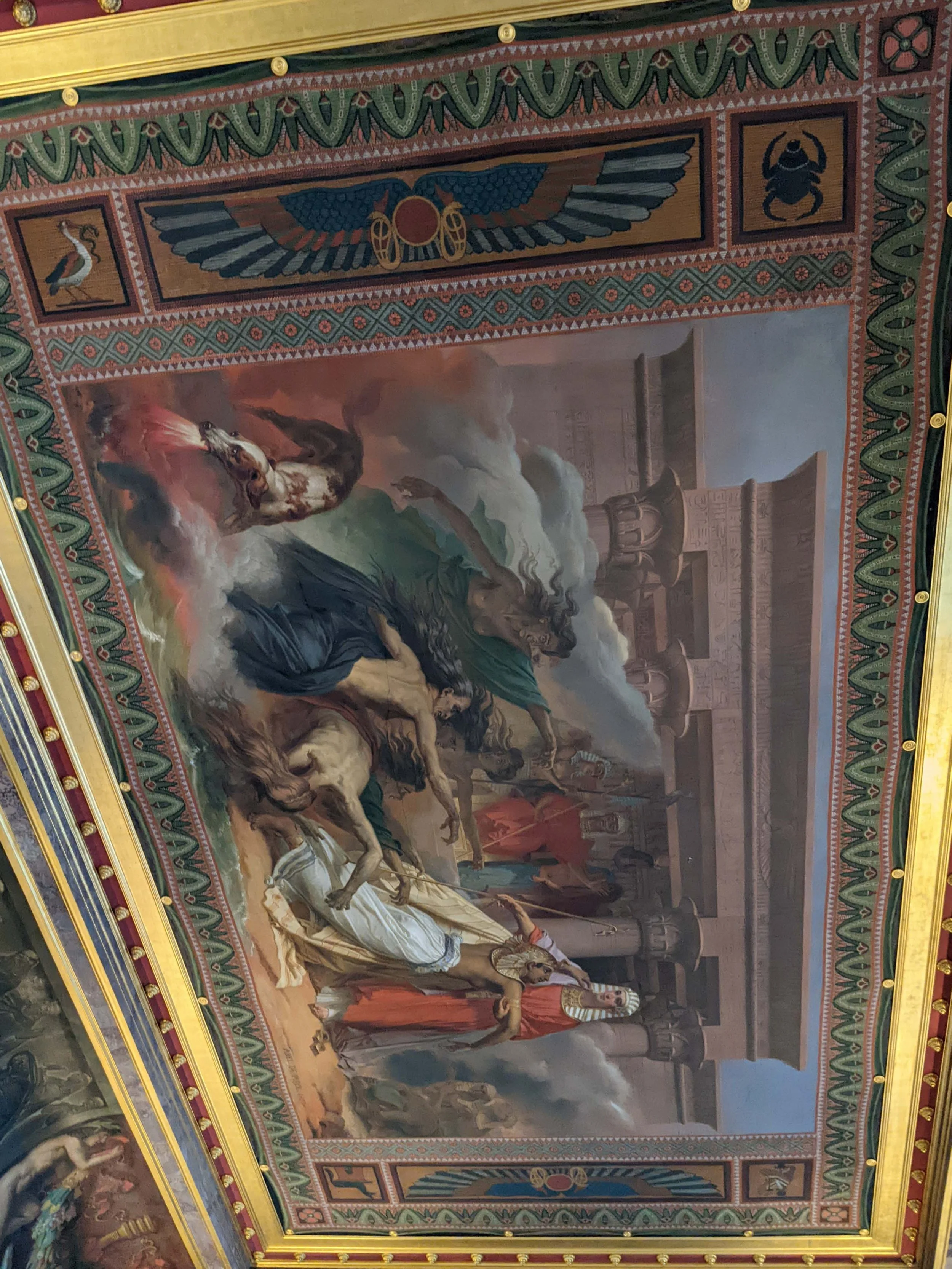
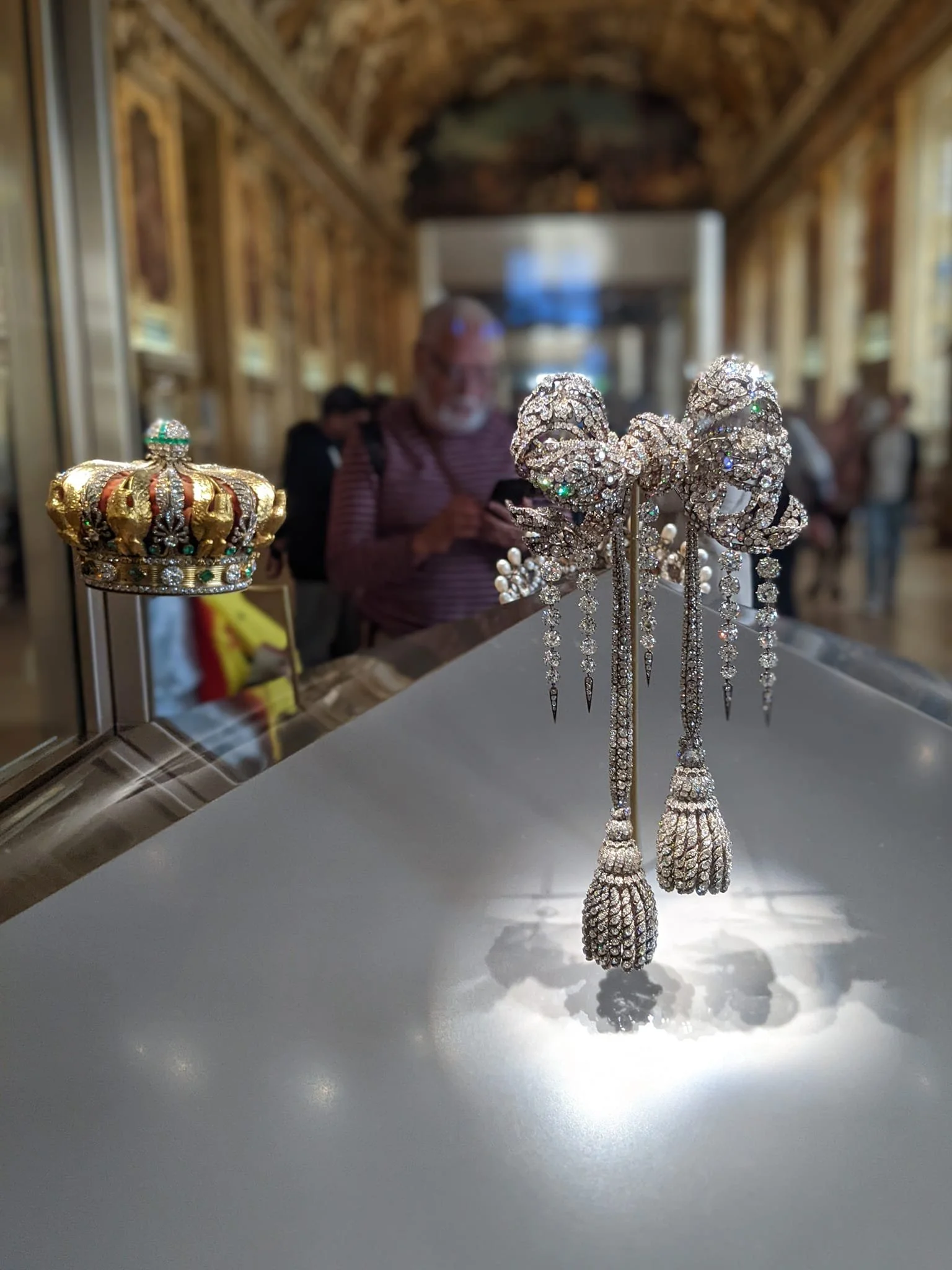
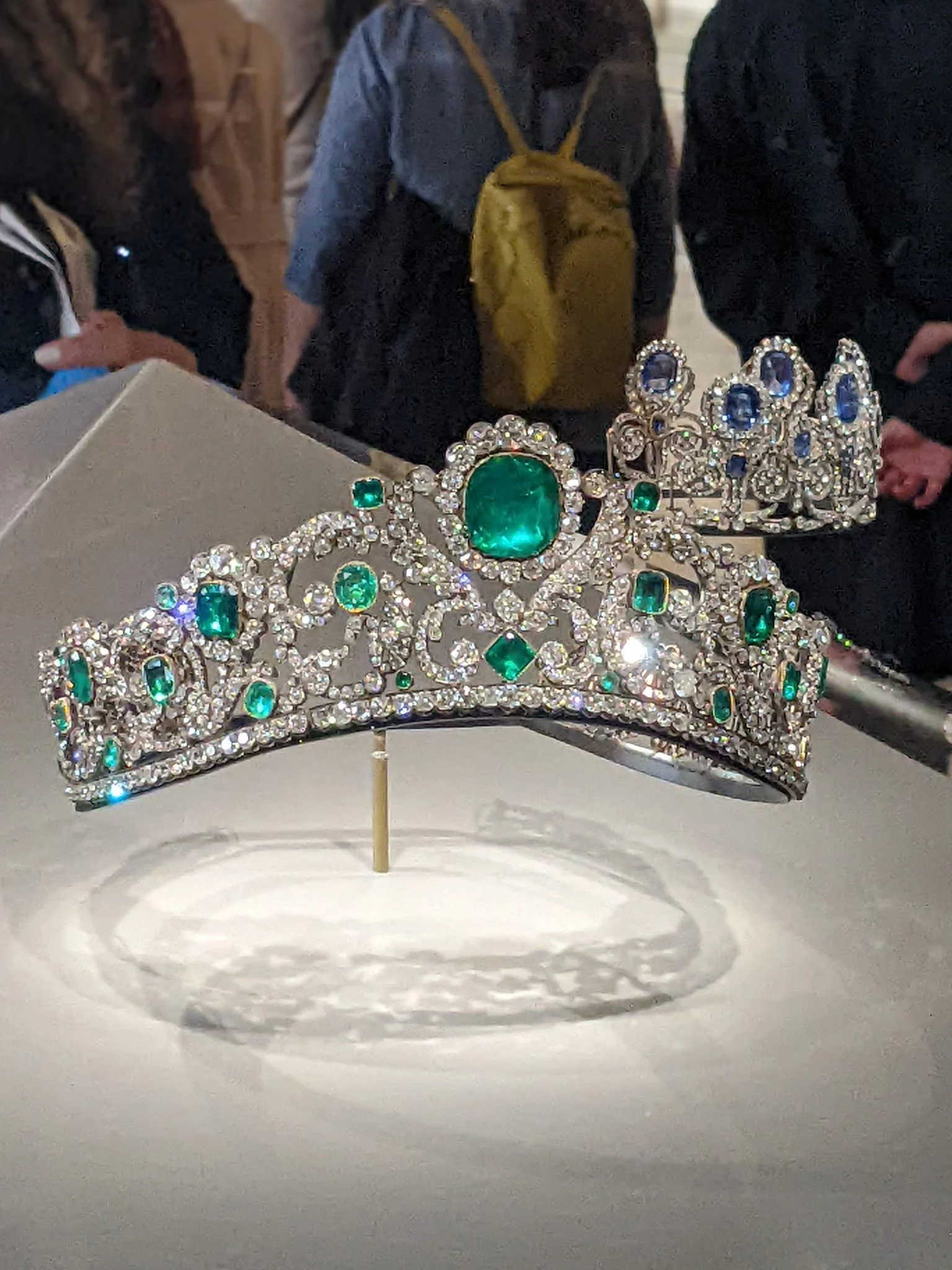
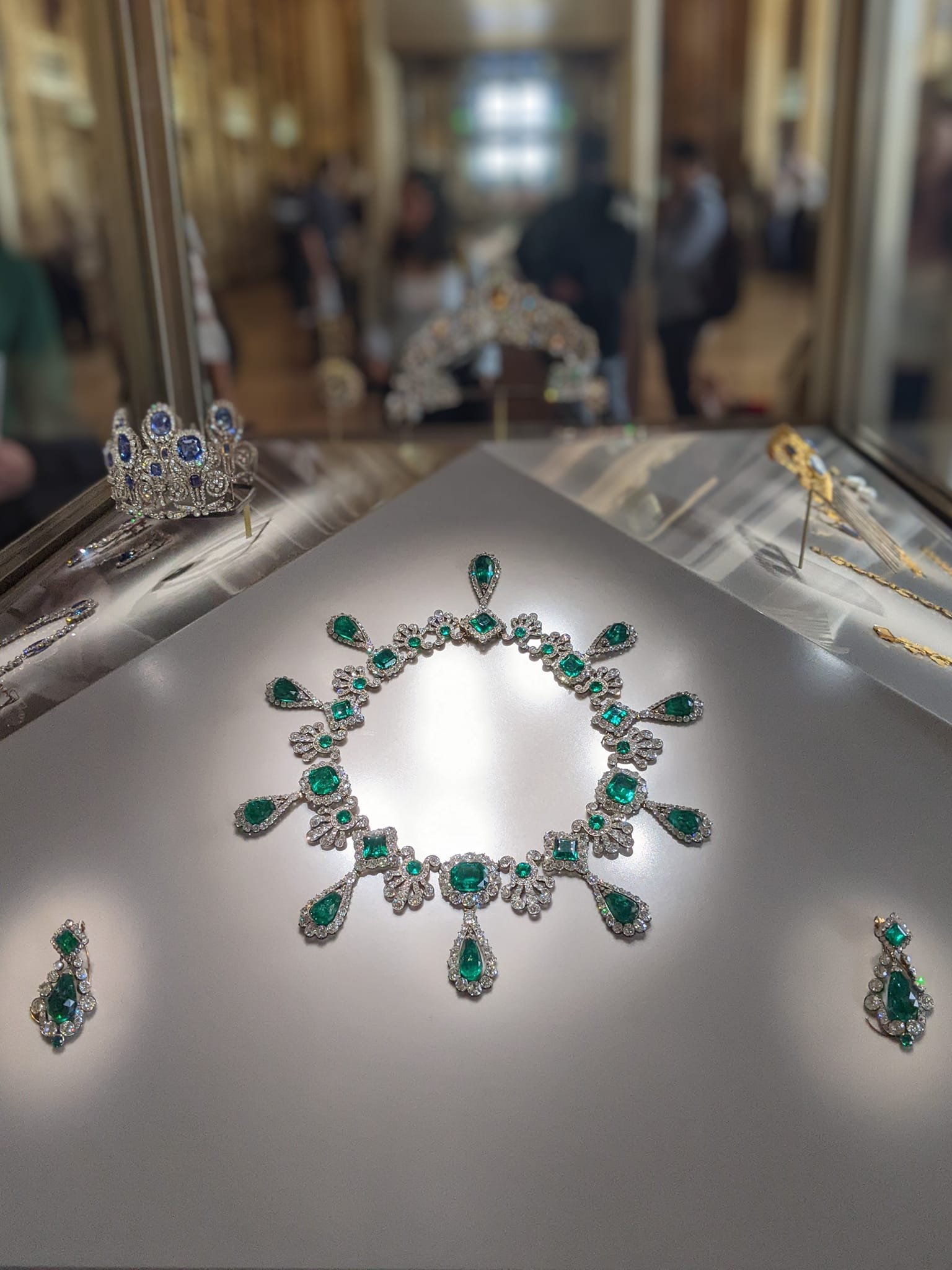
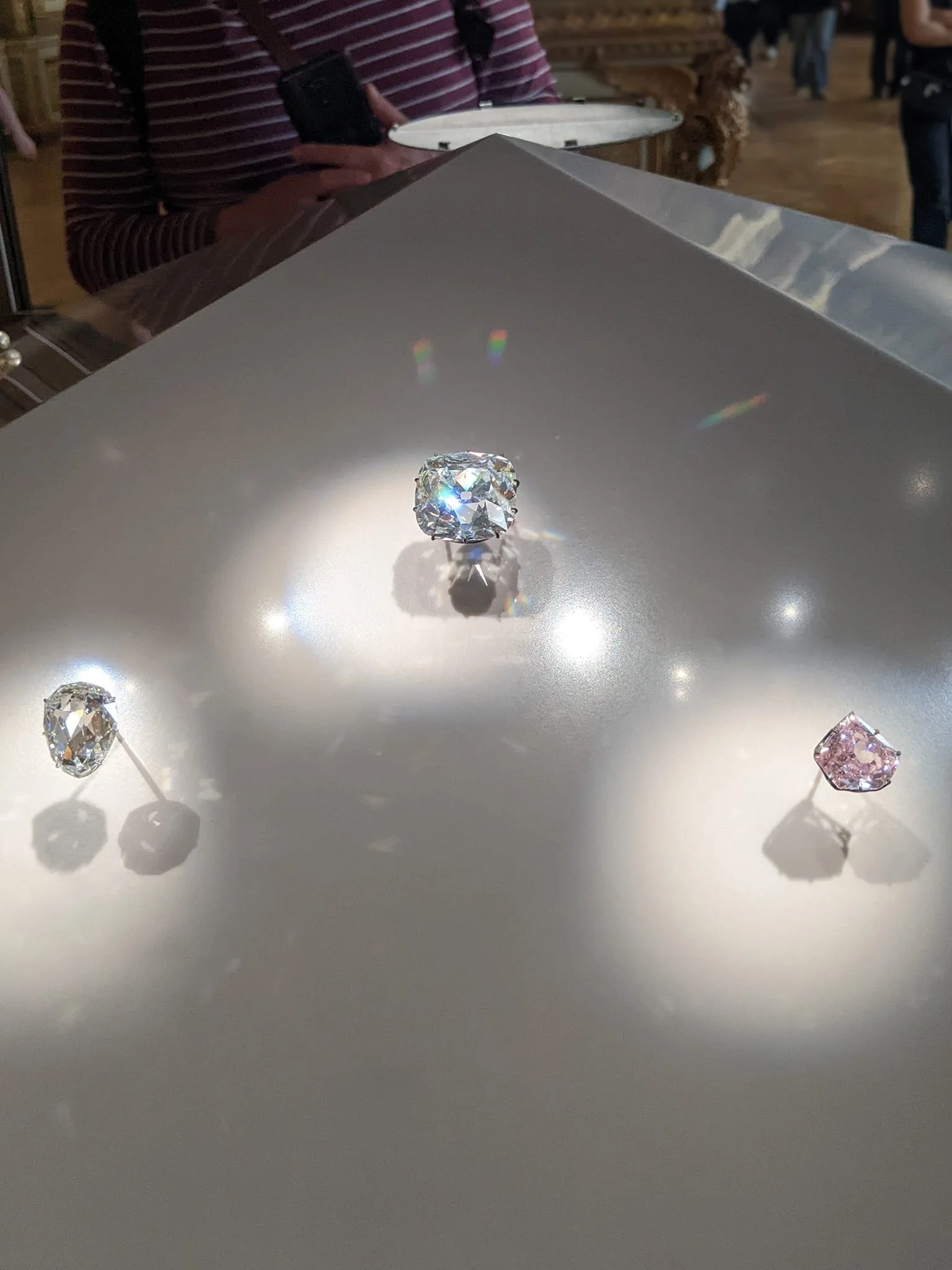
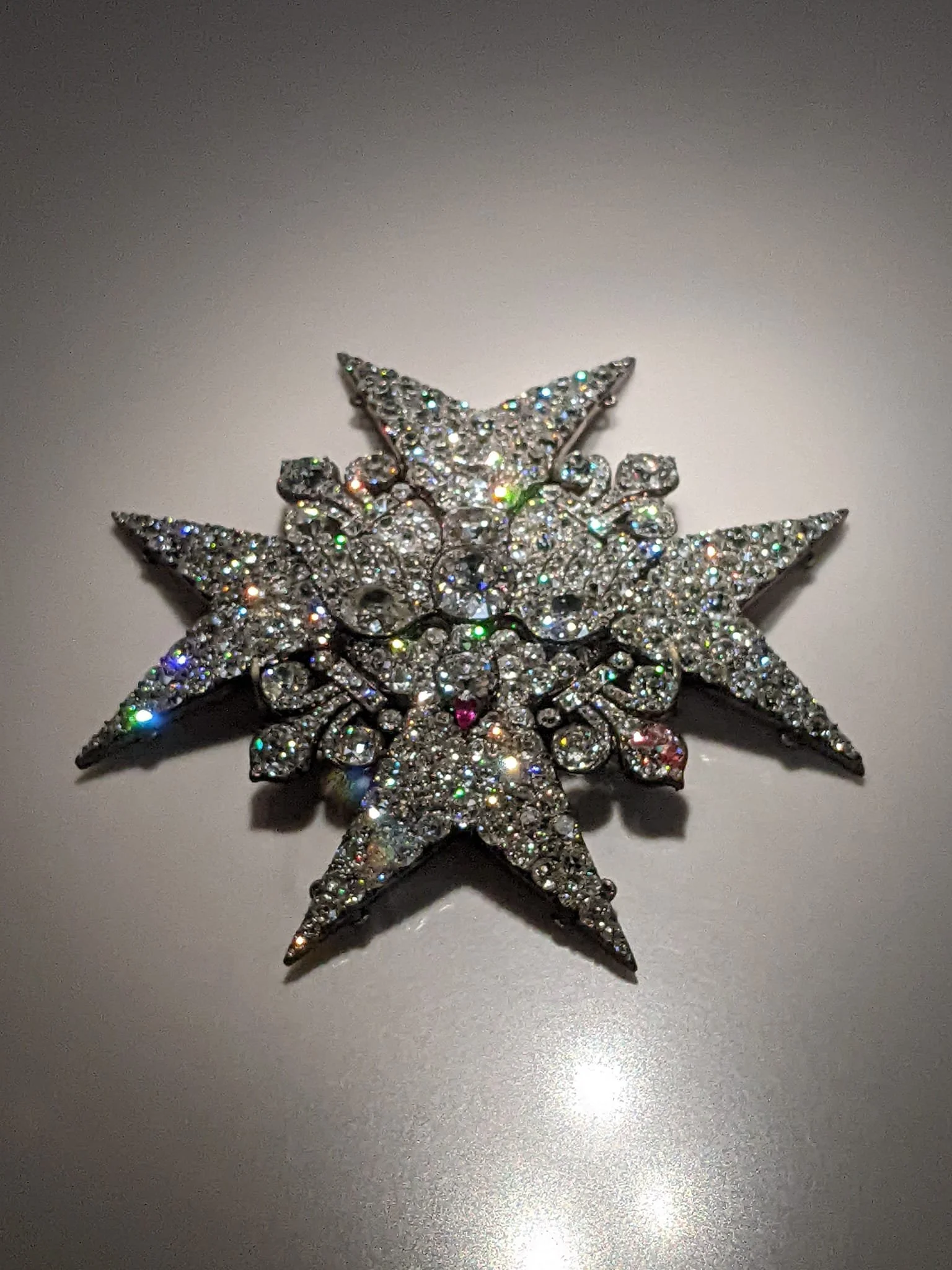
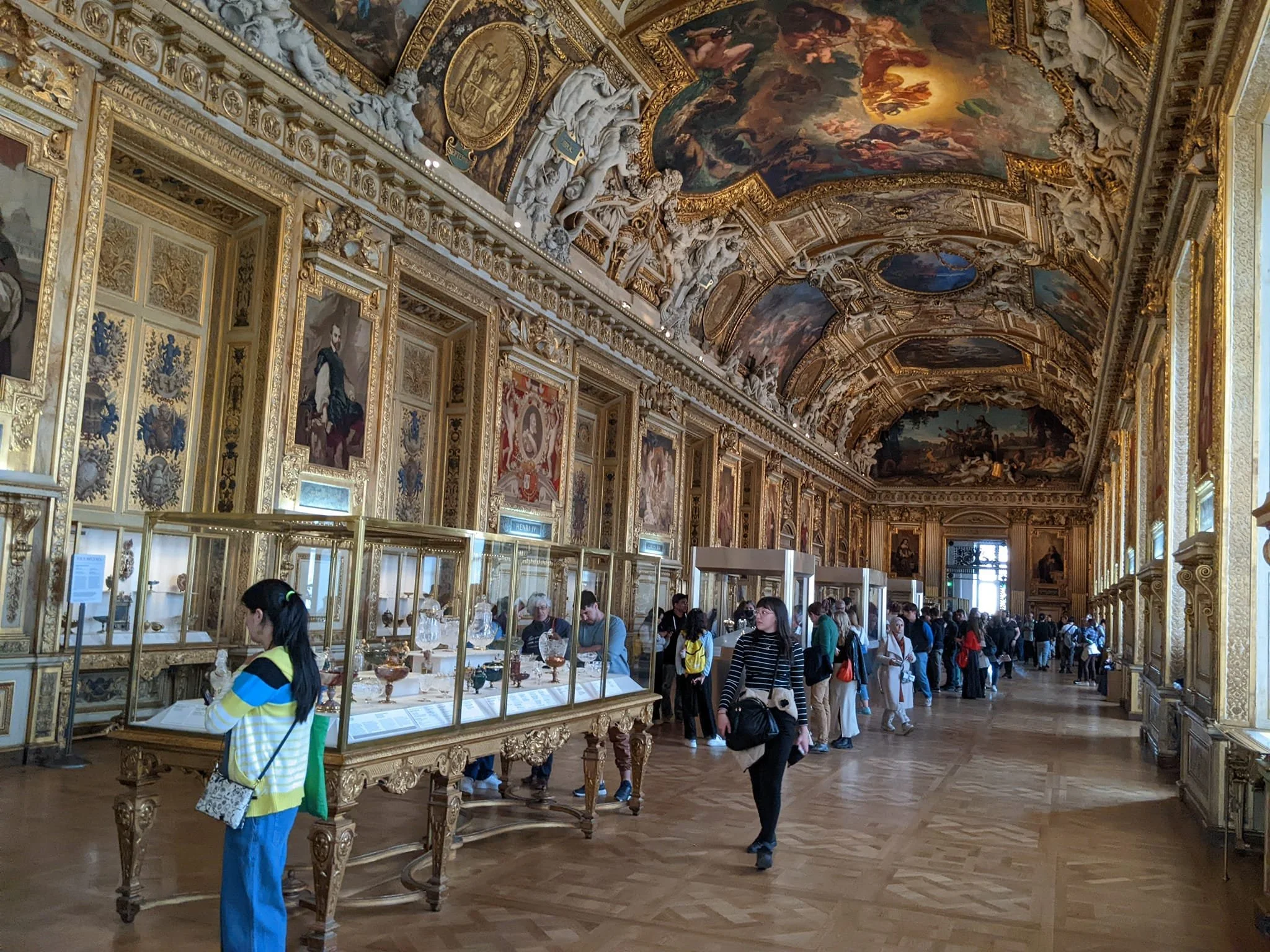
We asked the security personnel and were directed towards ‘Salle des États’ the palace’s largest room. ‘Go to the first floor and then follow the crowds’ was the advice. In route to our destination, we passed through ‘Galerie d’Appollon’ which is the home of French royal jewels and hard stone vessels.

View fullsize 3.jpg
View fullsize 4.jpg
View fullsize 5.jpg
View fullsize 6.jpg
View fullsize 16.jpg
View fullsize 8.jpg
View fullsize 19.jpg
View fullsize 15.jpg
View fullsize 7.jpg
View fullsize 20.jpg
View fullsize 9.jpg
View fullsize 10.jpg
View fullsize 11.jpg
View fullsize 11a.jpg
View fullsize 11b.jpg
View fullsize 11c.jpg
View fullsize 12.jpg
View fullsize 13.jpg
View fullsize 14.jpg
View fullsize 18.jpg

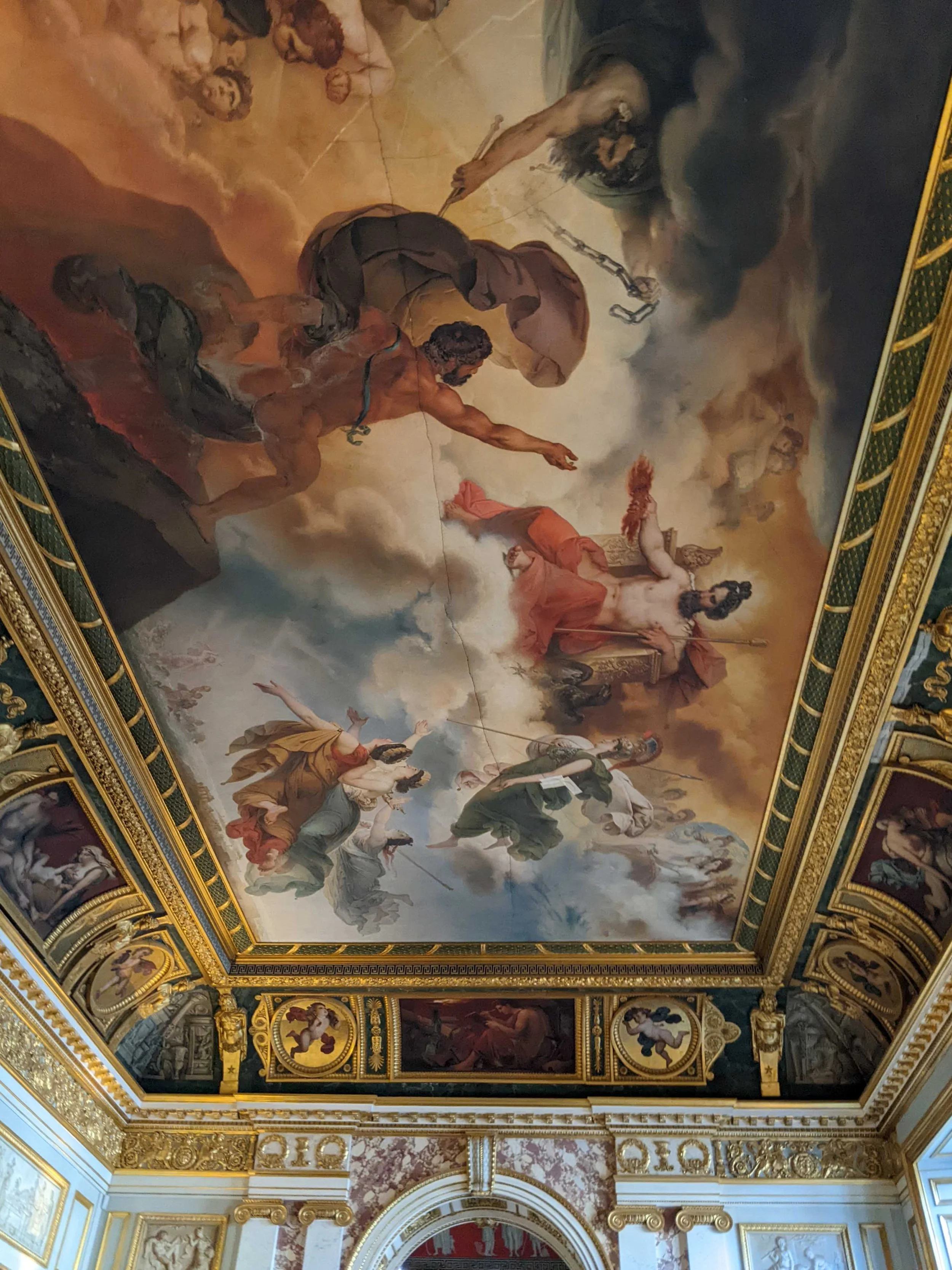
Apparently, King Louis XIV famously identified himself with Apollo (the Greek god of the sun and the arts) and this splendid gallery was the first tangible representation of that image. One of the best gilders, painters and sculptors contributed to the decorations in the room. Truly, the decor of the hall and the treasures inside are breathtaking.


And finally, we reached the most crowded room in the museum, the great hall where Mona Lisa hangs from the centre of the wall. Her enigmatic smile enchanting her audience who crowded around her in droves, with mobiles held high trying to capture the image from all possible angles. It seems that the crowd’s emphasis was more focused towards registering their presence rather than appreciating the artwork. Another tick on their bucket list.
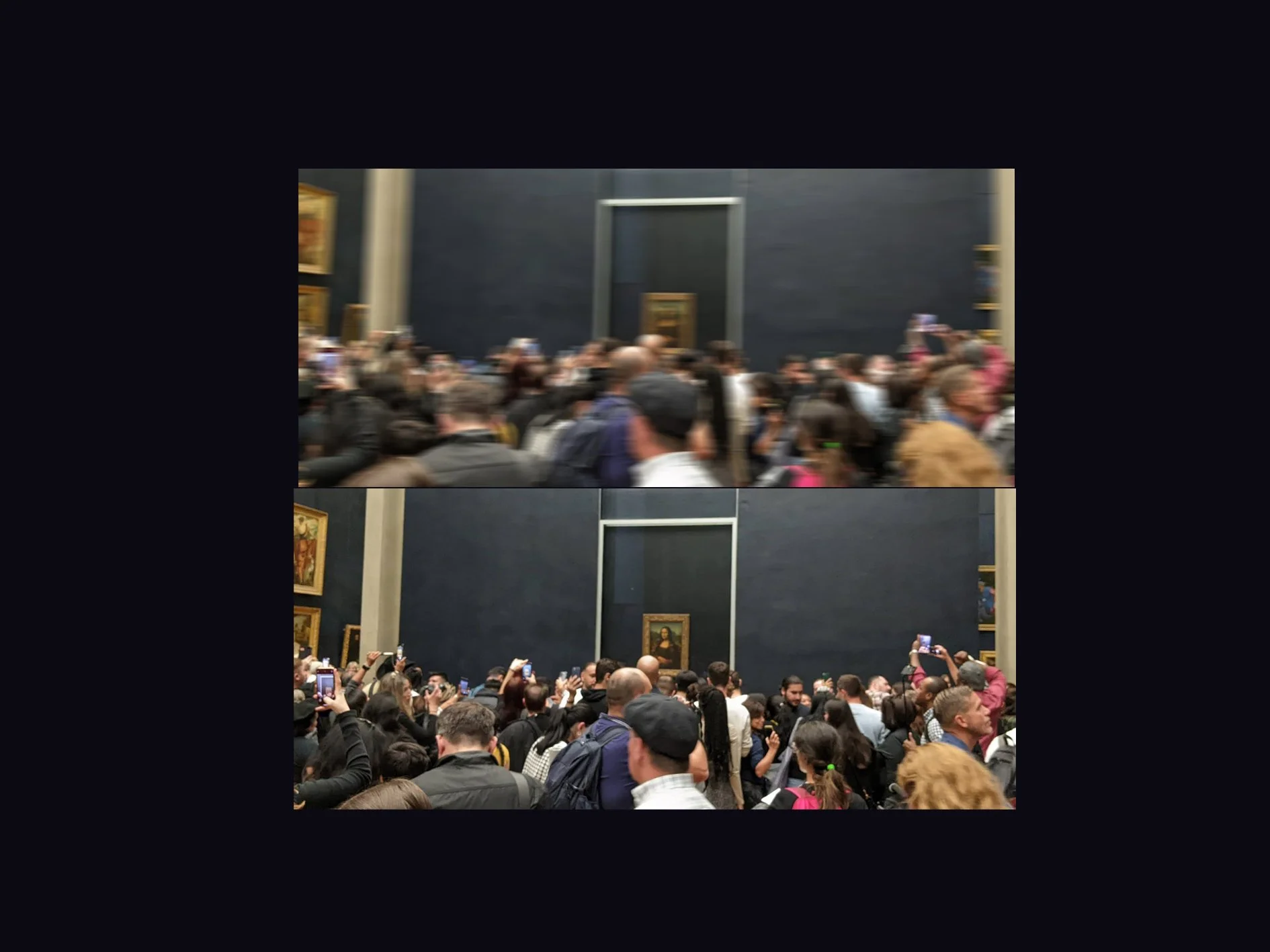
Very few, if anyone appreciates that the painting was the turning point in portraiture painting. Not only the Italian Renaissance but a large number of the seventeenth to nineteenth centuries artists were inspired by this work.


 According to Louvre Curator Jean-Pierre Cuzin “In a break with the Florentine tradition of outlining the painted image, Leonardo perfected the technique known as sfumato, which translated literally from Italian means "vanished or evaporated." Creating imperceptible transitions between light and shade, and sometimes between colours, he blended everything "without borders, in the manner of smoke, his brush strokes so subtle as to be invisible to the naked eye”.

It is said that Leonardo was fascinated by the way light falls on curved surfaces he painted the image with layers of transparent colour, each only a few molecules thick, making the Mona Lisa’s face appear to glow.
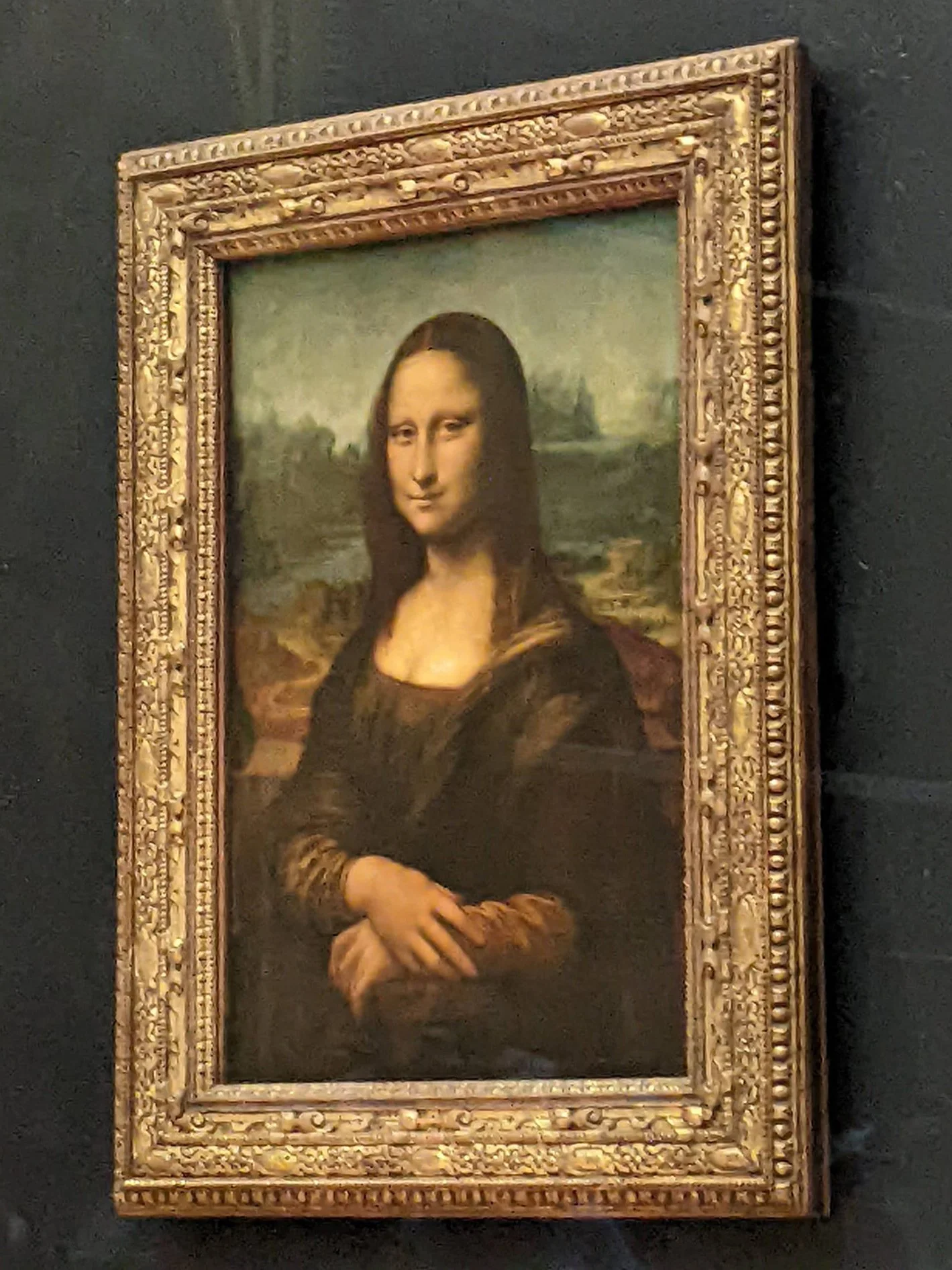
We spent nearly 4.5 hrs in the museum and barely managed to skim through the displays. Without a doubt, a comprehensive review requires more than one visit.

One other point to note, visitors can also hire headsets at an additional fee which can provide English translation. In hindsight, we should have hired one. But note you will need to have a photo ID and will need to deposit your licence or passport to get the device. Your documents will be returned when you return the device.


The Other Art Gallery- The Petit Palais

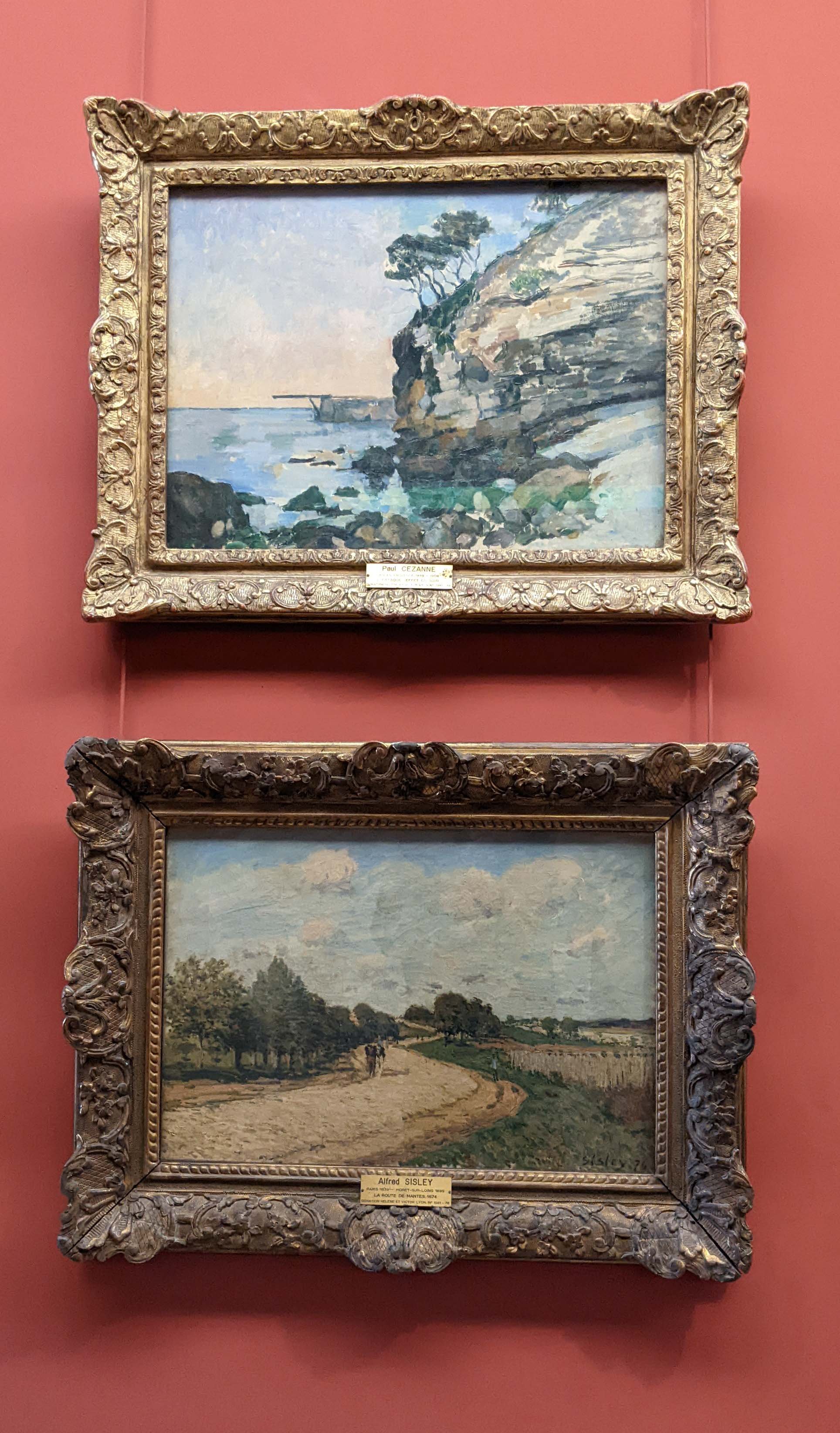
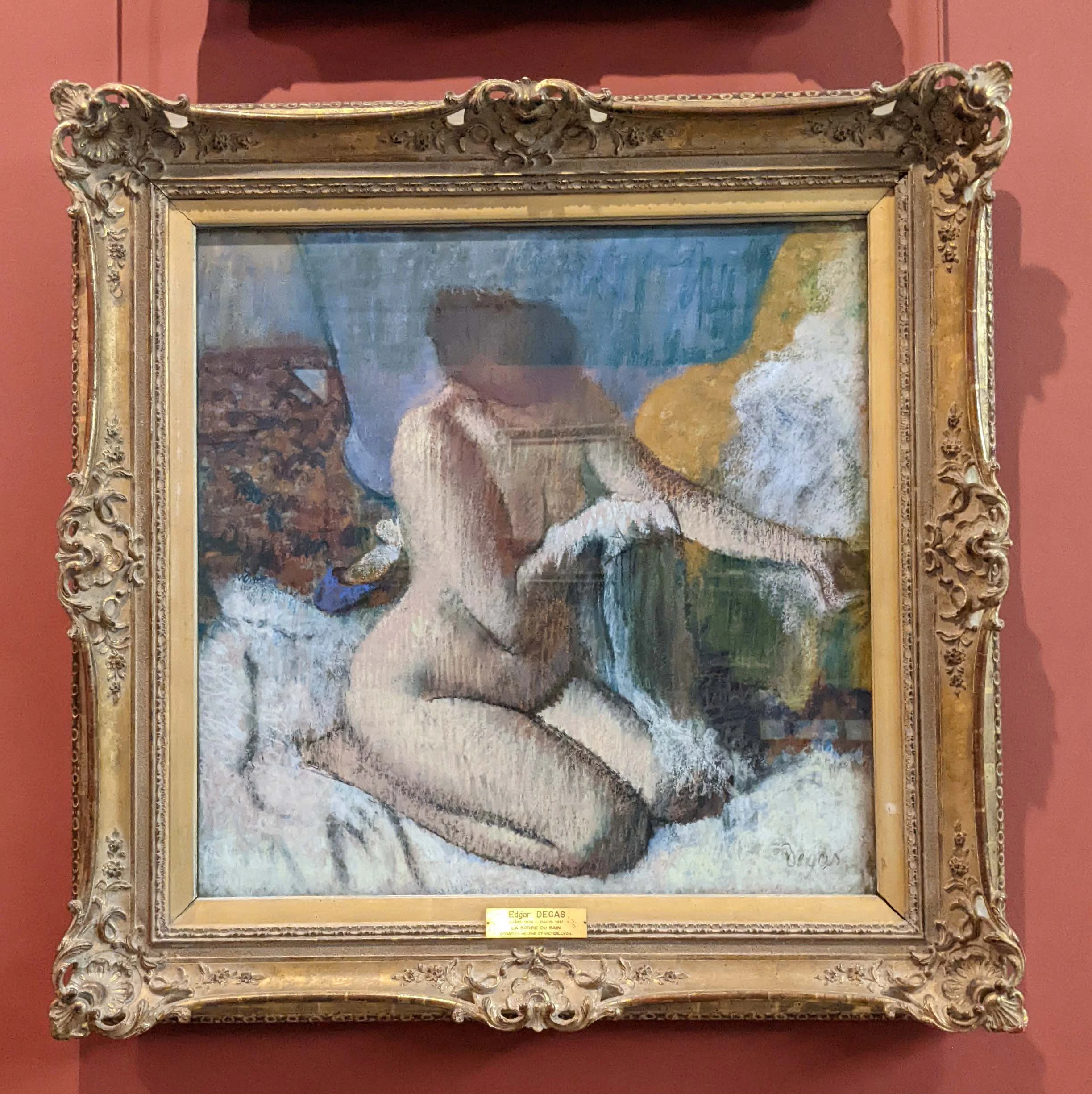
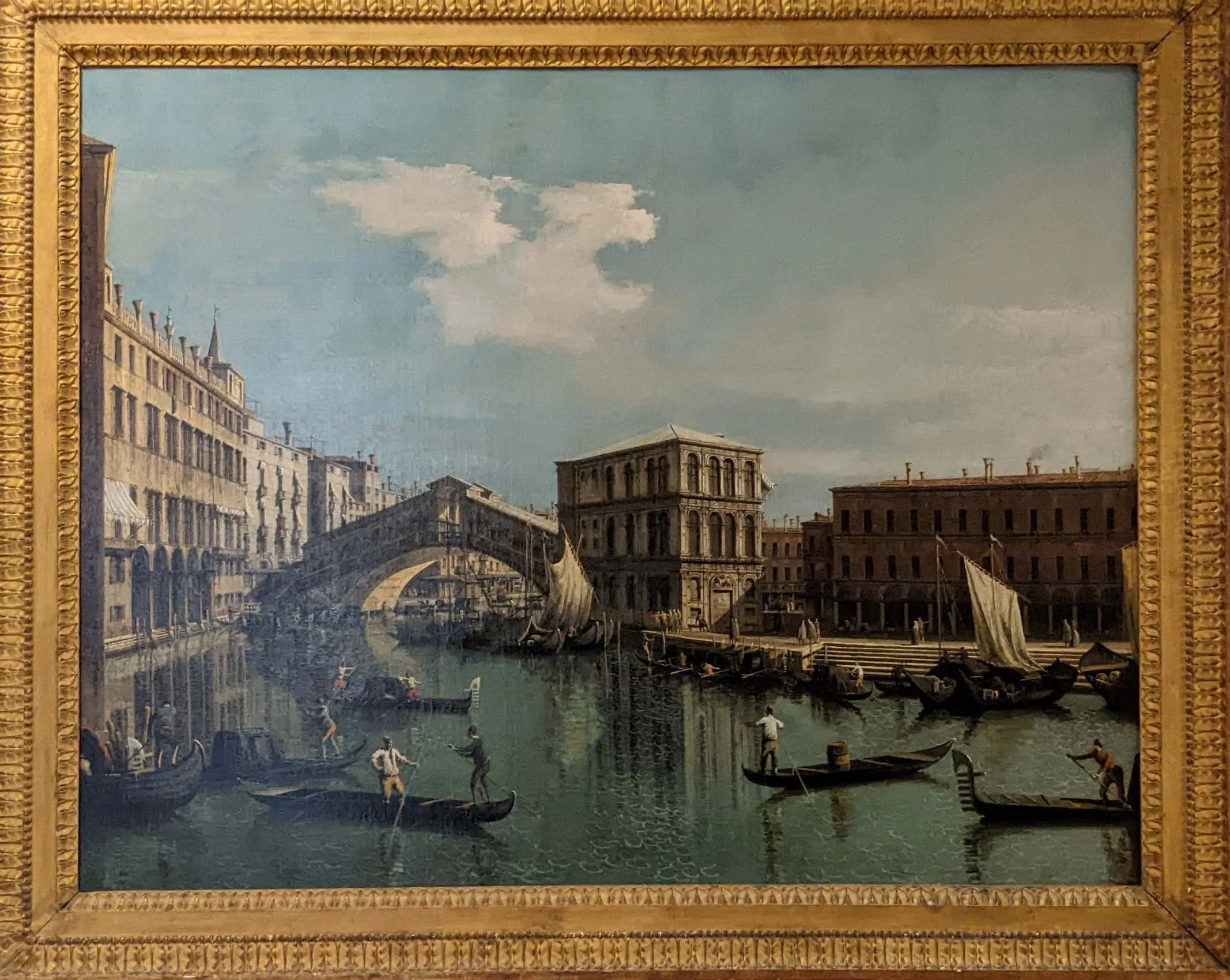
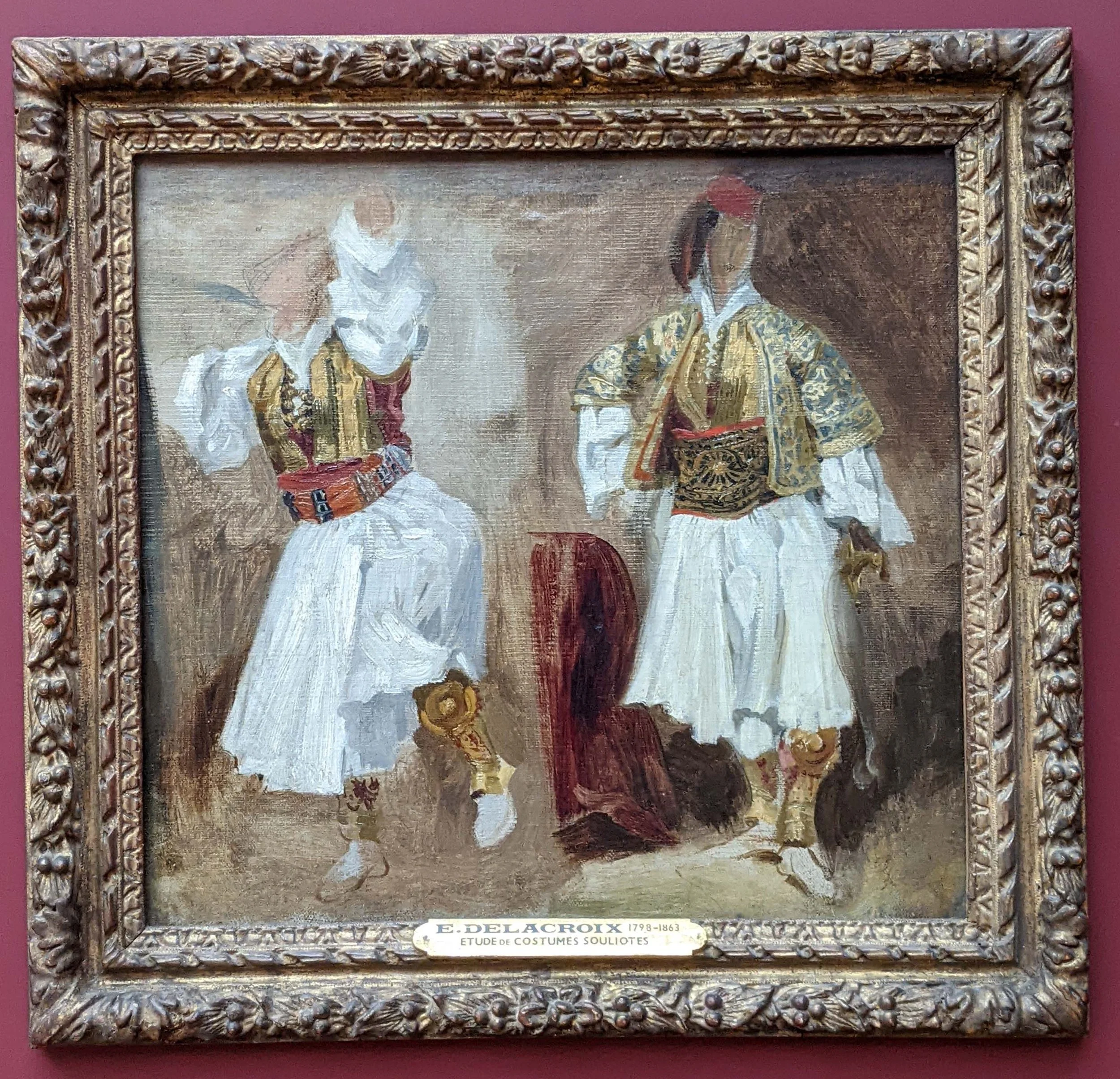
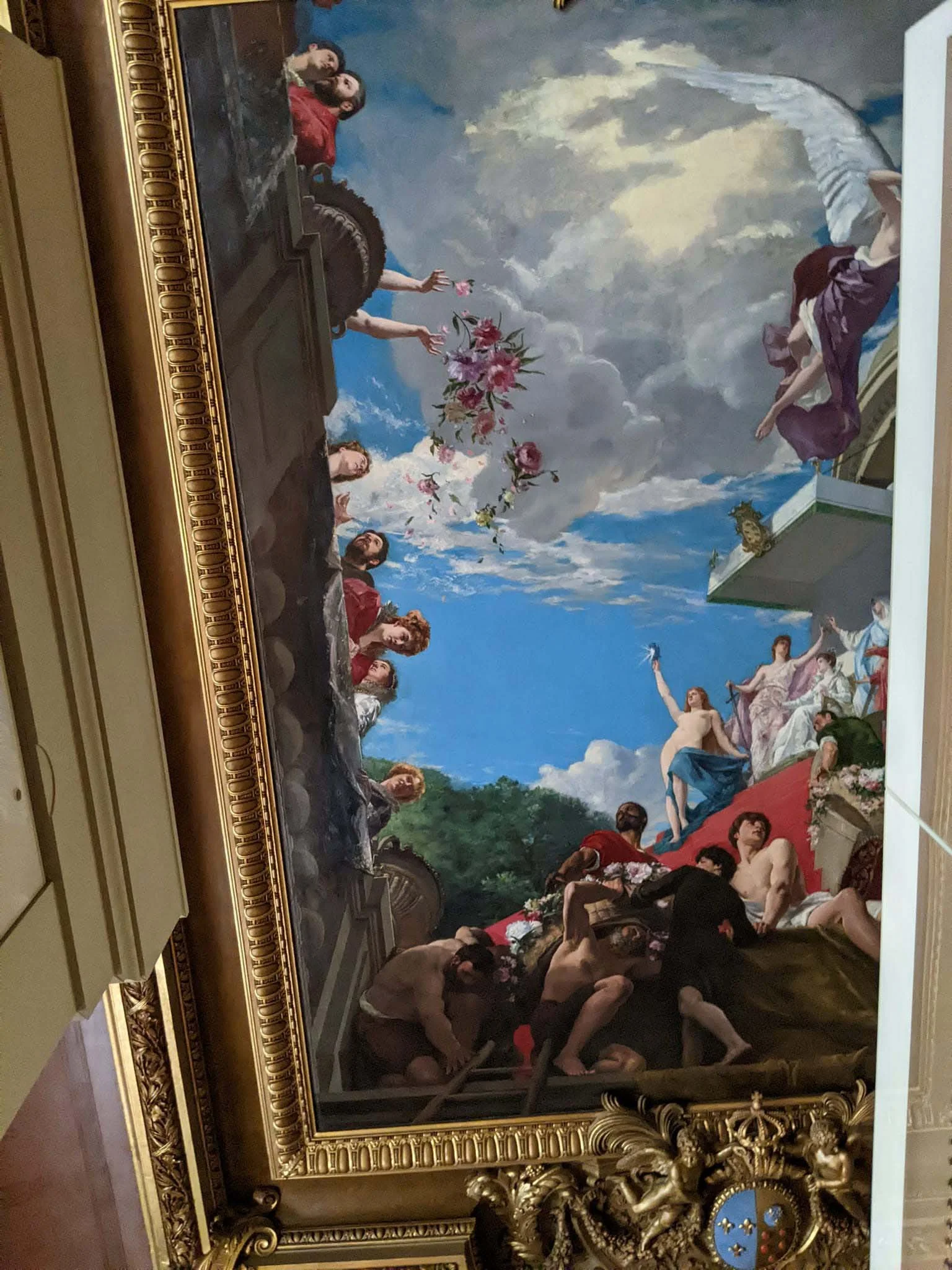
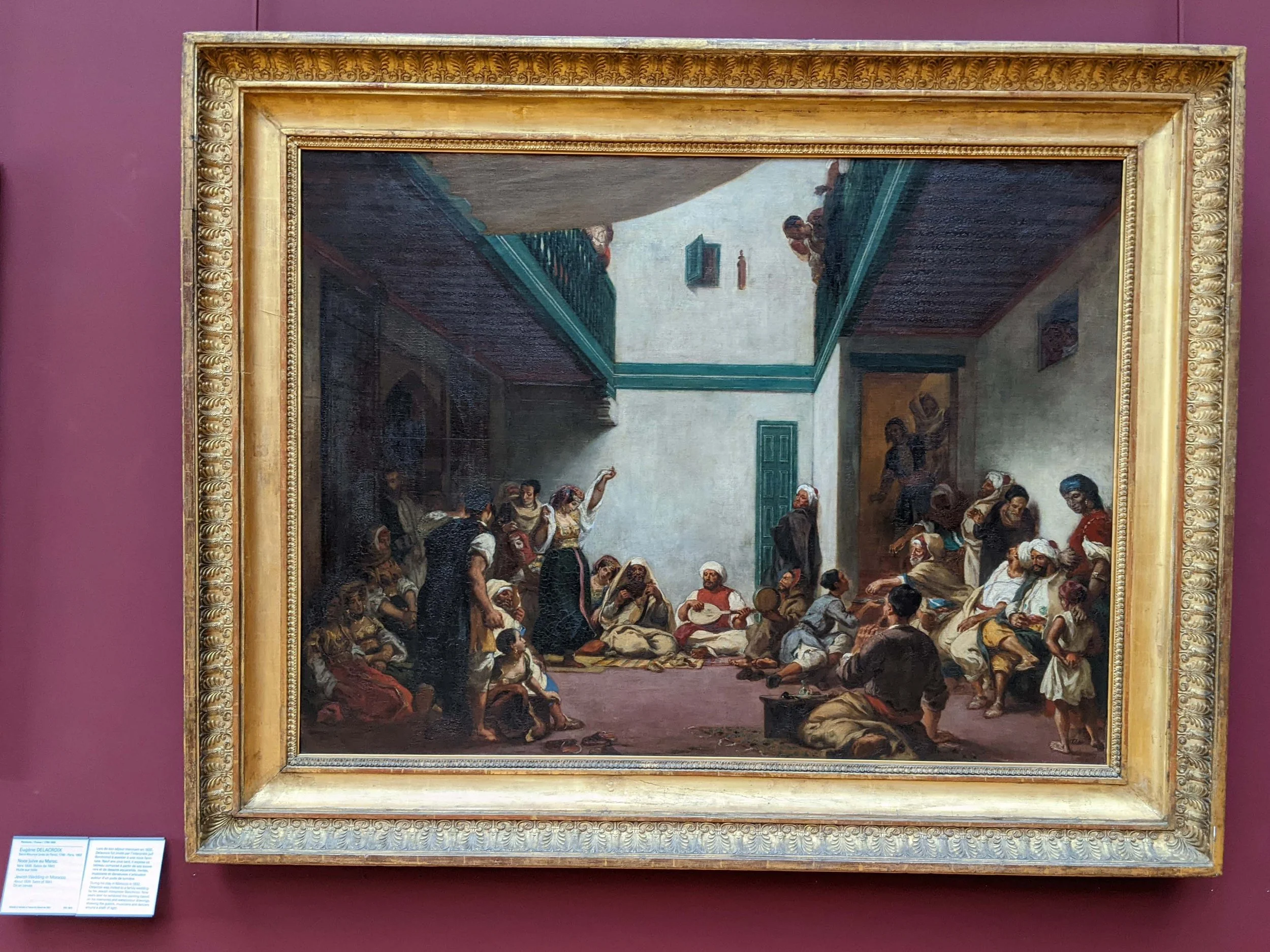
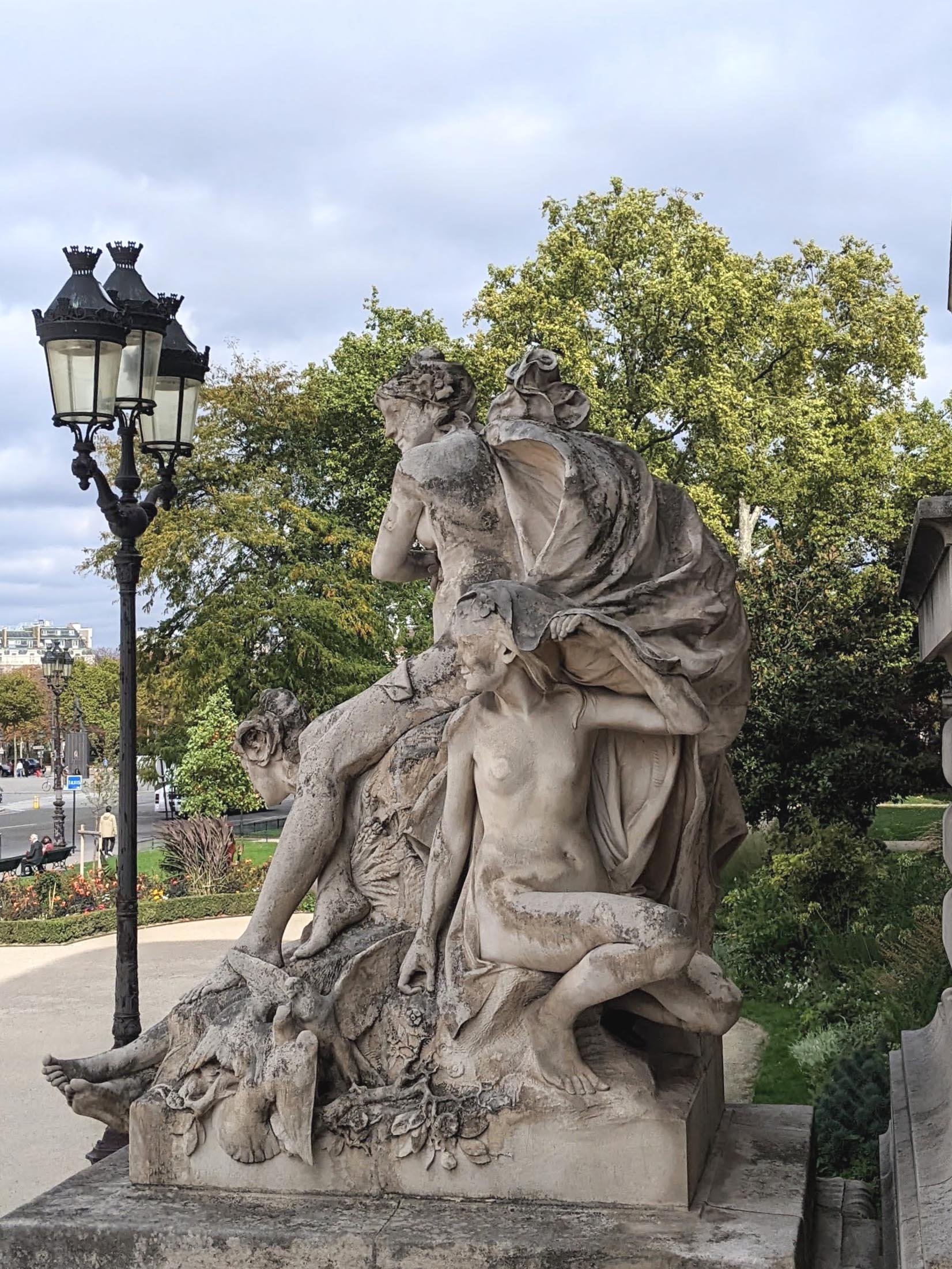
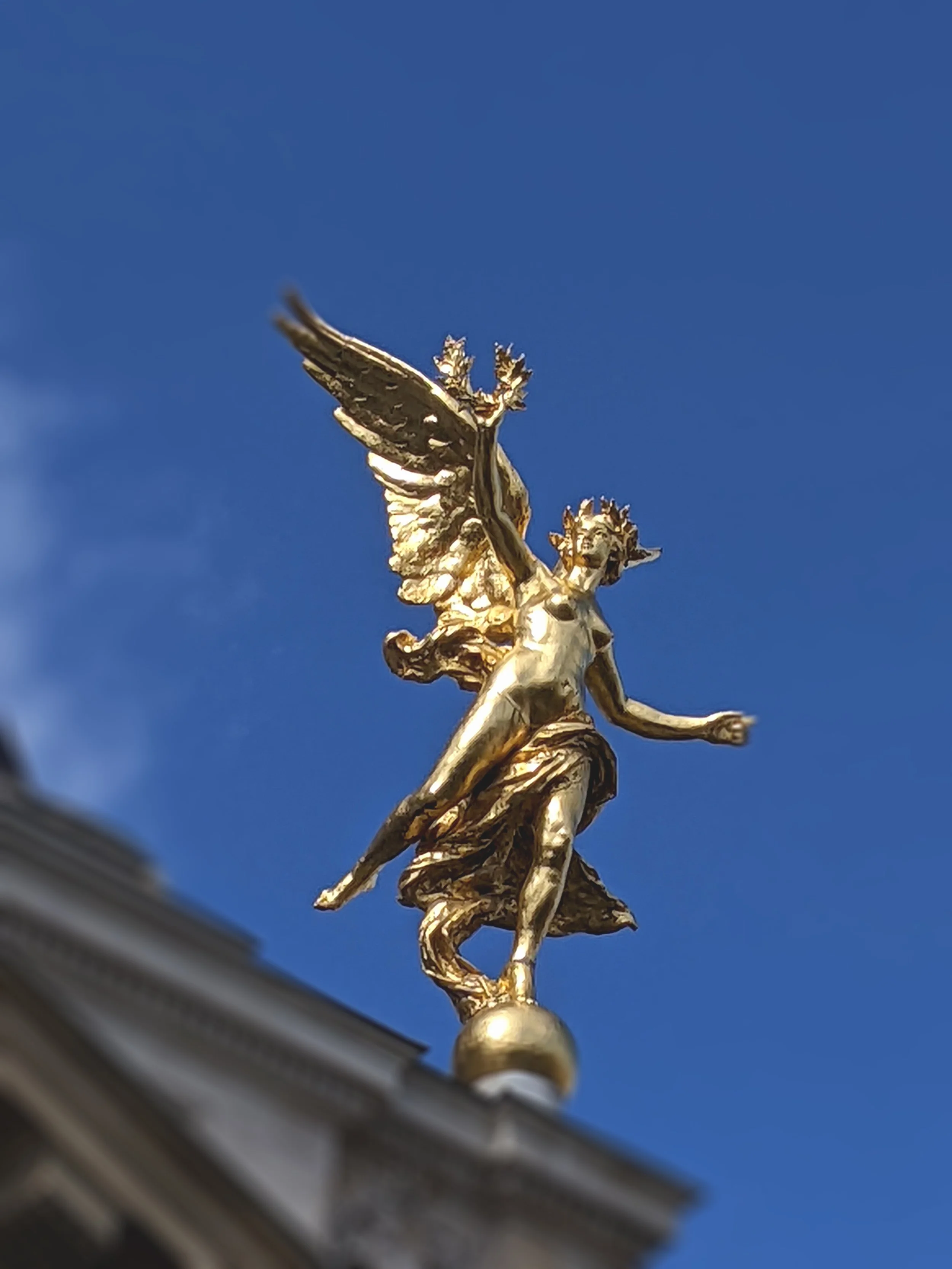
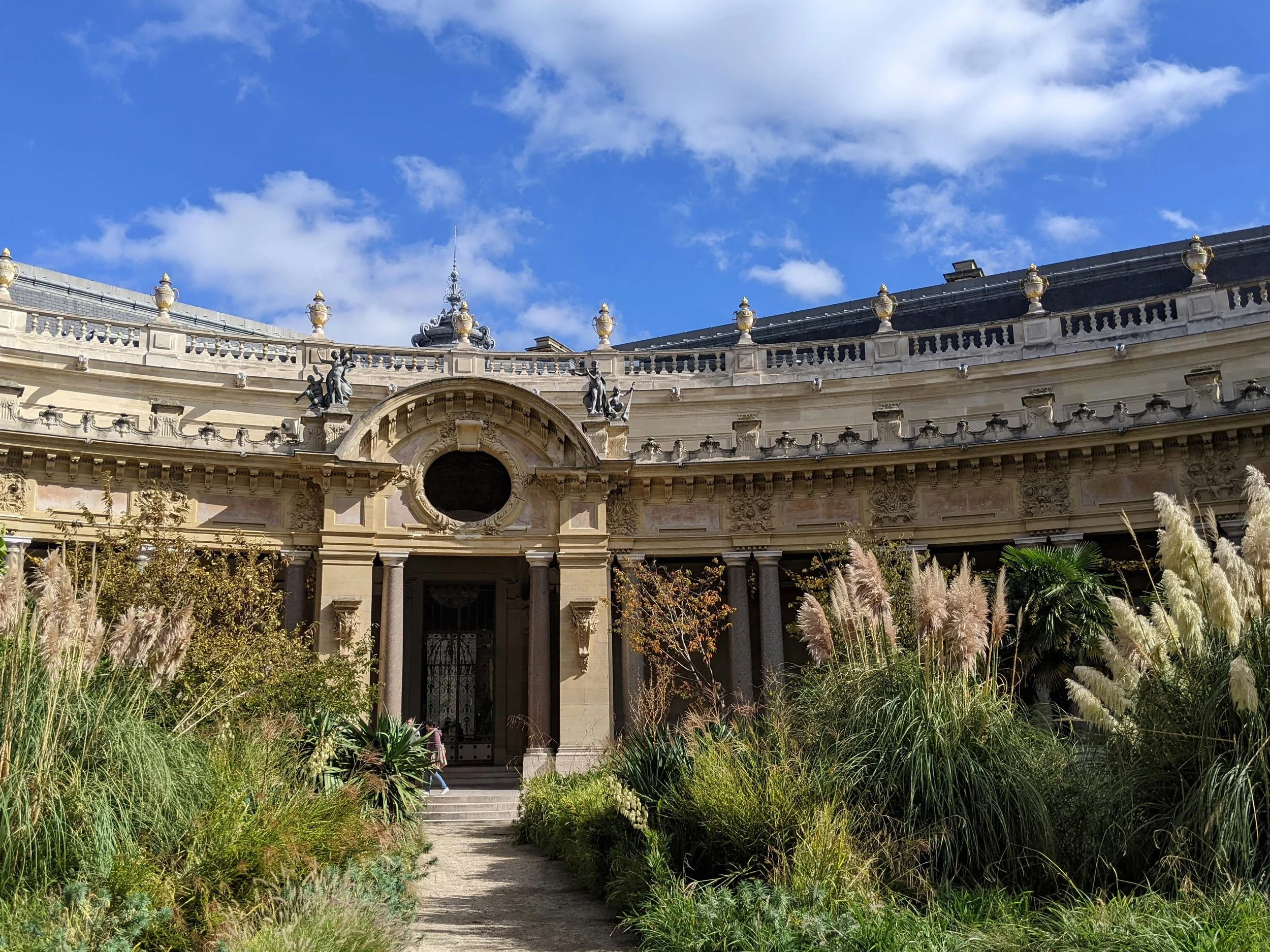
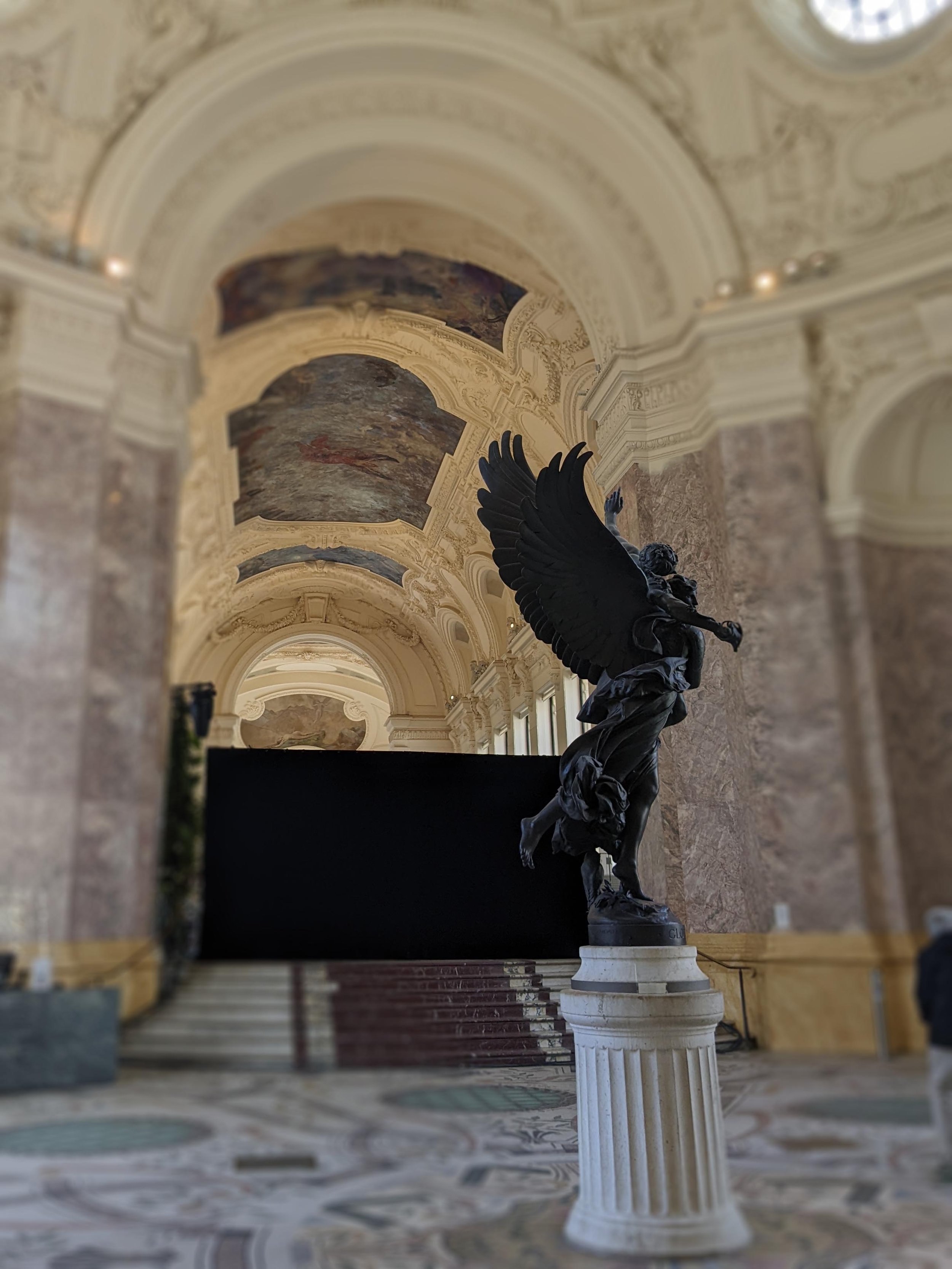
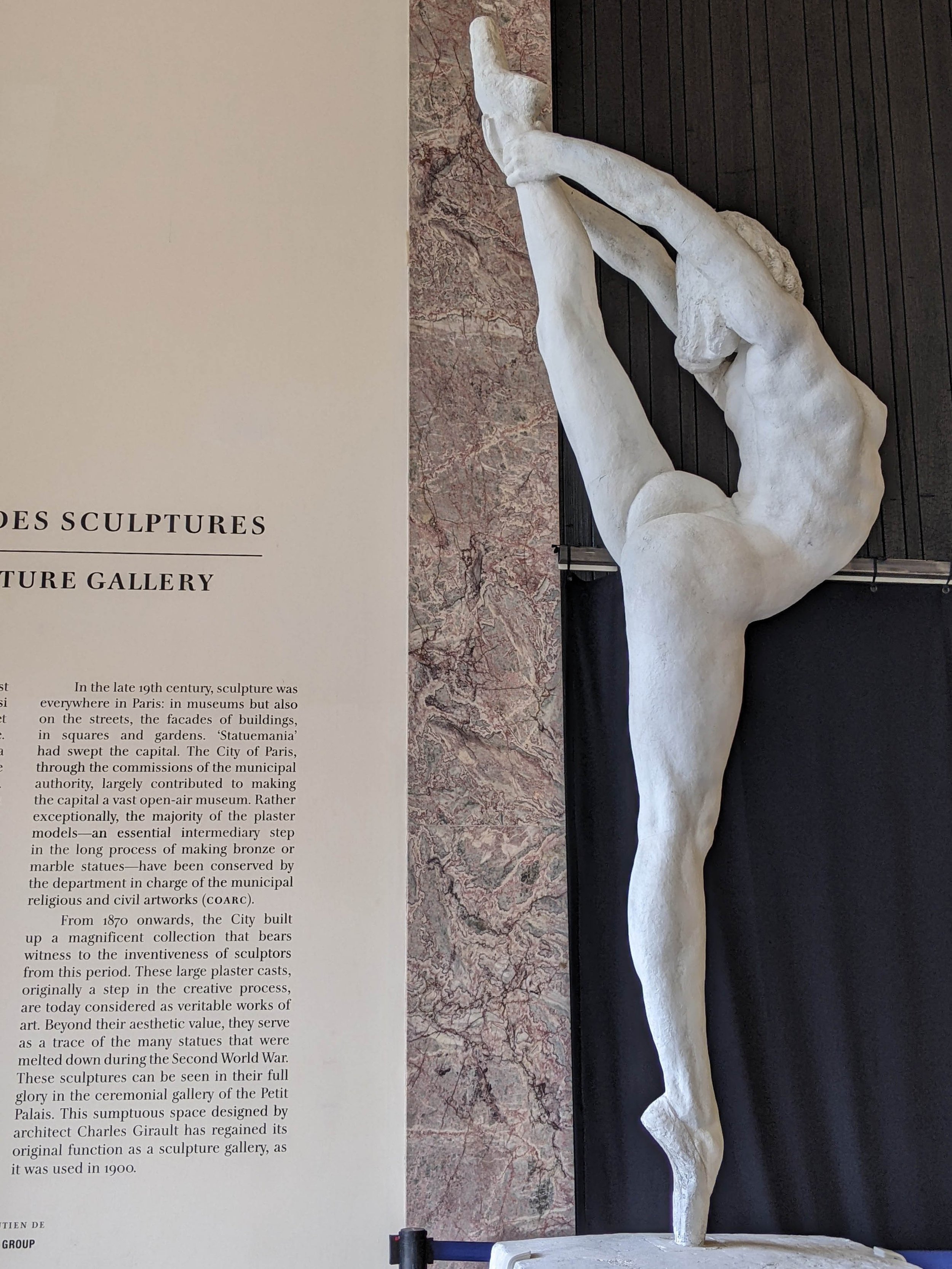
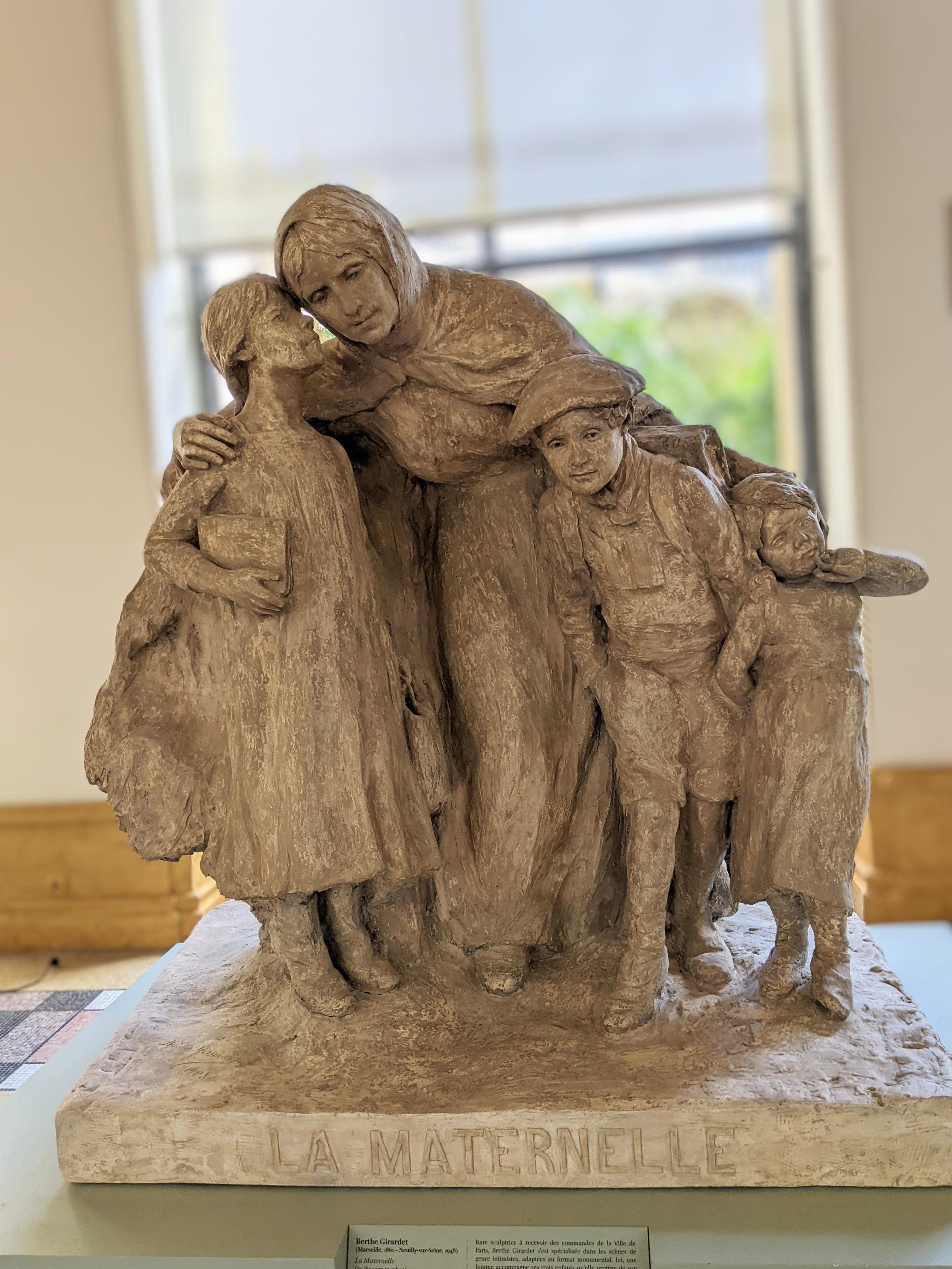
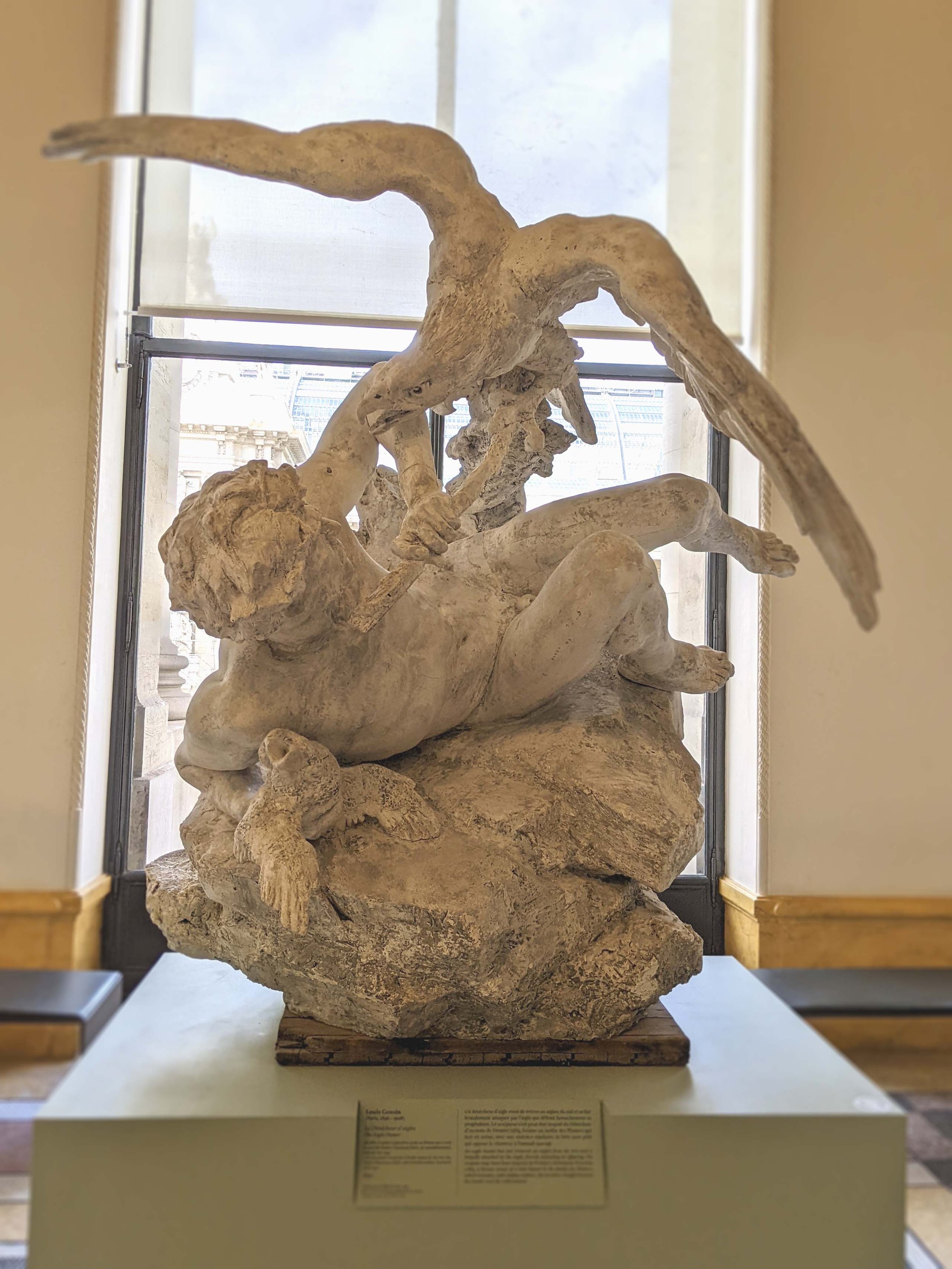
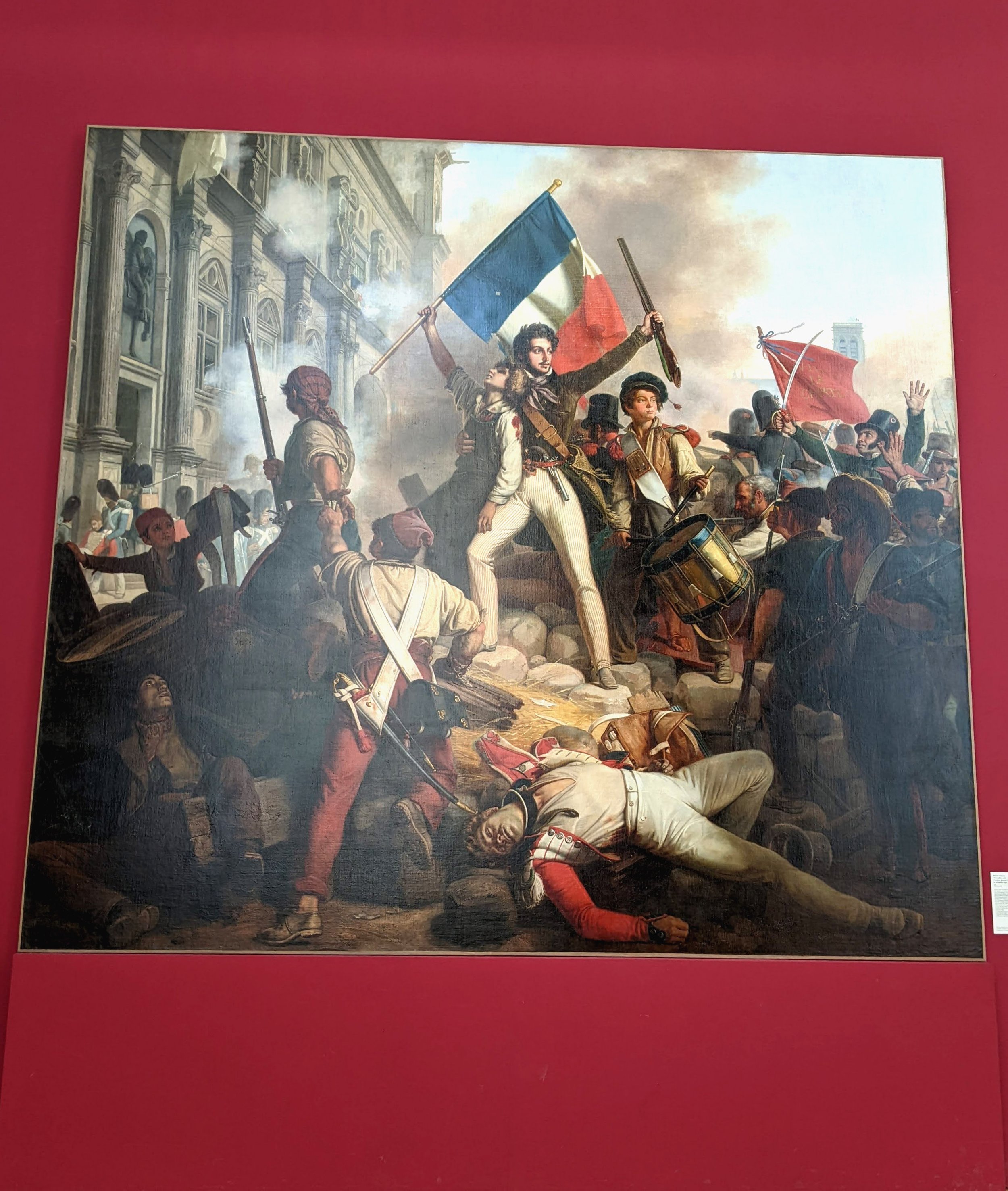
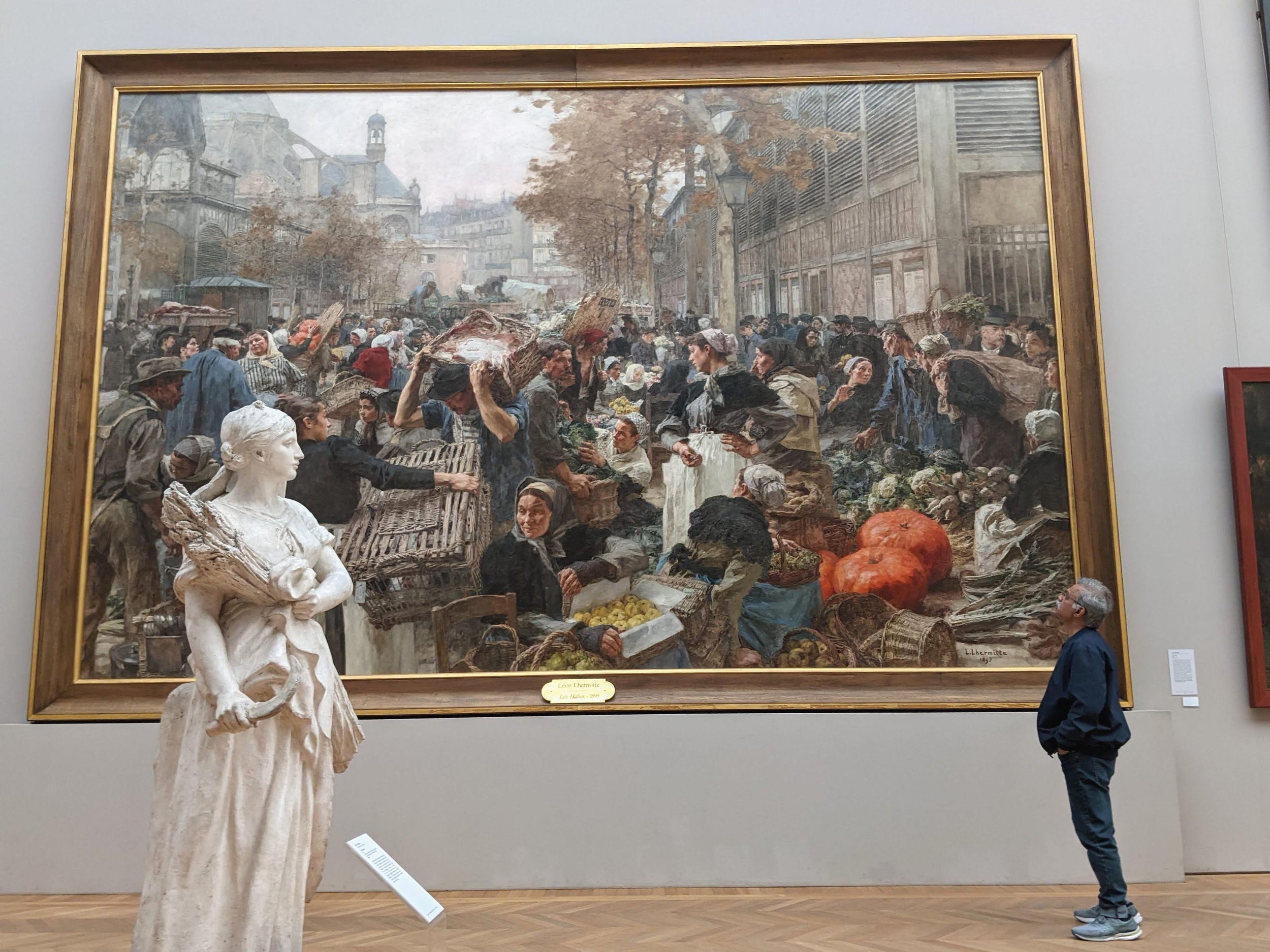
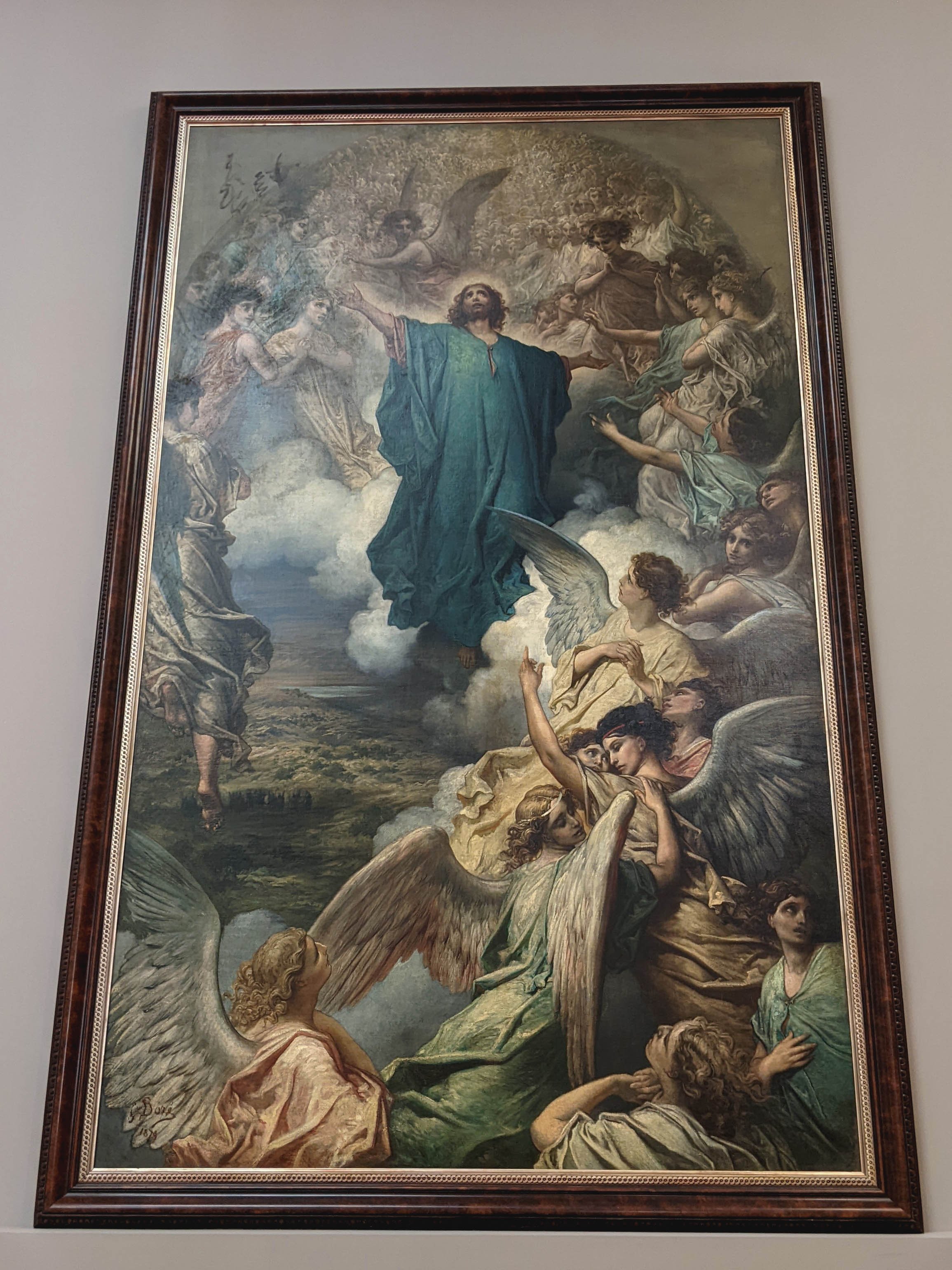
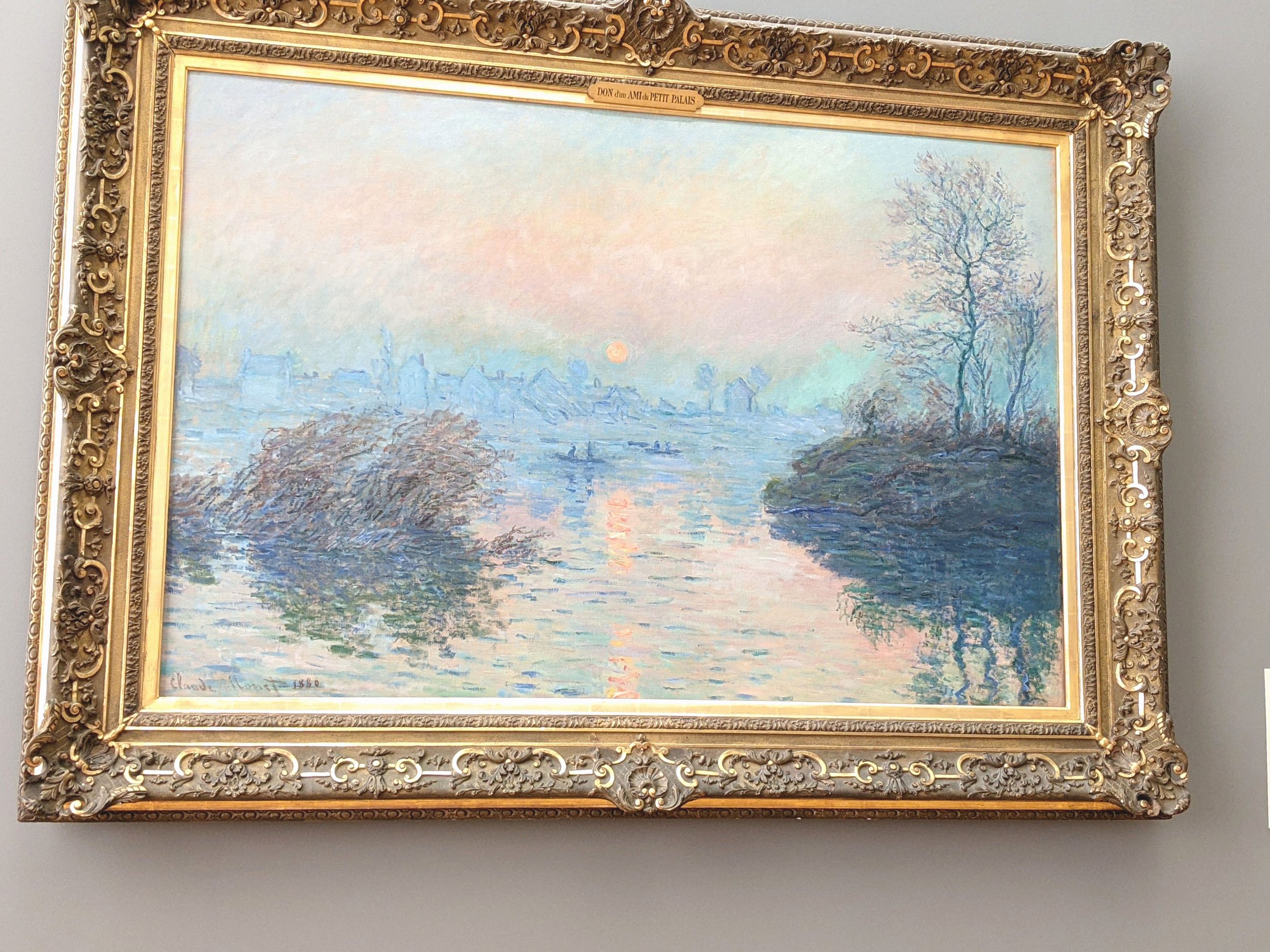
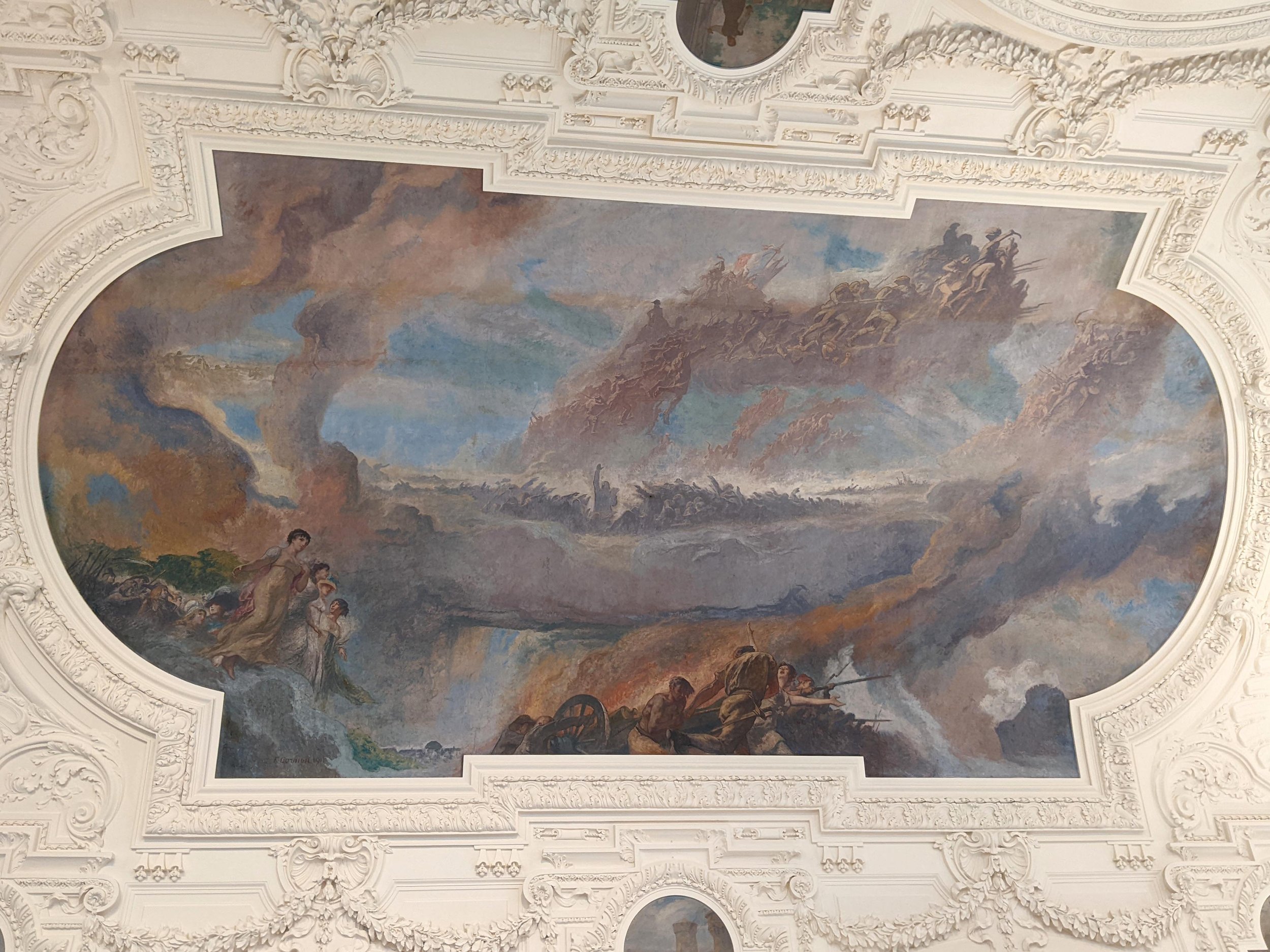
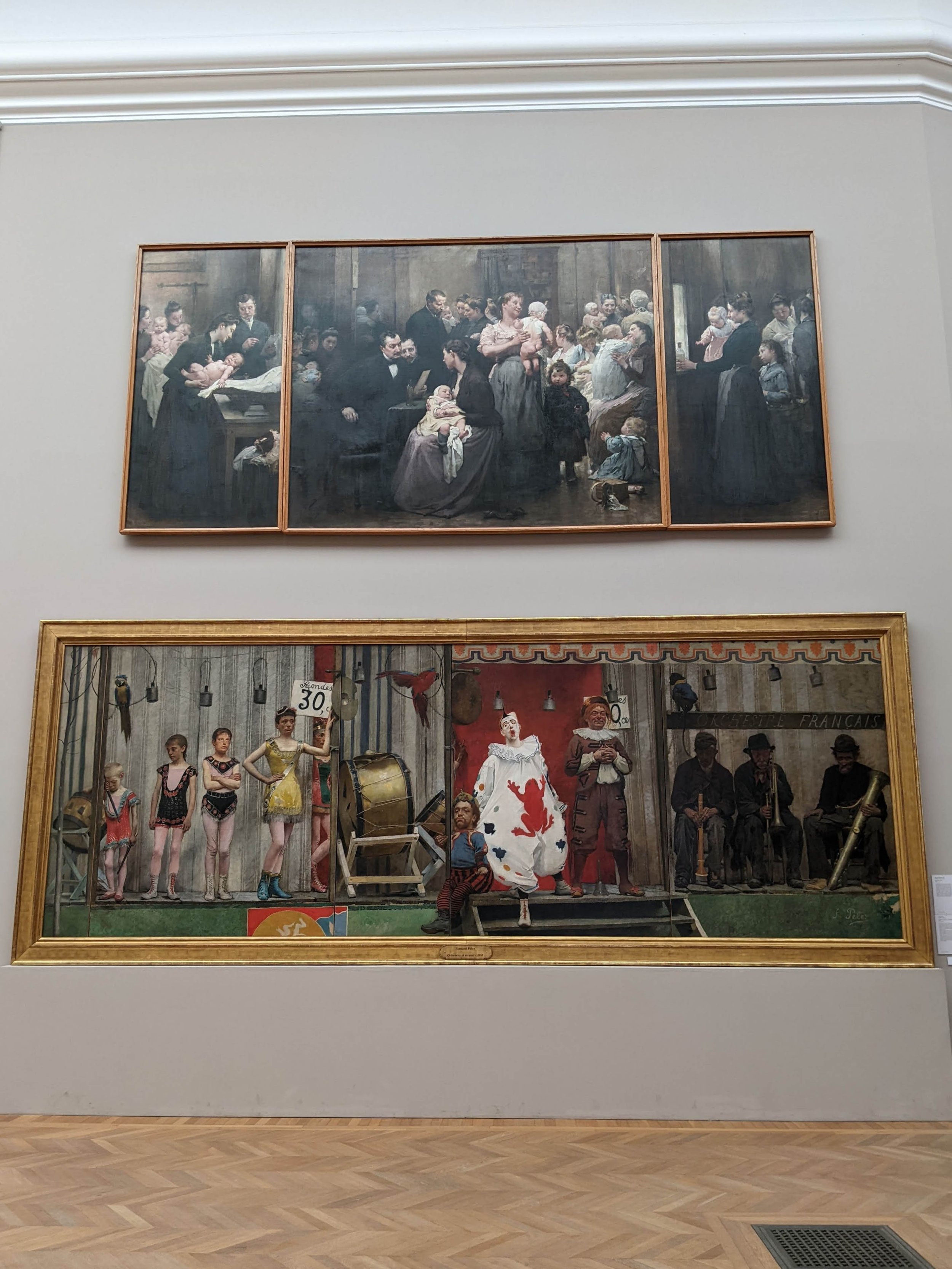
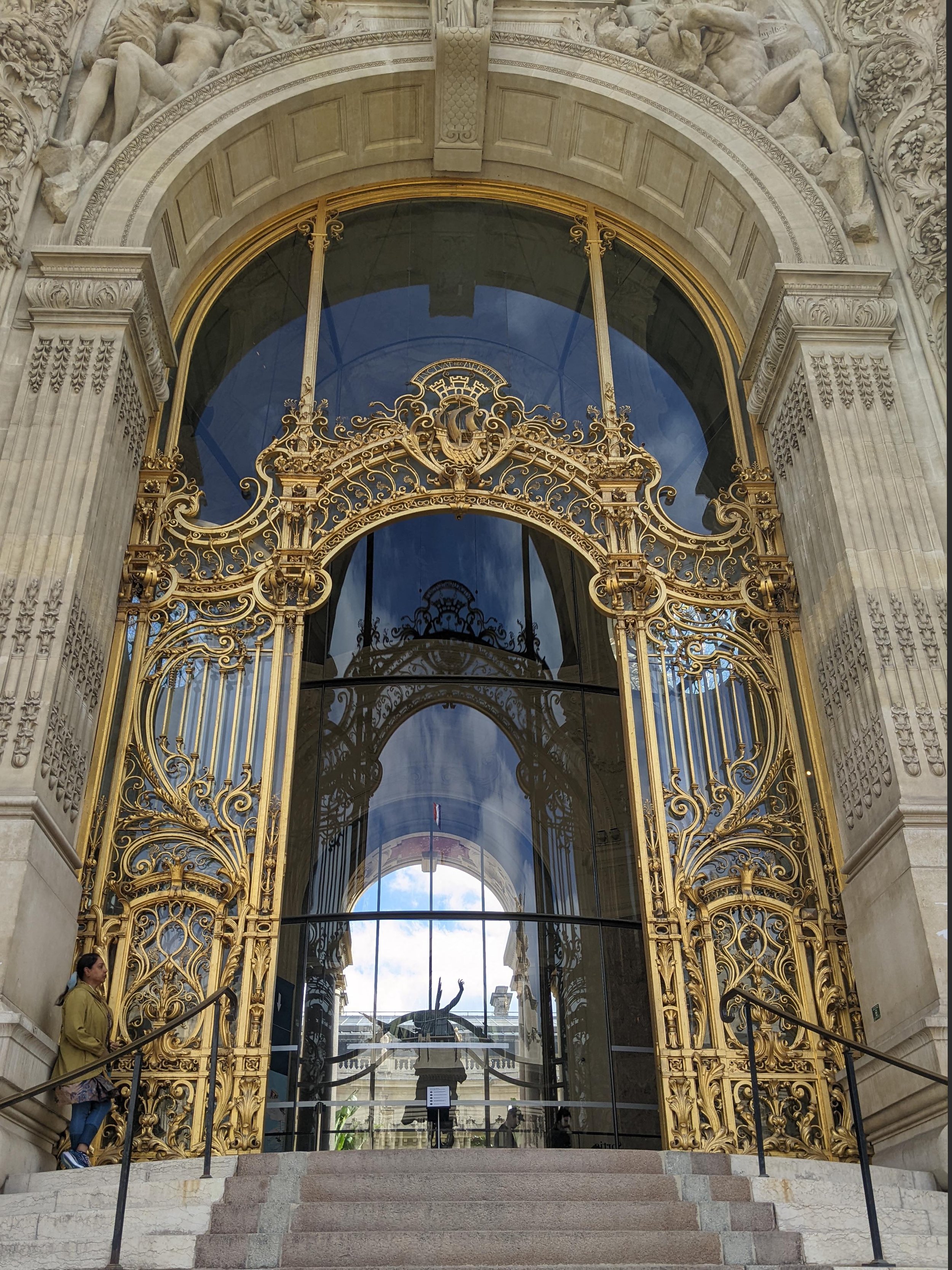
While in Paris, another must-visit art museum for art lovers is the Petit Palais.  This building was built for the 1900 World Fair, and now houses the Paris Museum Of Fine Arts.
17.jpg
16.jpg
2.jpg
1.jpg
3.jpg
15.jpg
13.jpg
14.jpg
12.jpg
7.jpg
9.jpg
8.jpg
6.jpg
11.jpg
10.jpg

We were lucky that during our visit, a ‘free entrance’ promotion was on. Though much smaller than the Louvre, it still takes an hour to view the exhibits.

All in all, Paris galleries are a delight for art lovers and rightfully deserve a place in your itinerary.
In Arts, Multicultural, Travel Tags mona lisa, Mona Lisa, Louvre, Paris, Art gallery, Leonardo, Petit palace, Petit palais, Paris museum of fine arts, Museum, #arts, art
Comment

Topkapi Palace

October 29, 2022

I feel that the best part of Istanbul’s historical sites is that they seemed to be concentrated in pockets. You catch a tram to one location and chances are that you will be able to see a handful of places in a single visit. The pre-Covid hustle and bustle of tourist is back, which makes for a lively environment but unfortunately, also increases the chance of getting photobombed.

When we visited, a number of sites were partially closed to the public because of restoration works, luckily Topkapi Palace was open.

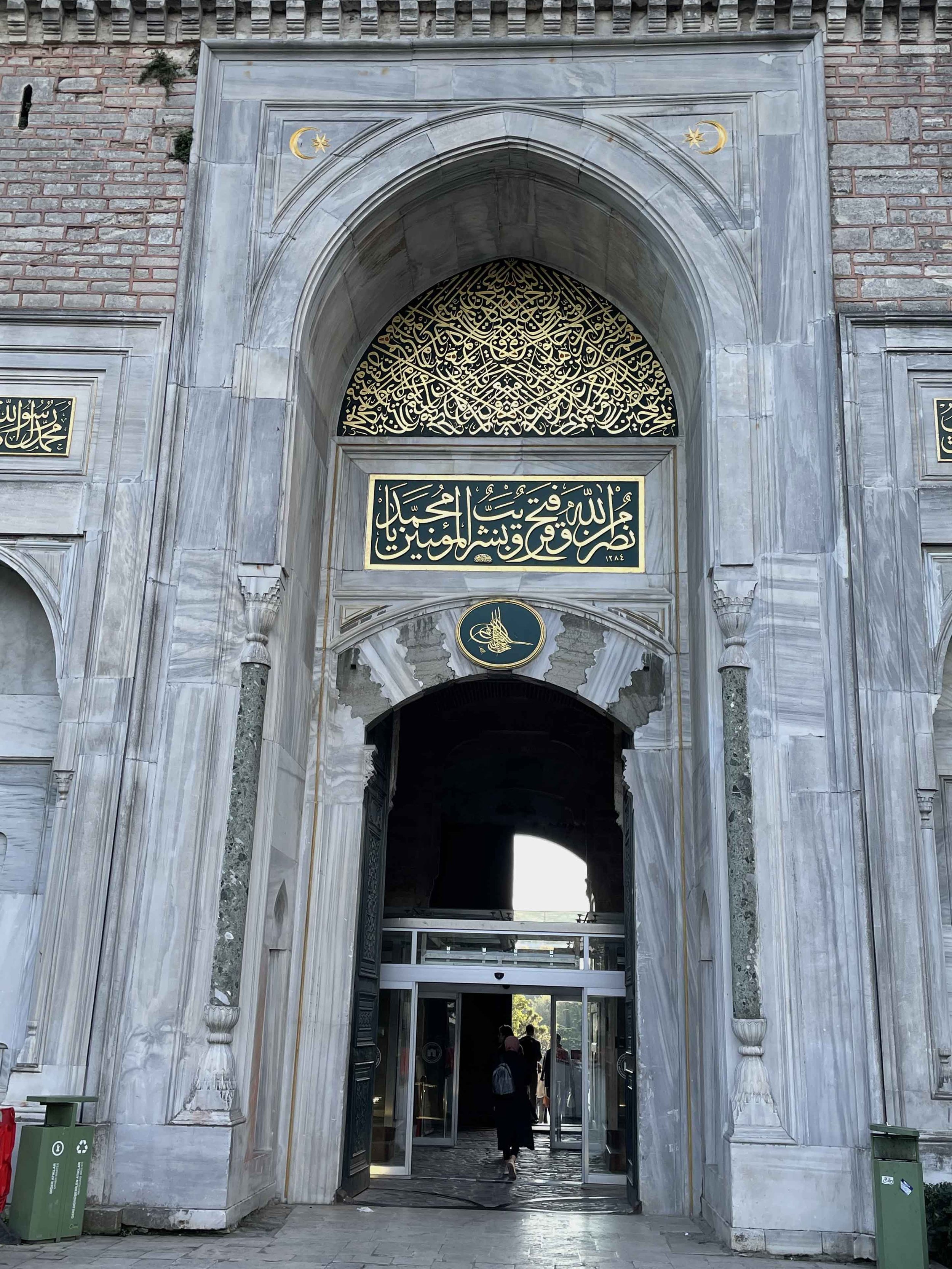
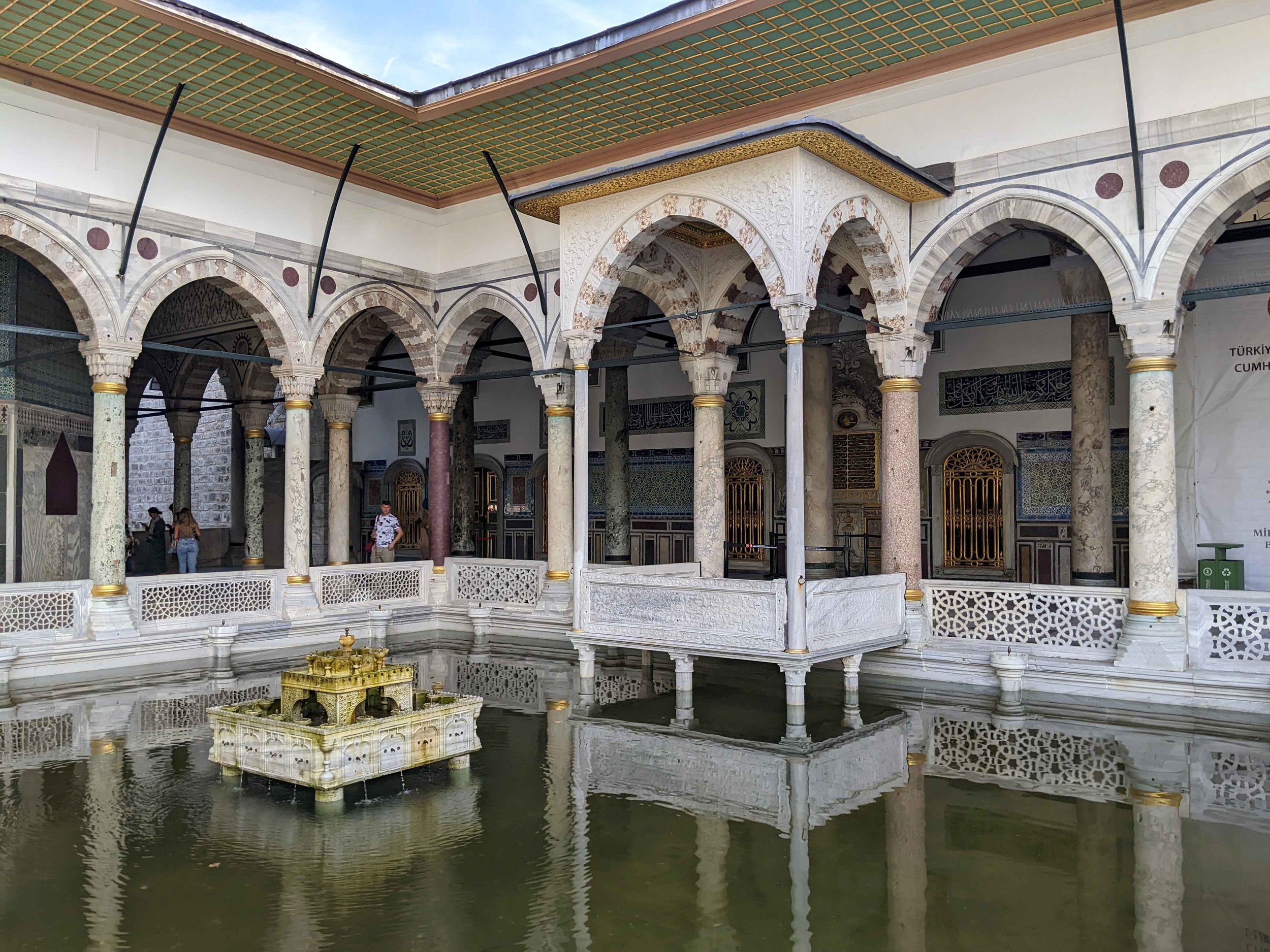
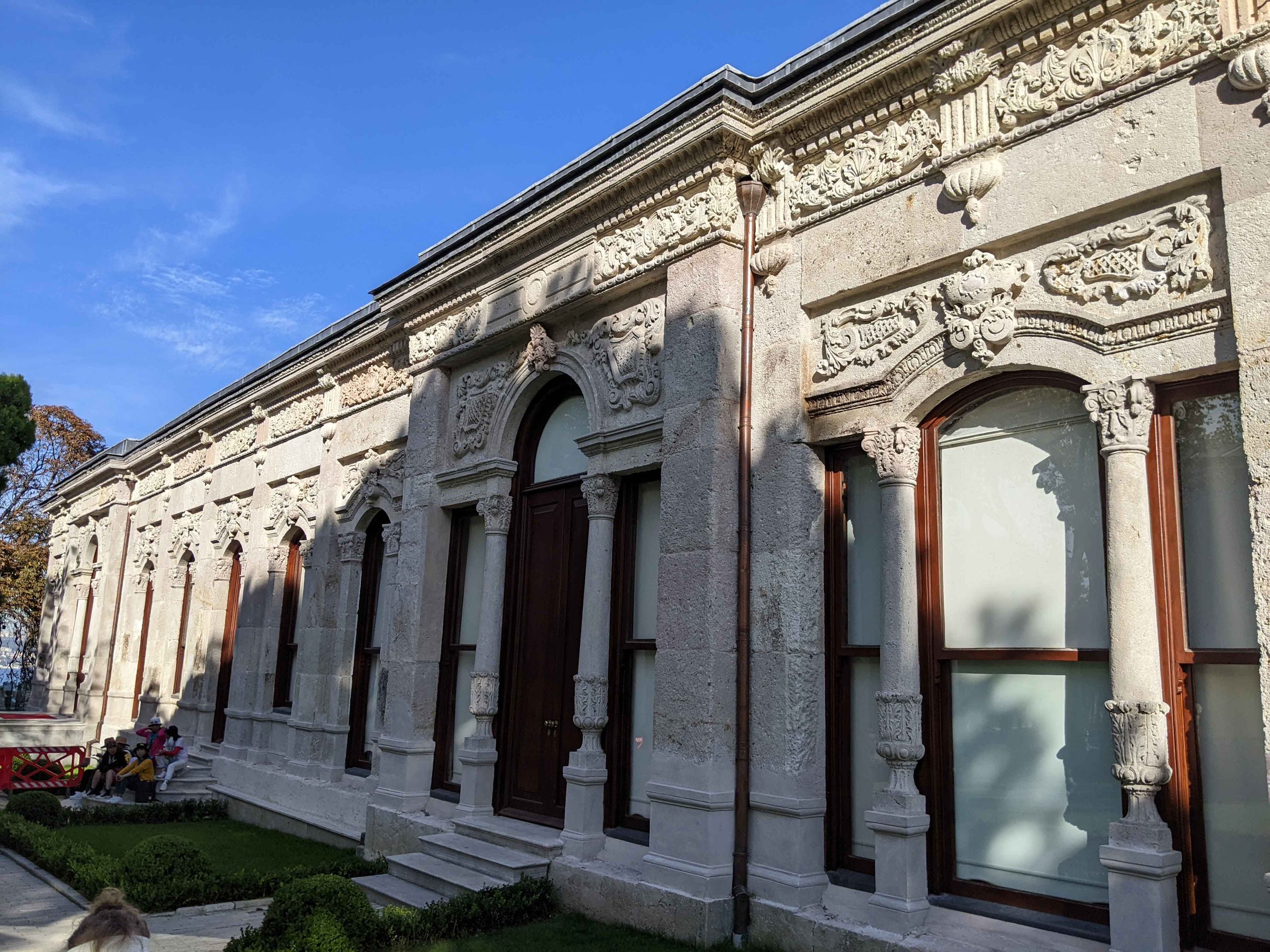
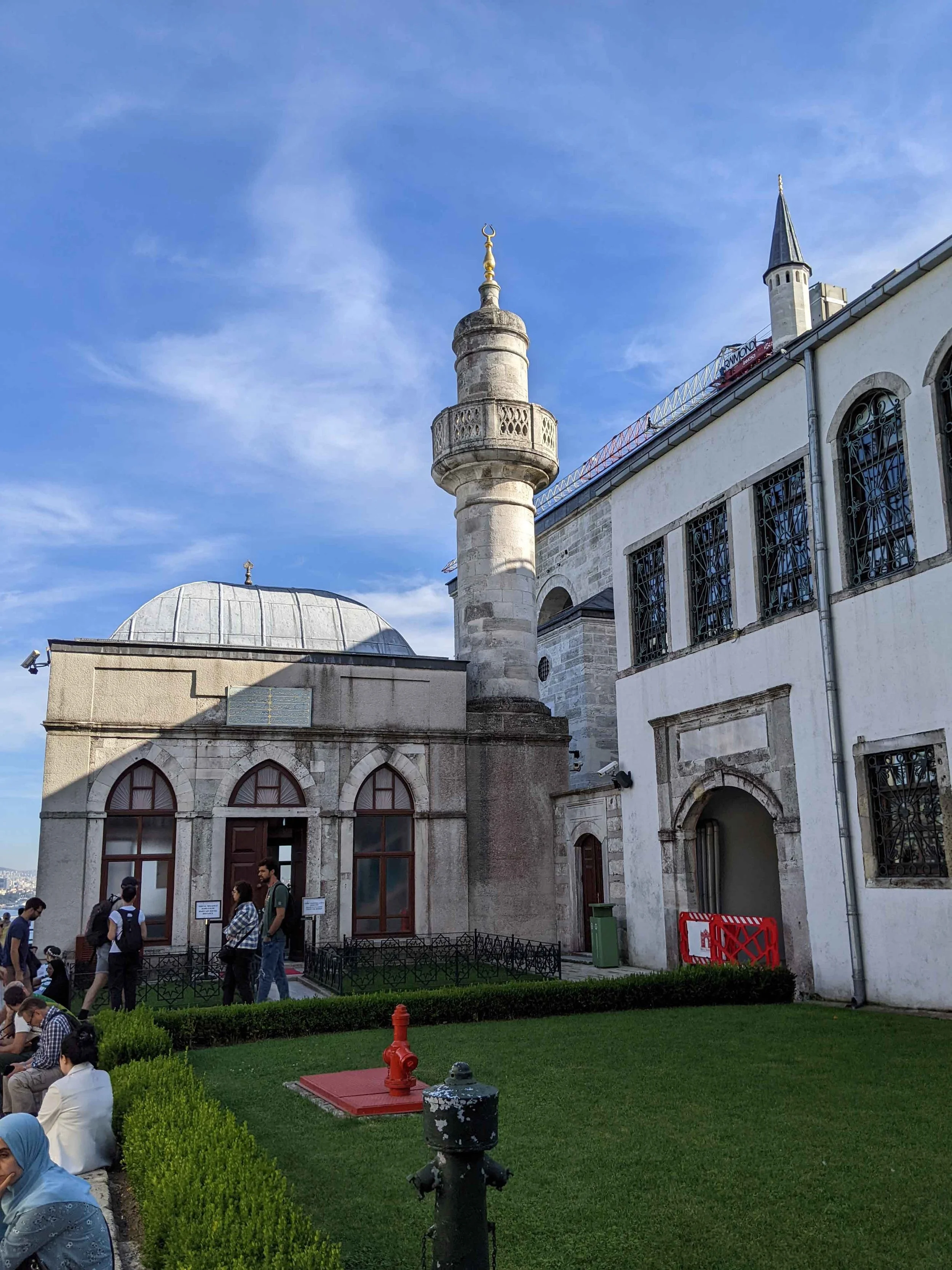
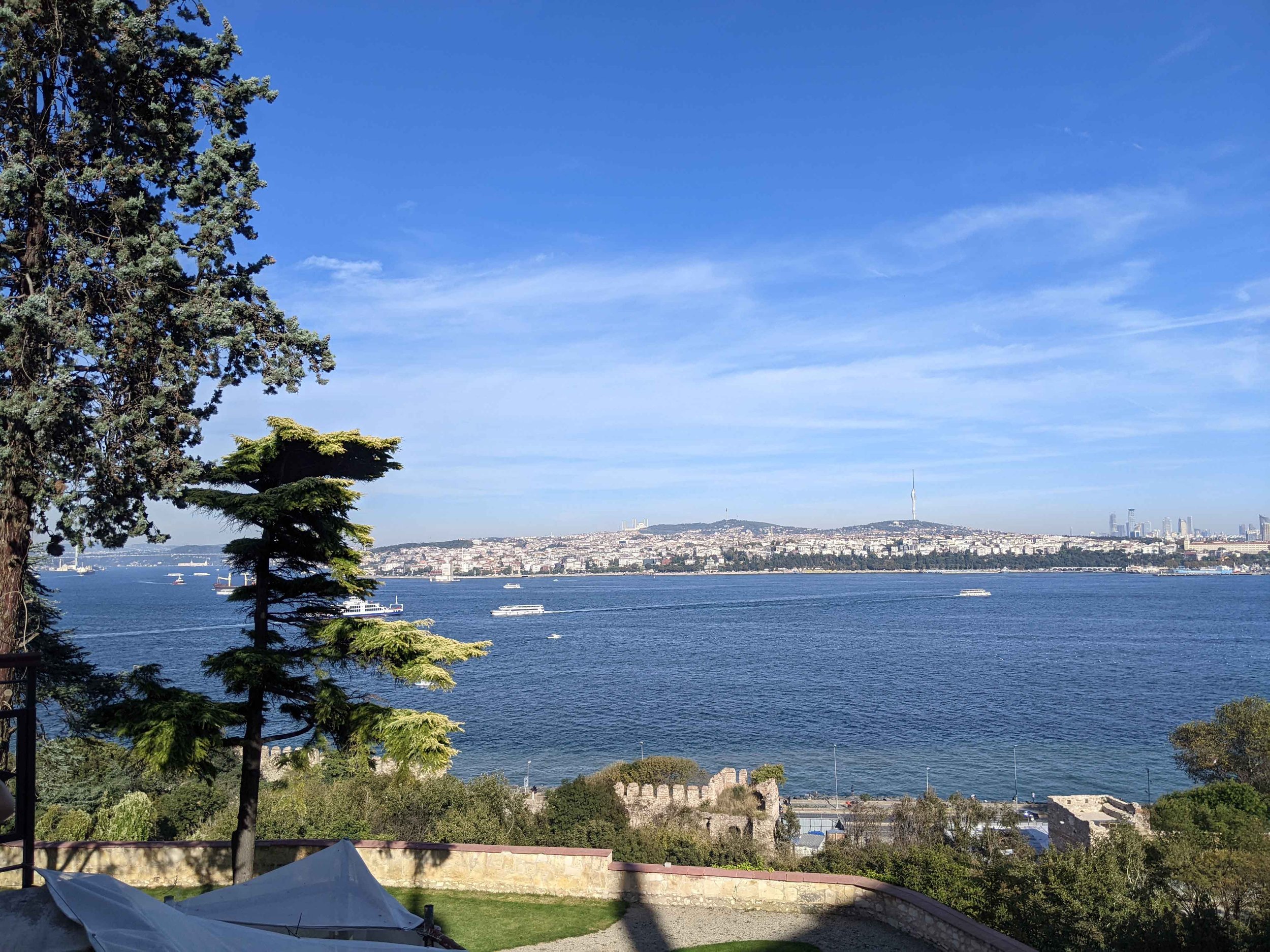
Topkapı Palace (literally translated as ‘Cannon gate palace’) was built by Sultan Mehmed II during the 14th century and is located in the historic peninsula bounded by the Marmara Sea, the Bosphorus Strait, and the Golden Horn inlet.

The palace remained the sultan’s main residence and center of government until the mid-19th century, after which the official residence was shifted to Dolmabahçe Palace. It was converted into a museum in 1924 when Turkey became a republic.

Spread over an area of 350,000m2, this palace, with its historic buildings, collections, and nearly 300,000 archive documents, is considered one of the largest museum palaces in the world.


THE MUSEUM

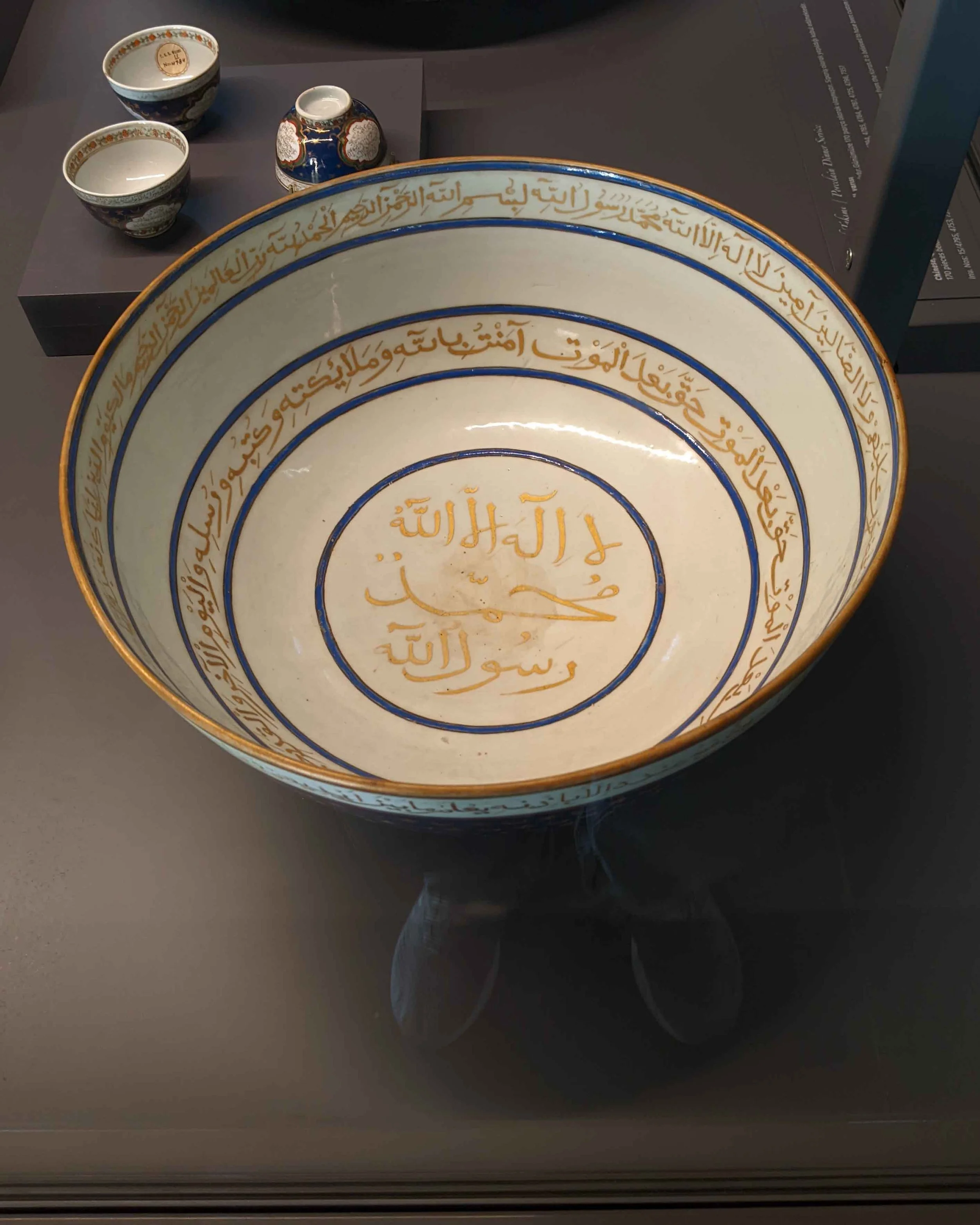
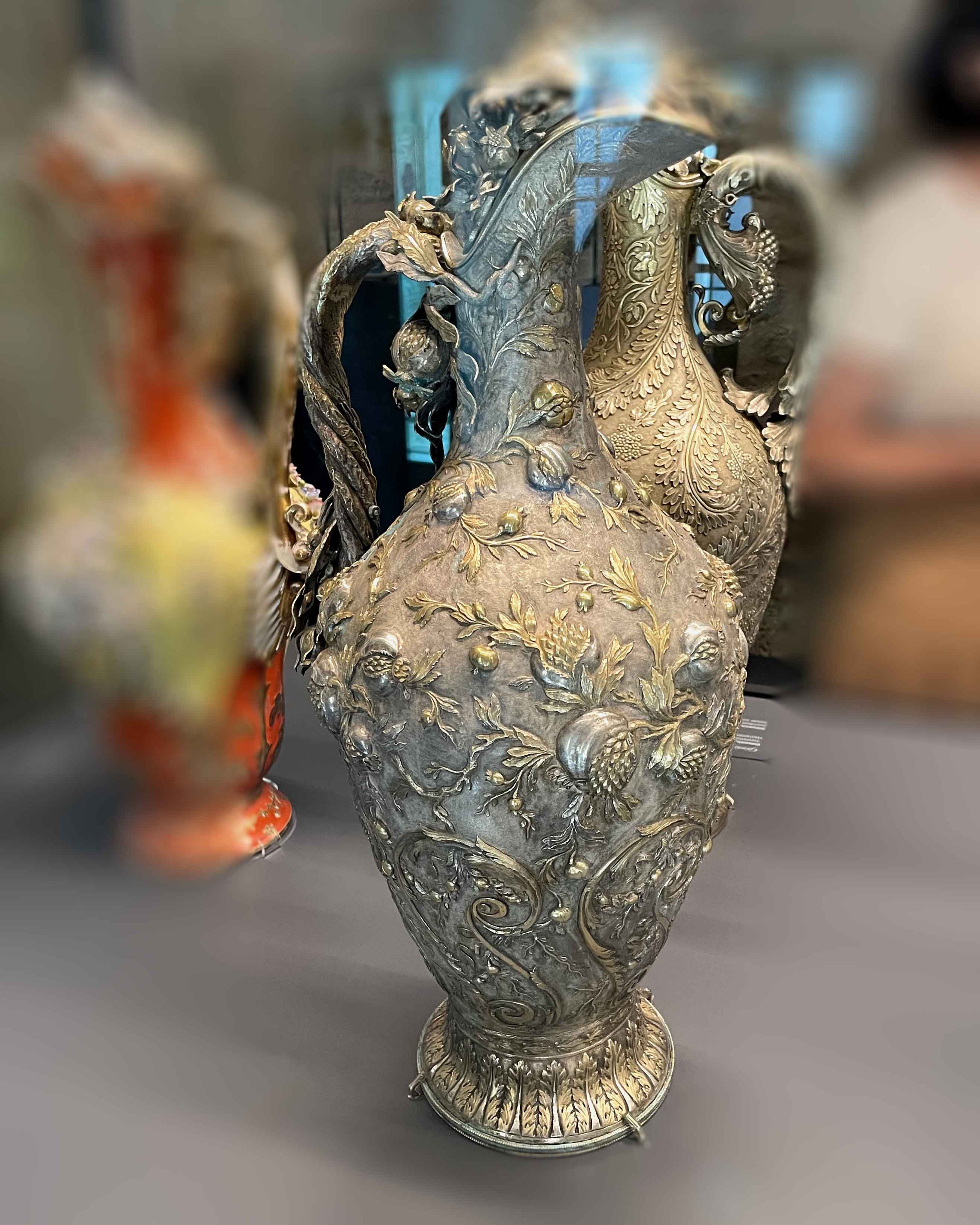
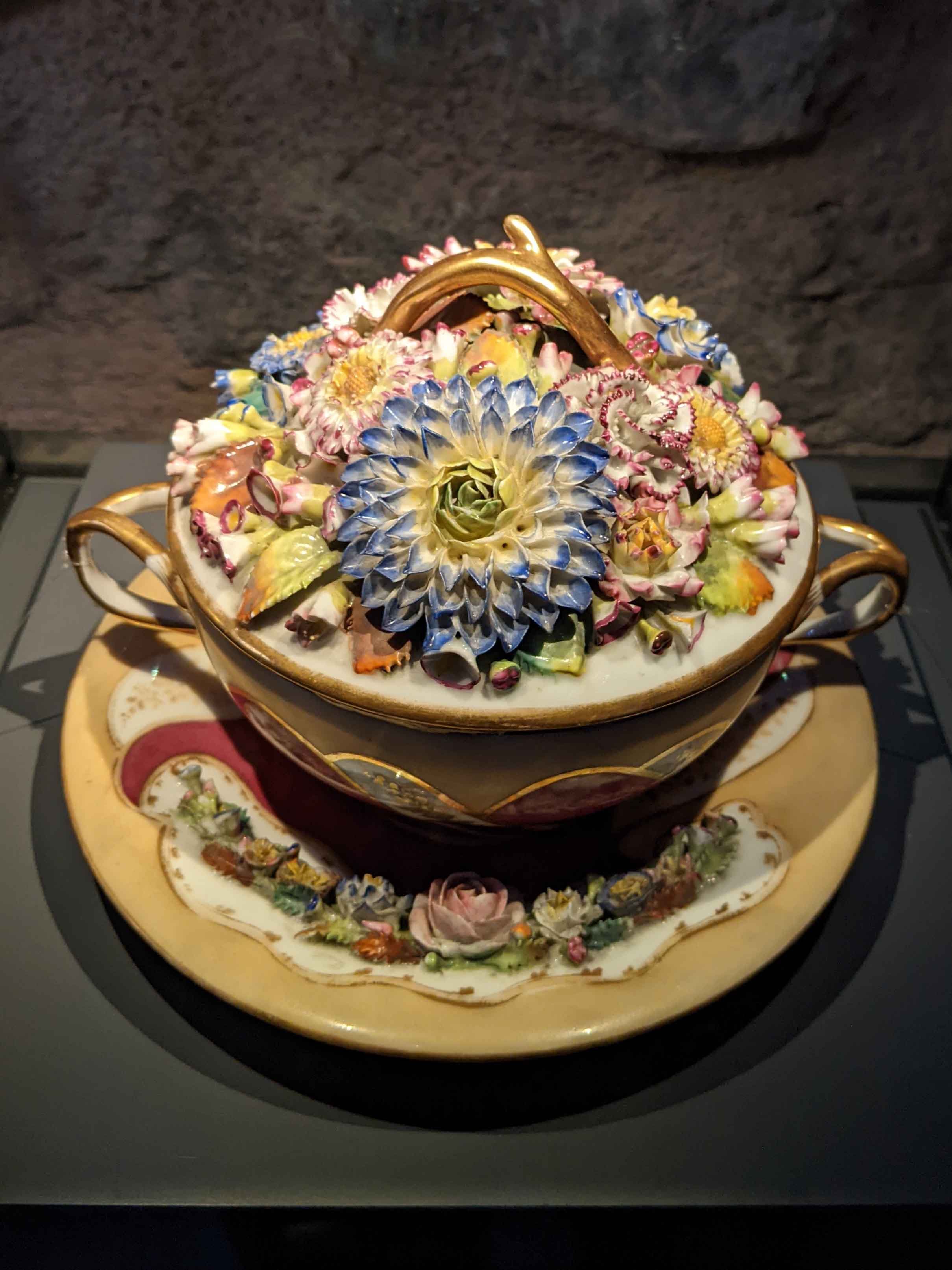
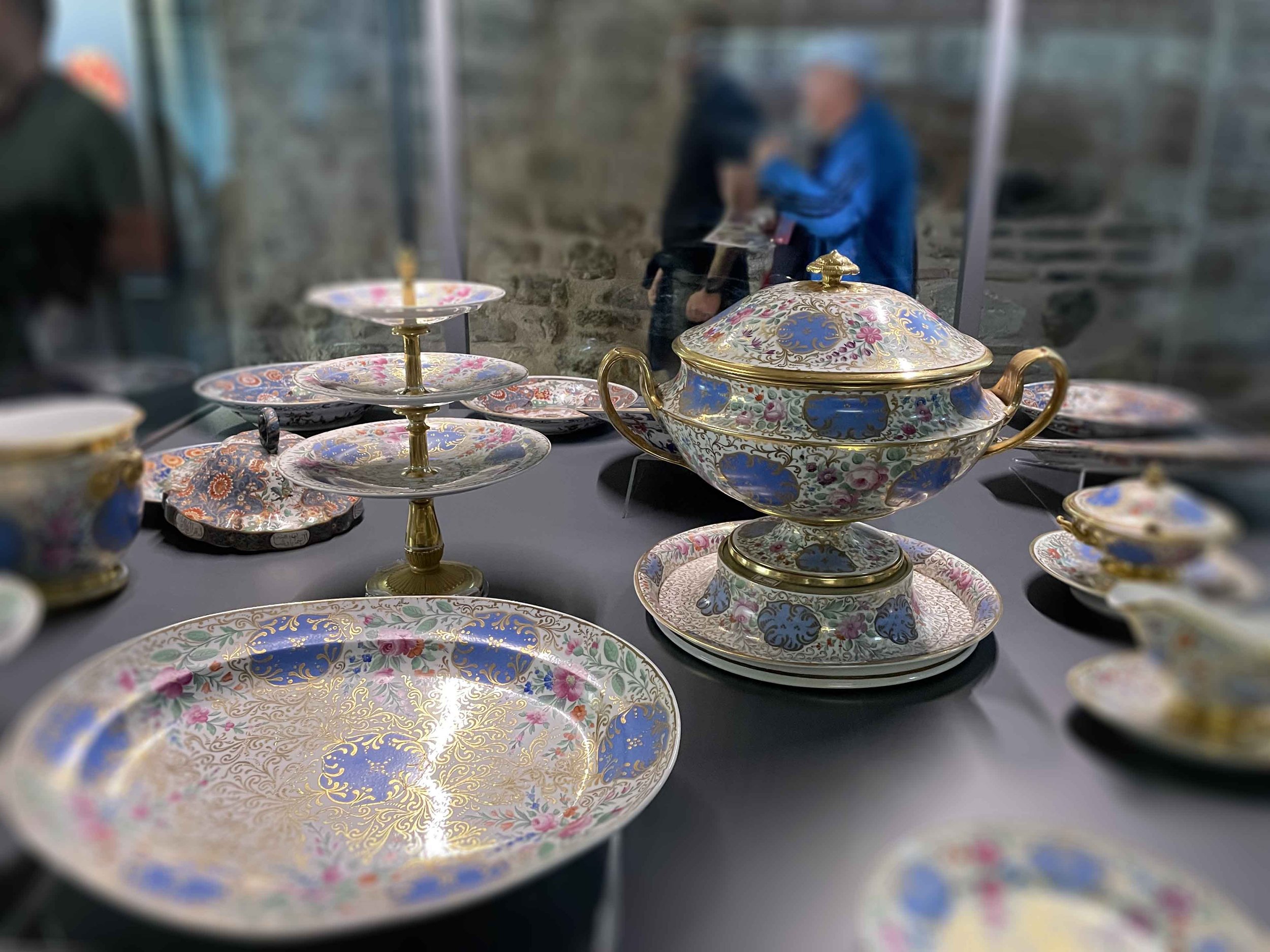
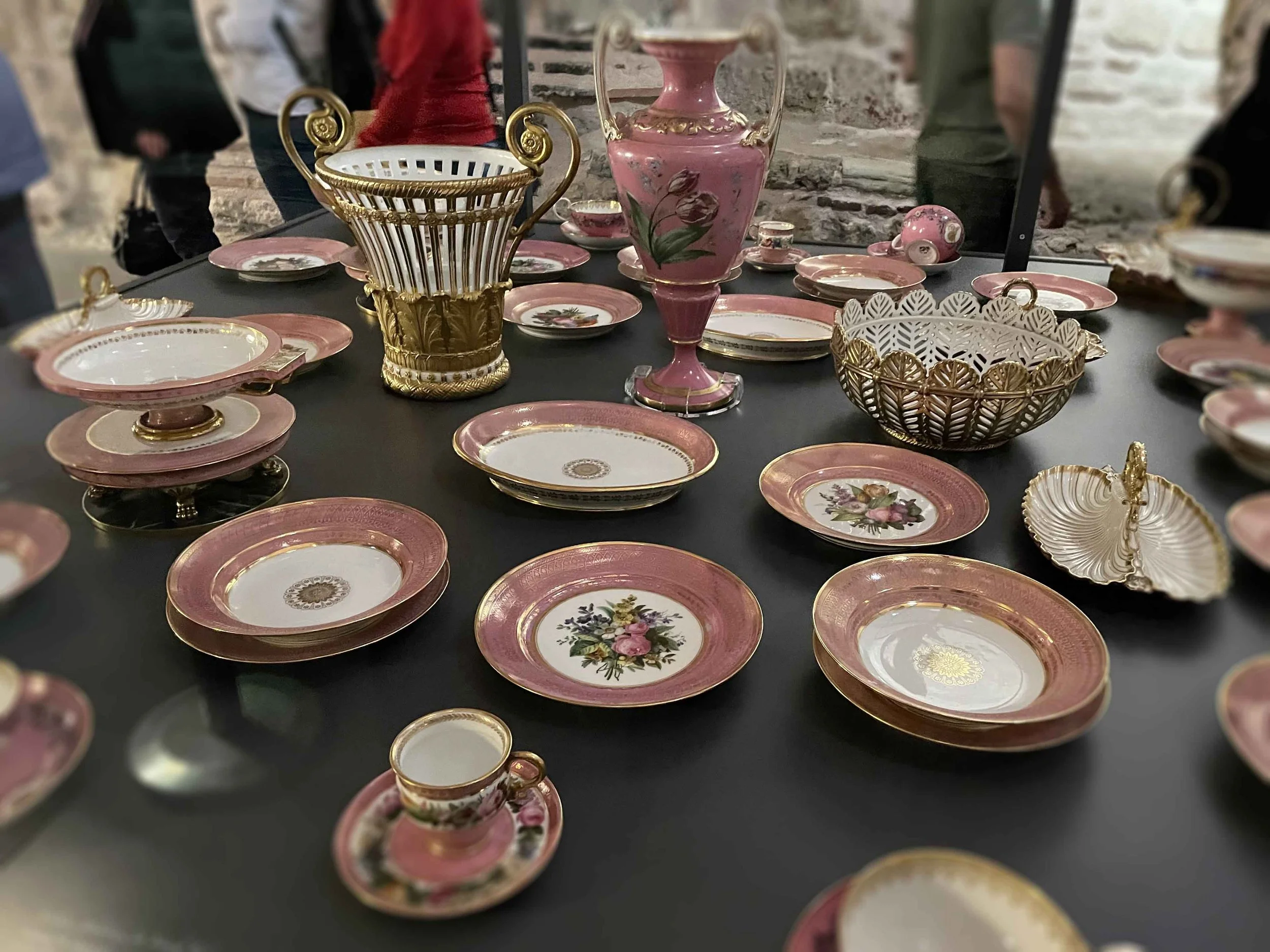
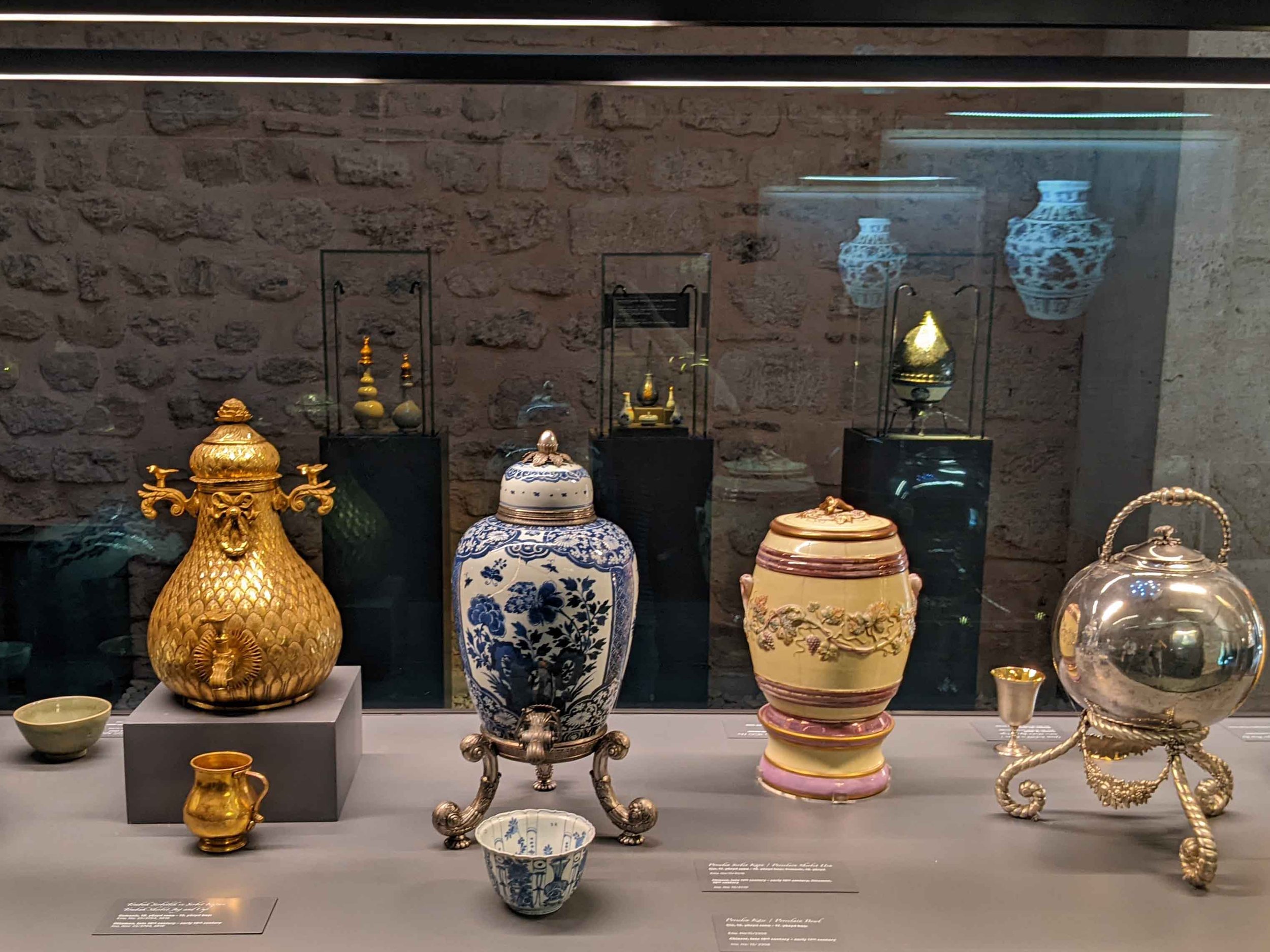
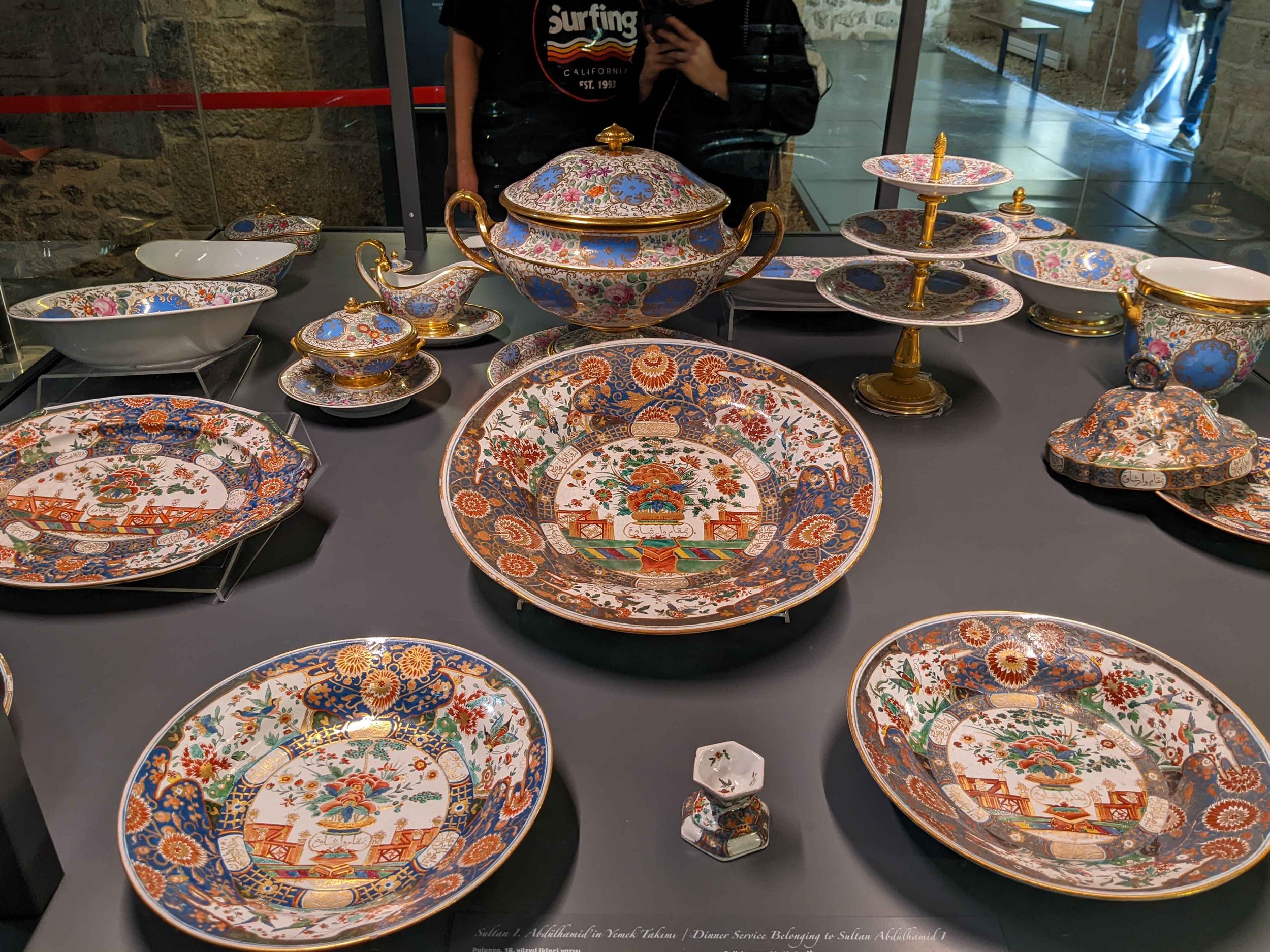
The museum houses one of the best collections of royal and extravagant European, Chinese, and Japanese porcelain and glassware. They are also displays of the Sultan’s kitchen and the utensils used to prepare food and feed the army of people working at the palace.

12a.jpg
a17.jpg
a12.jpg
a18.jpg
a19.jpg
a13.jpg
a15.jpg
a16.jpg
a4.jpg
a6.jpg
a2.jpg
a8.jpg
a9.jpg
a14.jpg
a10.jpg
a20.jpg
a1.jpg
a3.jpg
a21.jpg
a7.jpg

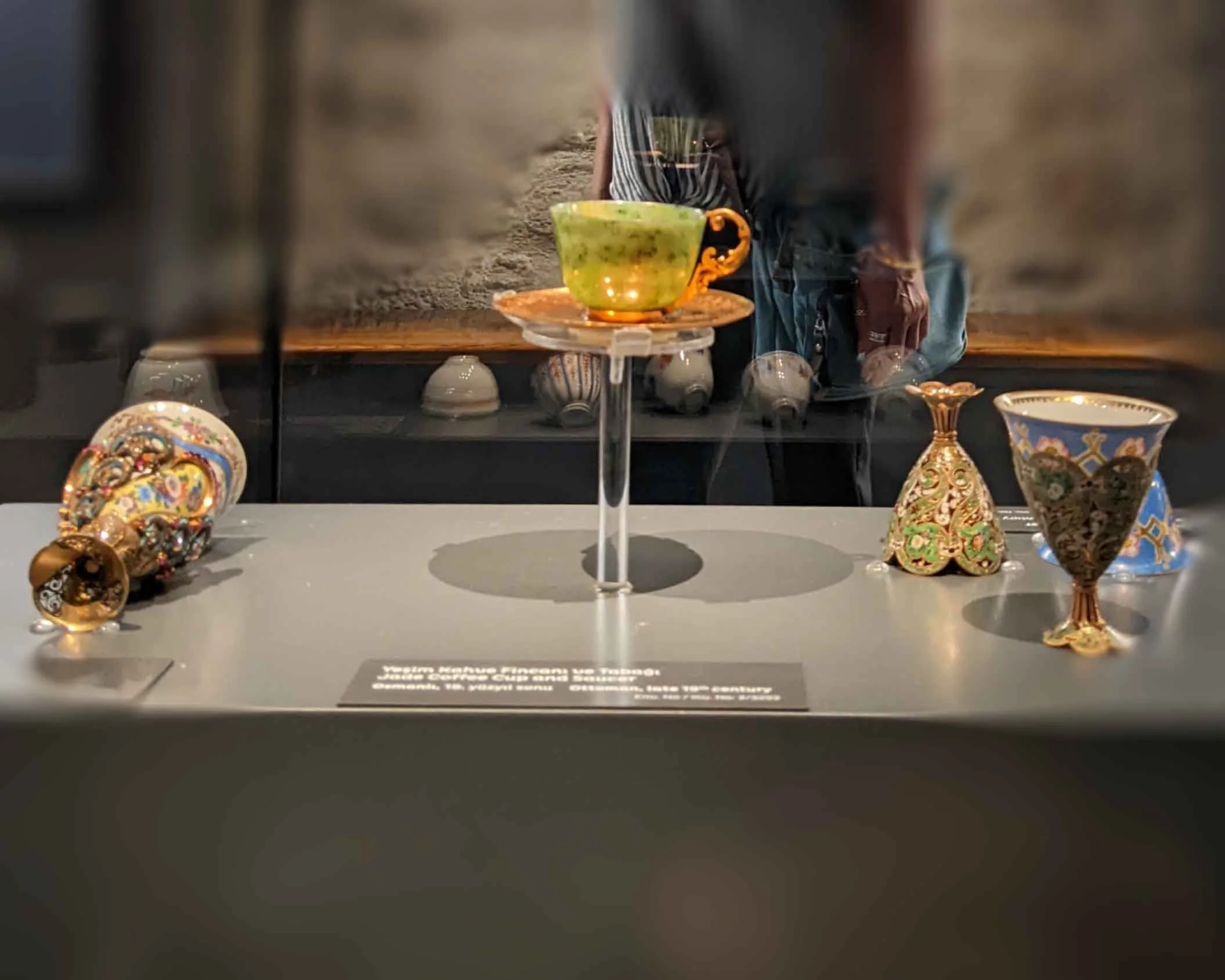
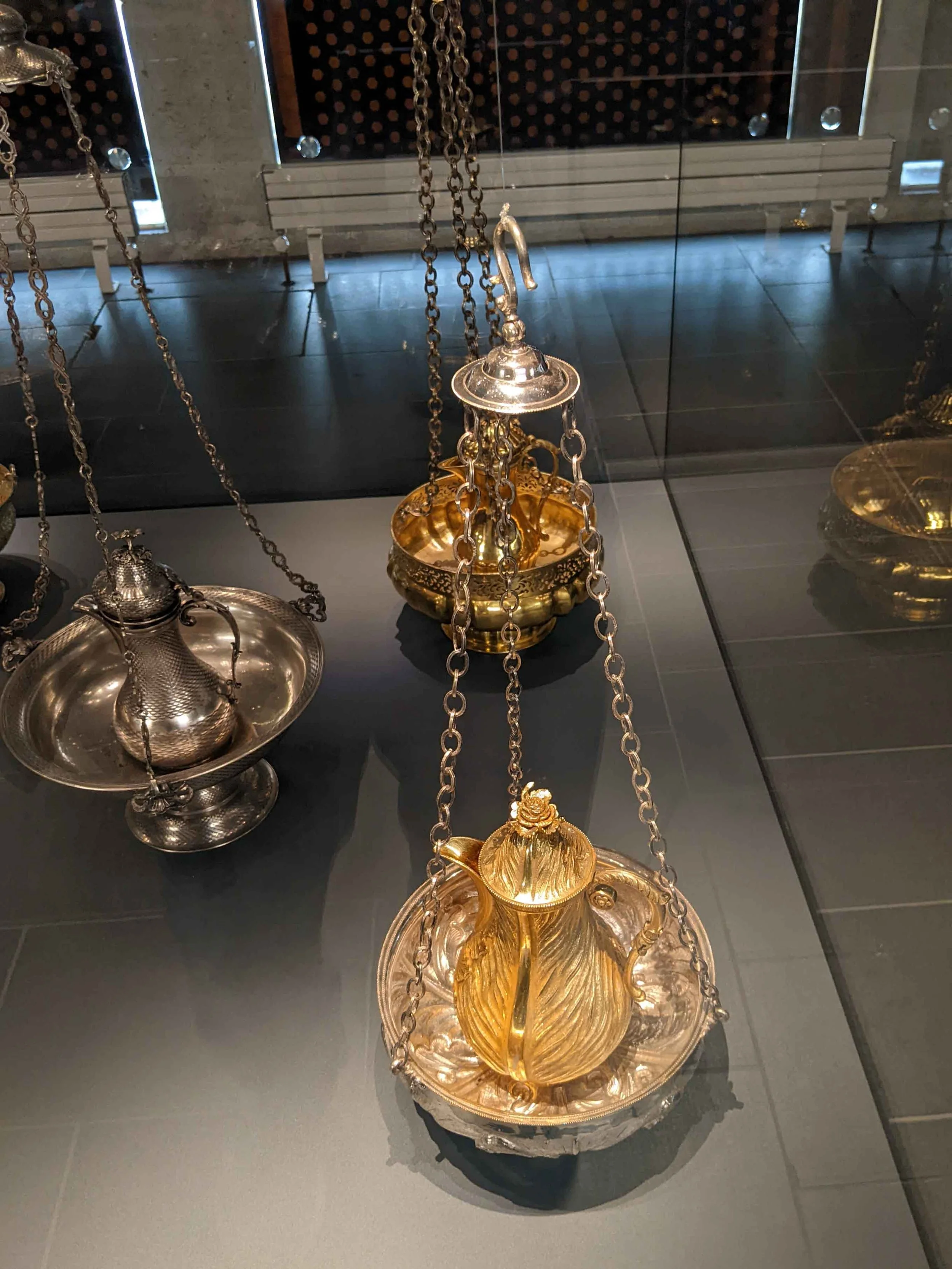
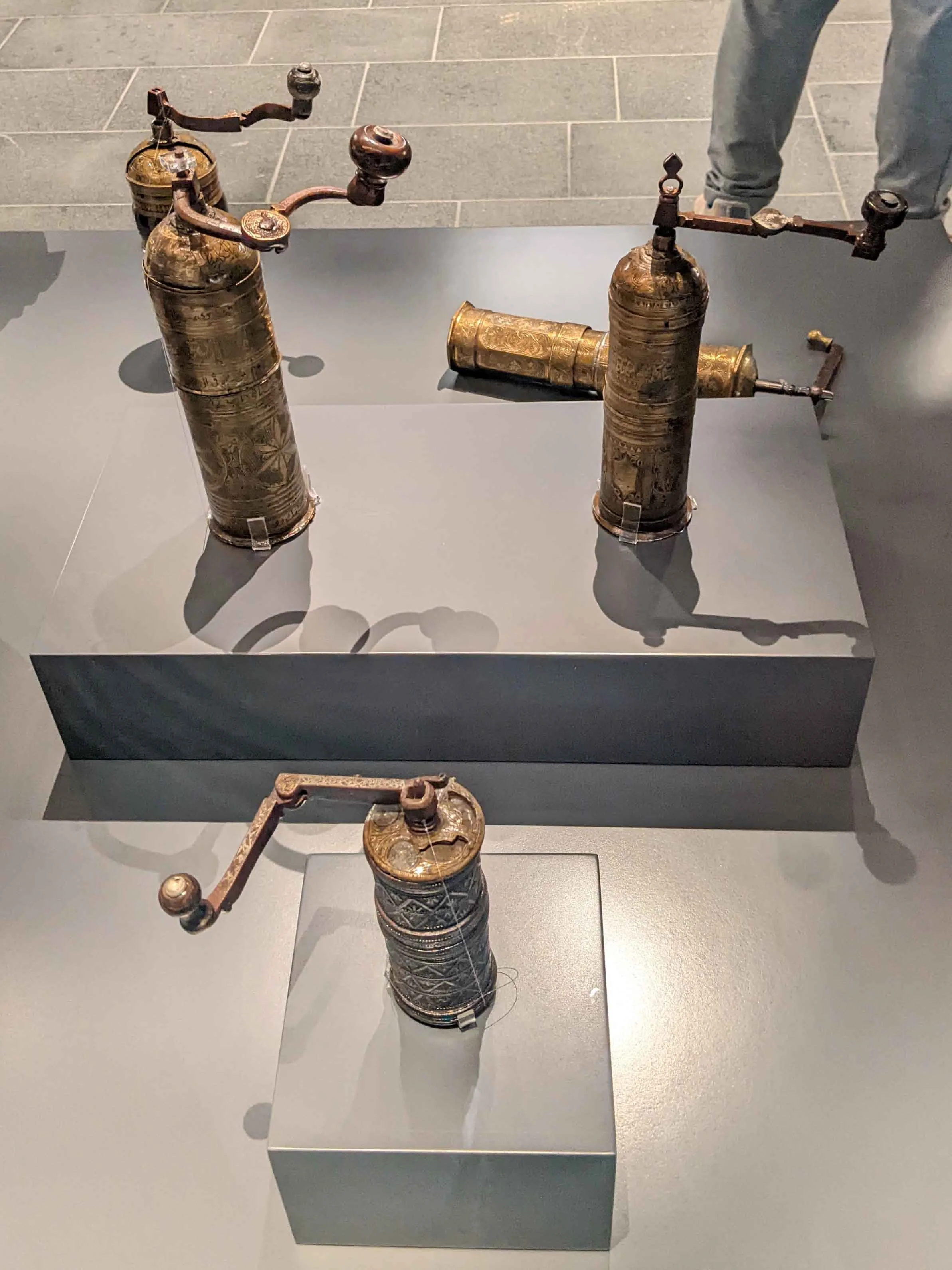
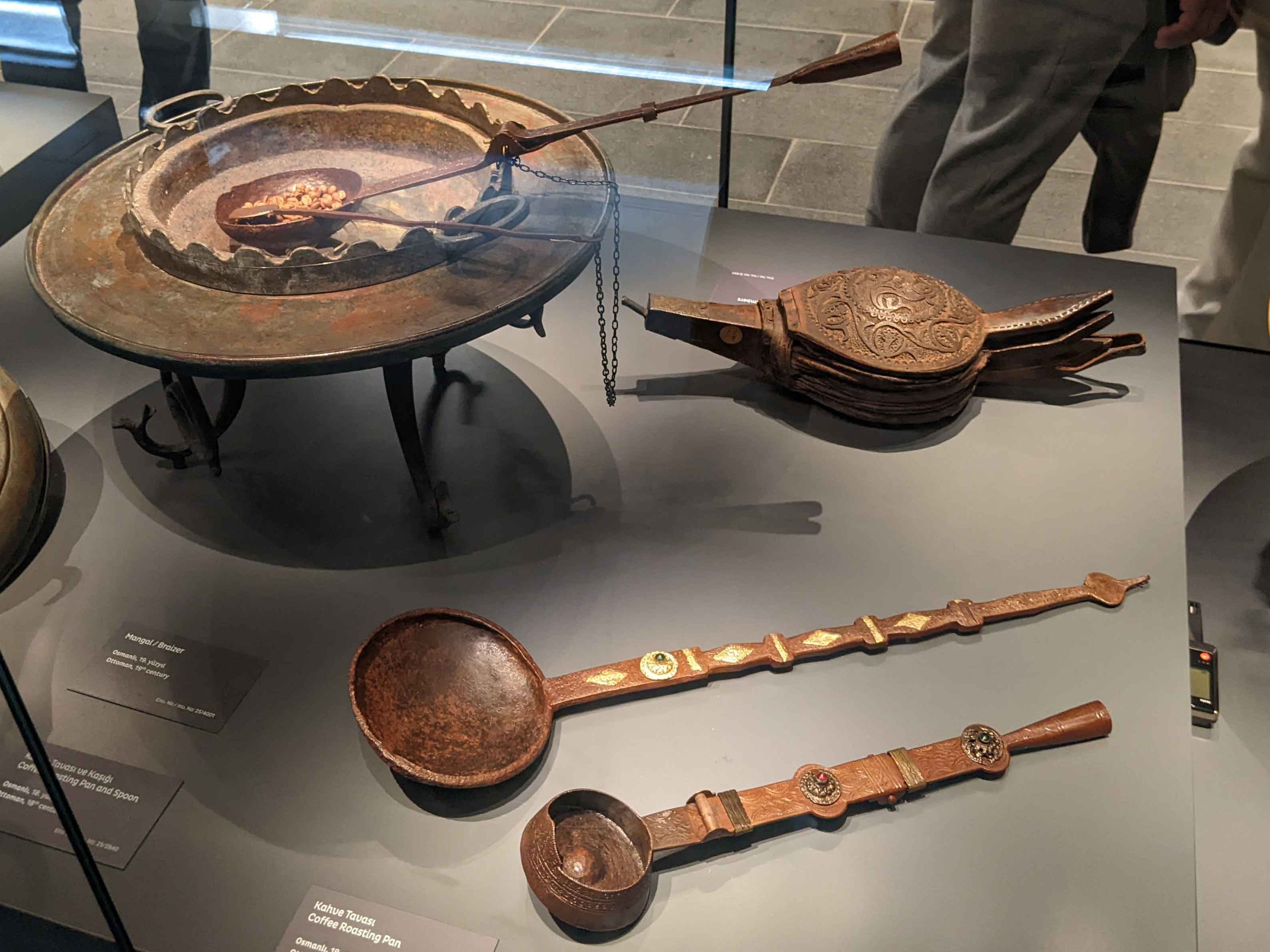
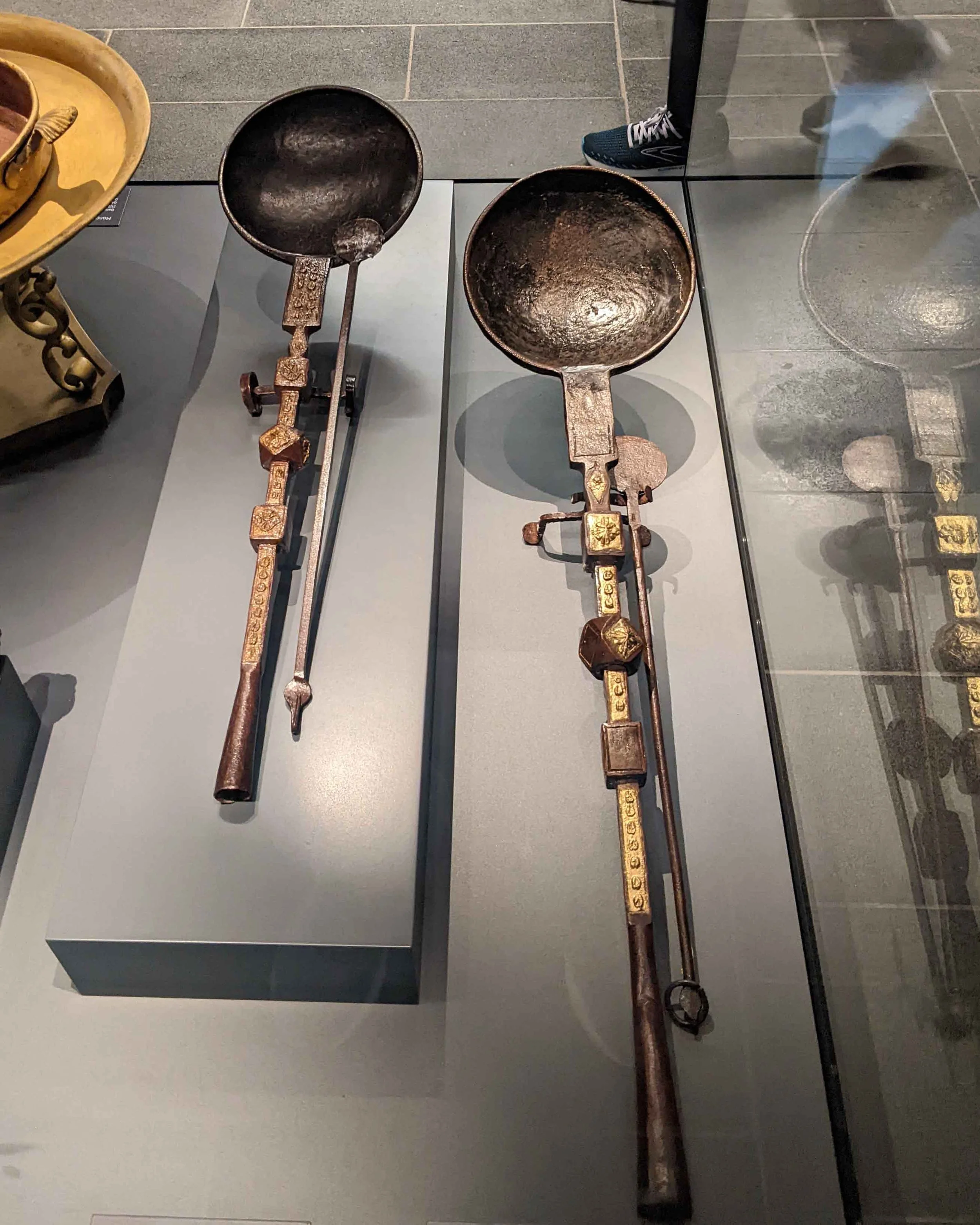
Coffee culture existed at the Ottoman palace and continued in the traditional manner during the 19th century. The museum has a whole section dedicated to this facet of palace life. Coffee was presented to the Sultan and his guest in special ceremonies featuring specially trained staff and utensils.
 

In the harem, coffee was served by female attendants known as’ kahveci kalfa’ trained in the rituals of its presentation. One of the attendants carried the velvet or satin cloth adorned with gold thread, pearls, or diamonds, and others the jeweled cups and holders on a gold or silver tray. A third brought the coffee jug on its chafing dish, where it was kept hot by embers, and a fourth filled the cups, placed each in a holder, and offered them to the guests.
 

Wouldn’t it be nice, to have coffee served with similar pomp and glory at the local Starbucks instead of the usual frowned-faced attendants?

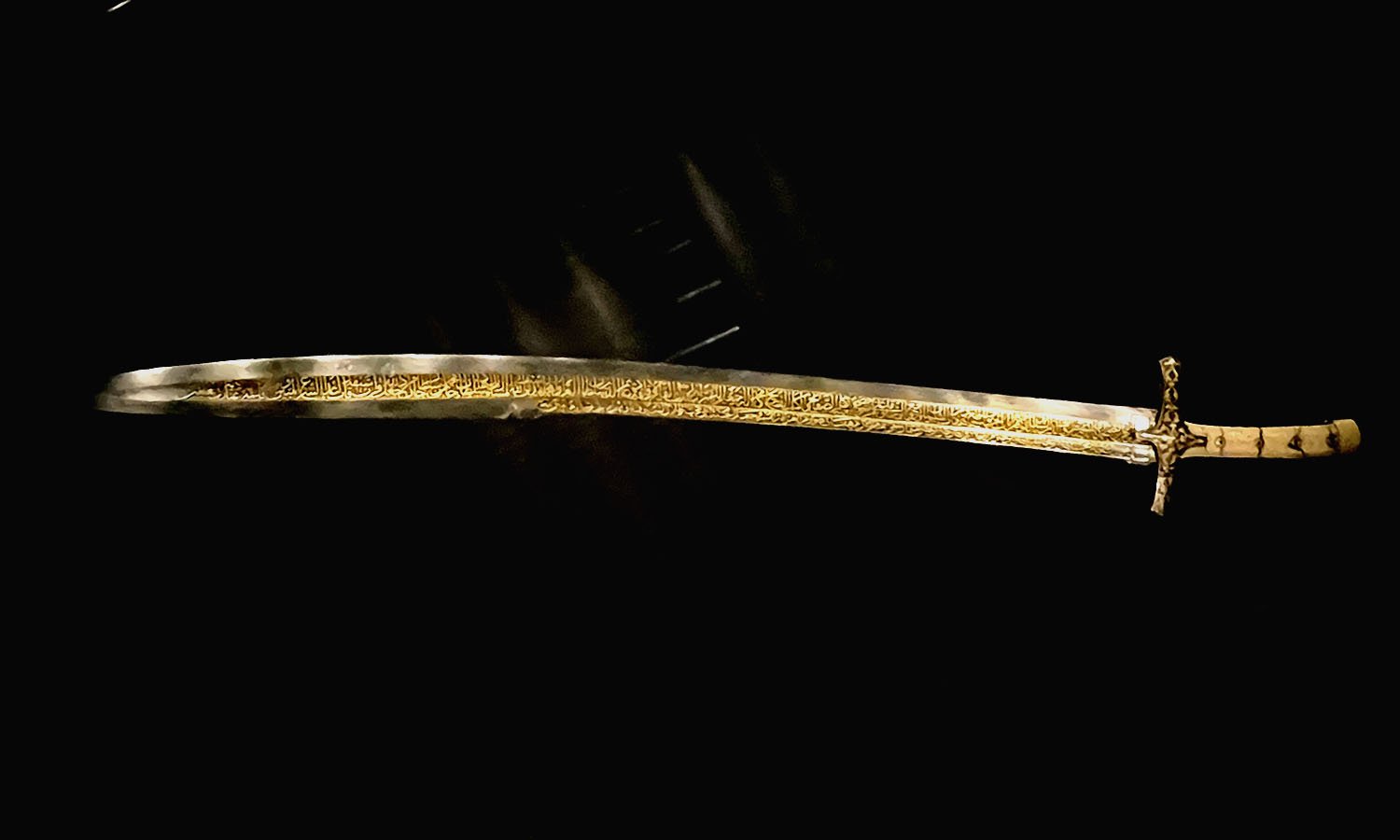
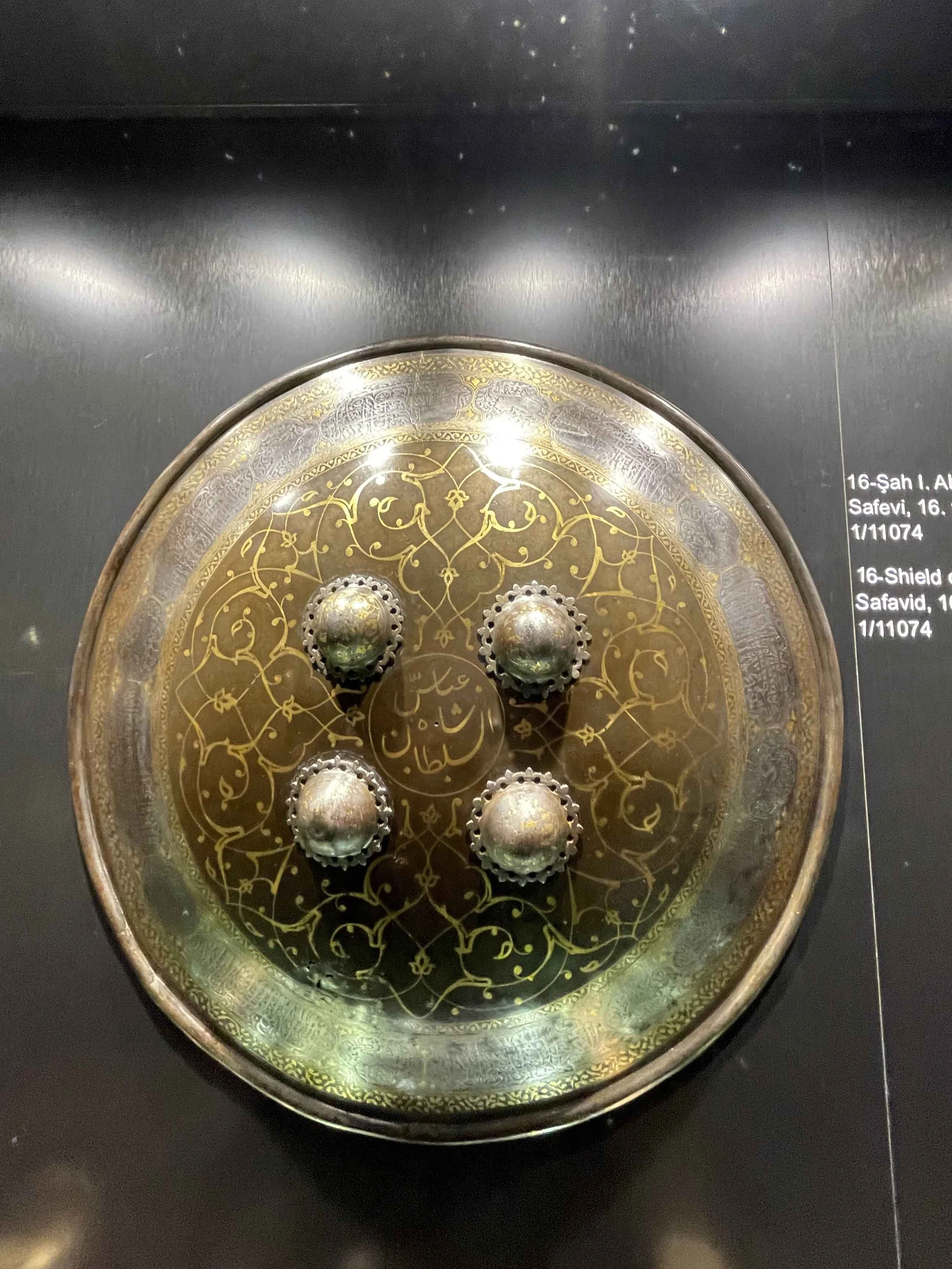
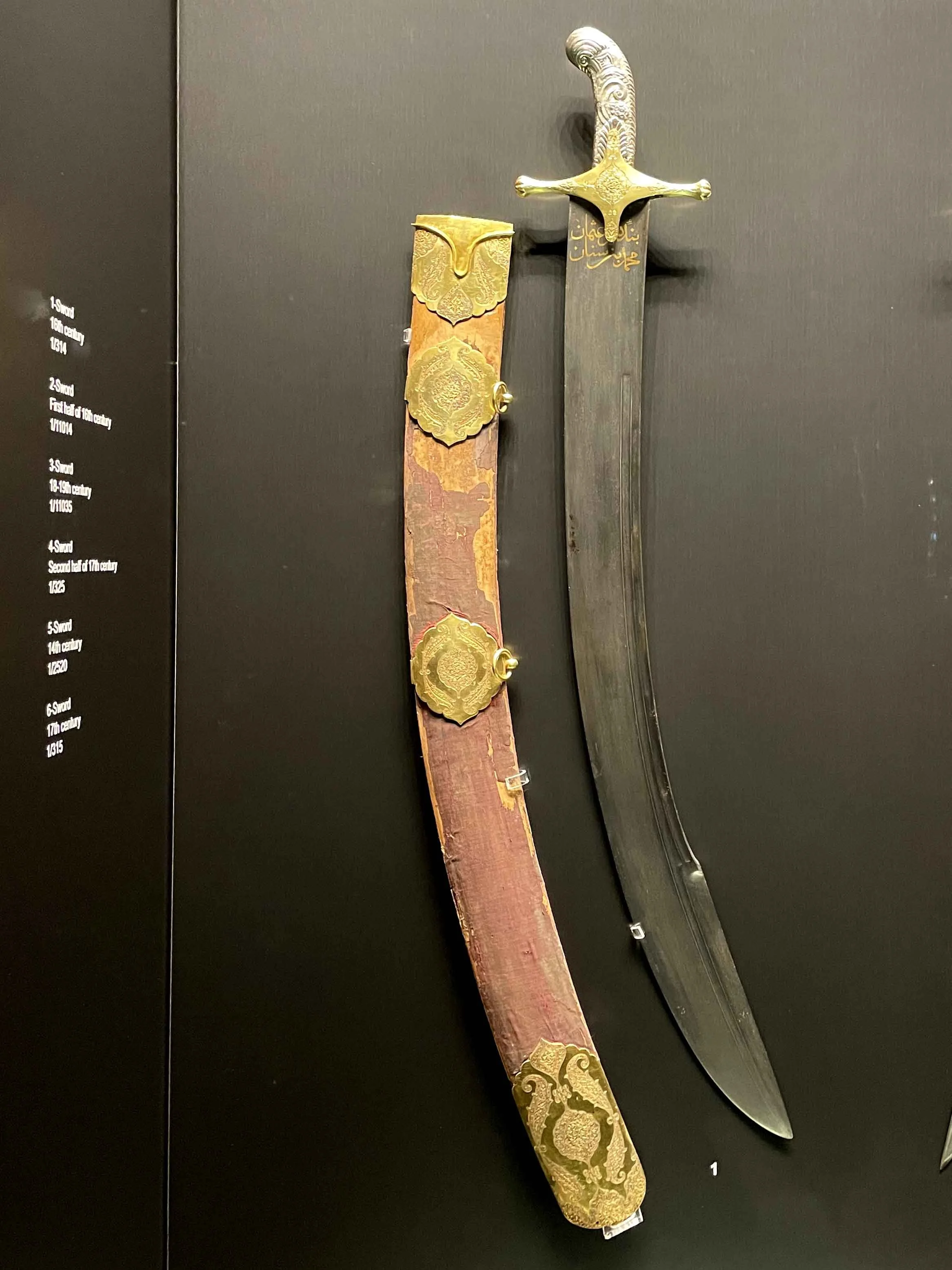
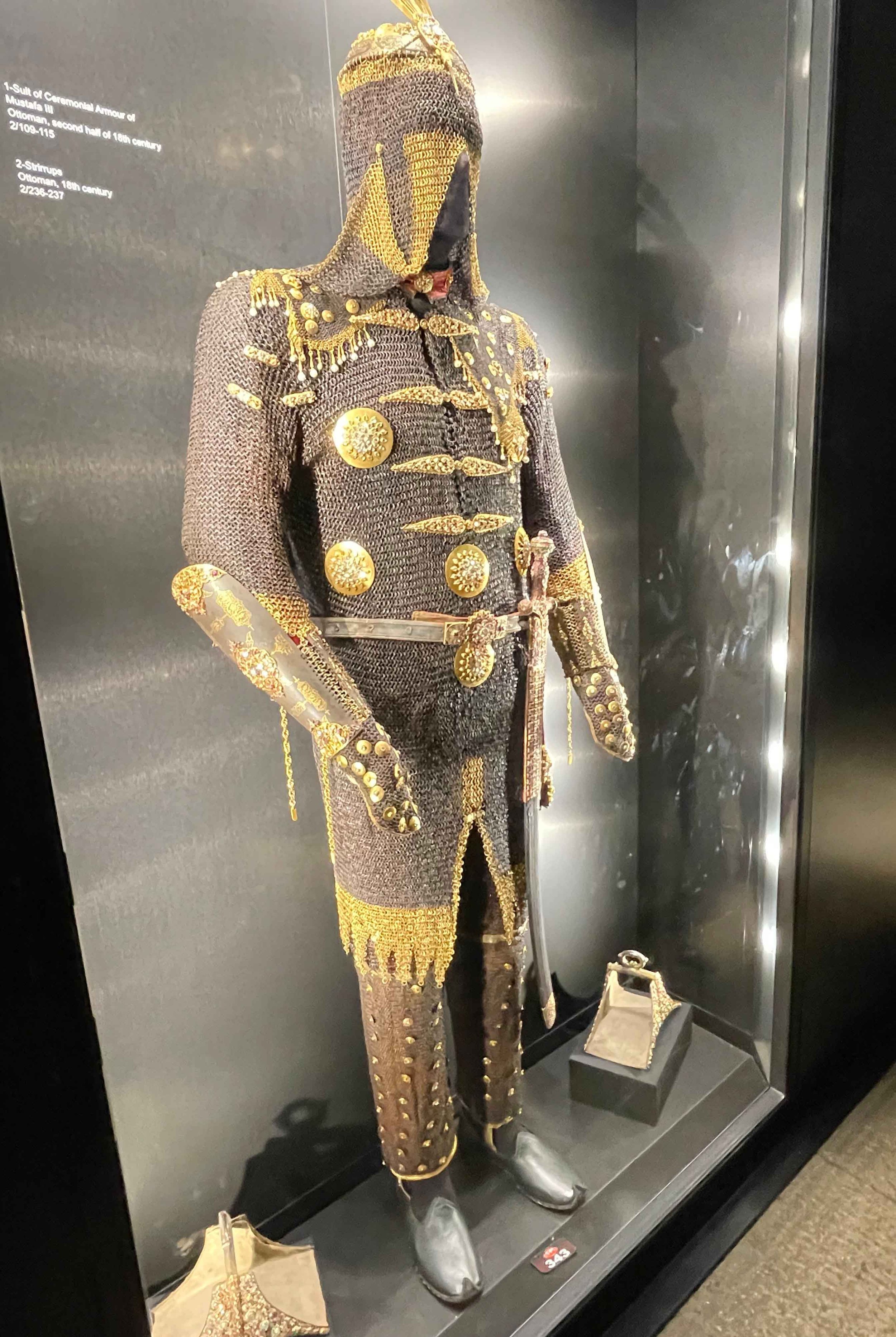
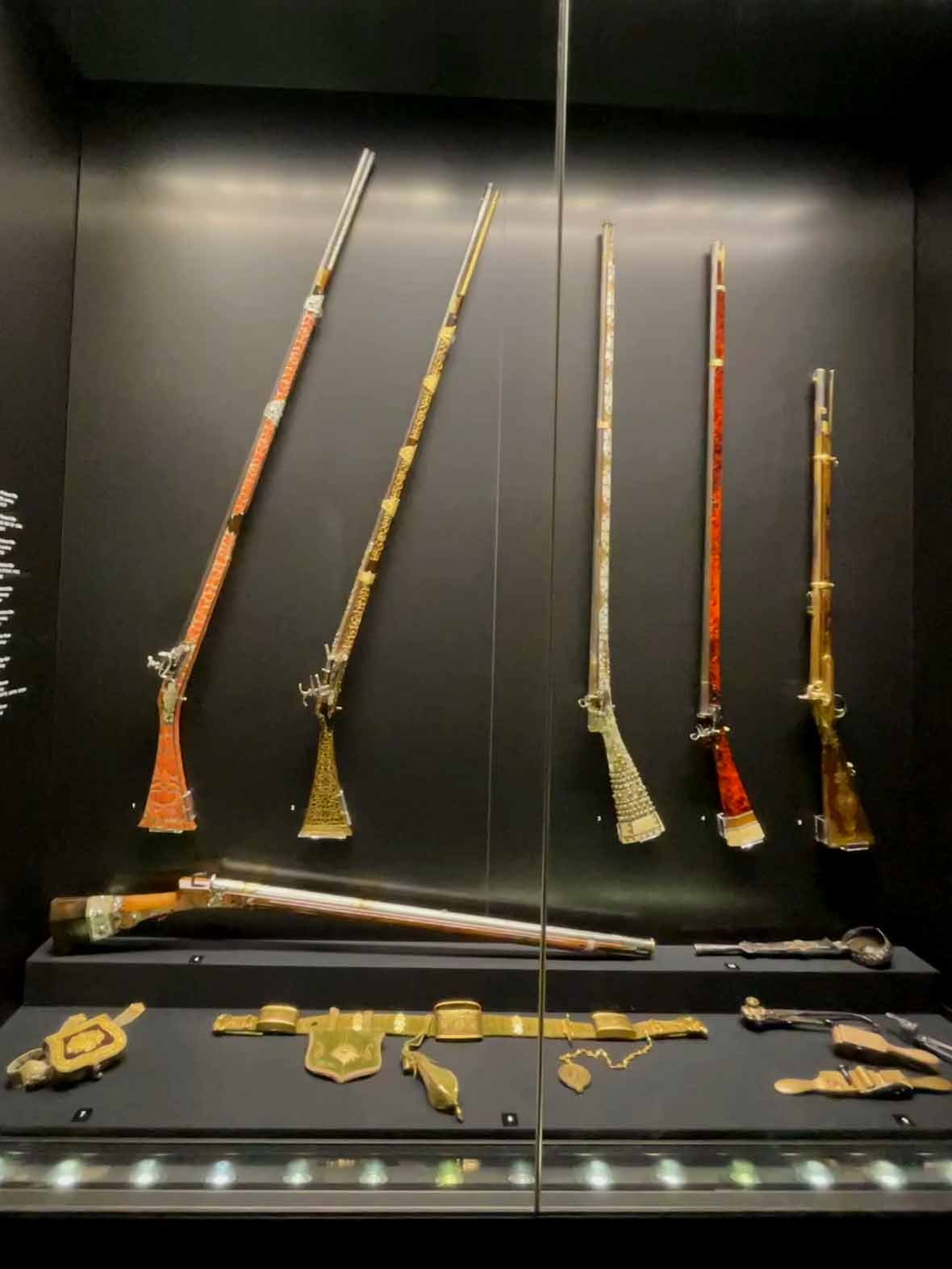
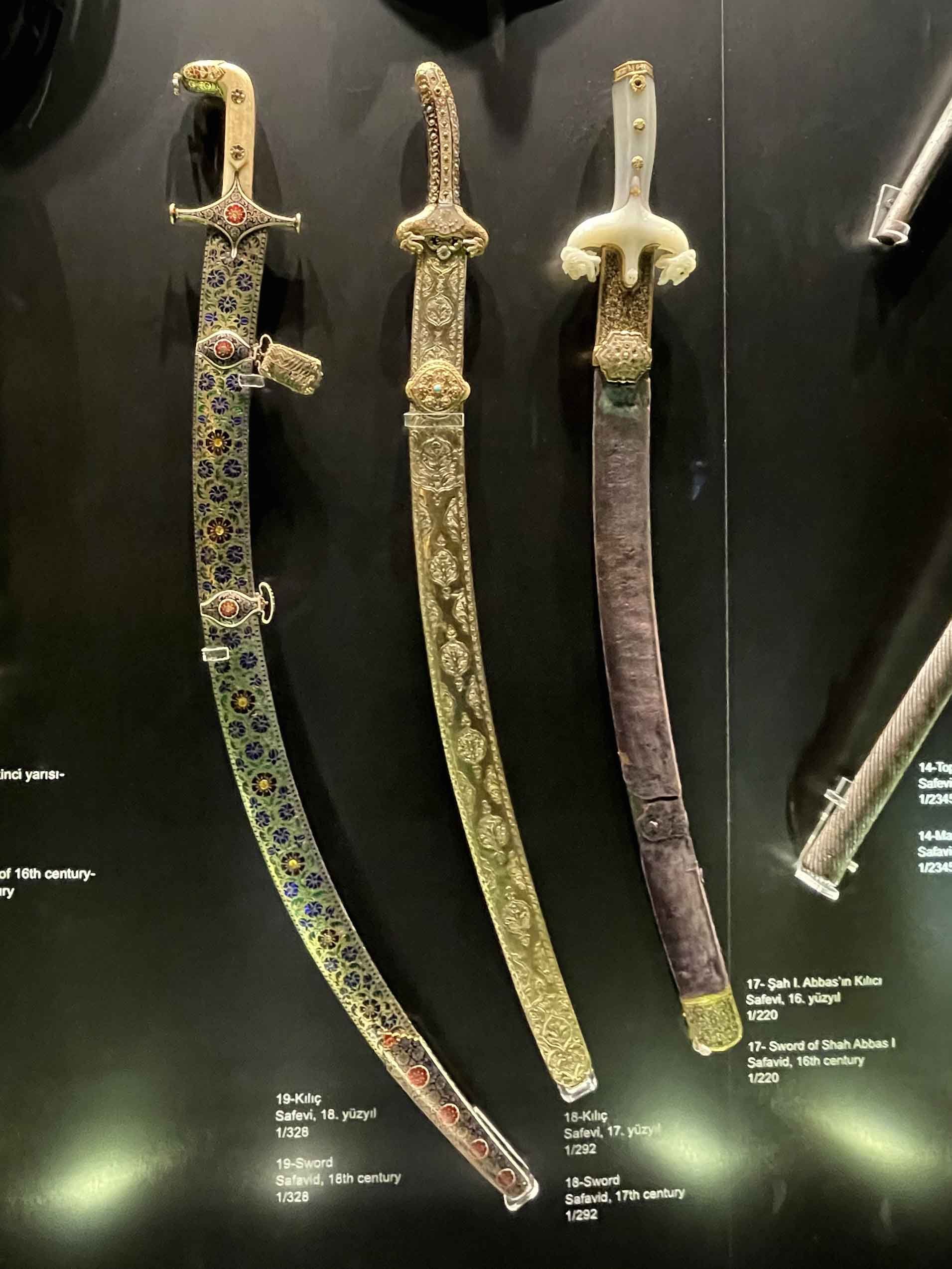
The weapons collection at the Topkapi Palace Museum is one of the richest and most diverse collections in the world. It comprises of thousands of weapons of various origins such as Indian, Arab, Turkish, Persian, Mamluk, Abbasid, European, Japanese, Crimean Tartar, and Umayyad. Spanning over 1,300 years, the collection consists of weapons that were transferred from the armies and those that were used by the palace guards.


THE HOLY RELICS

b4.jpg
b2.jpg
b3.jpg
b1.jpg

Outside the Library building in the centre of the third courtyard, we found a long queue of people that seemed to be moving at a snail’s pace. People from all over the world, Muslims, and non-Muslims flocked outside this ‘Has Oda’ or the chamber of the holy relics to view the most precious relics of the Islamic world. Note, only limited visitors are allowed to enter the chamber at a time, and women are required to cover their heads with a scarf before entering the chambers.

The Ottomans collected the Holy Relics attributed to the prophets from all over the empire and brought them to Istanbul for safekeeping. It is said that the Ottoman sultans wanted to keep the Holy Relics close to themselves because they thought that the location of the relics would qualify Istanbul as the centre of the Islamic world.

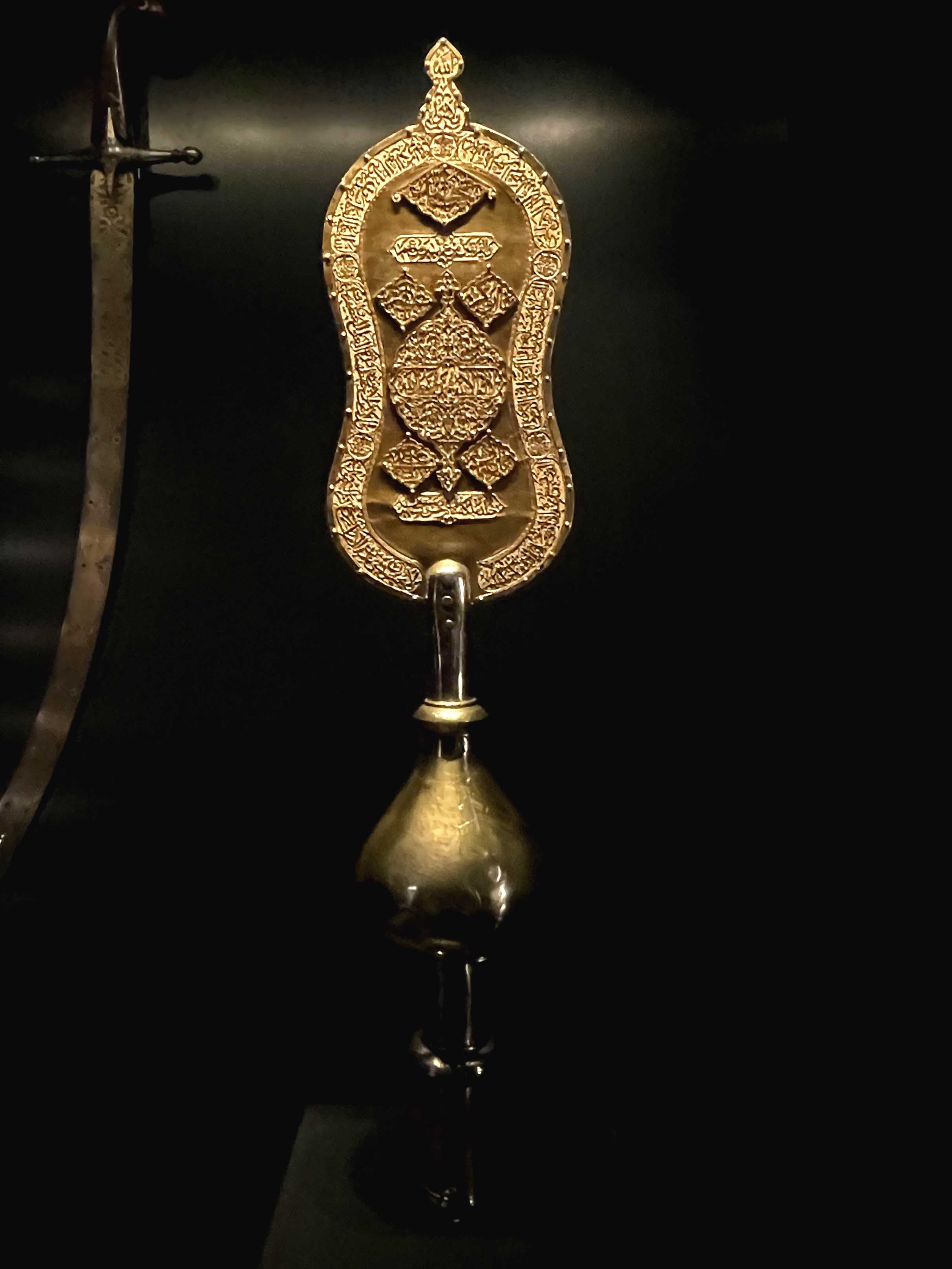
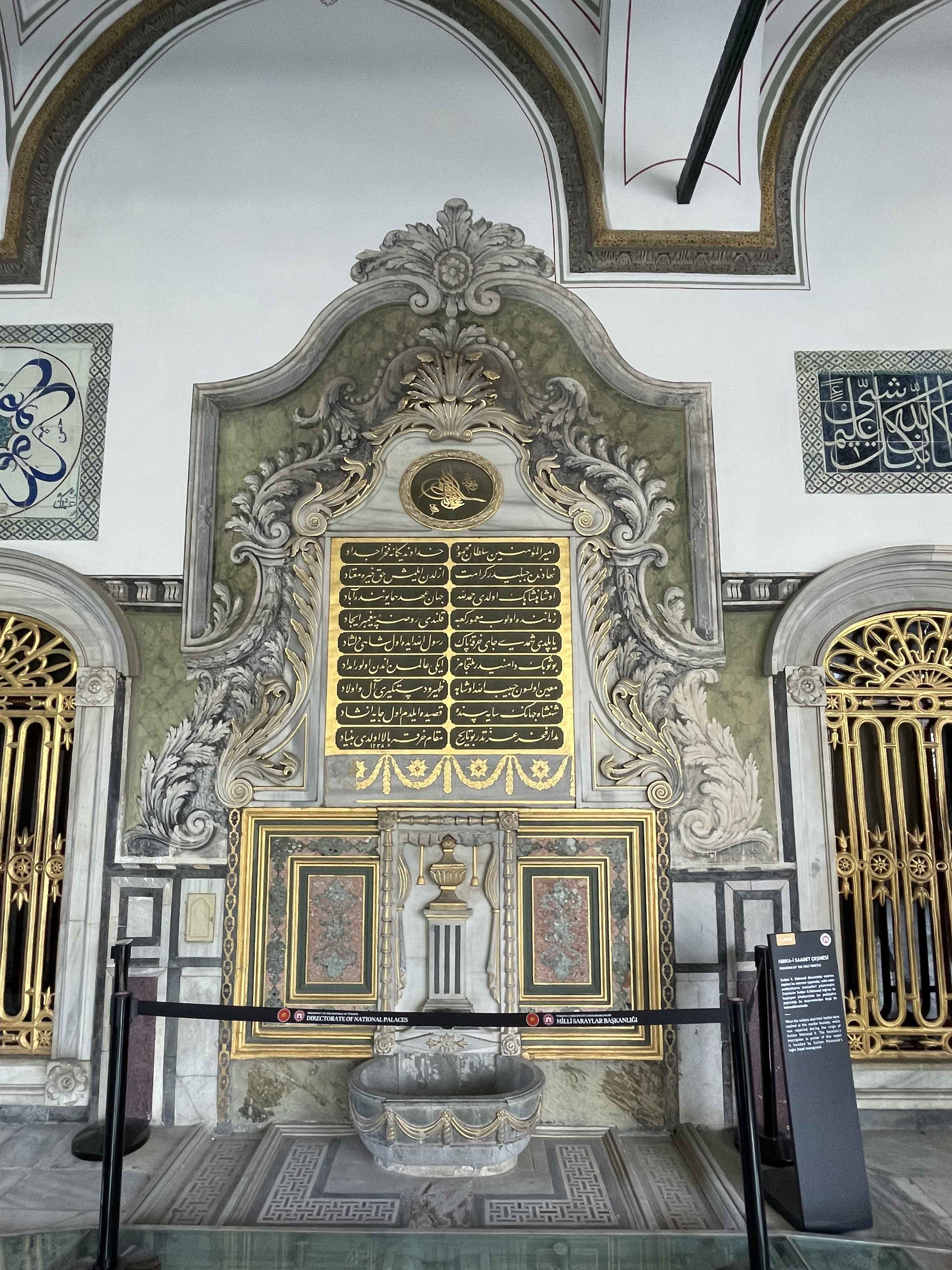
Each of the relics is highly prized and has its own history/mythology and was collected over generations and kept inside mosques and ancient monasteries. Among this collection are the Holy Mantle, the bow, and the sword of the Prophet Mohammad (peace be upon him). There are also holy relics attributed to other prophets such as the staff of Moses; the sword of David; the robe of Joseph; and the swords of the Prophet Muhammad’s companions.

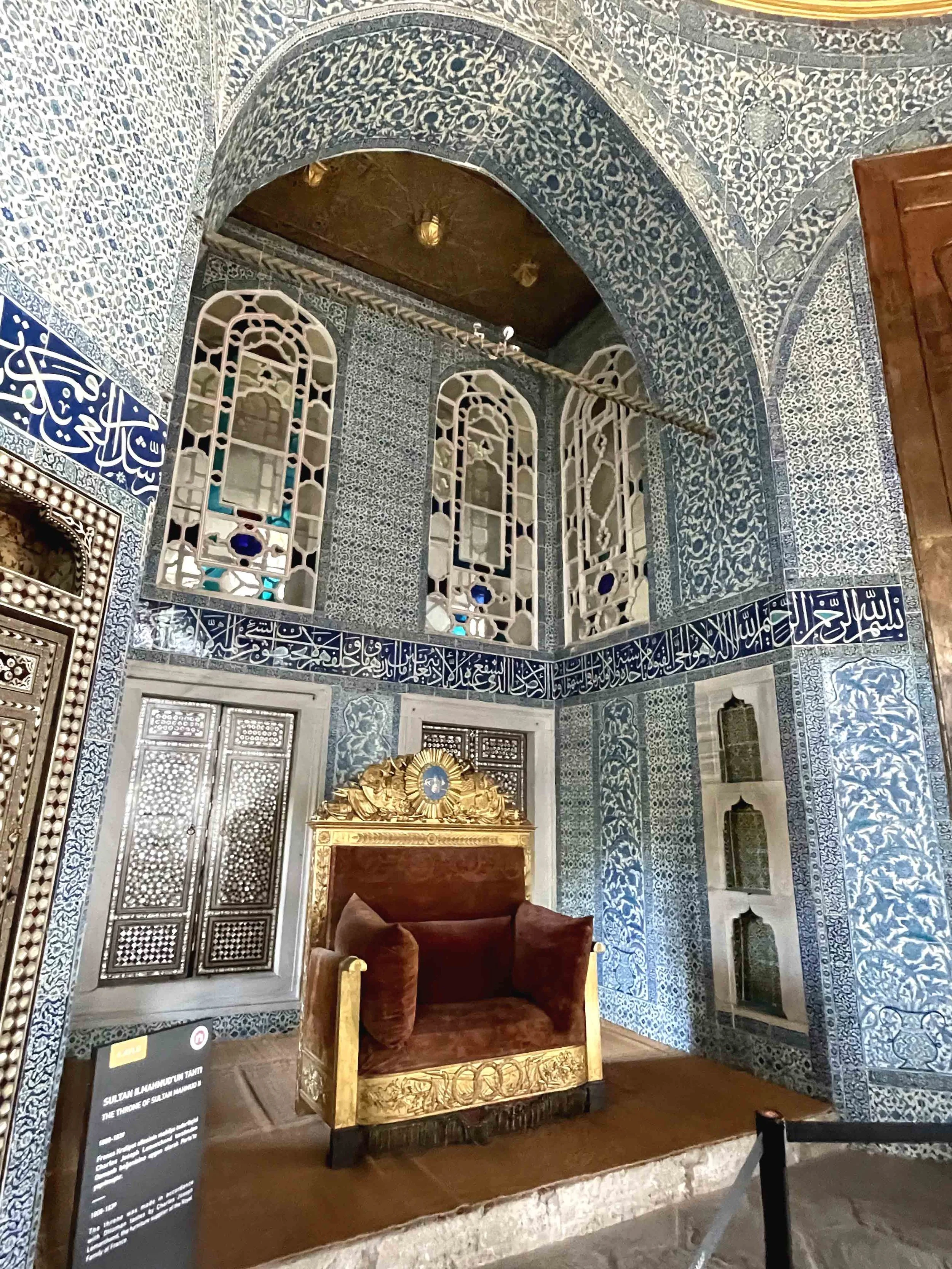
The collection is housed in the Privy Chamber, where the sultan lived and kept his throne. It is said that, prior to their accession to the throne, the sultans would come to this room to pray and receive homage from the Privy Room officials before leaving for the ceremony. Even now, an imam inside a glassed-off chamber recites the Koran around the clock.


LIBRARY

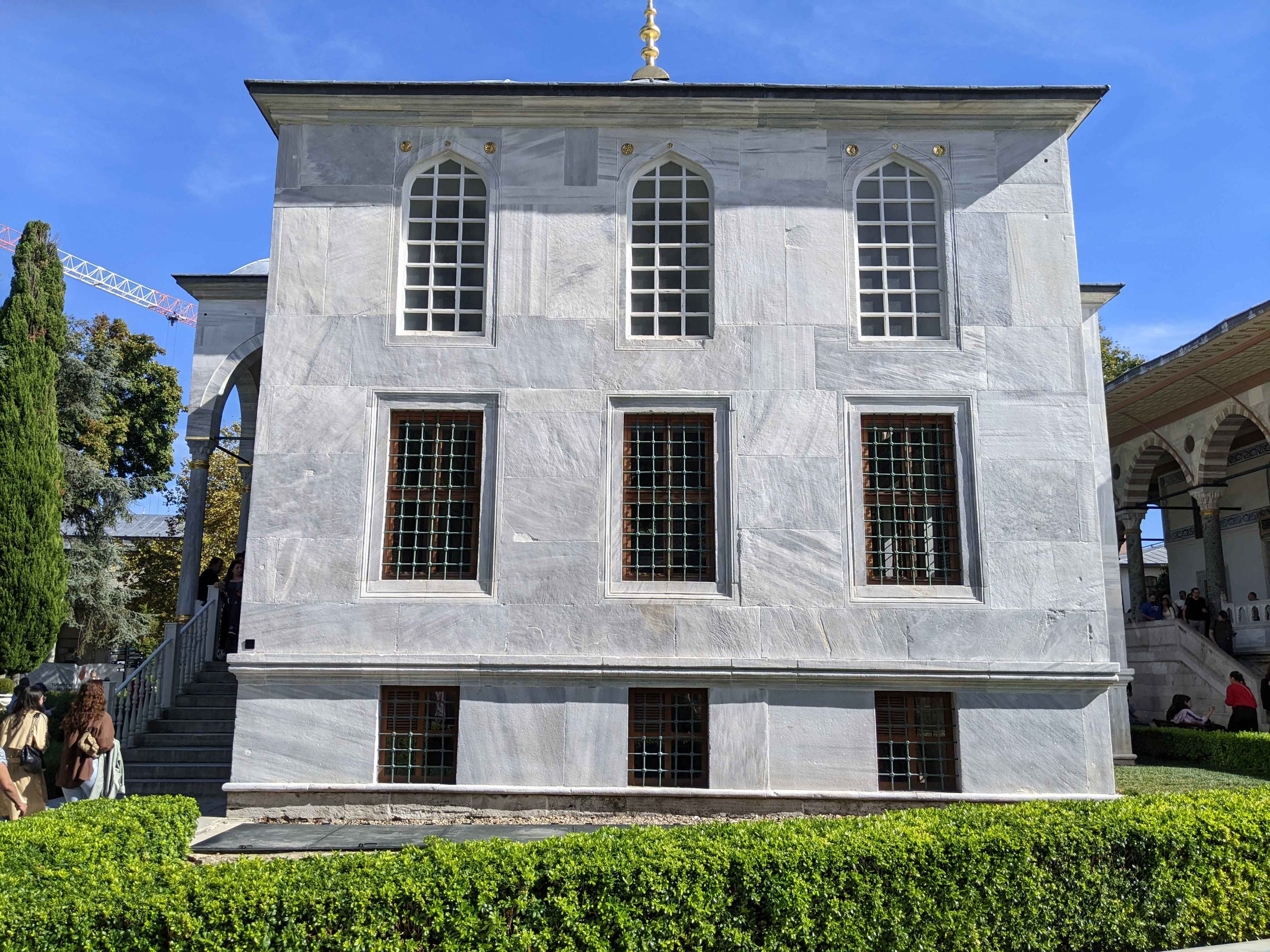
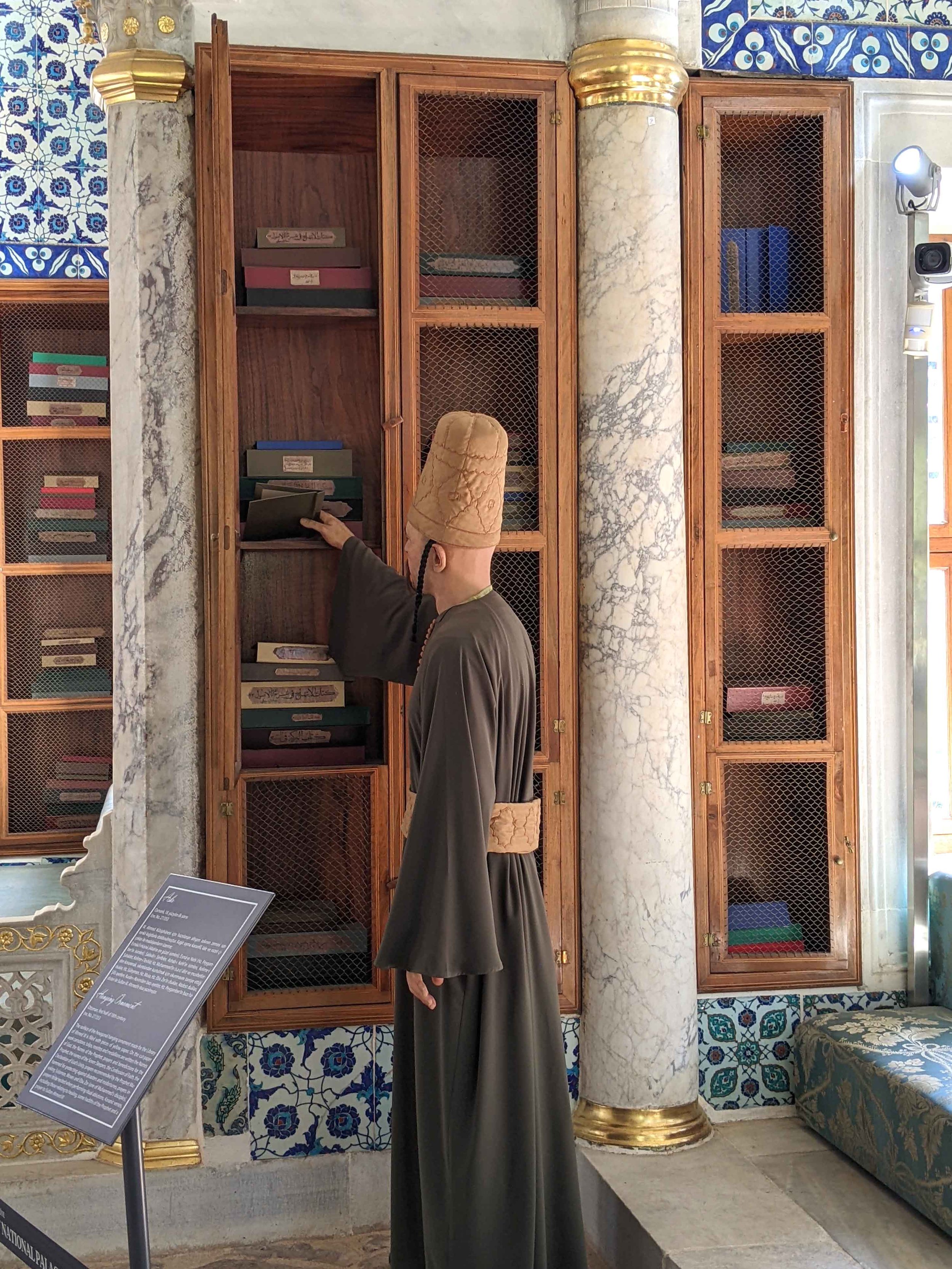
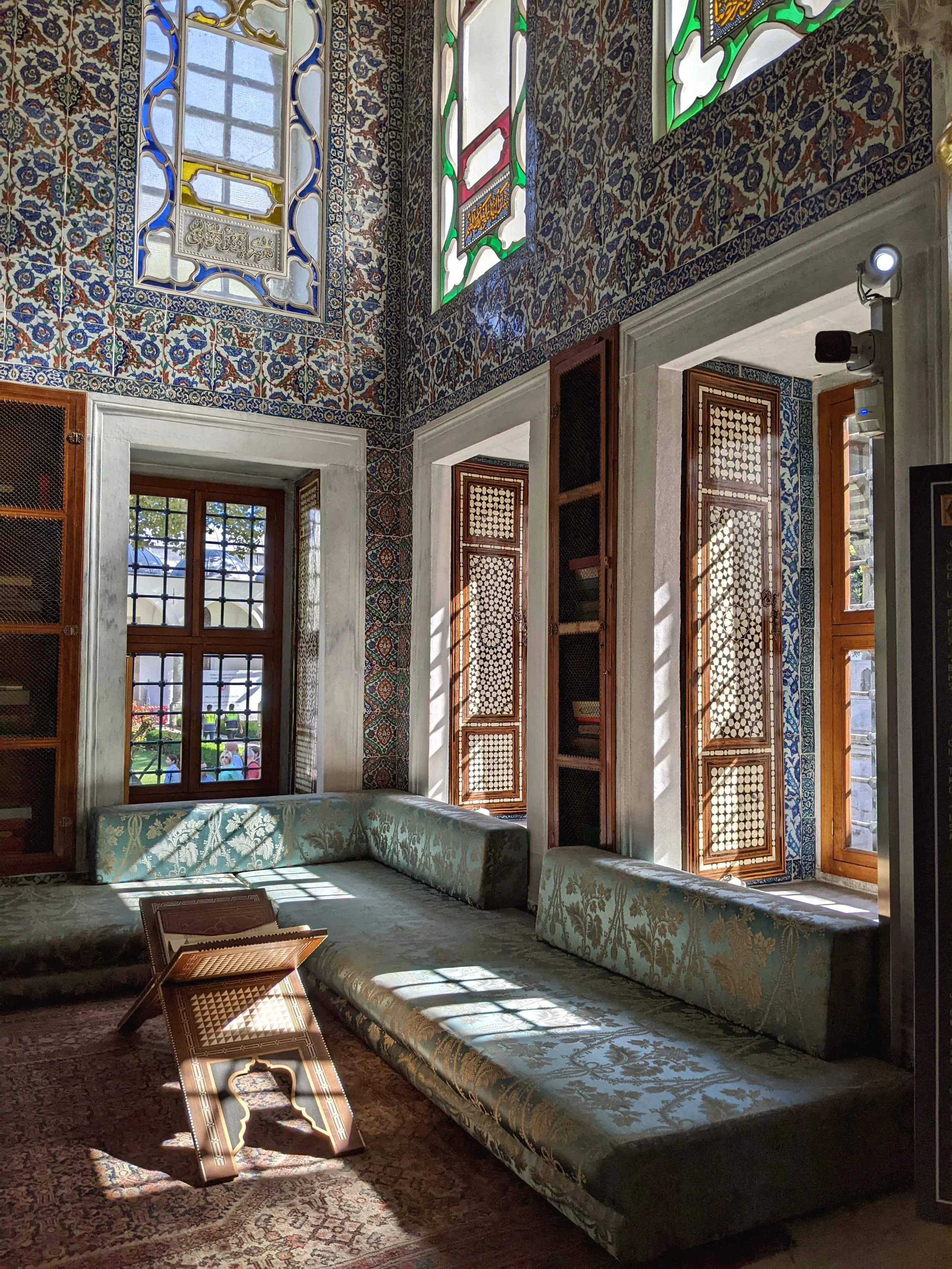
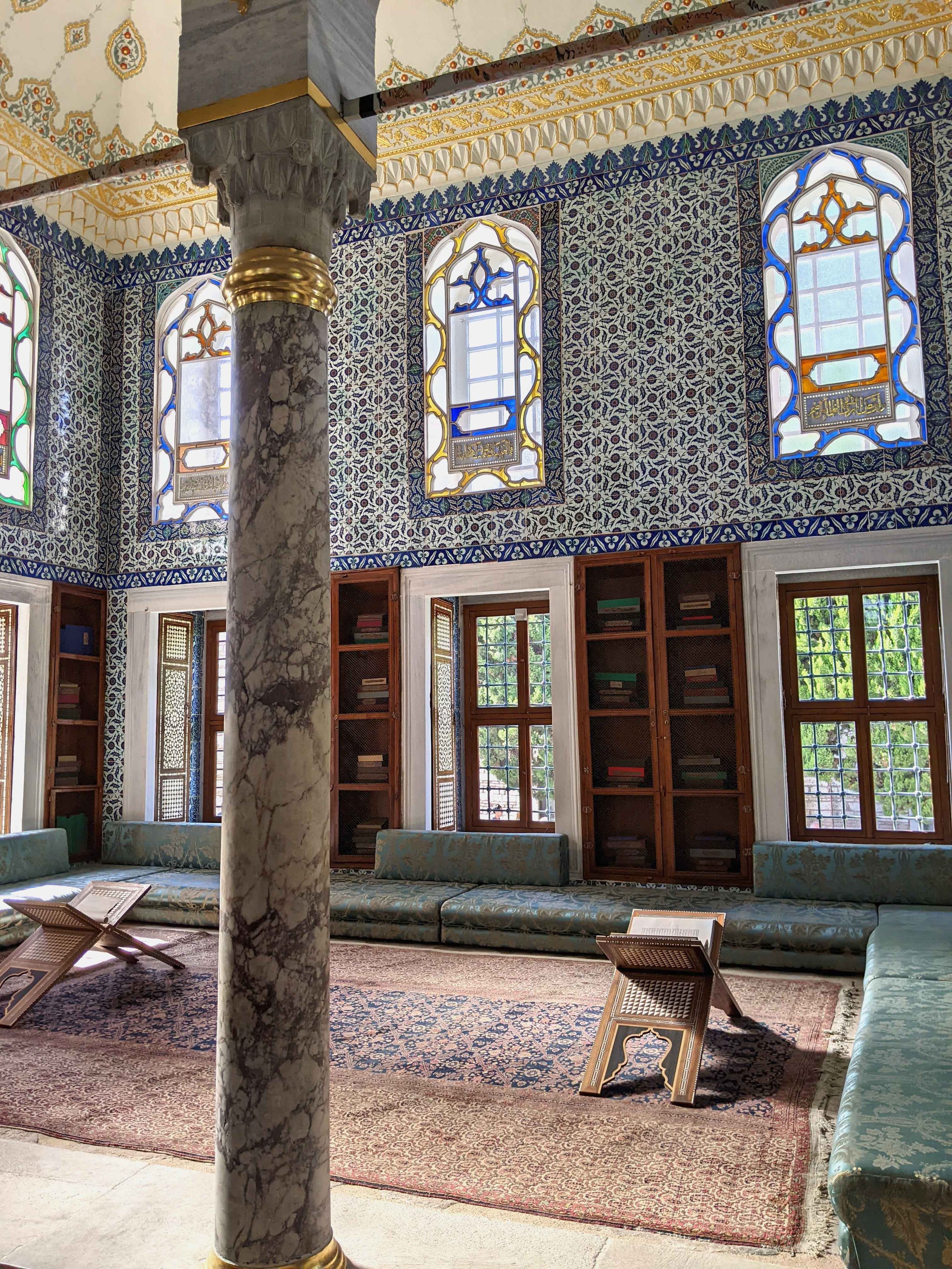
What wouldn’t I give for a library like this! The interior of this building is breathtaking, and the location is serene. Imagine sipping a coffee on a diwan googling away to one heart’s content, without a worry in the world.

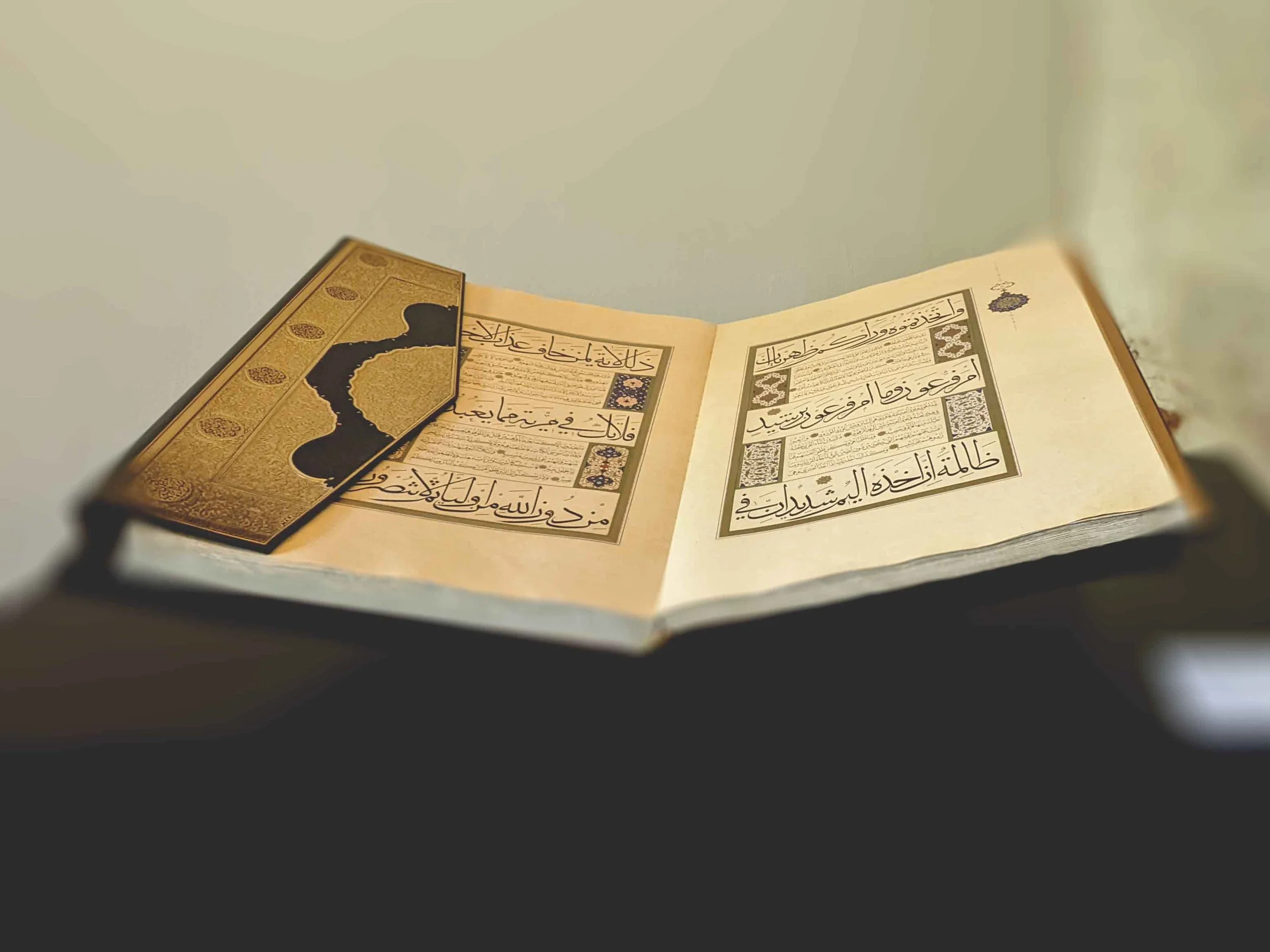
The library was built by Sultan Ahmed III in the 18th century and stored archival records and books. The learned men of the times dedicated their works to the sultans, and this was supplemented by, literary works acquired during various conquest.

In the present day, this collection presents an indispensable source of information for historians and perhaps provides the only extant official records of the Ottoman dynasty.

c3.jpg
c4.jpg
c1.jpg
c2.jpg
c5.jpg
c6.jpg

THE PALACE AND THE HAREM

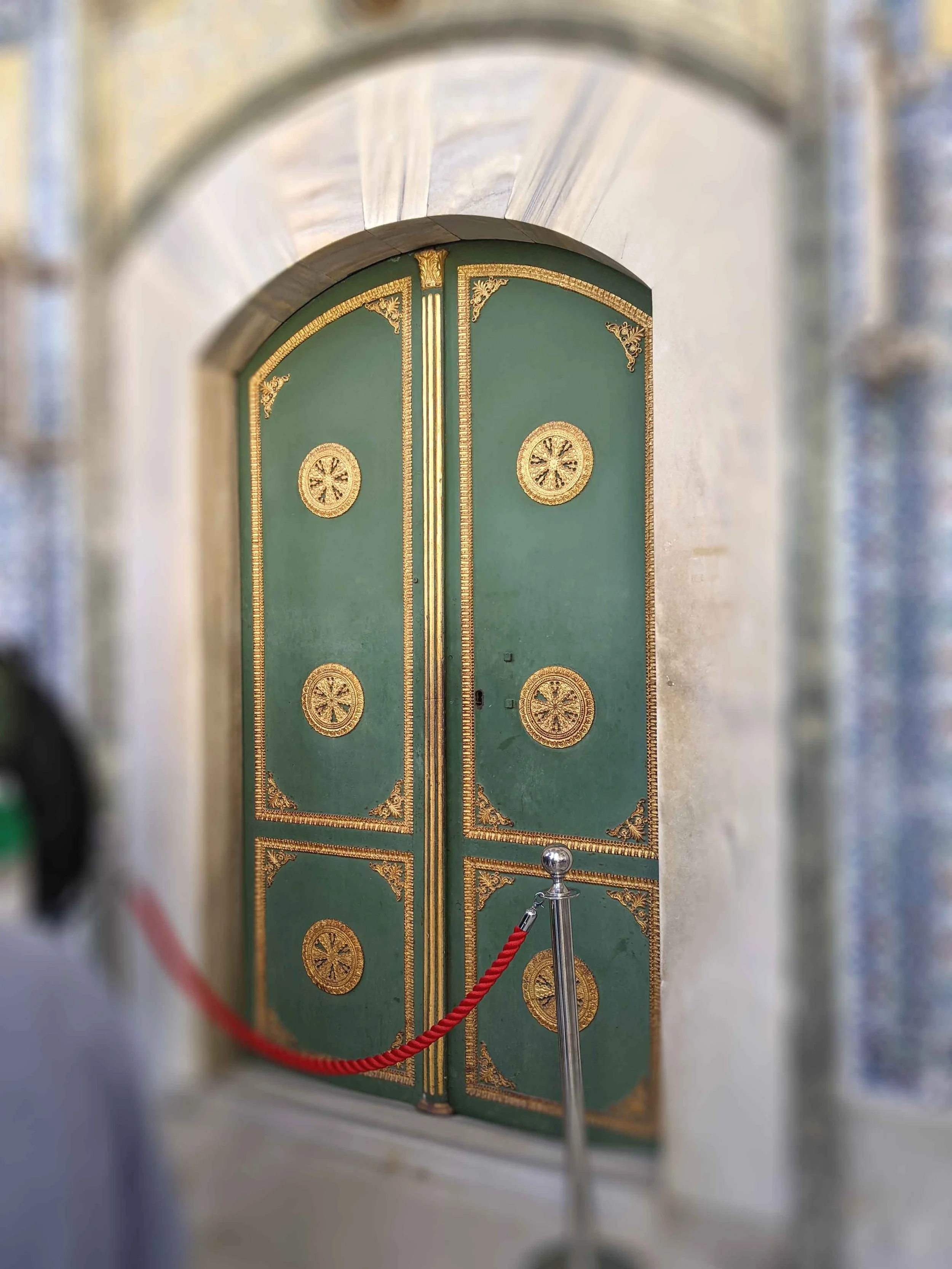
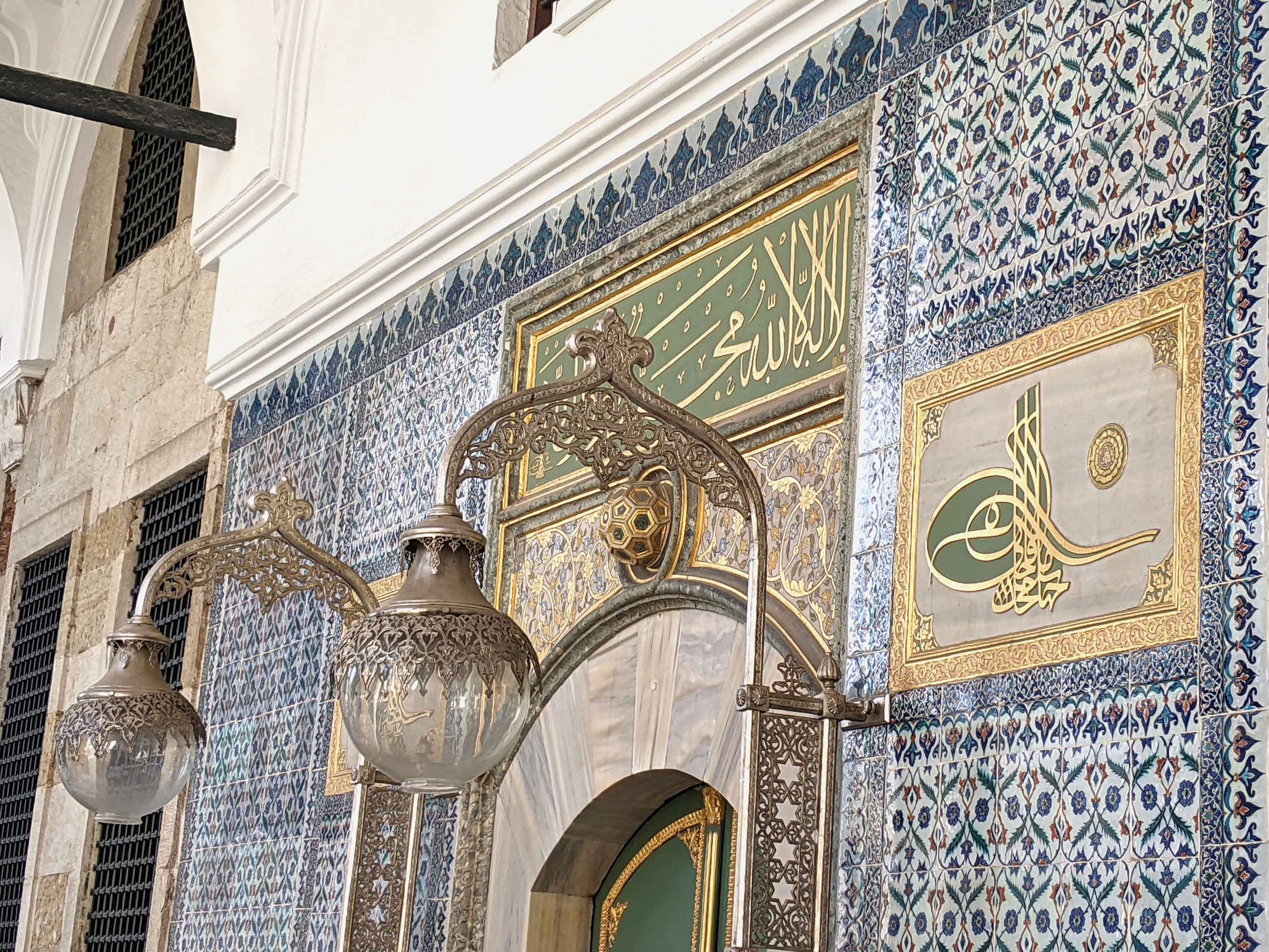
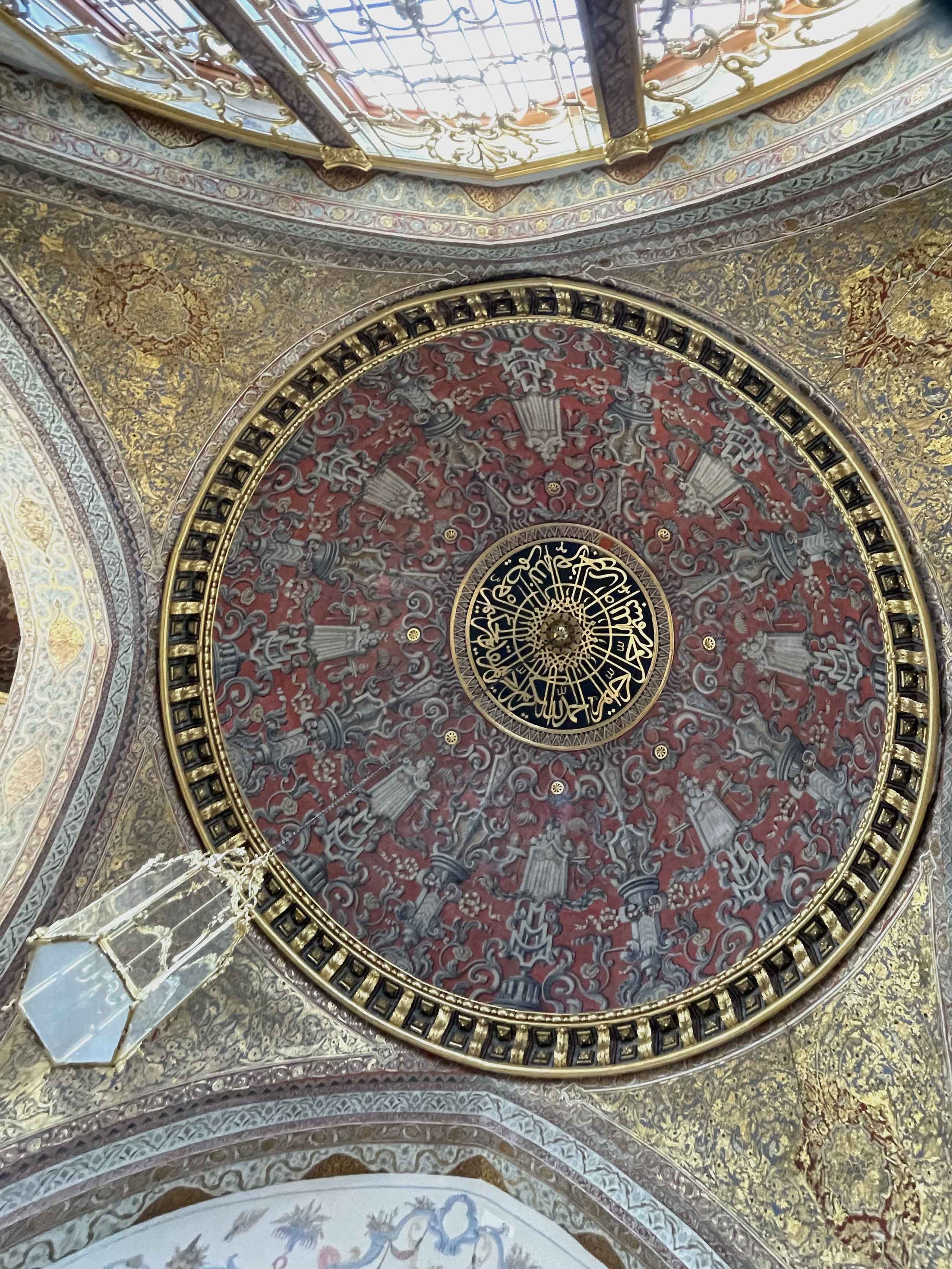
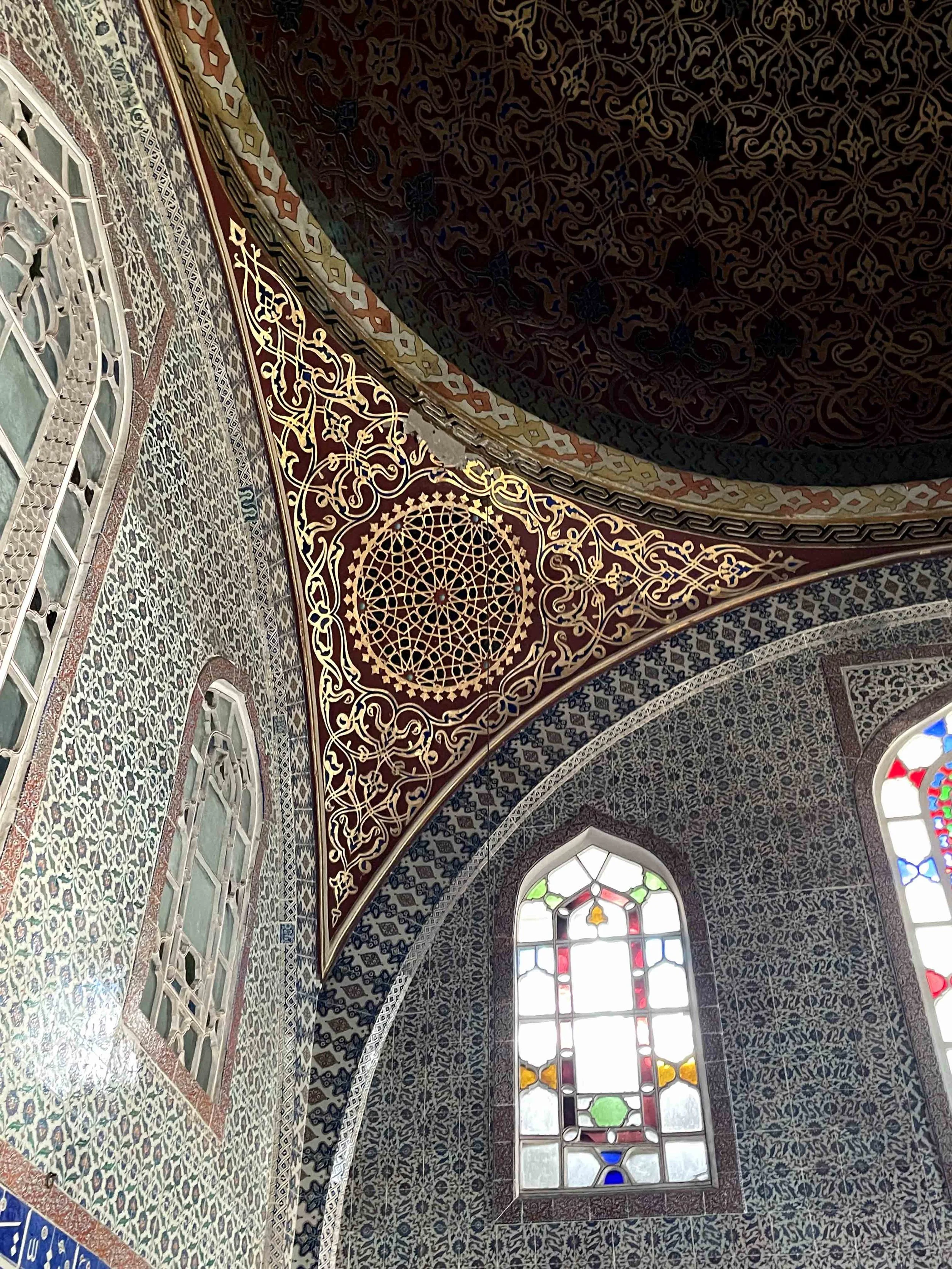
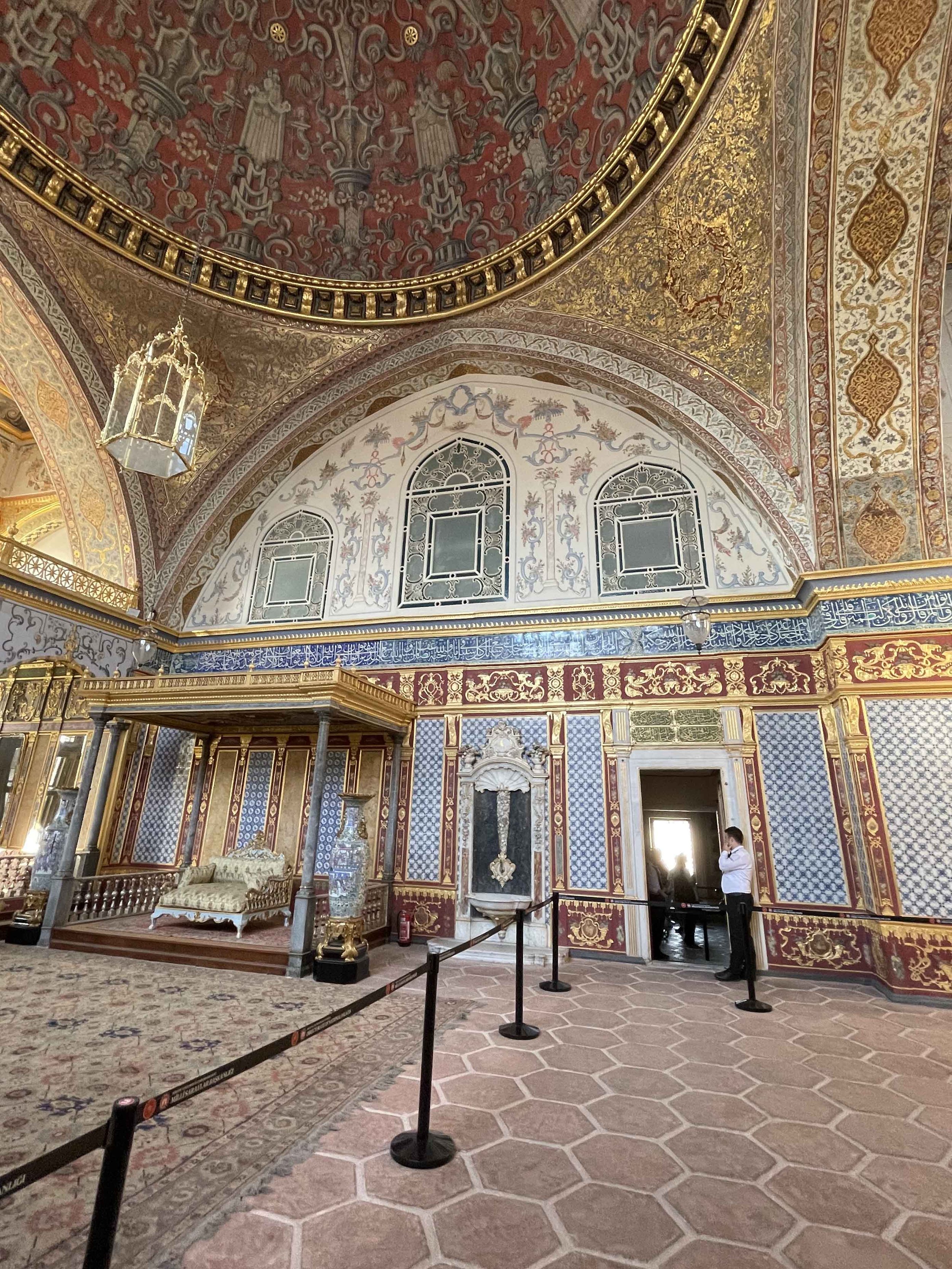
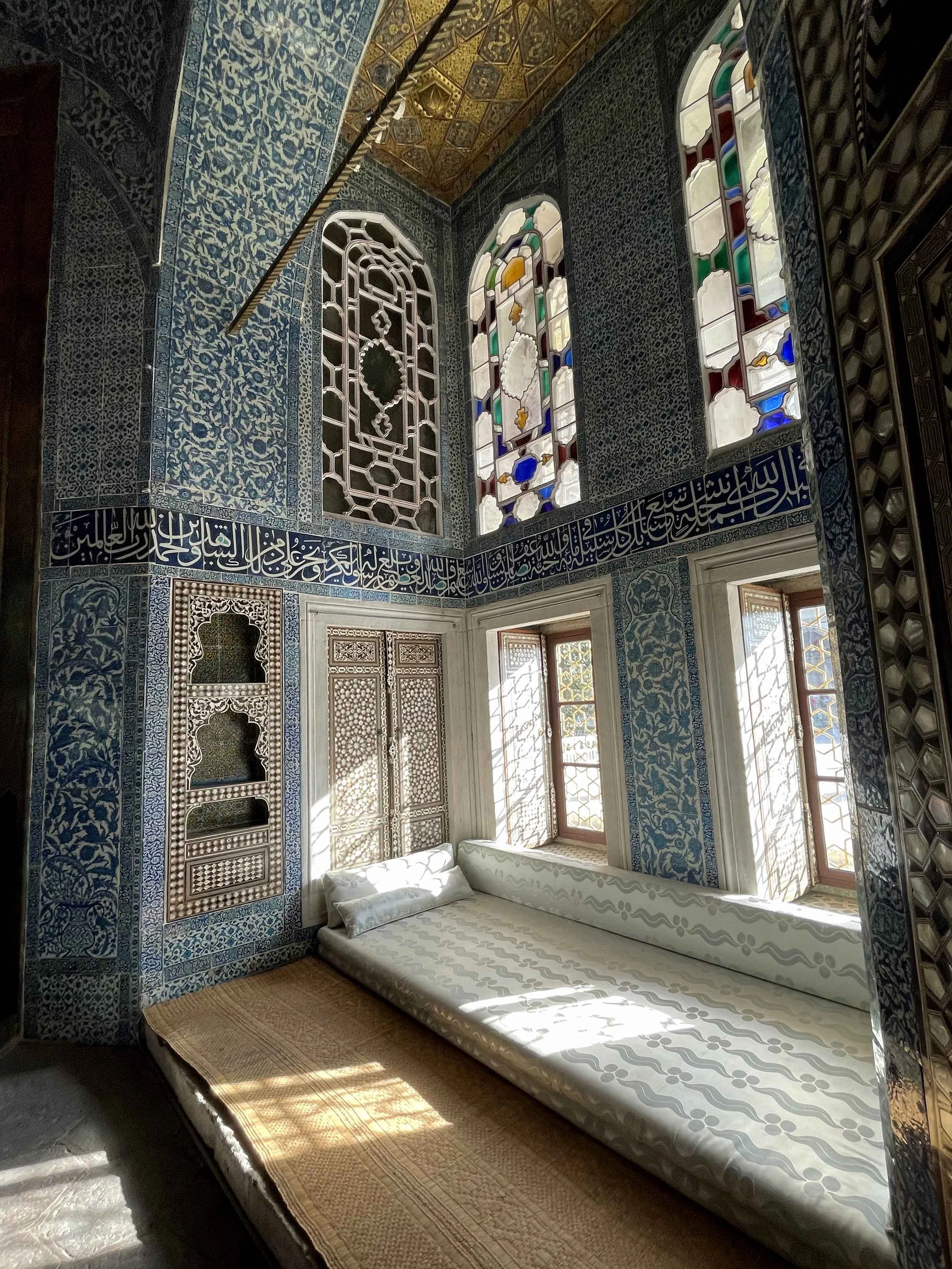
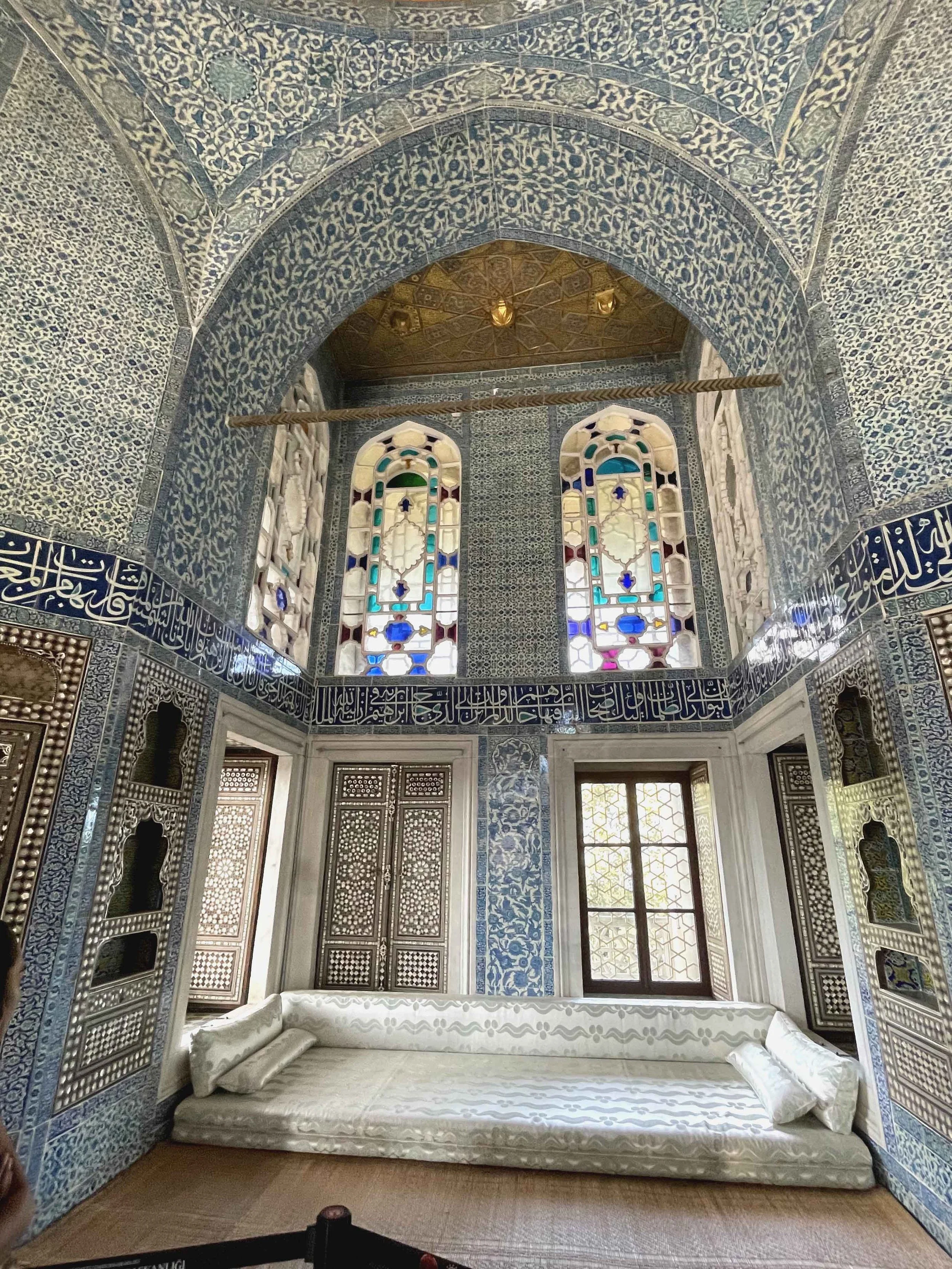
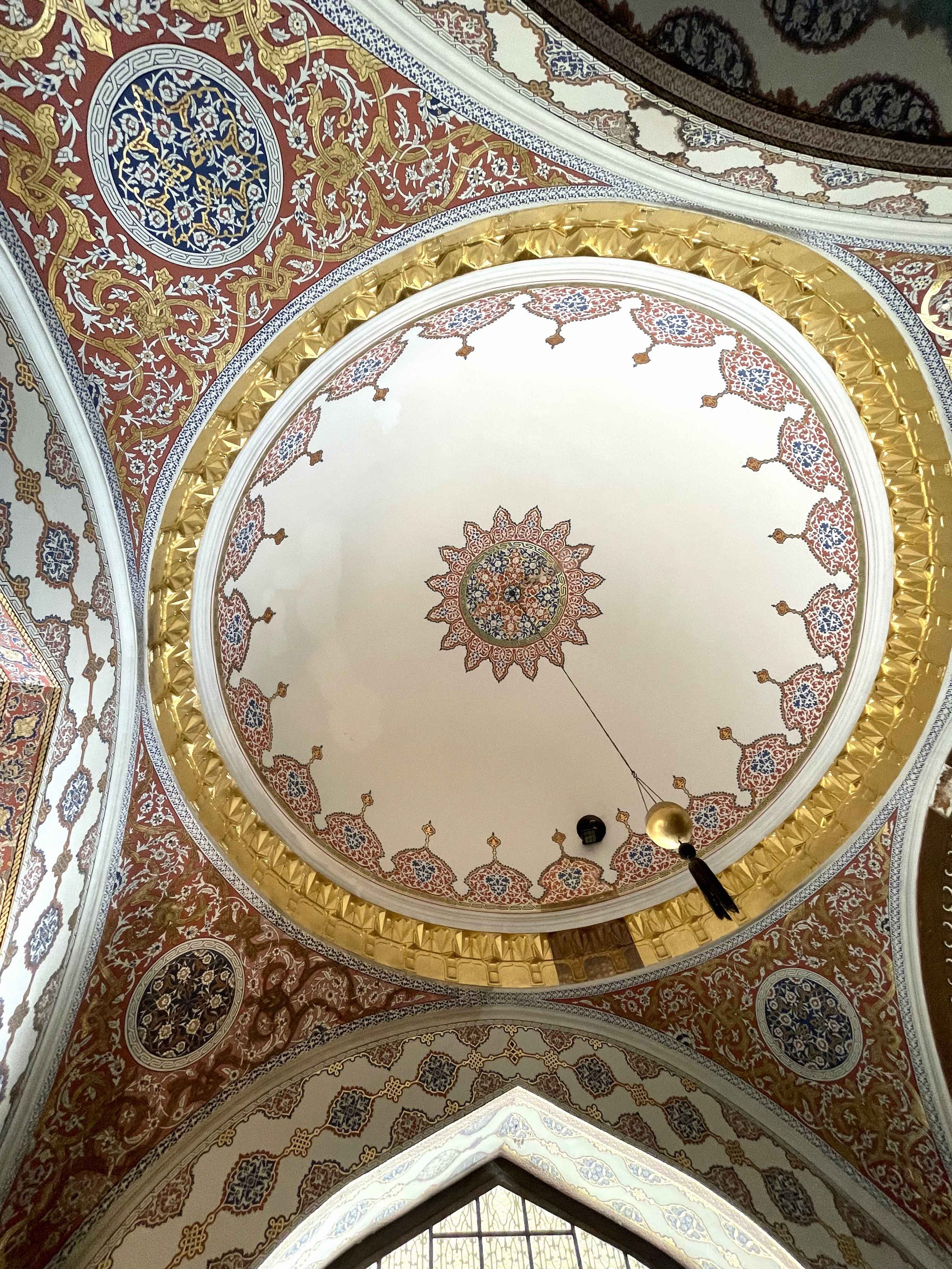
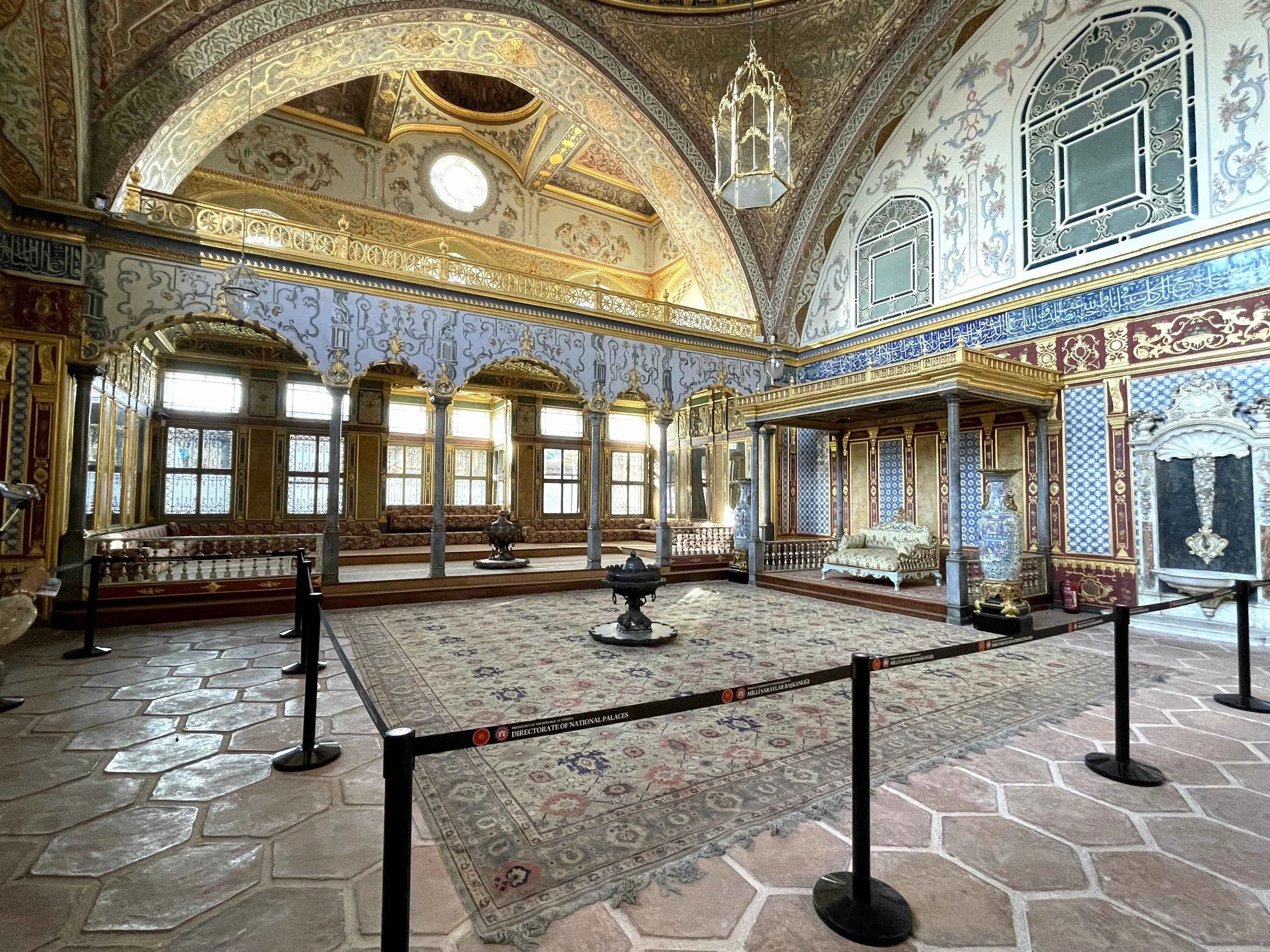
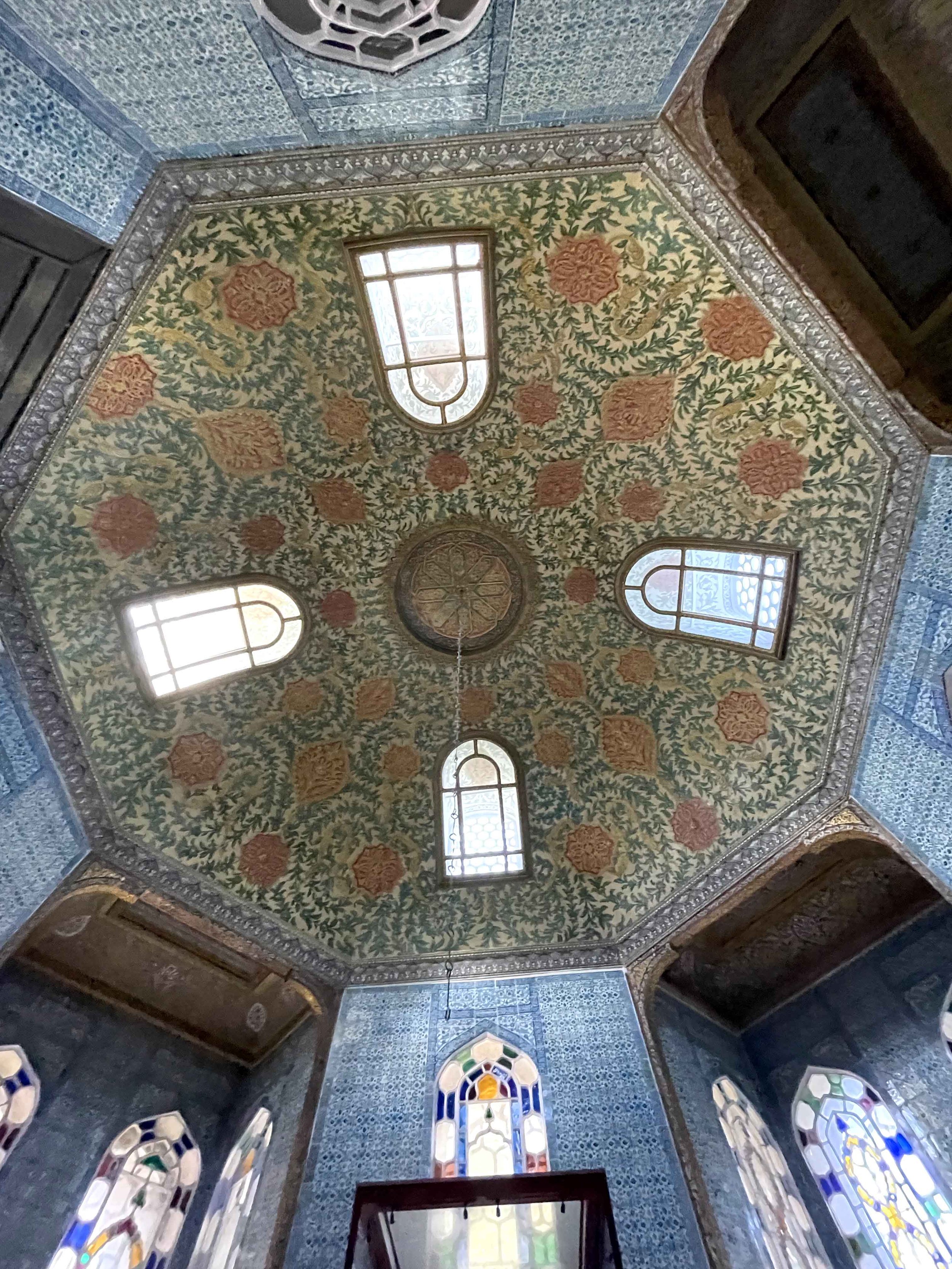
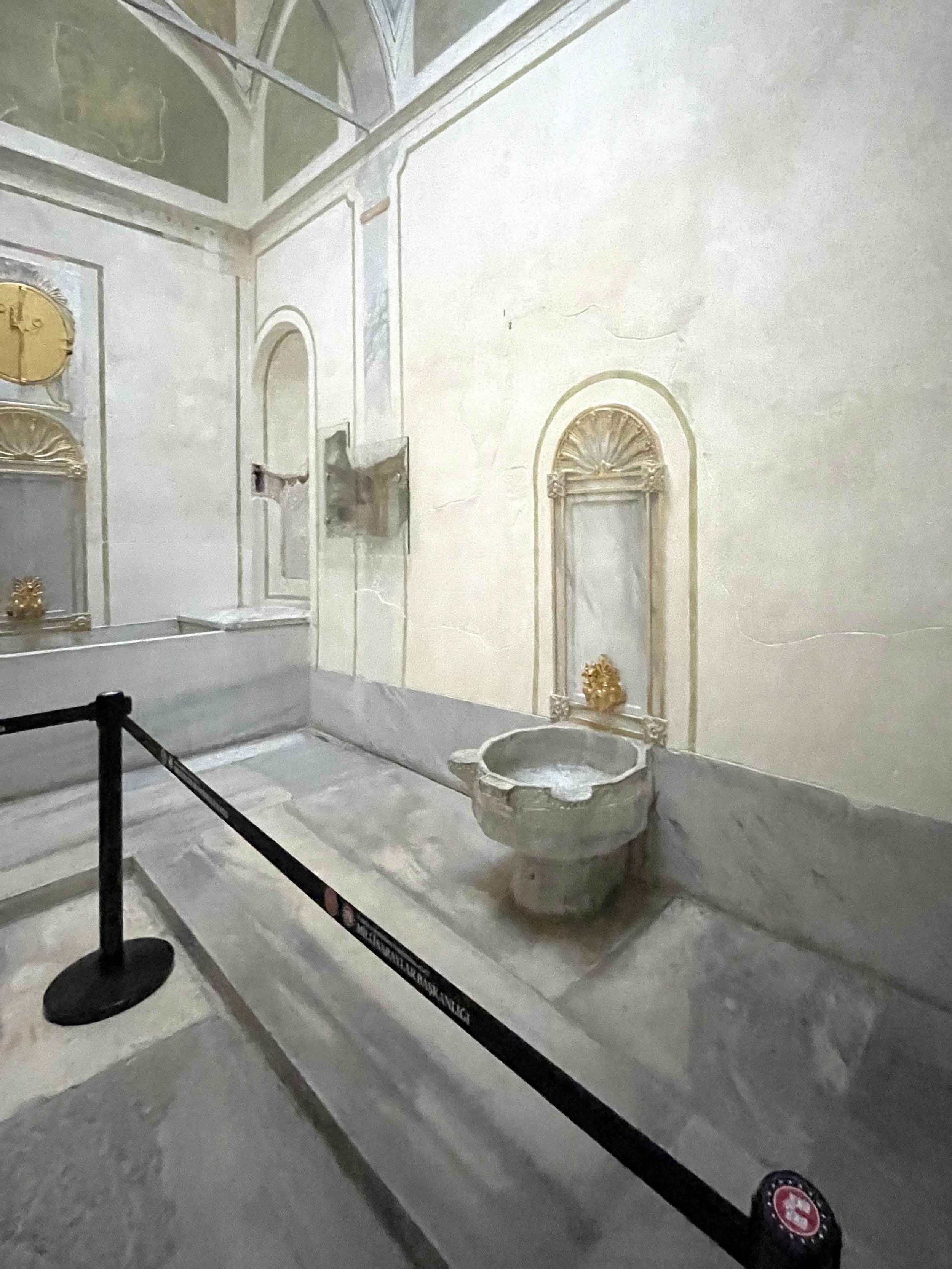
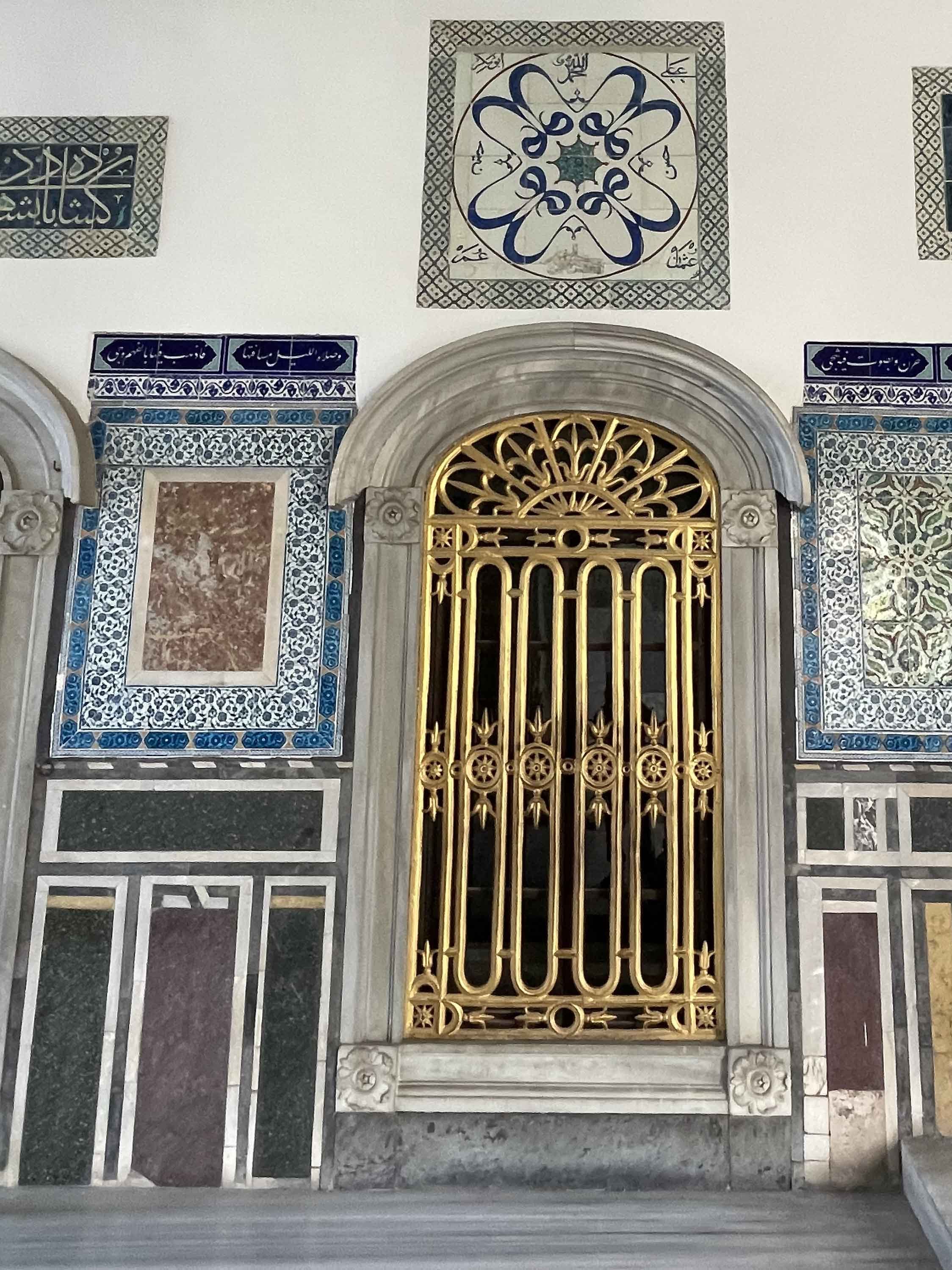
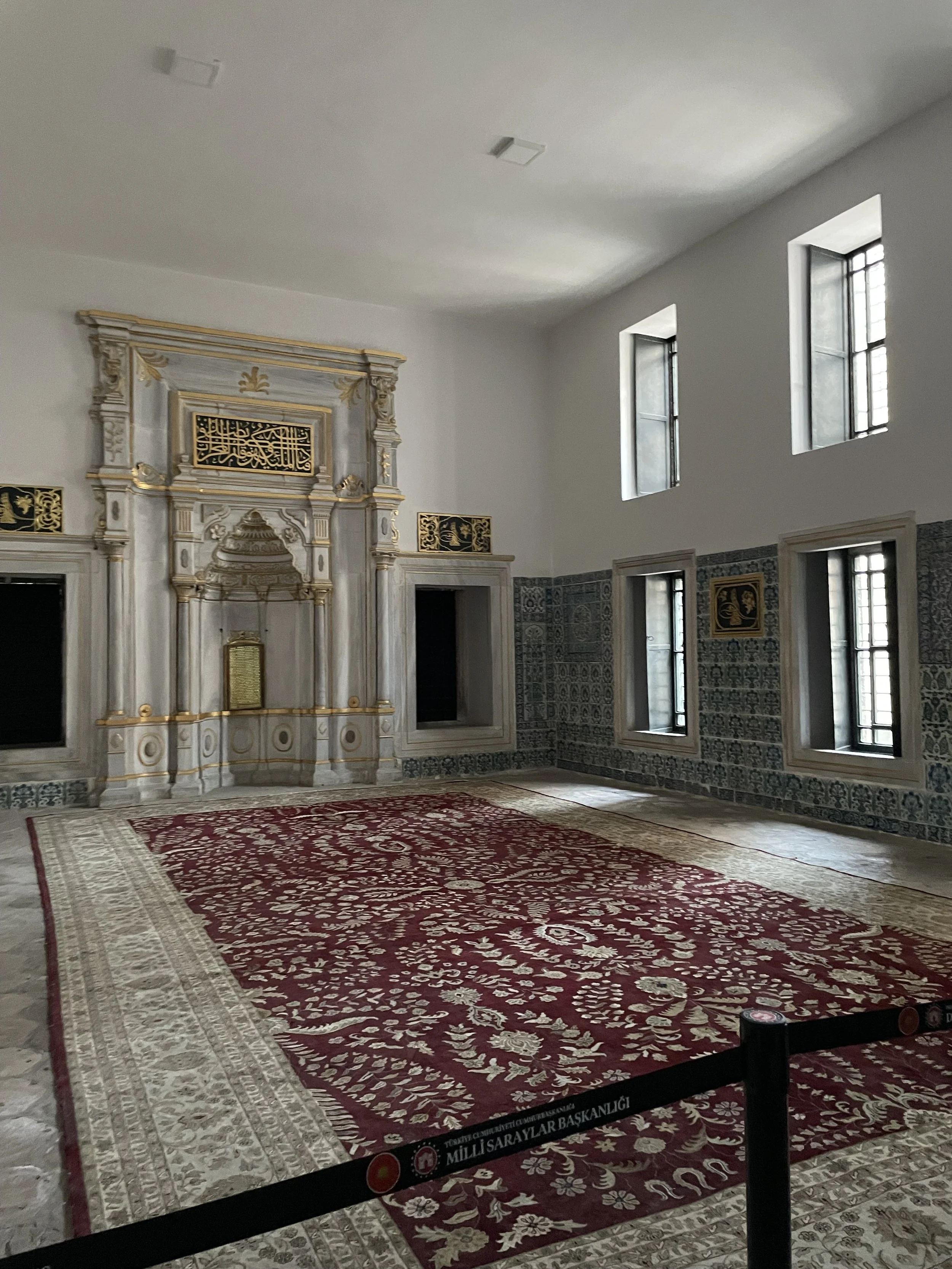
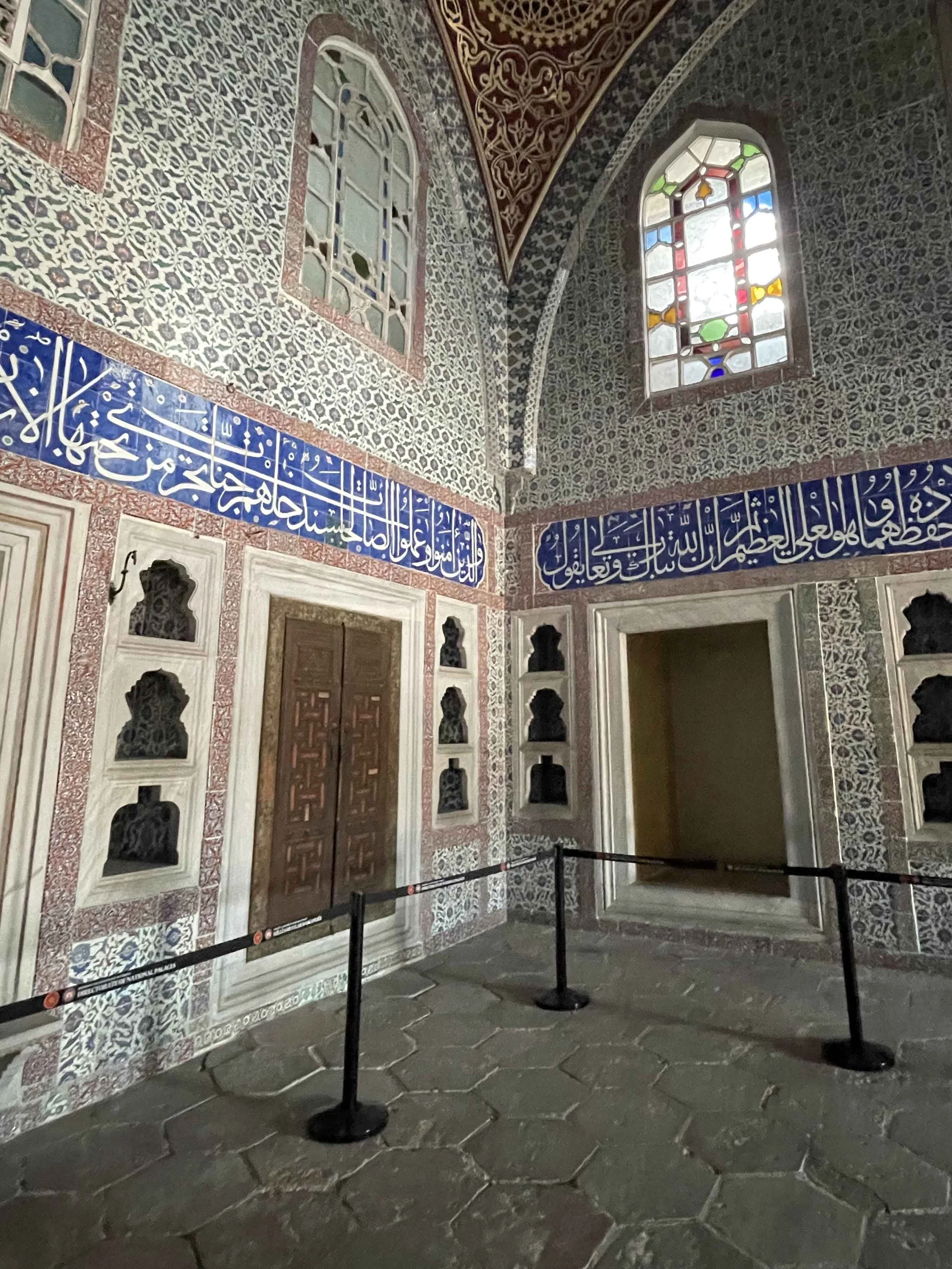
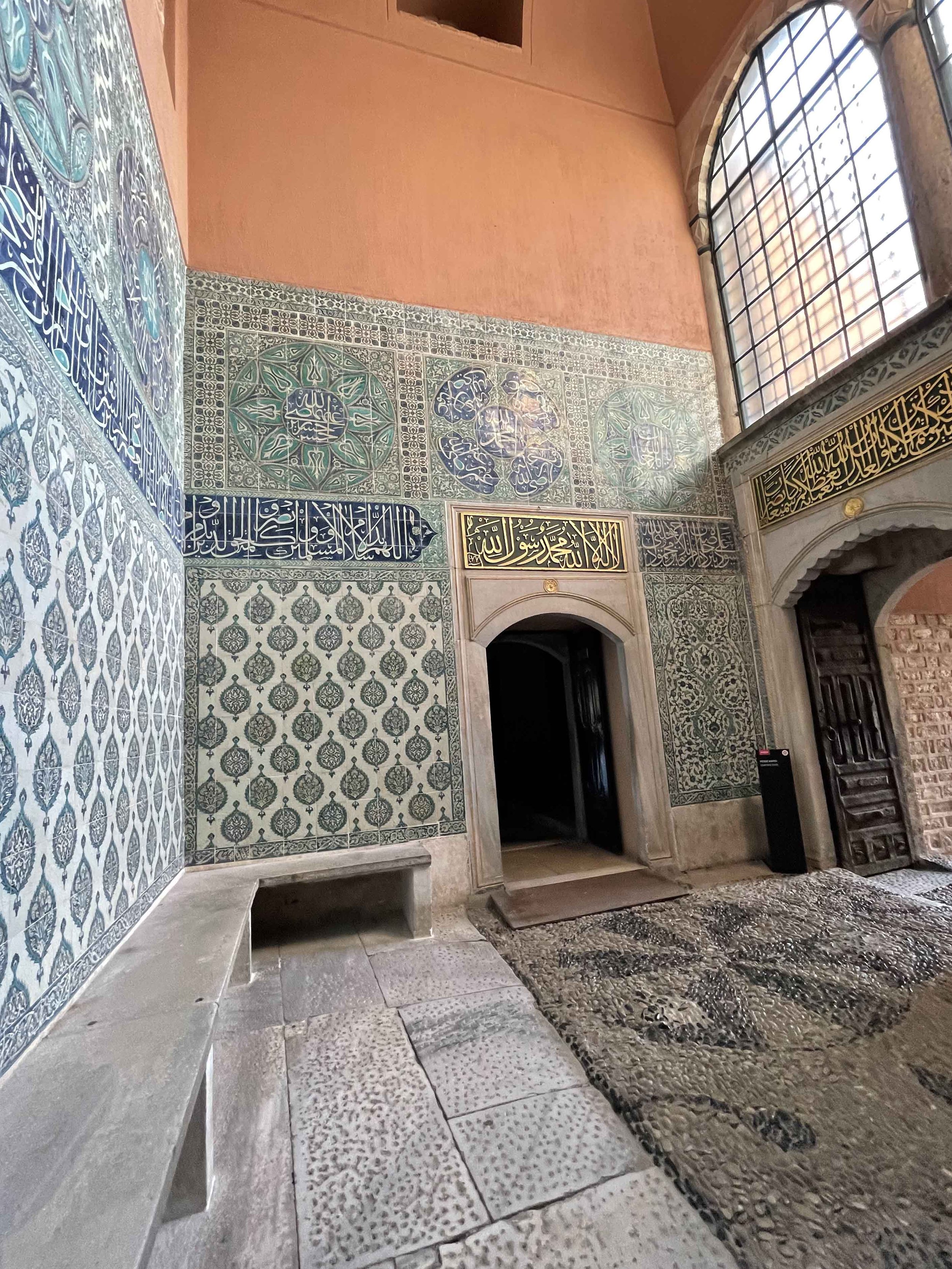
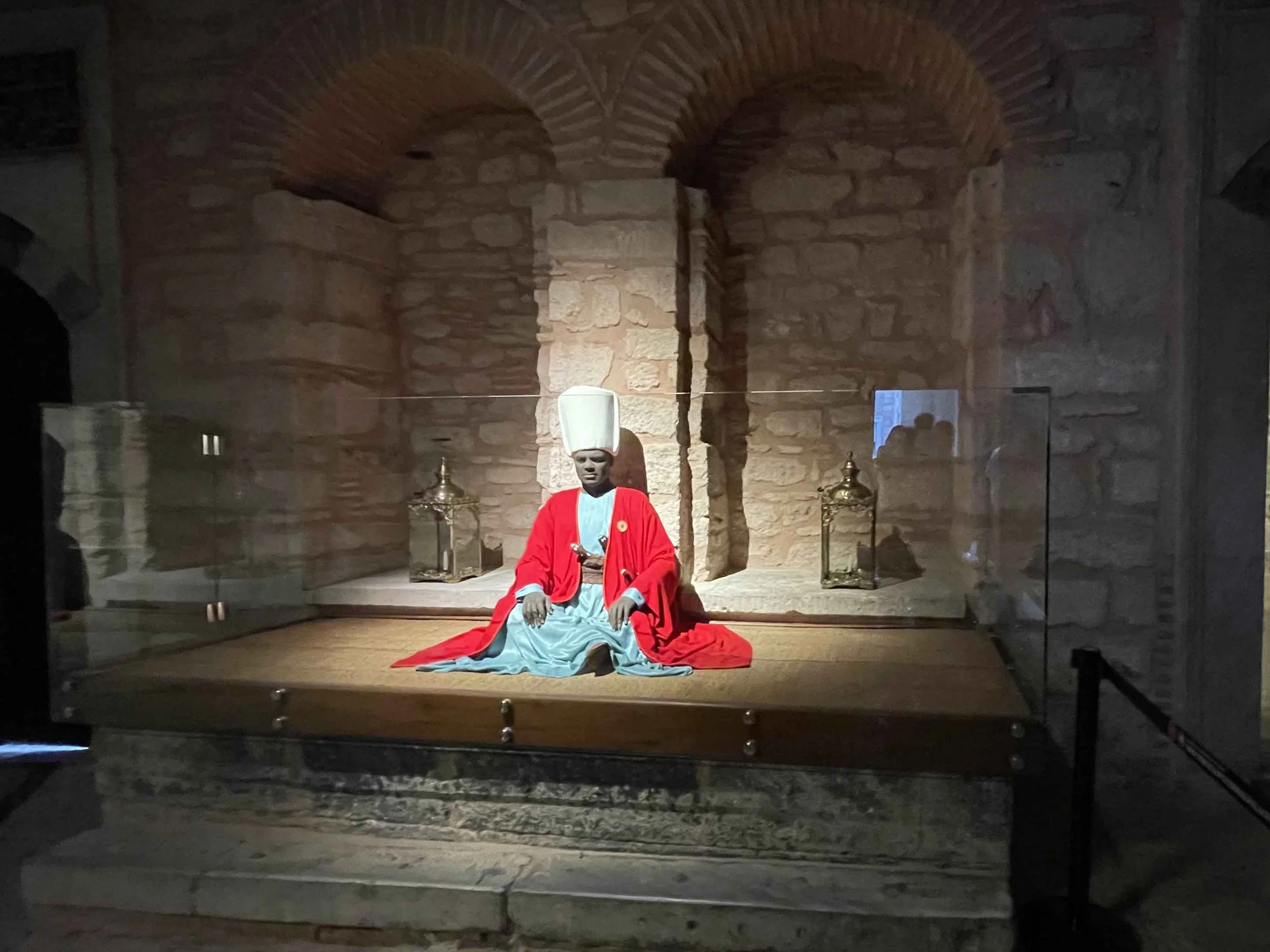
Although in modern times the word ‘harem’ conjures up images of thinly clad women and romance. ‘Harem’ is an Arabic word that literally means “a sacred, inviolable space” The harem were the private dwellings of the sultans and their families. It consisted of hundreds of magnificently tiled rooms connected with courtyards and fountain gardens. It was home to over a thousand harem women, children, and black eunuchs. The eunuch were usually castrated slaves which were trained to serve the residents of the harem.

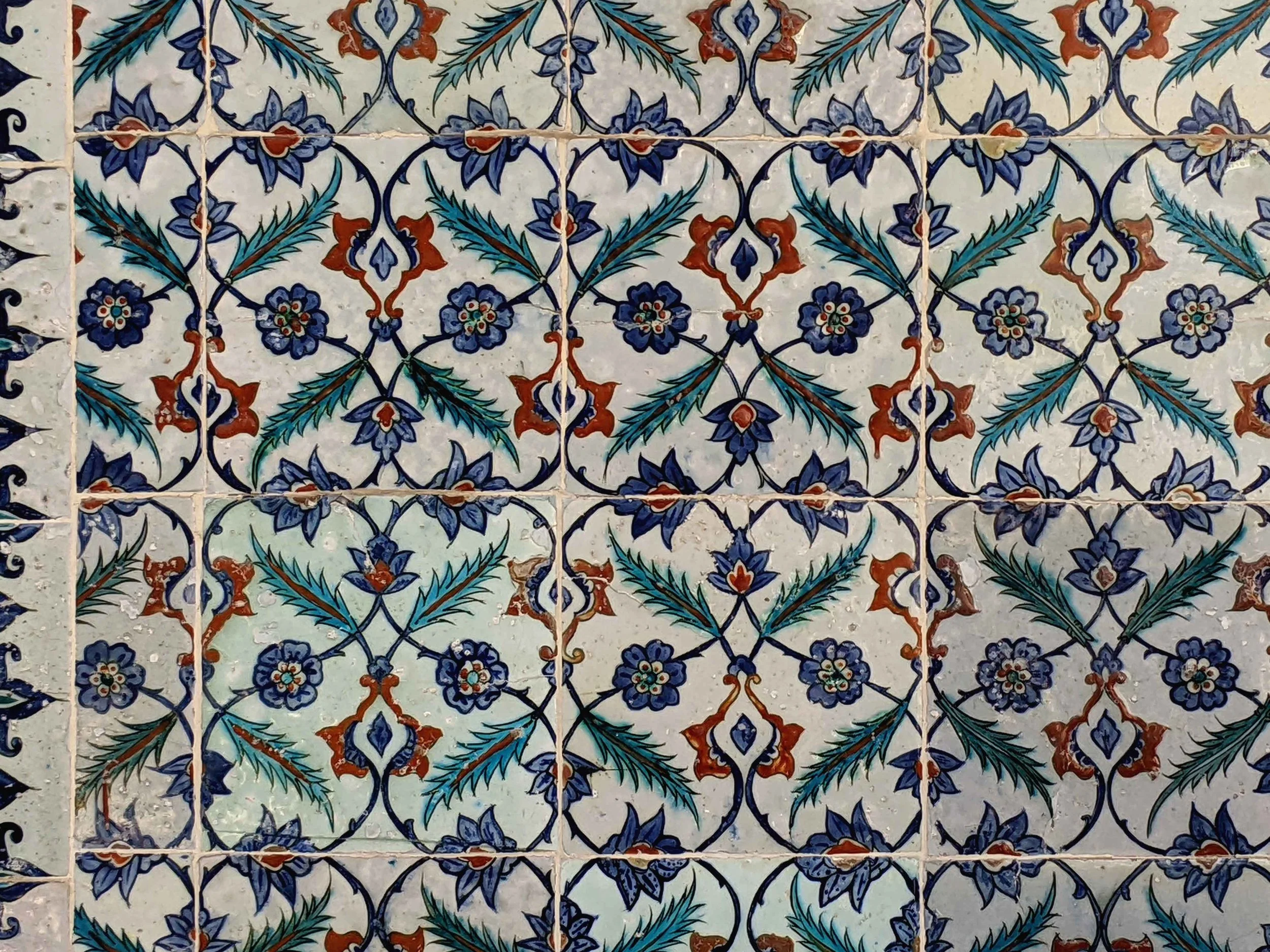
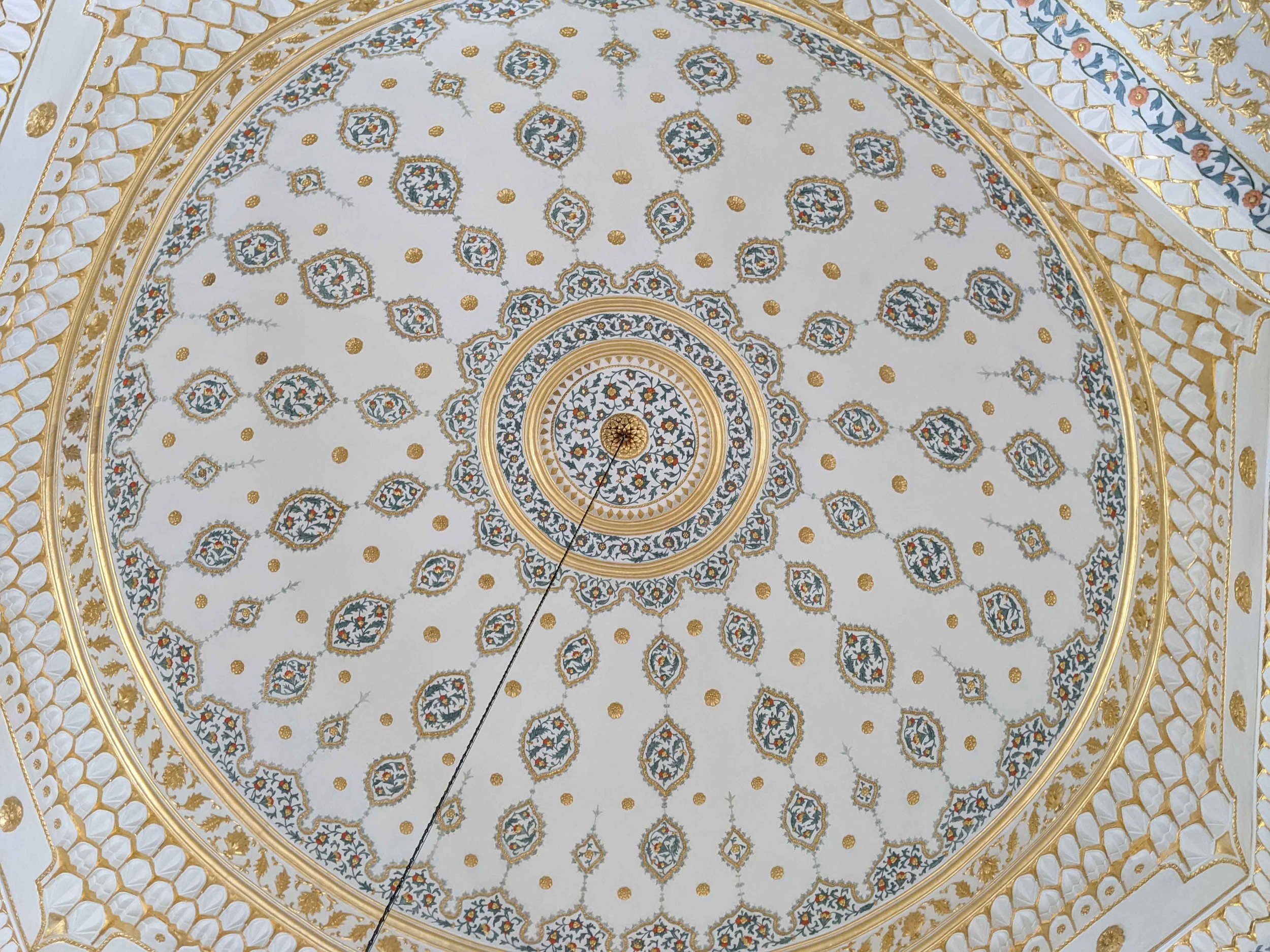
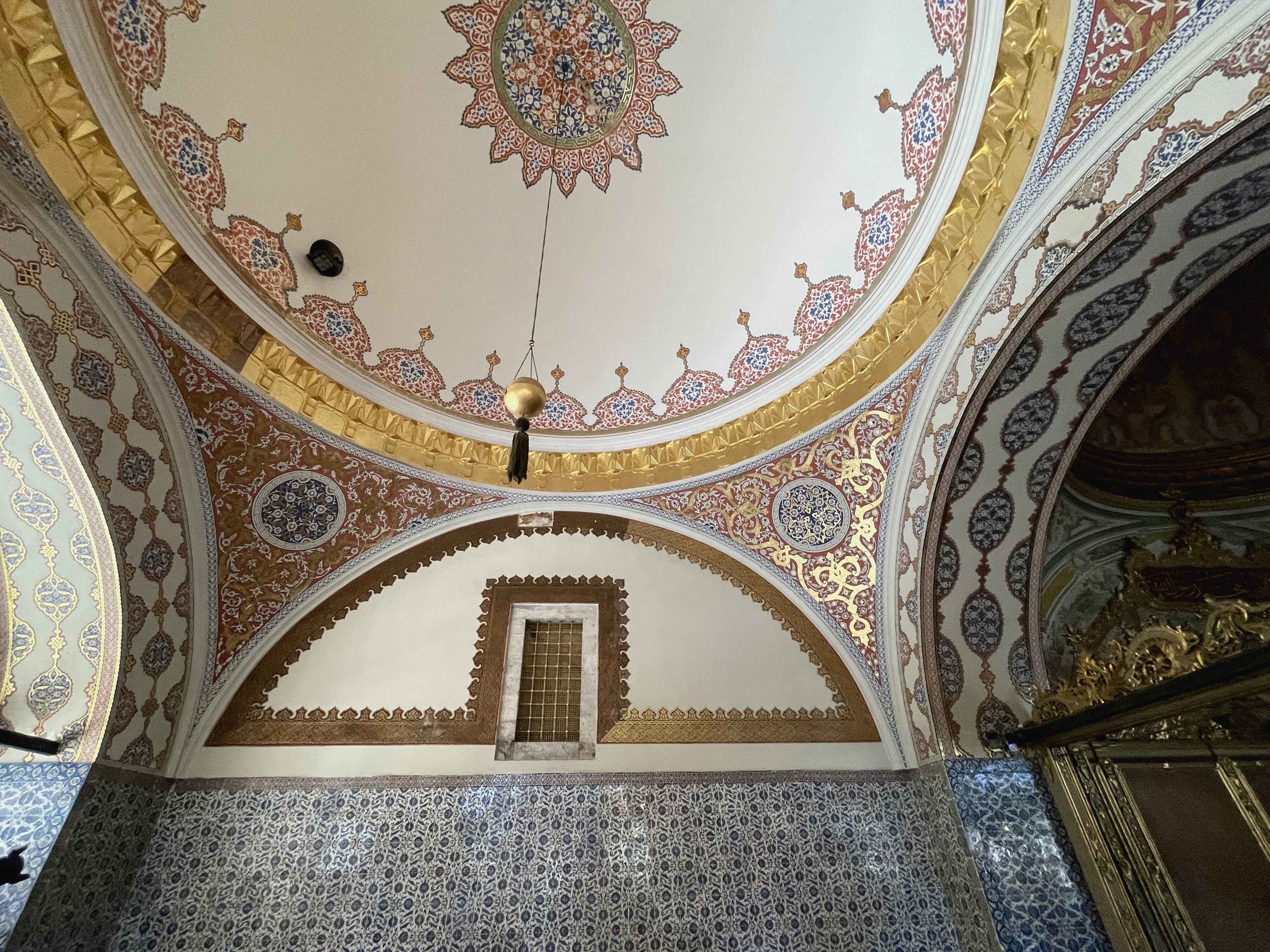
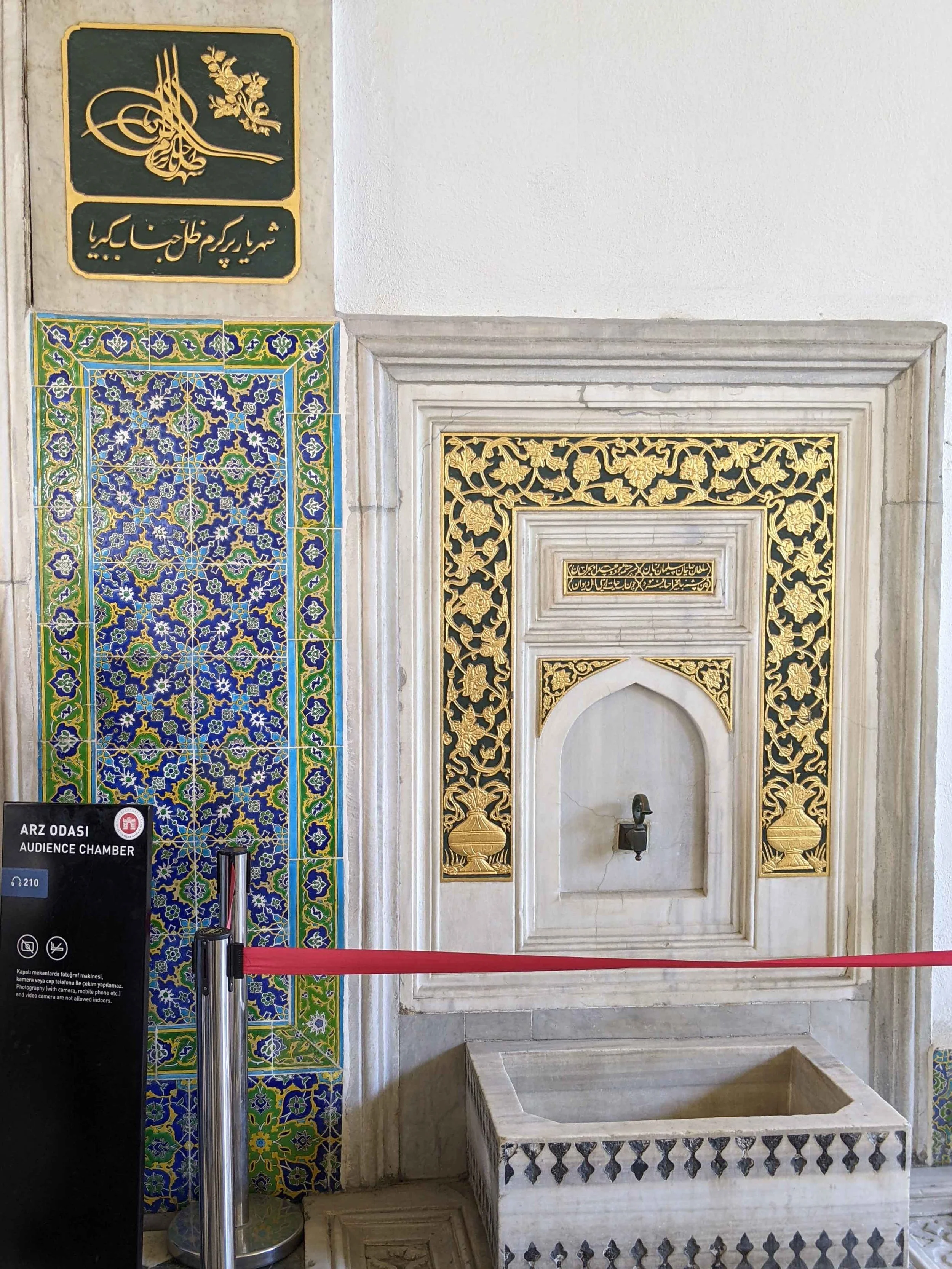
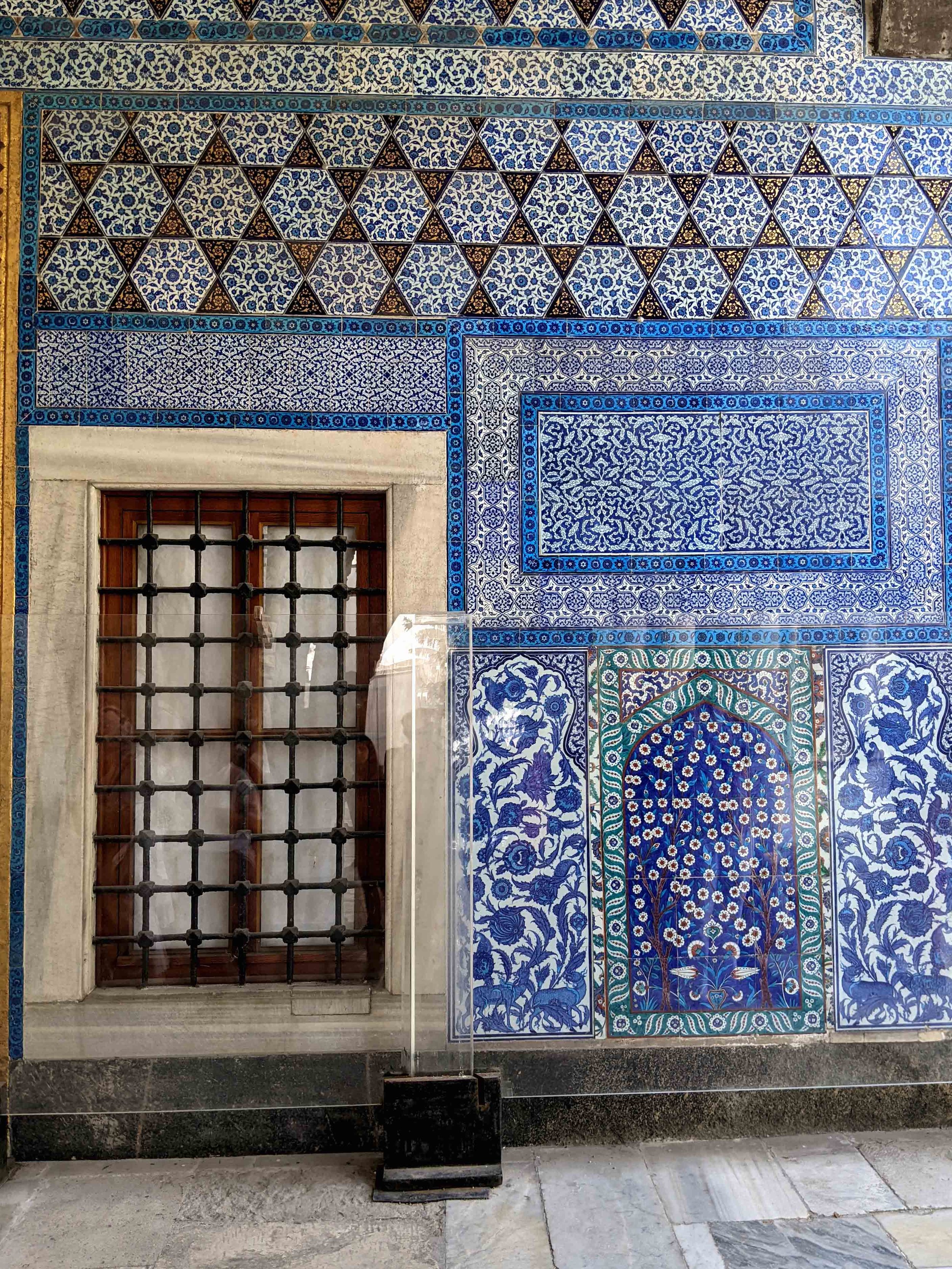
These rooms are simply spectacular and exhibit a mix of Turkish Iznik tiles and Western European paintwork and have intricate domed ceiling decor.

a22.jpg
a4.jpg
a2.jpg
a5.jpg
a6.jpg
a3.jpg
a7.jpg
a8.jpg
a12.jpg
a10.jpg
a9.jpg
a16.jpg
a13.jpg
a20.jpg
a15.jpg
a18.jpg
a17.jpg
a14.jpg
35.JPG
a1.jpg

COURTYARDS AND GARDENS

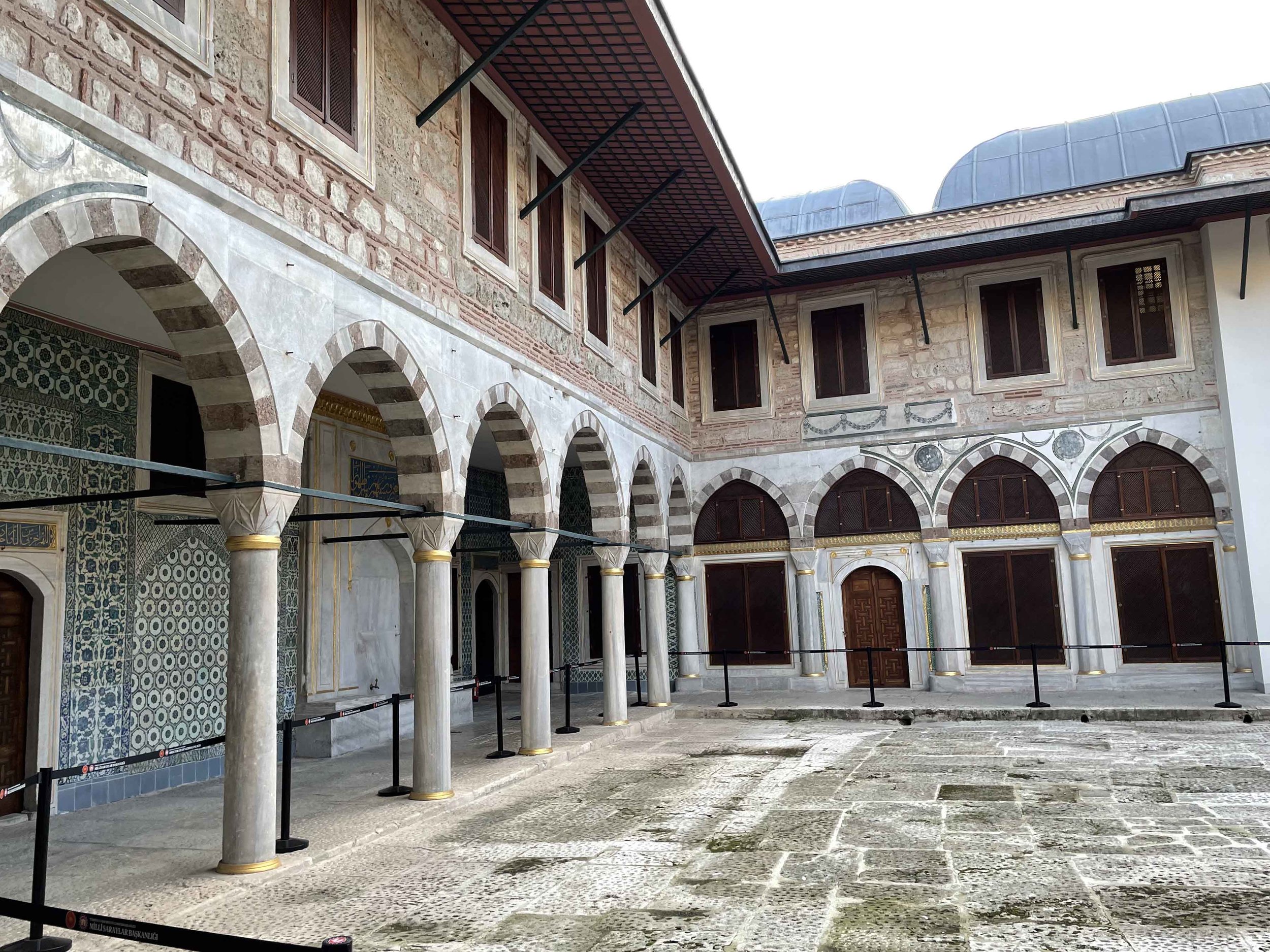
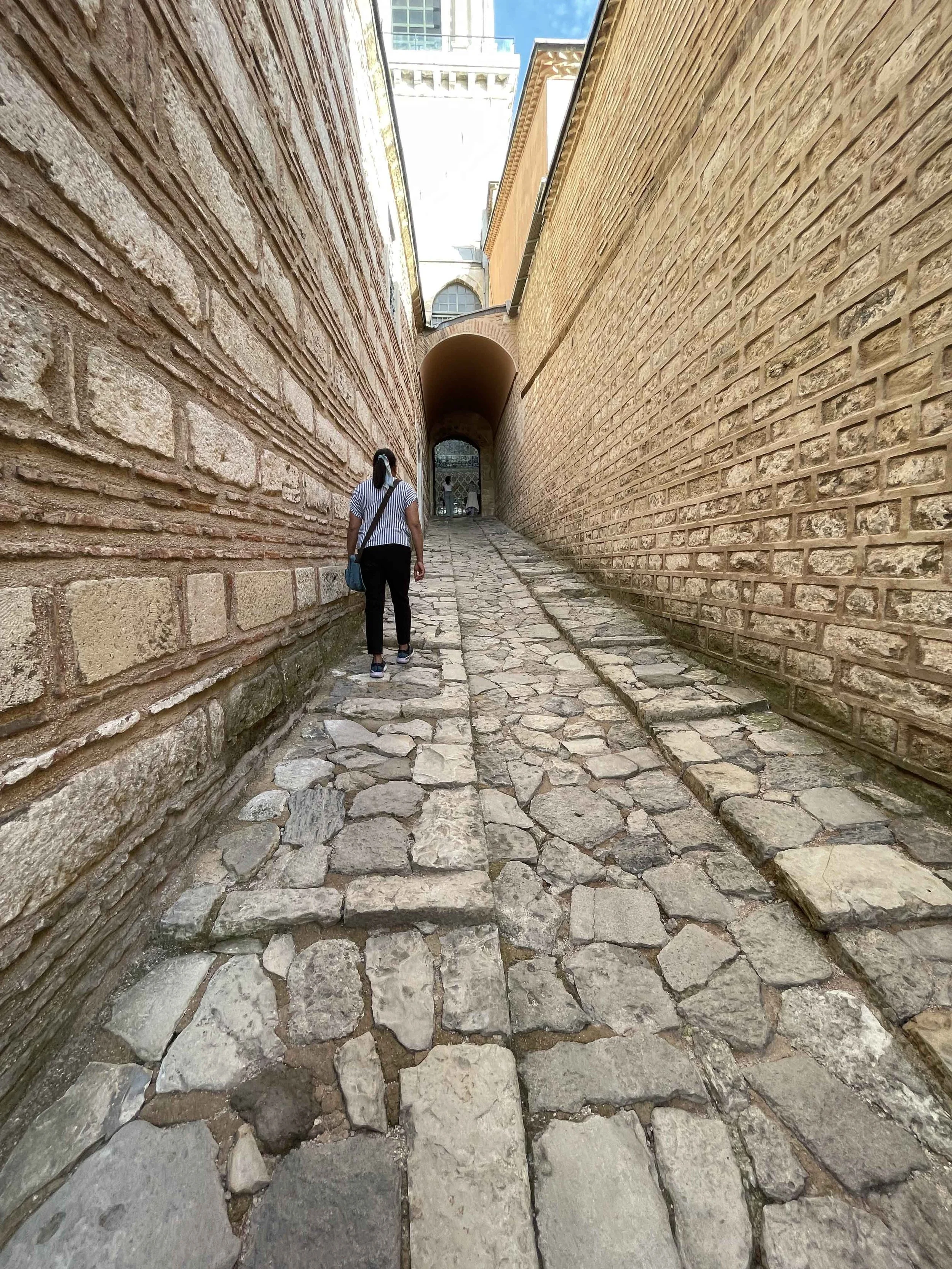
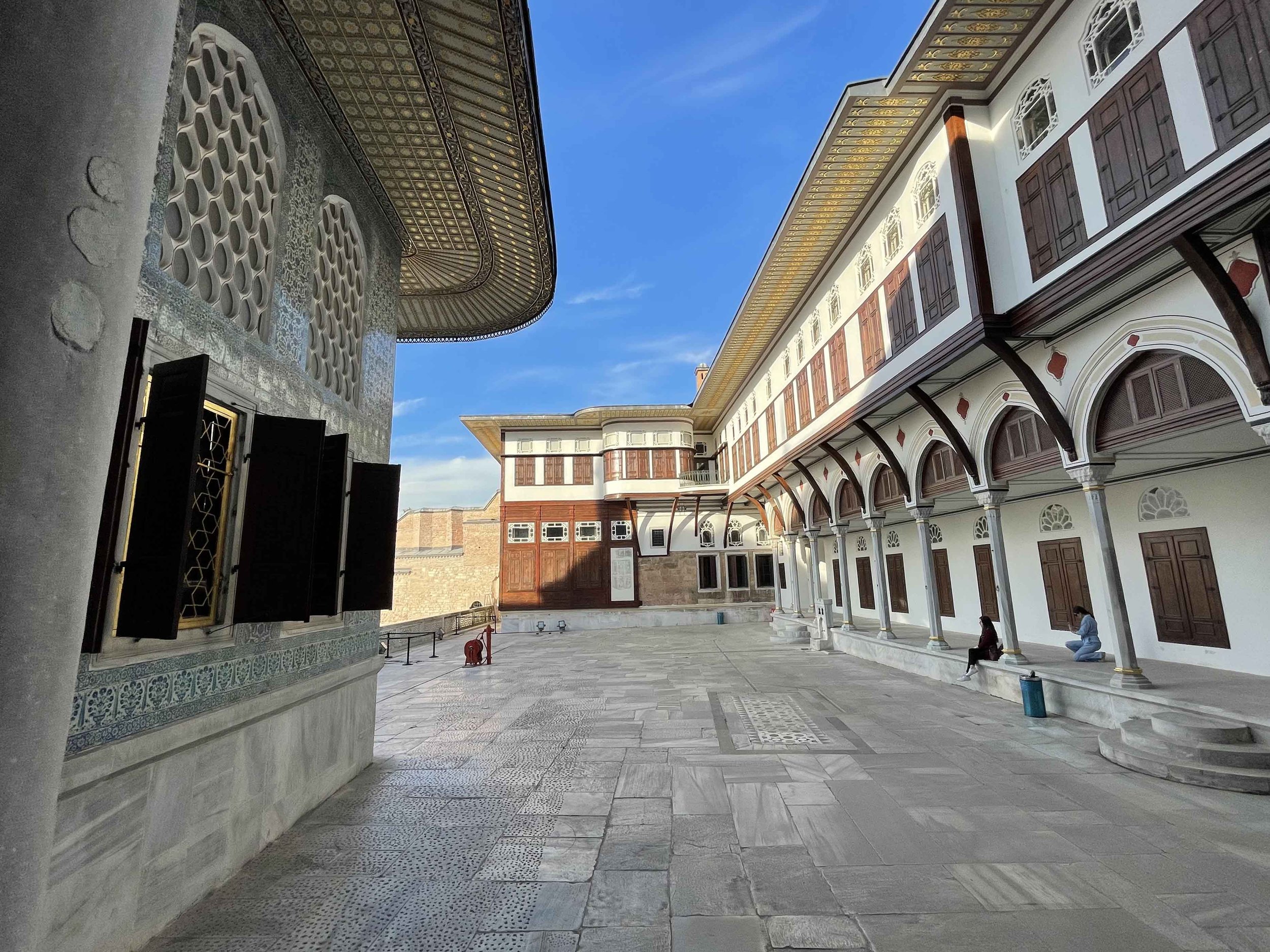
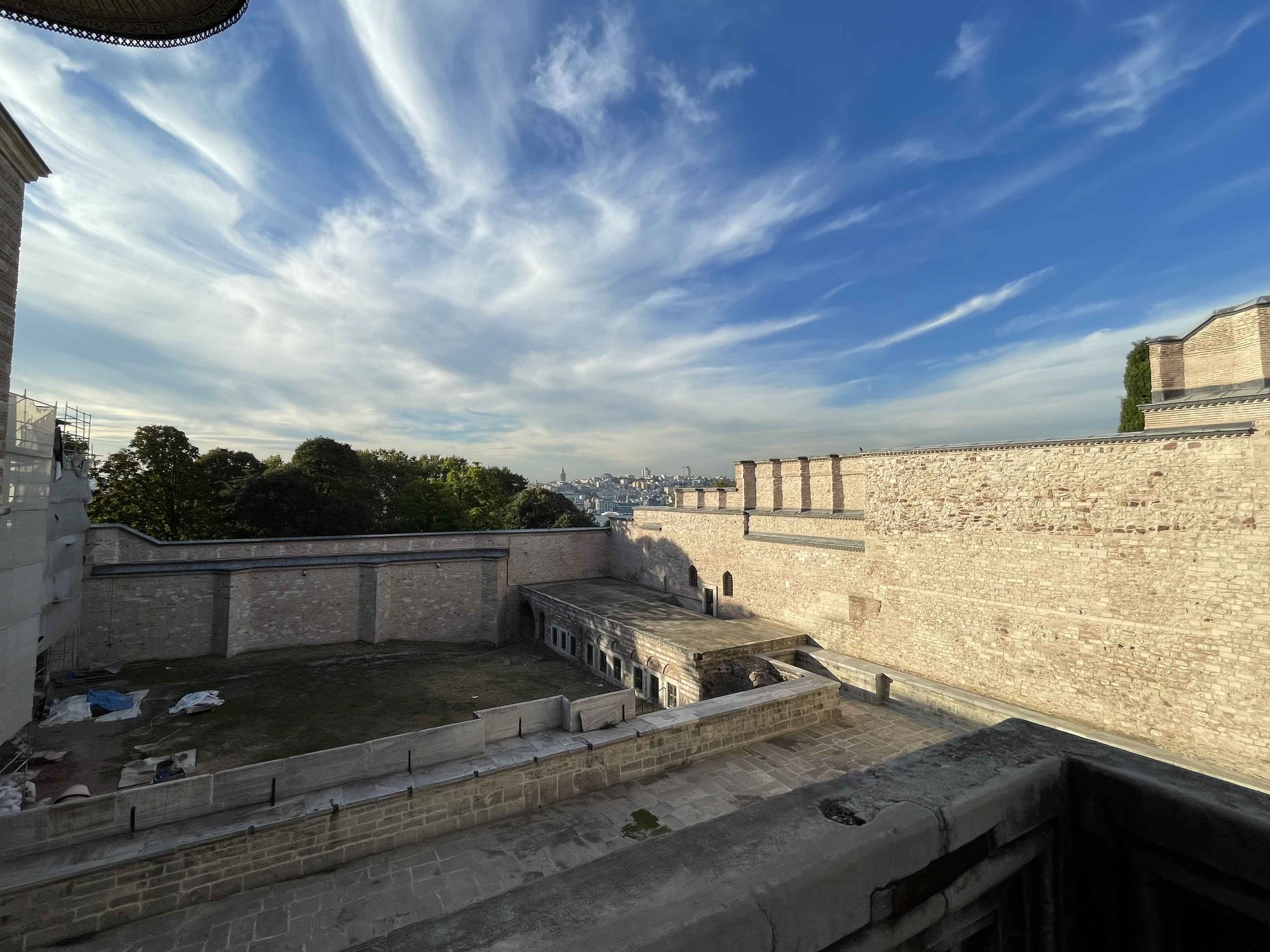
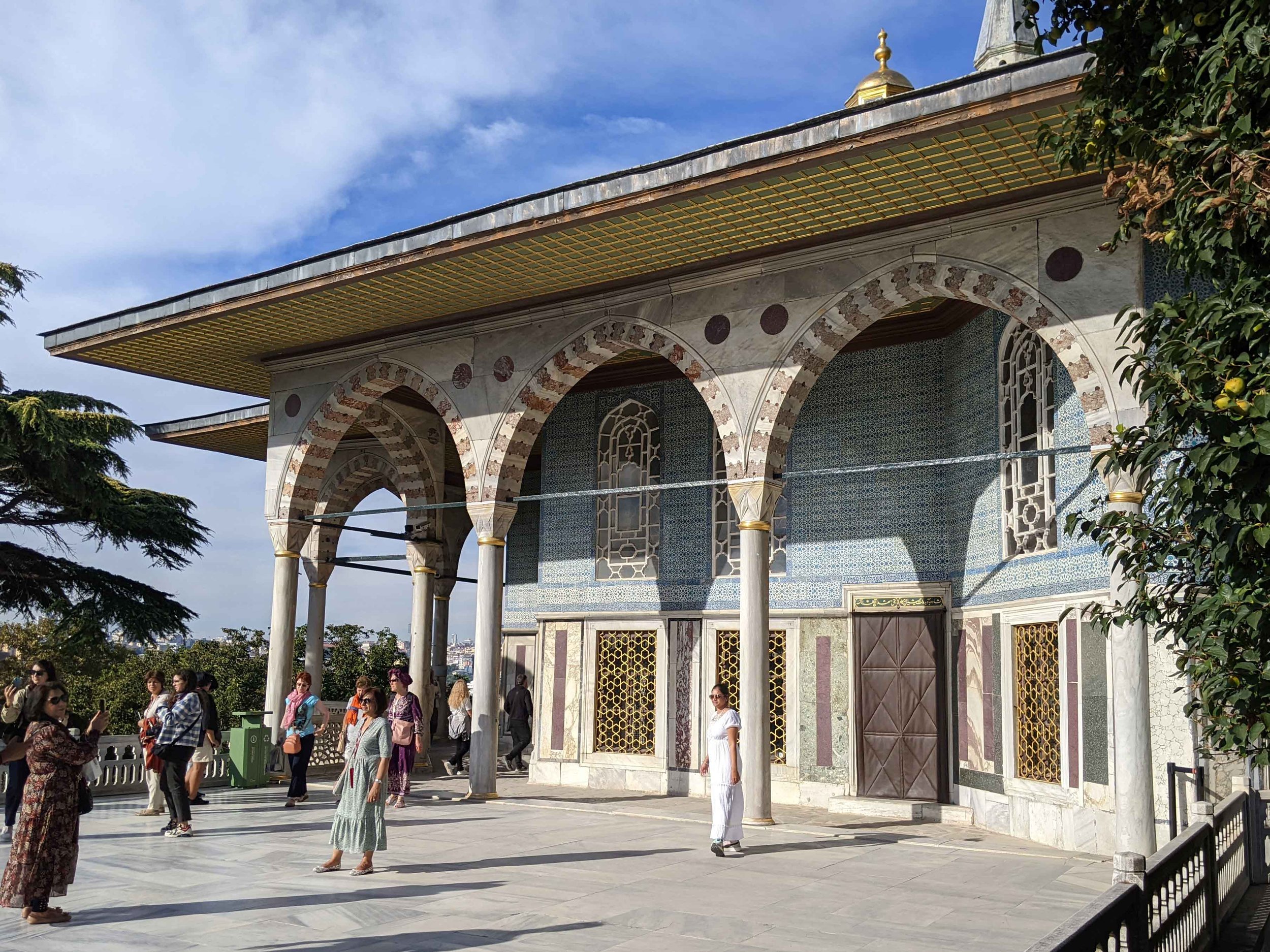
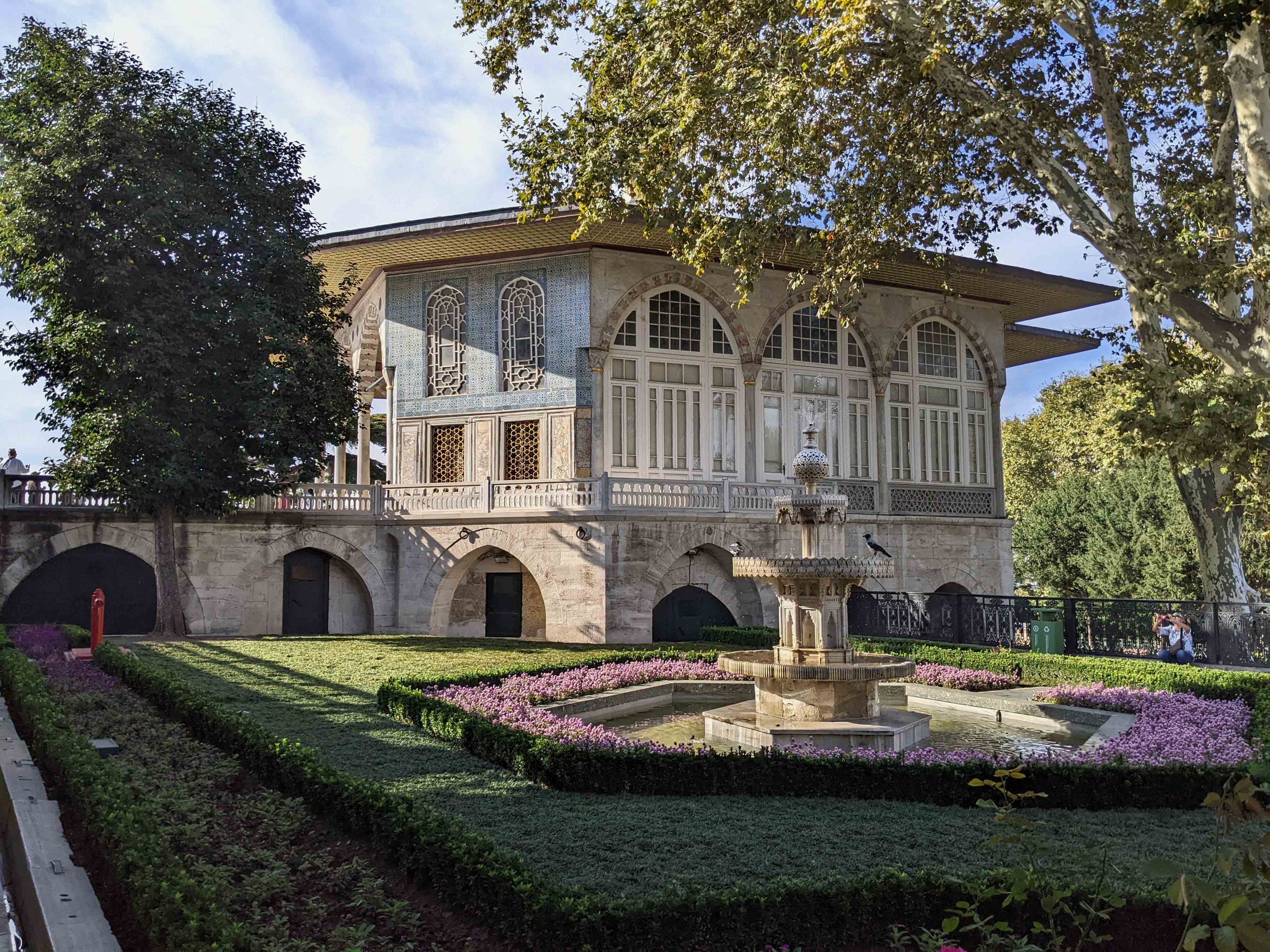
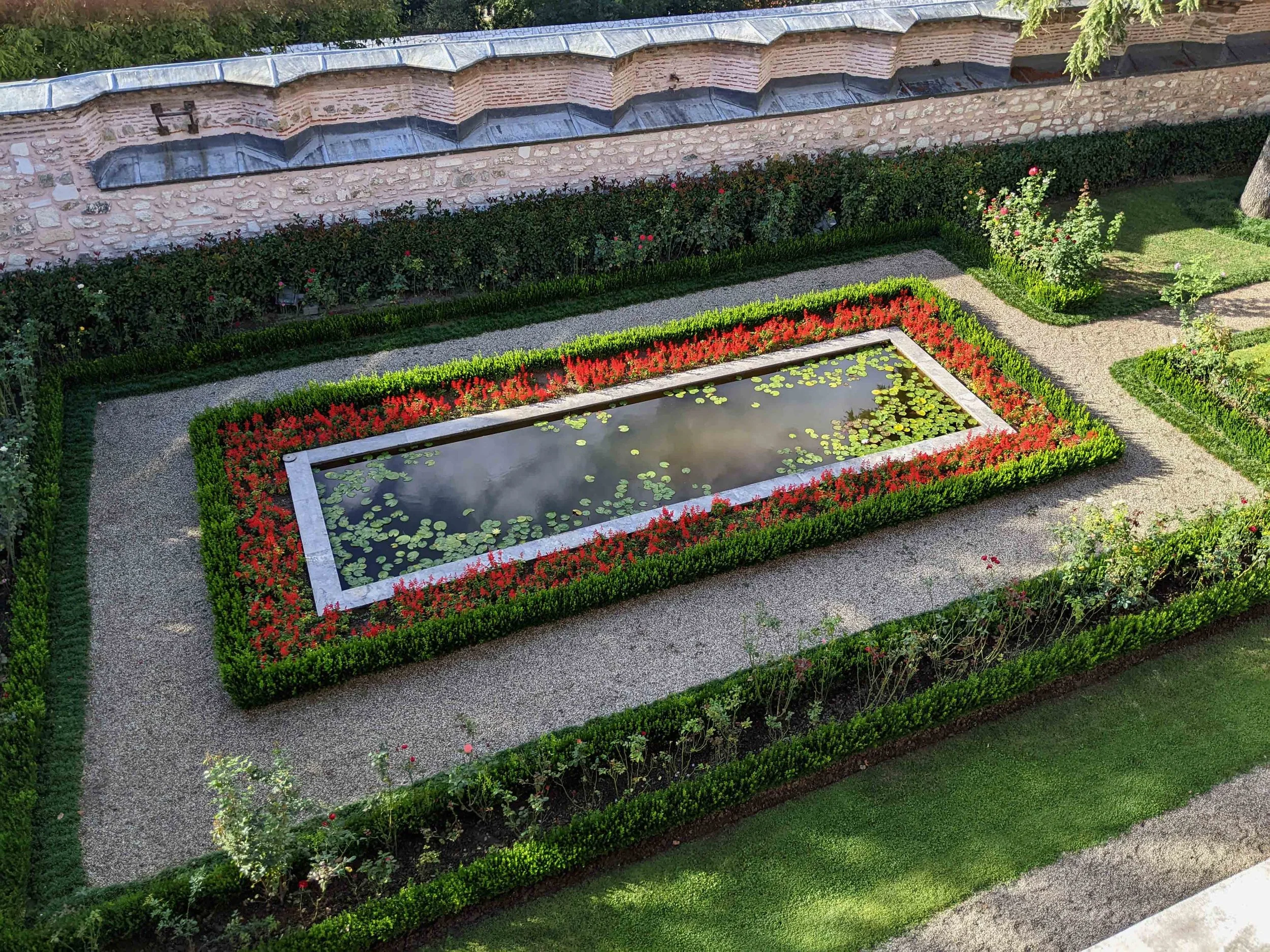
The palace design consists of four consecutive courtyards surrounded by high walls. Each courtyard served different purposes and was separated by a gate.

a10.jpg
a4.jpg
a2.jpg
a6.jpg
a14.jpg
a8.jpg
a9.jpg
a13.jpg
a11.jpg
a1.jpg
a3.jpg
a7.jpg

The outer courtyard is the largest and only public courtyard. This courtyard’s open space made it ideal for ceremonies and processions. The second courtyard was called the ‘Divan Square’, and was the administrative center of the palace. Only official visitors and members of the court could enter this space

The innermost third courtyard housed the private residence of the sultan and the inner palace school. Only the sultan, members of his family, his servants, and the occasional approved visitor were allowed to enter. The third courtyard extends to the fourth courtyard, which consists primarily of terraced gardens and pavilions.

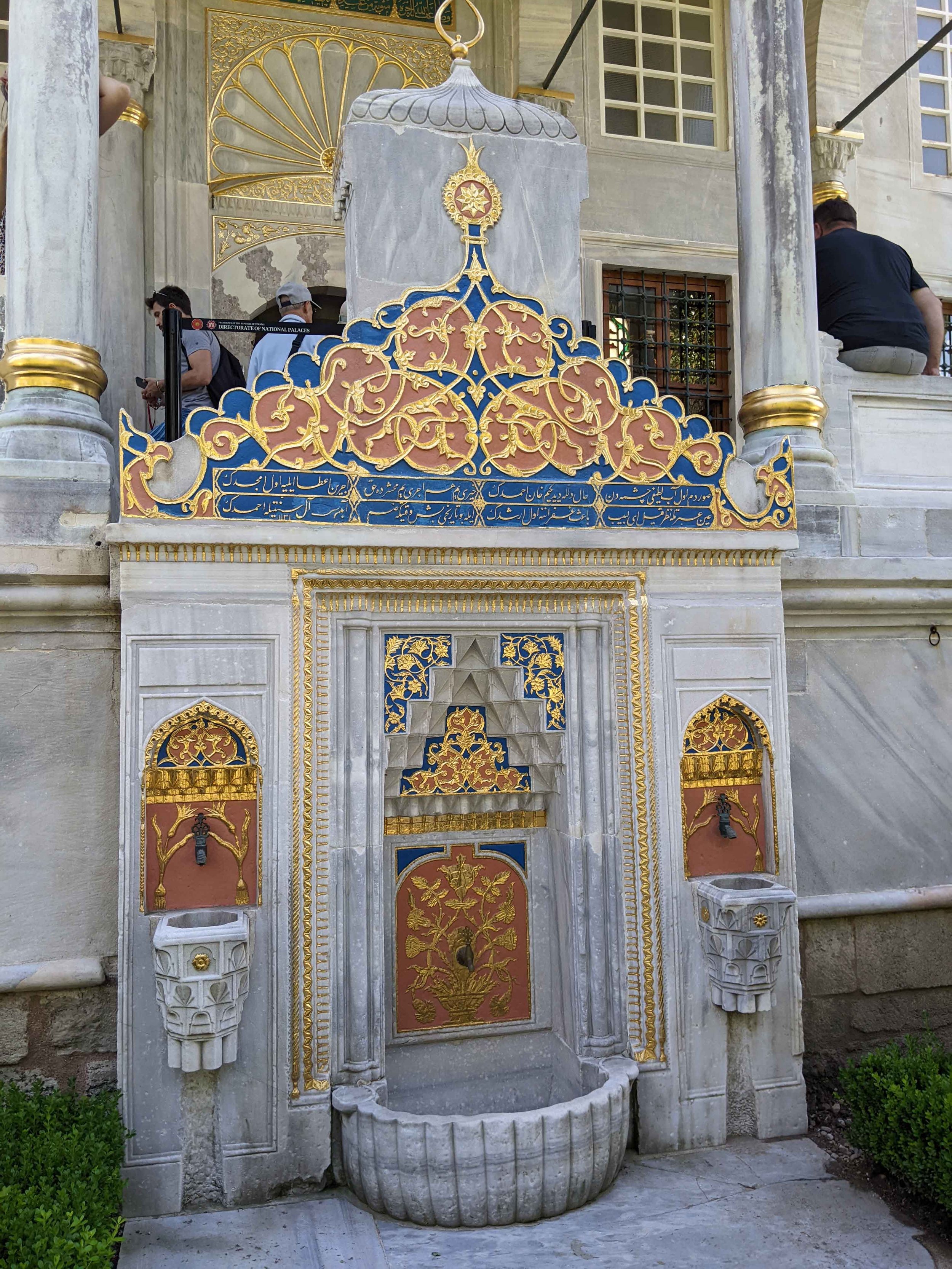
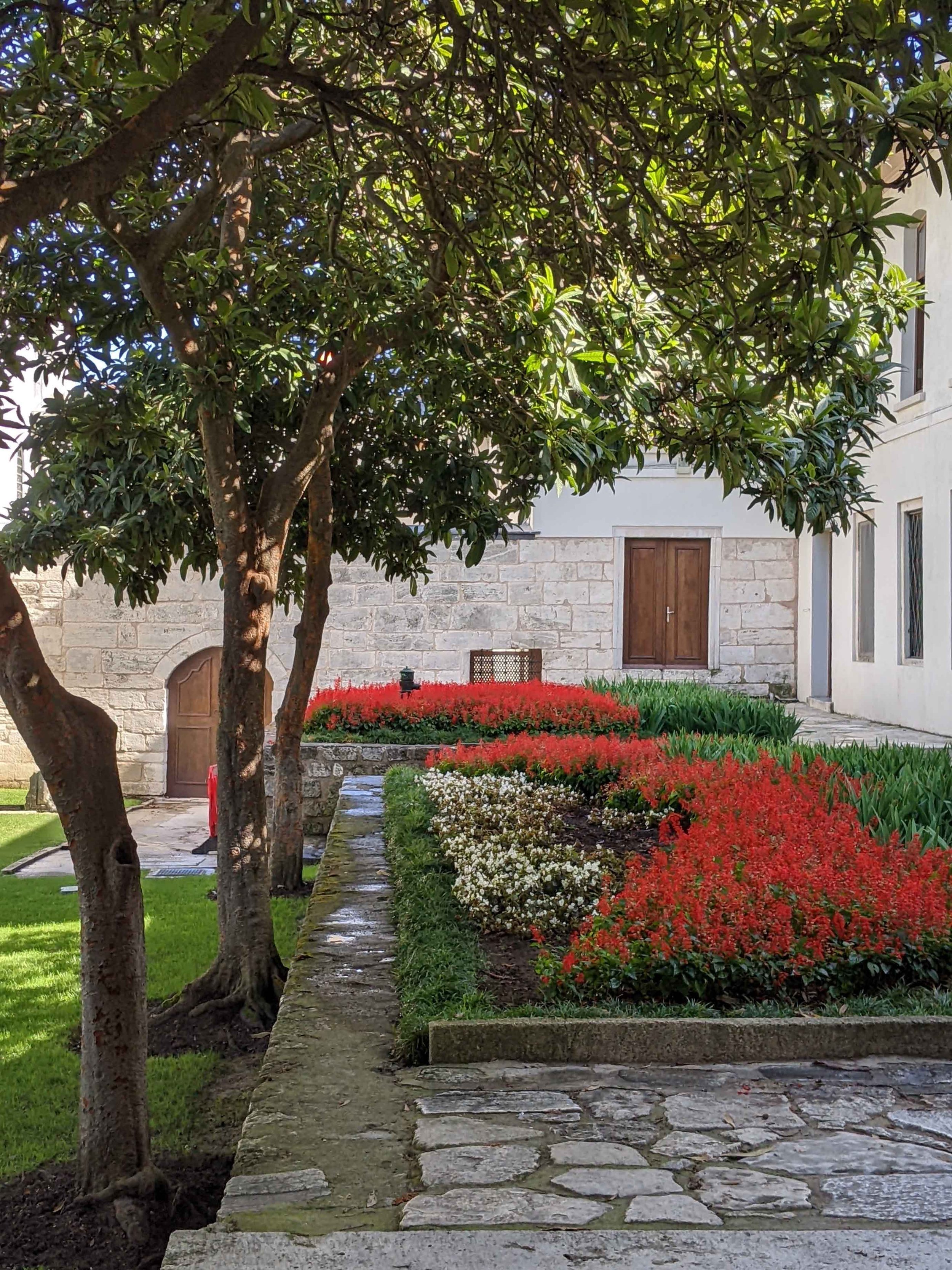
The Sultans were keen lovers of gardens and flowers and lined the courtyards with long tall trees, fountains, and lawns. They collected best flower species from all over the empire and planted them in the palace.

The Austrian ambassador who came to Istanbul at the time of Sultan Suleyman, stated the following about the flower passion of the Turks, “The flowers smelled so good that our heads were spinning, which was unusual for us. Turks, are very fond of flowers. They do not hesitate to give a lot of money for a beautiful flower.”

Topkapi palace is a must-see destination while visiting Istanbul, allow at least 4 hours for a proper look. It is a touristy spot that attracts thousands of visitors each day, therefore it’s better to visit early and see the harem (additional tickets) and the chamber of holy relics first up before it gets busy.

In Arts, Islamic Arts, Travel, Turkey, Garden, Ottoman Tags topkapi, Topkapi, Palace, Turkey, Courtyard, Gardens, garden, Library, Museum, Harems, harem
Comment

Latest AND THE Greatest


TOGETHER

INTERACTIVE ART PROJECT

Powered by Squarespace