• +Works
    • Arabic Abstractions II
    • Mechanical Imprints
    • Arabic Abstractions
    • Emerging Artist Space
    • Group Shows
    • ARTIST STATEMENT
    • CV
    • CONTACT
  • +Conversations
Menu

Sohail Yamin

Conversations With Colour
  • +Works
  • +Exhibitions
    • Arabic Abstractions II
    • Mechanical Imprints
    • Arabic Abstractions
    • Emerging Artist Space
    • Group Shows
  • +ABOUT
    • ARTIST STATEMENT
    • CV
    • CONTACT
  • +Conversations
alhambra

Alhambra

December 10, 2022

Described as a ‘pearl set in emeralds’ by the poets of the time, it took the writing of another writer a few centuries later to refocus the world attention to the beauty of this city.

The writer’s name was Washington Irving and the book that drew the attention to this Southern Spanish region of Andalusia was the ‘Tales of the Alhambra’. Irving works were in line with ‘romantic’ literary movement of early 19th century America that celebrated nature, focussed on the individual emotions and imaginations, and sort to connect the local tales and legends to the history and roots of the nations.

Irving fell in love with the city on first sight and described it as “a most picturesque and beautiful city, situated in one of the loveliest landscapes that I have ever seen.” His celebrity status as a writer, helped gain him permission to stay in the fortress where he compiled his notes, observations and sketches which were later compiled into a book ‘Tales of the Alhambra’ that was published in 1832. His contribution to promoting the city is acknowledged by a commemorative plaque at the Alhambra that reads, “Washington Irving wrote his Tales of Alhambra in these rooms in 1829”.
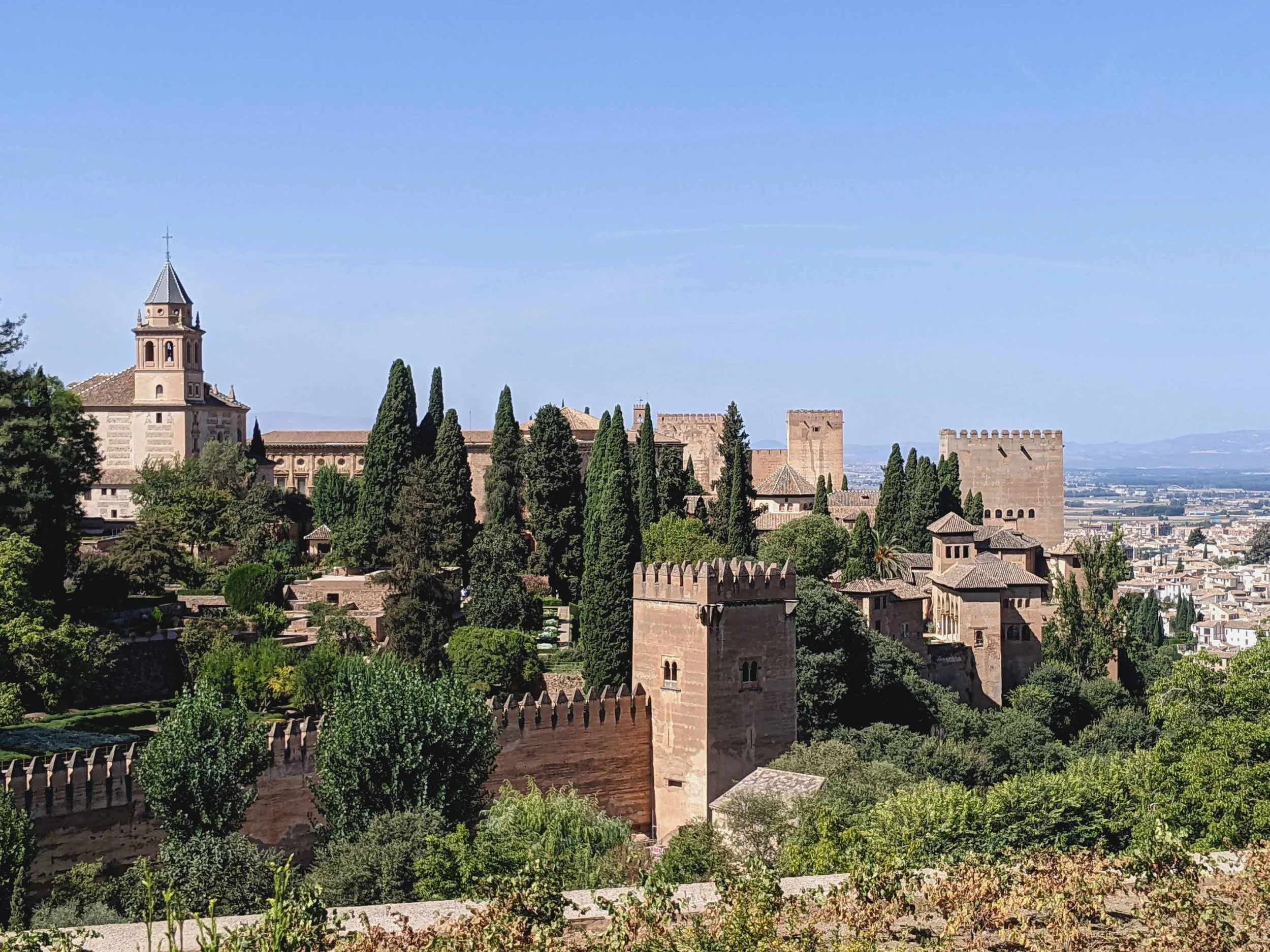
“a most picturesque and beautiful city, situated in one of the loveliest landscapes that I have ever seen.”

Washington Irving

The Moors in Spain.

The term ‘Moor’ does not describe people of a particular ethnicity or race and was used by the Europeans of the Middle Ages and the early modern period to designate Spanish Muslims, Europeans of African descent, and others. However, the term was mostly used to describe Muslims in general.

In 711, North African Muslims led by the Tariq ibn-Ziyad, captured the Iberian Peninsula (modern day Spain and Portugal) and established the territory of Al-Andalus. For centuries to follow, these territories flourish and become the centre of education, the arts and sciences. However, the differences in religion and culture led to a centuries-long conflict between the Muslim Sultans with the Christian kingdoms of Europe, which culminated in 1492, when Catholic monarchs Ferdinand II and Isabella I won the Granada War and completed Spain’s reconquest of the Iberian Peninsula.

Alhambra

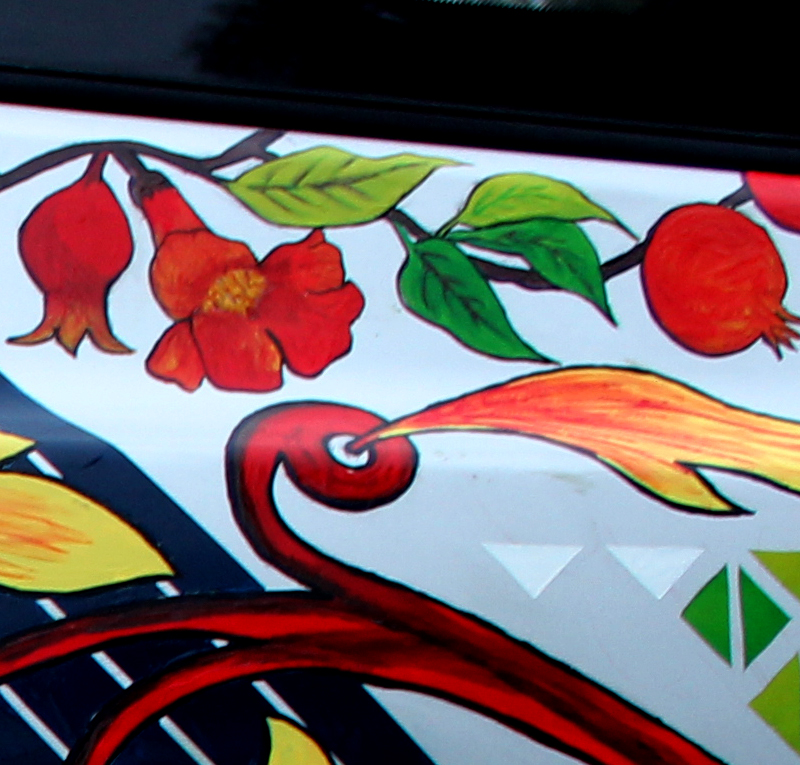
‘Alhambra’ is the Spanish adaptation of the Arabic term ‘qa’lat al-Hamra’ which roughly translates to “red castle”, perhaps referring to the sun-dried rose-coloured bricks that were used to build the fortress. The city of Granada, where the castle is located is named after a Jewish settlement, Medina-al-Granata, or Pomegranate City, the fruit being symbol of righteousness, knowledge, and wisdom and is said to contain 613 seeds, each representing one of the 613 mitzvot (commandments) of the Torah.

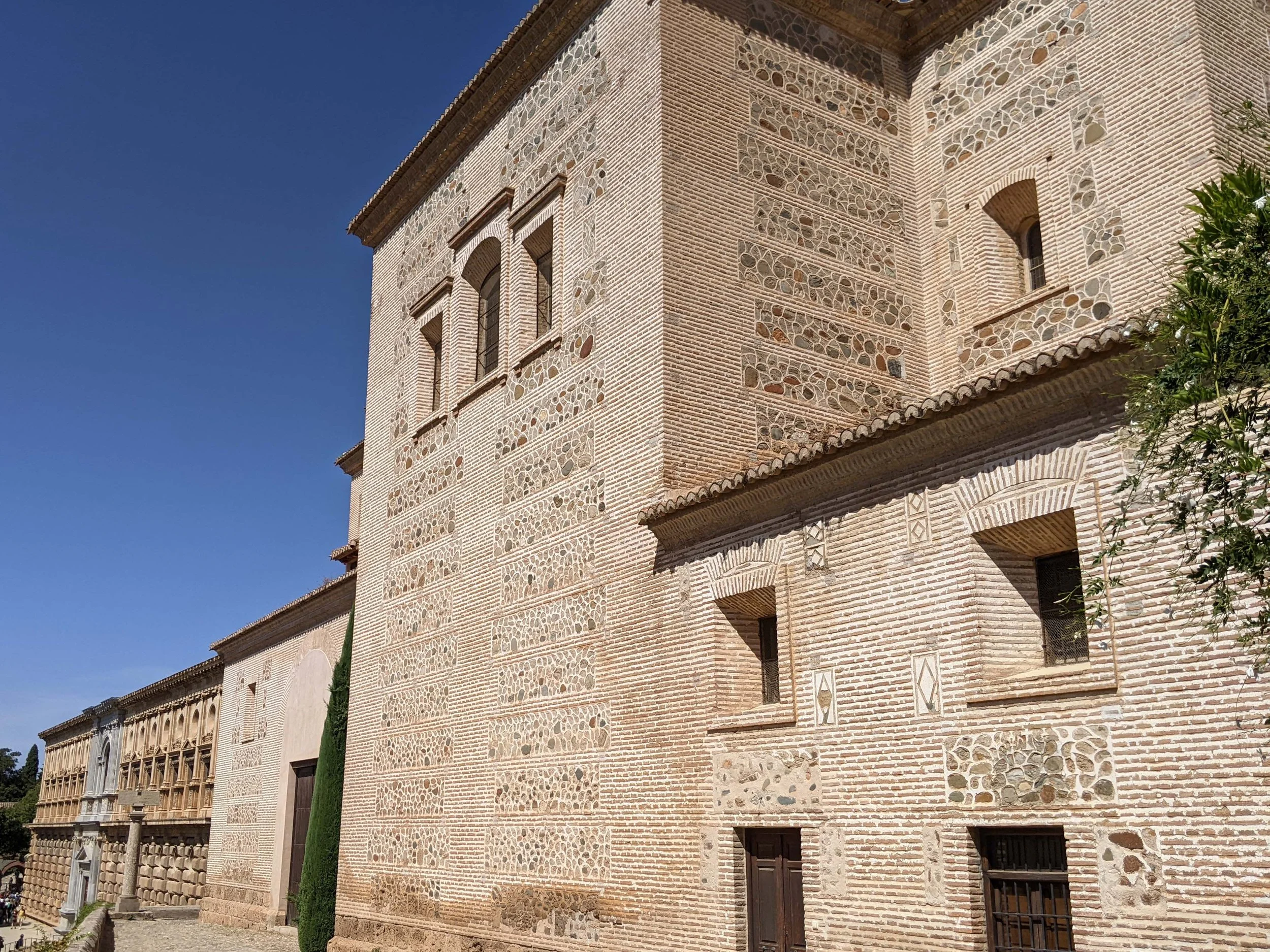
Though some form of fortification existed in this area since the 9th century, it was only after the arrival of Muhammad ben al Ahmar the first king of the Nasrid dynasty in the mid-thirteenth century that a royal residence was established in the Alhambra. This monument was not a project of a single ruler, 24 successive Sultans of the Nasrid dynasty contributed to it splendour, up until 1492 when the Emirate of Granada capitulate to the Catholic Reconquista.

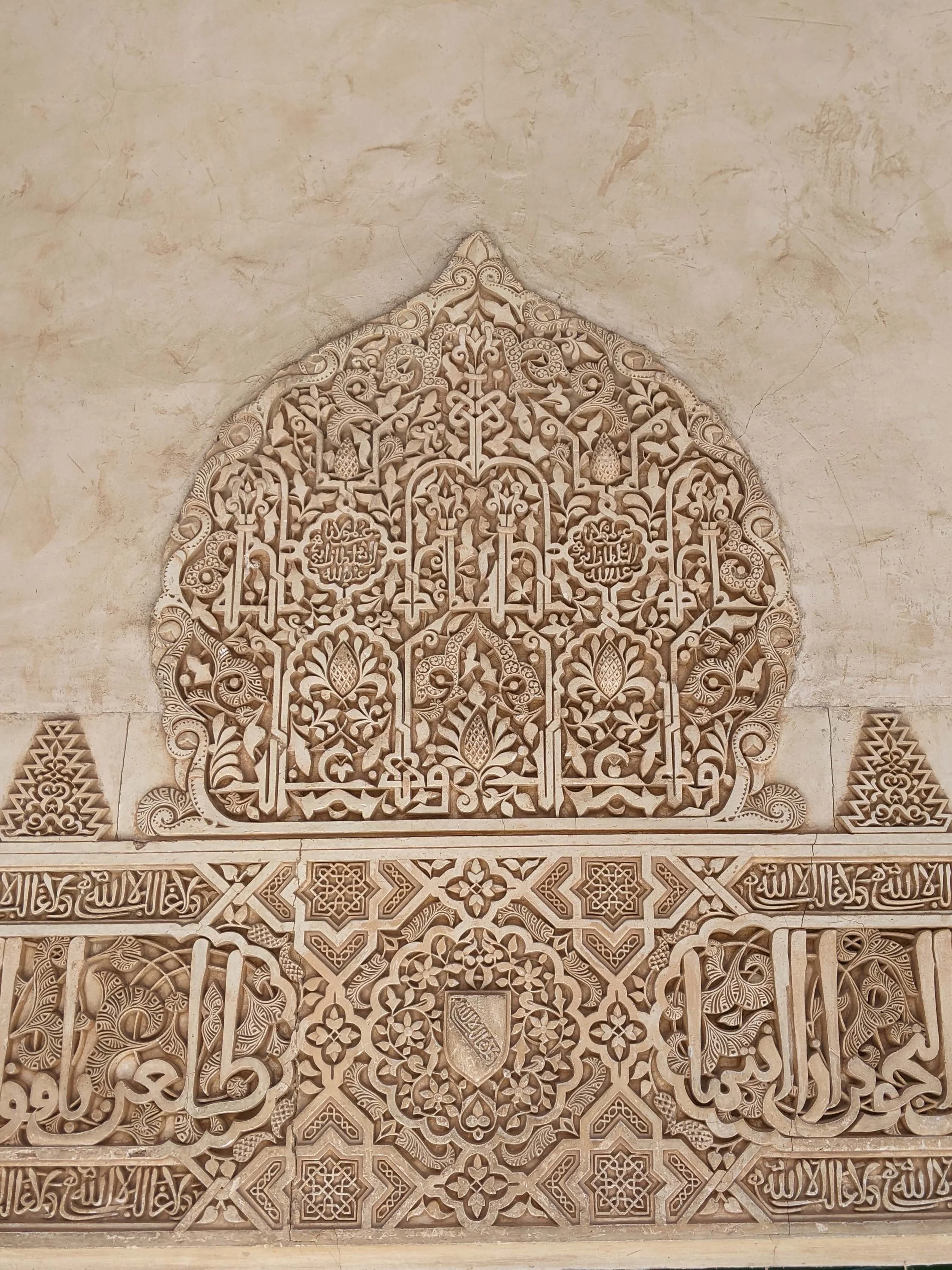
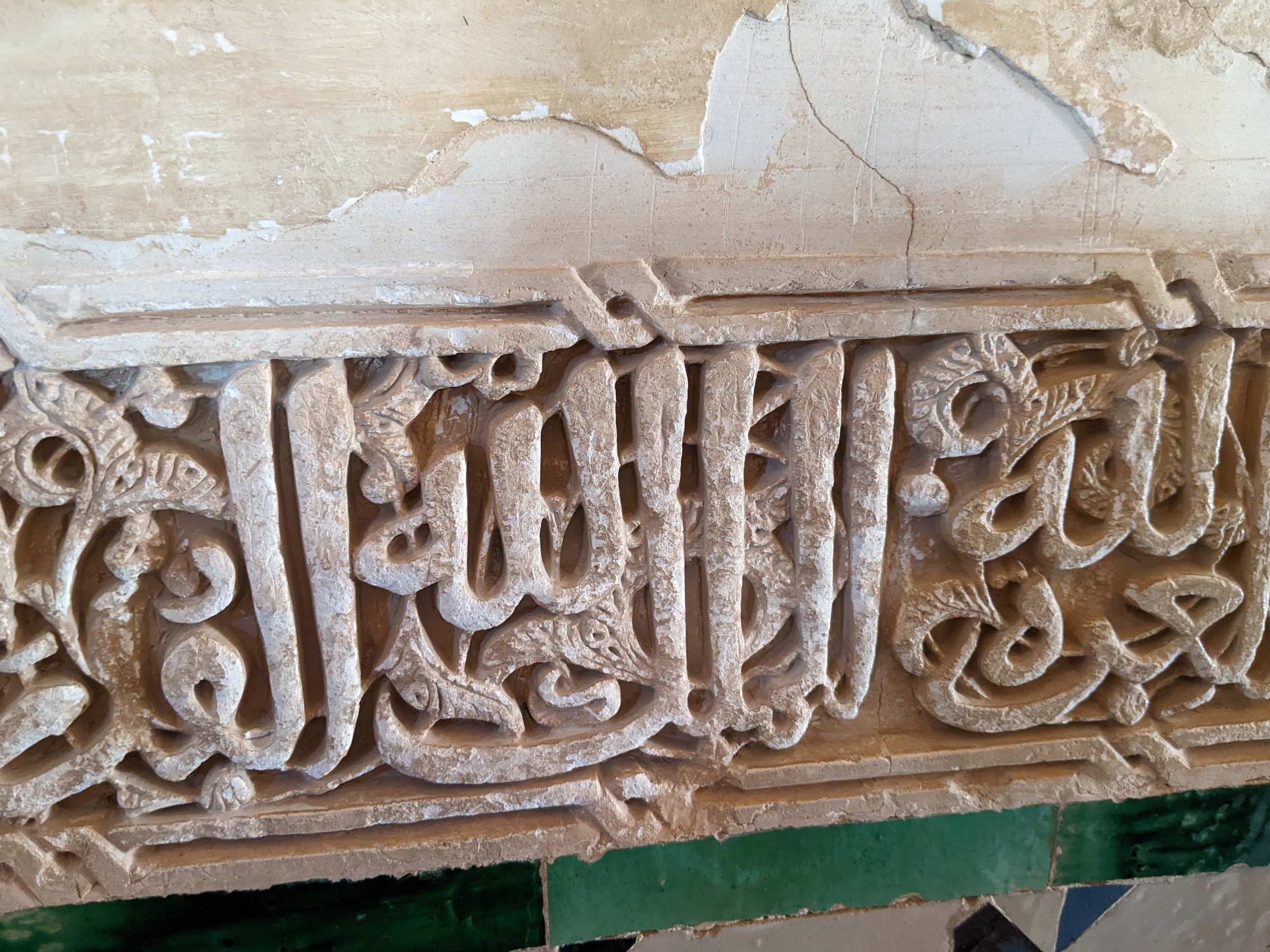
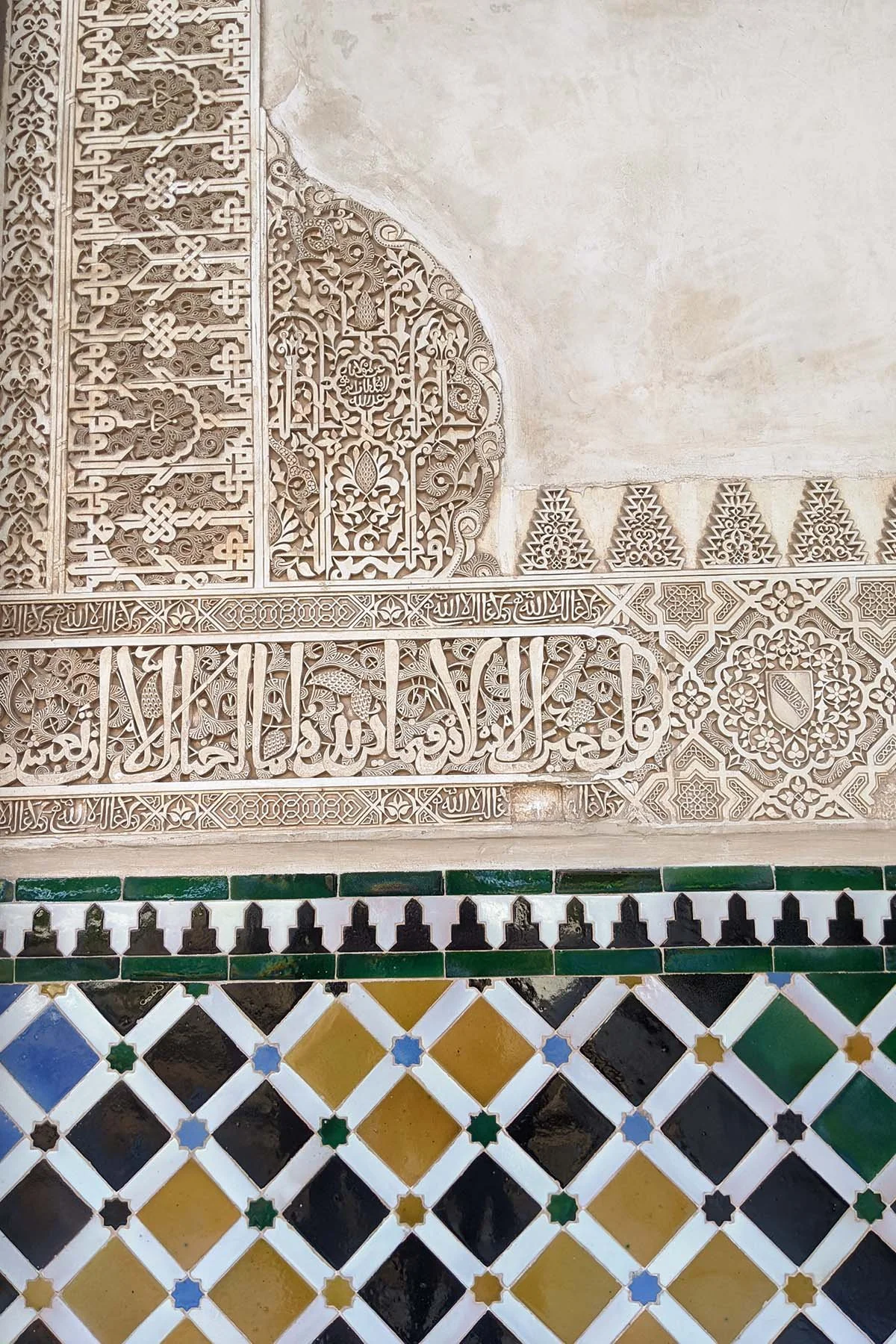
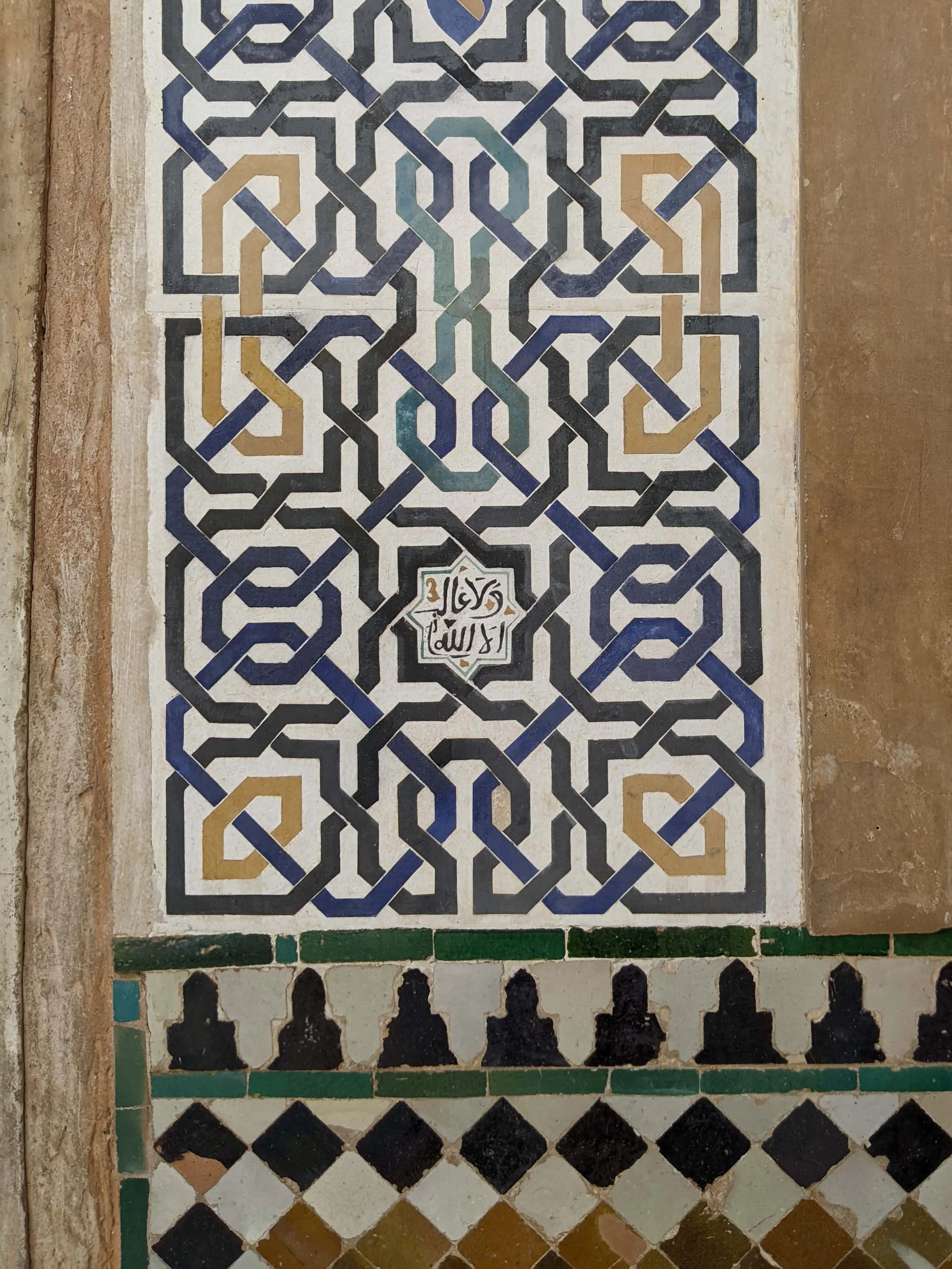
‘There is no victor but Allah’

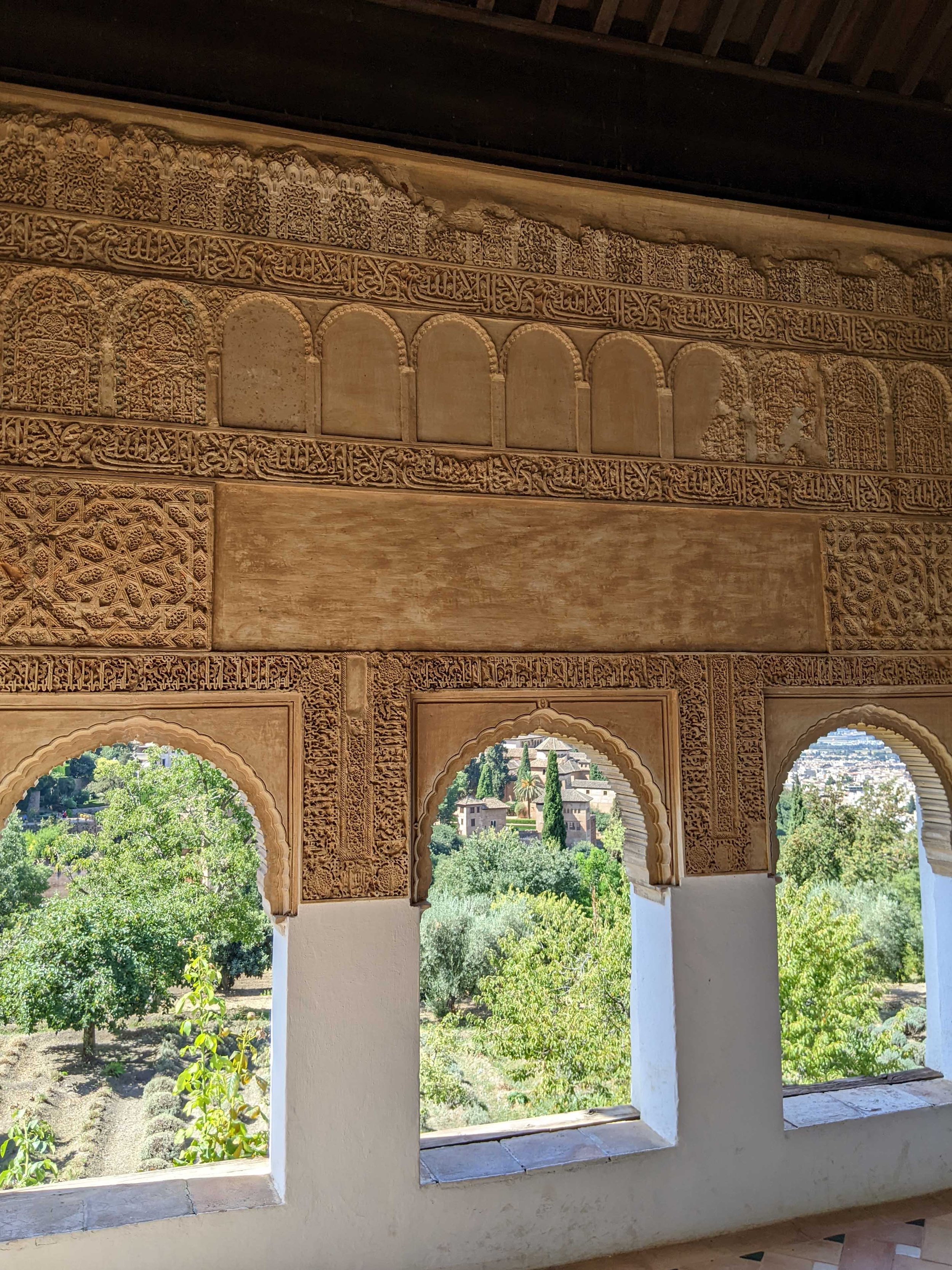
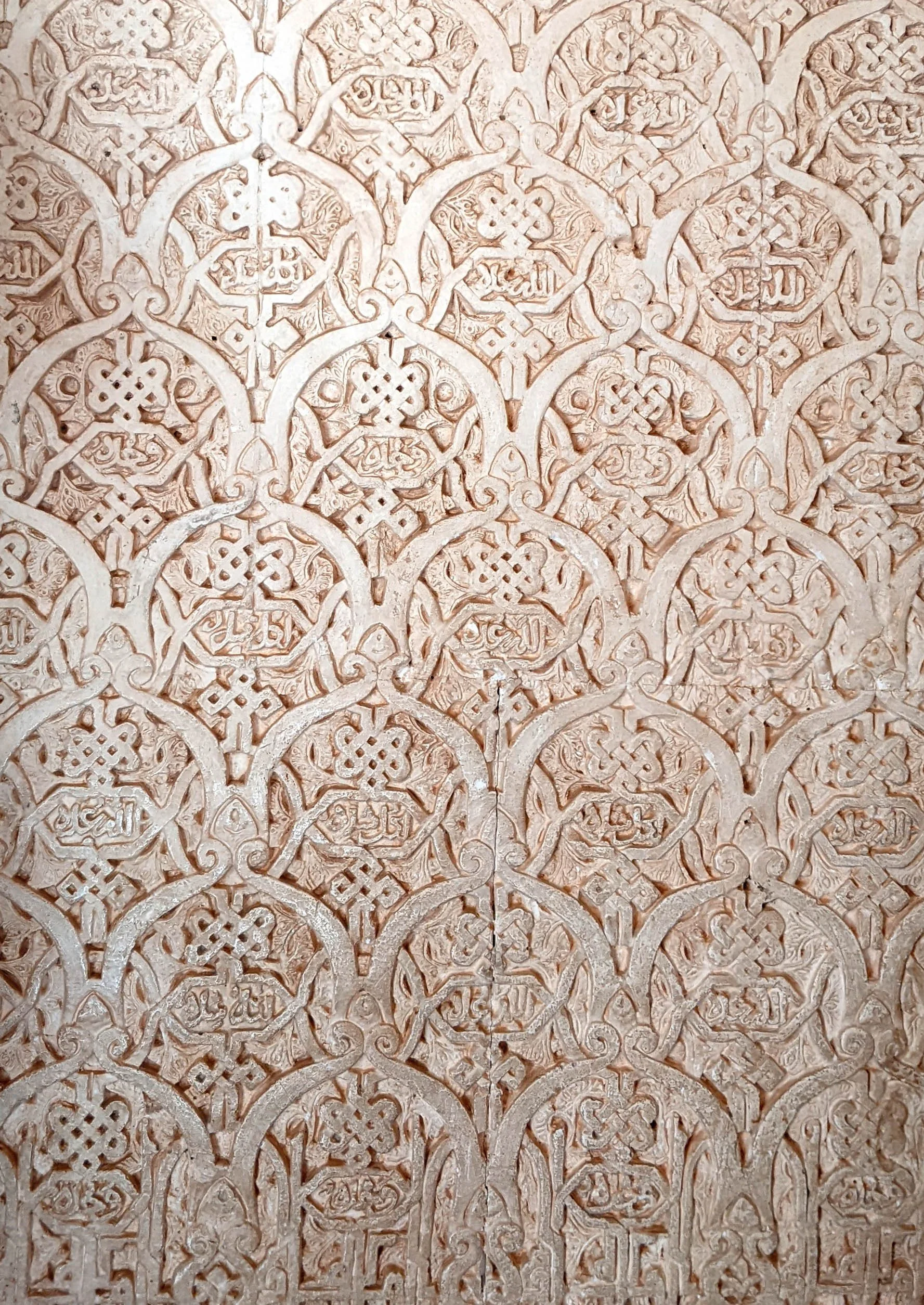
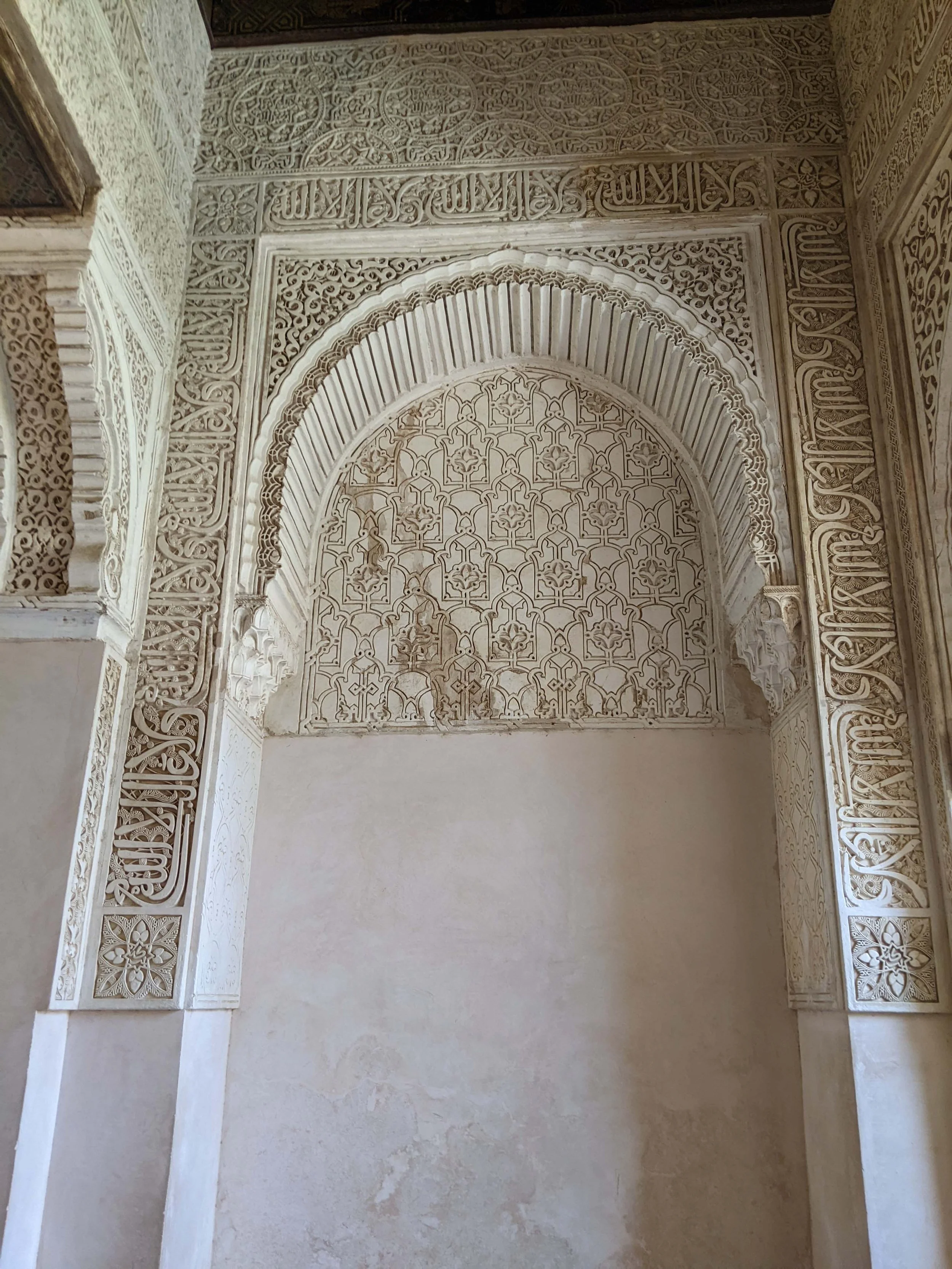
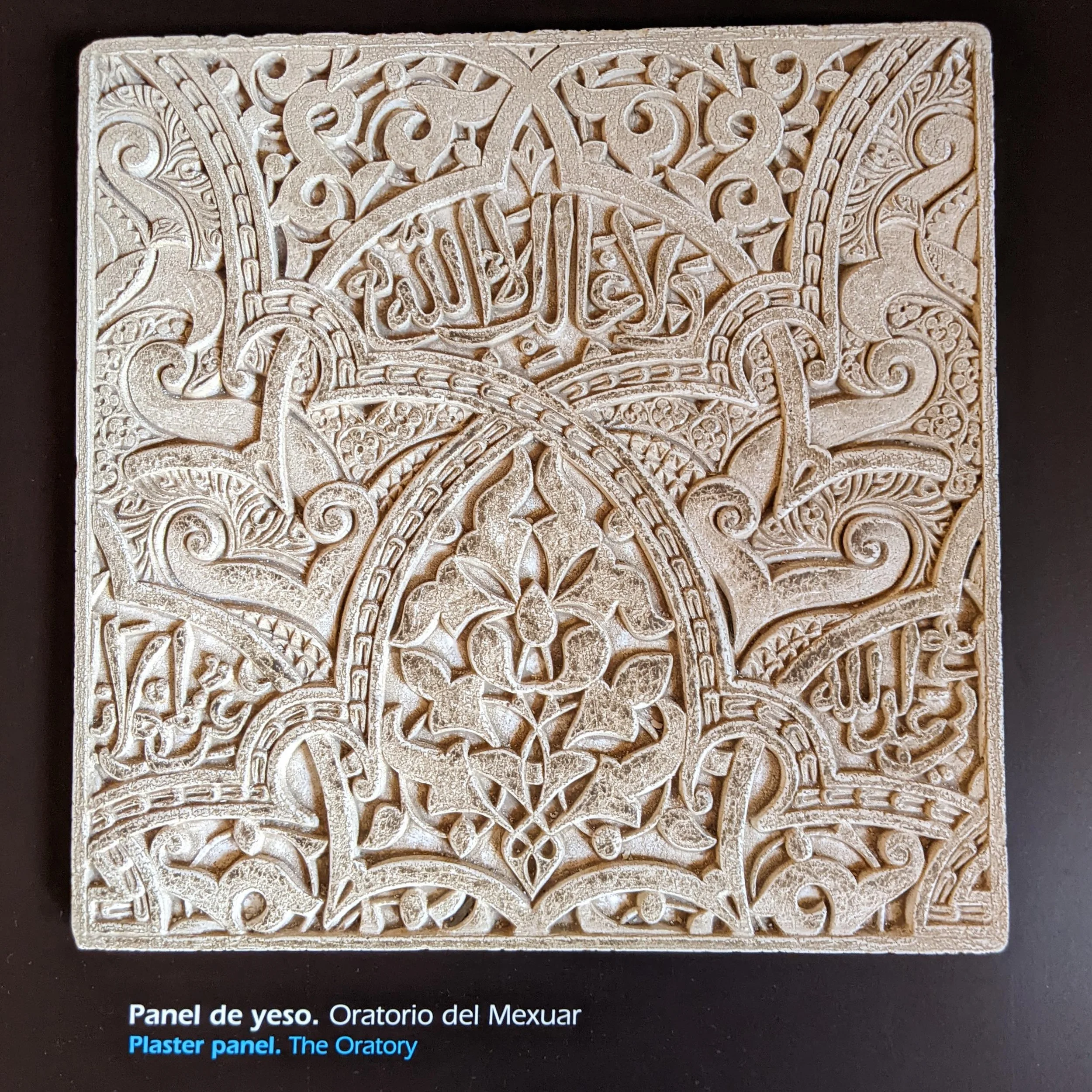
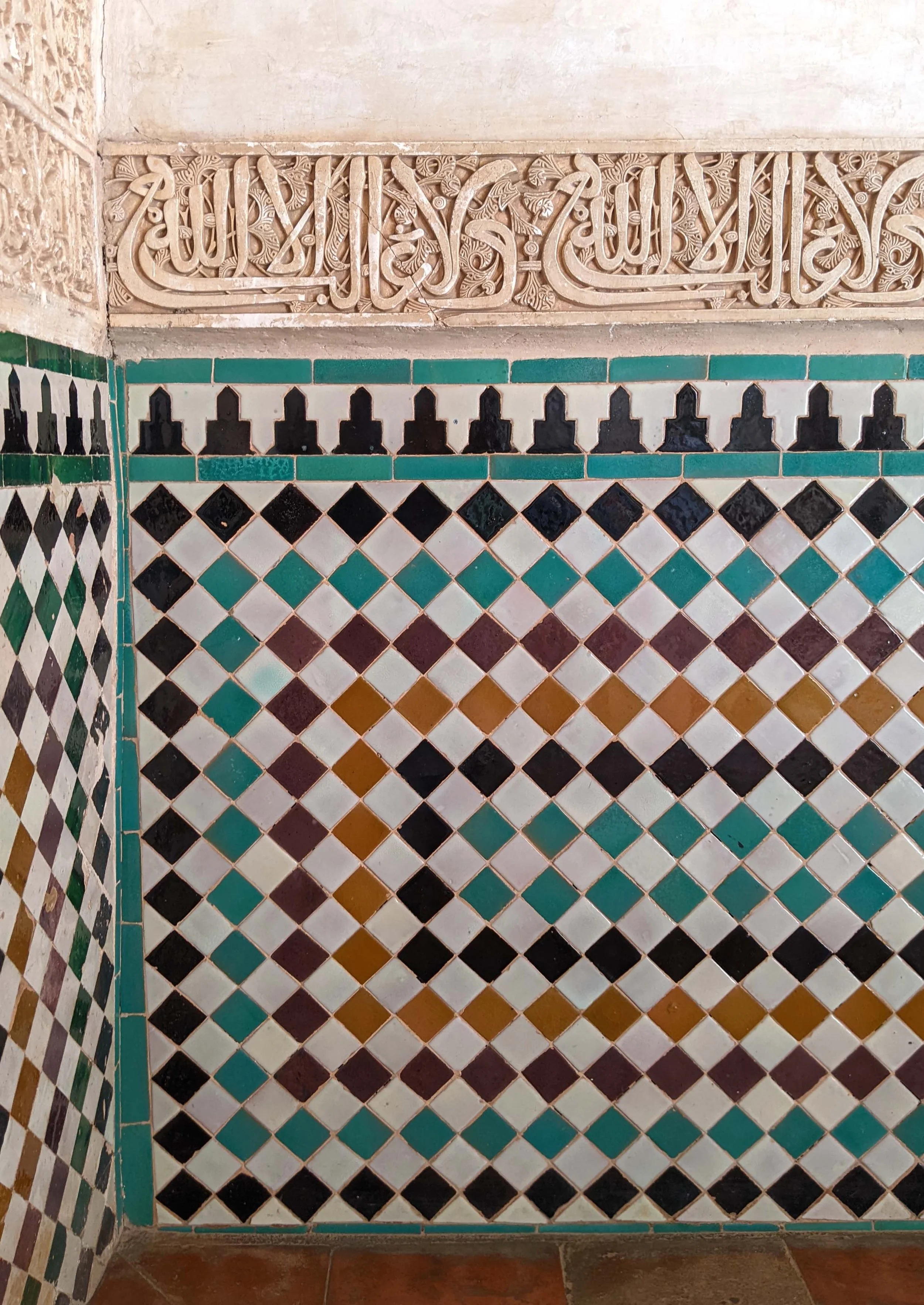
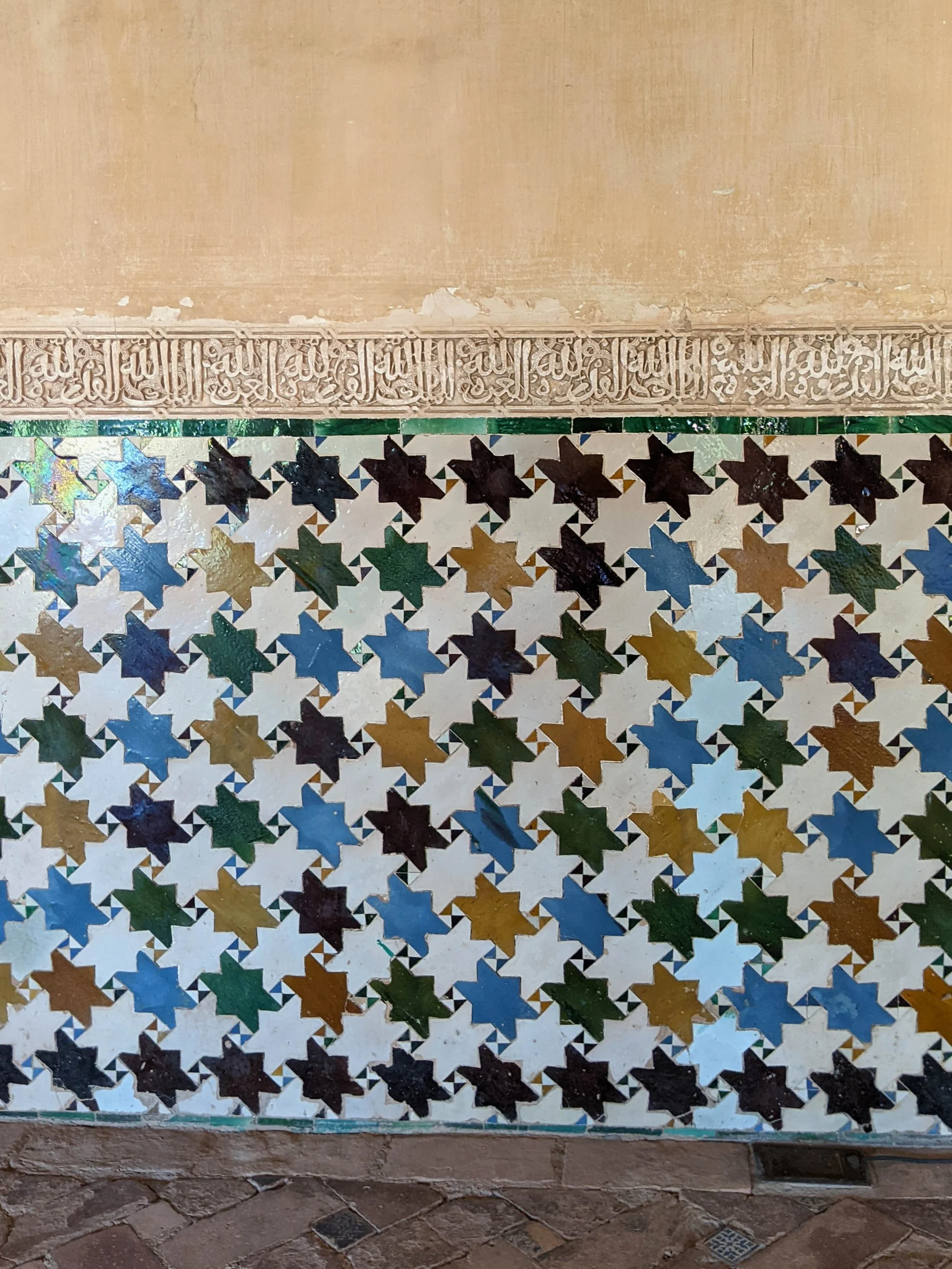
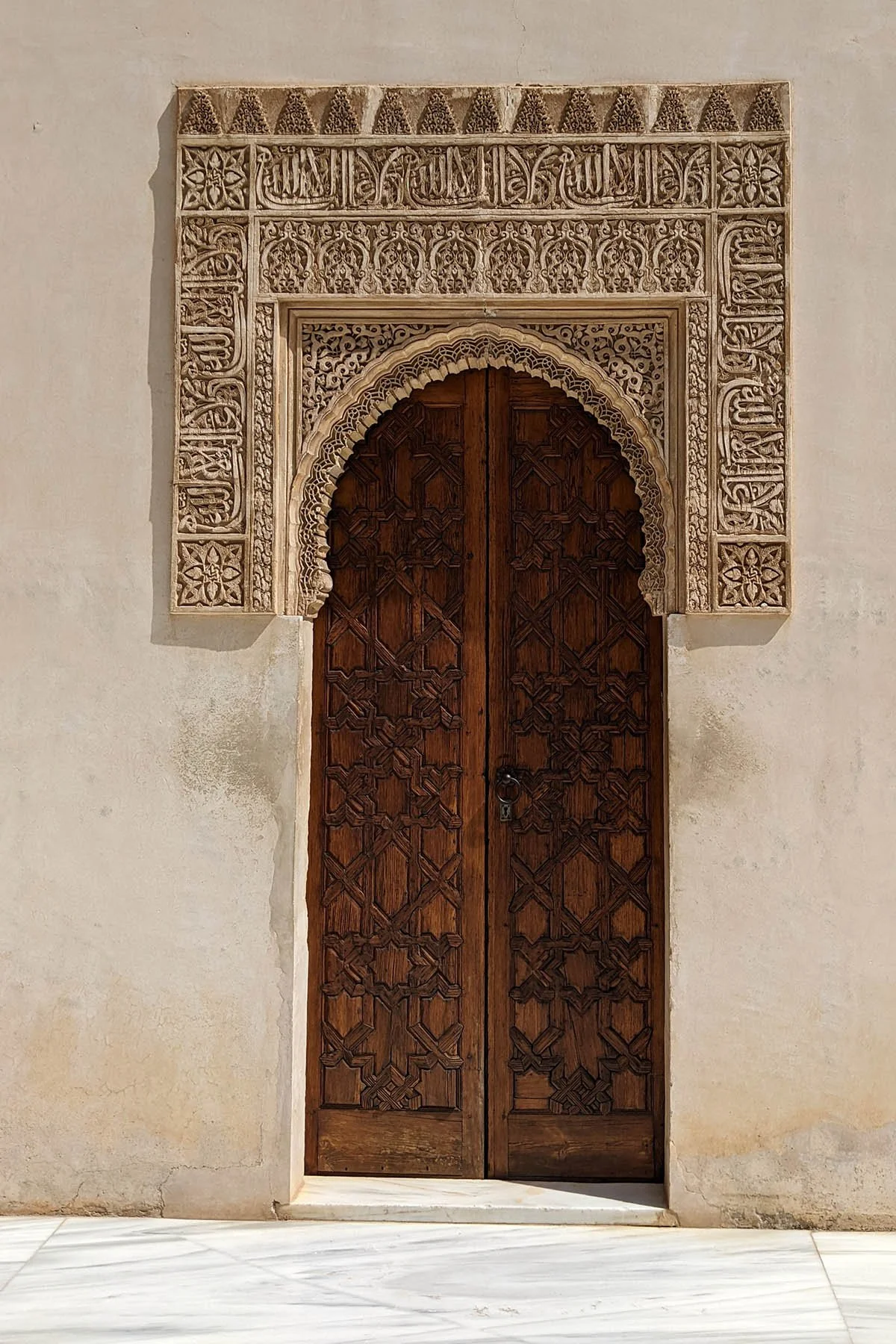
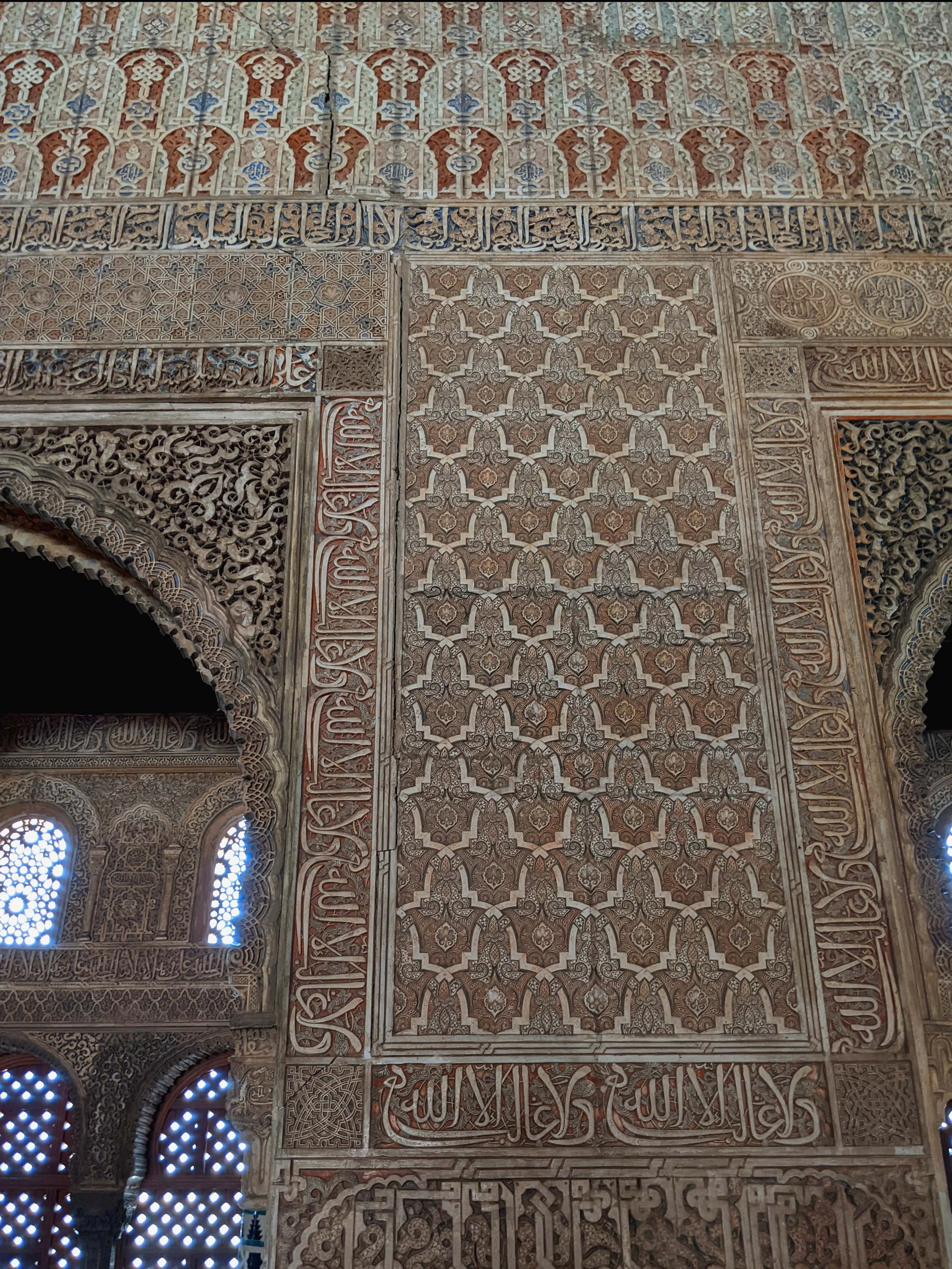
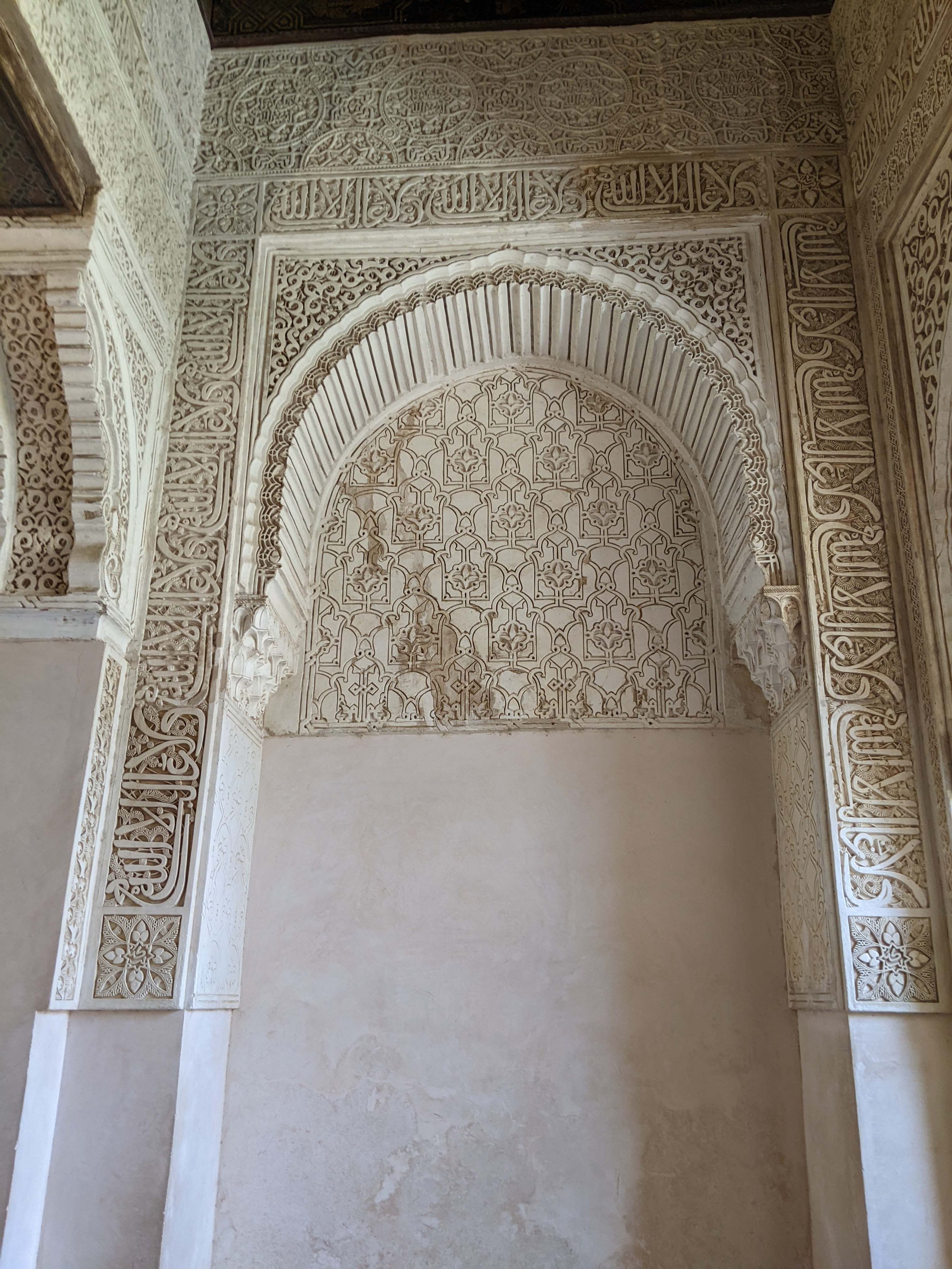
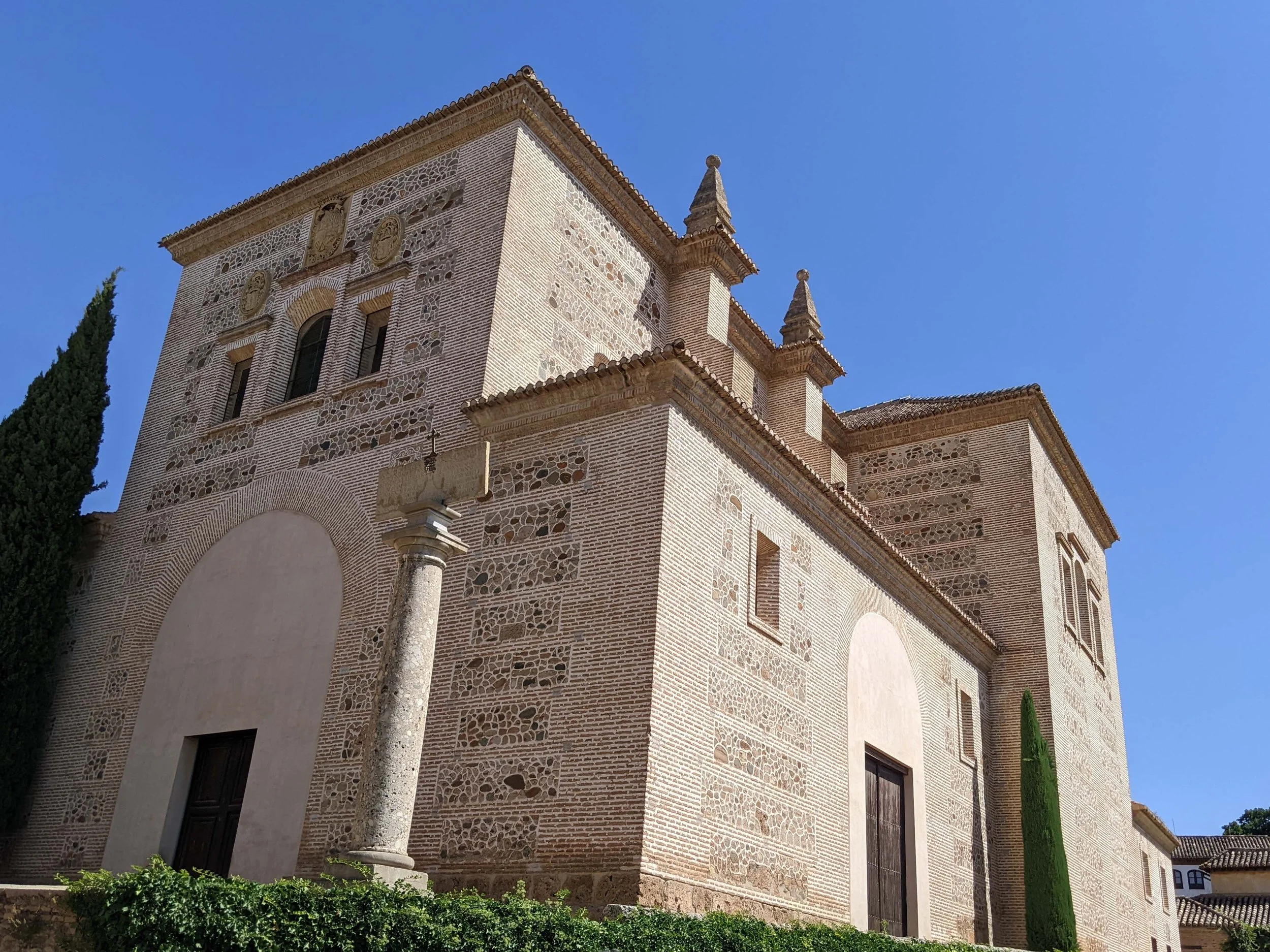
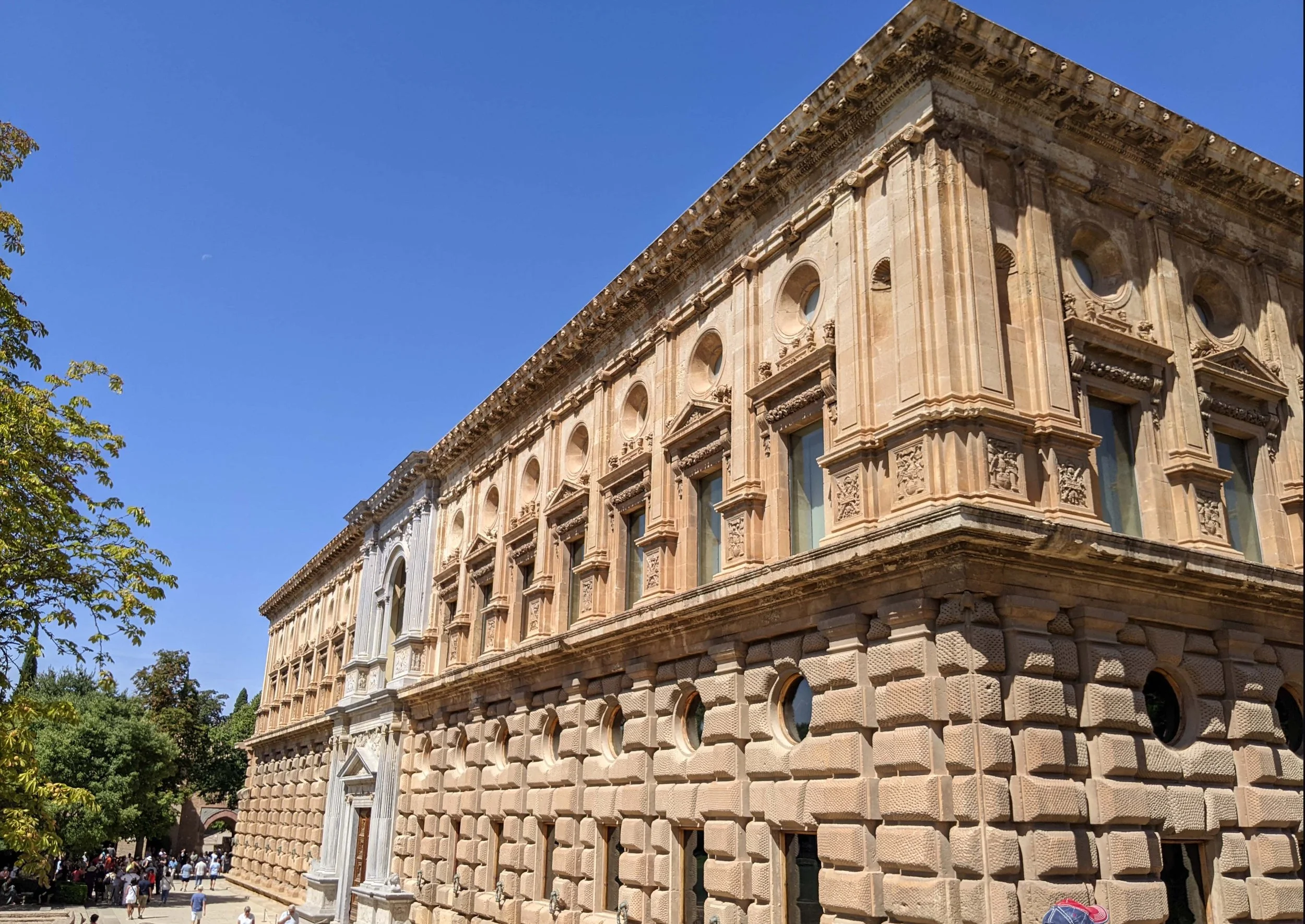
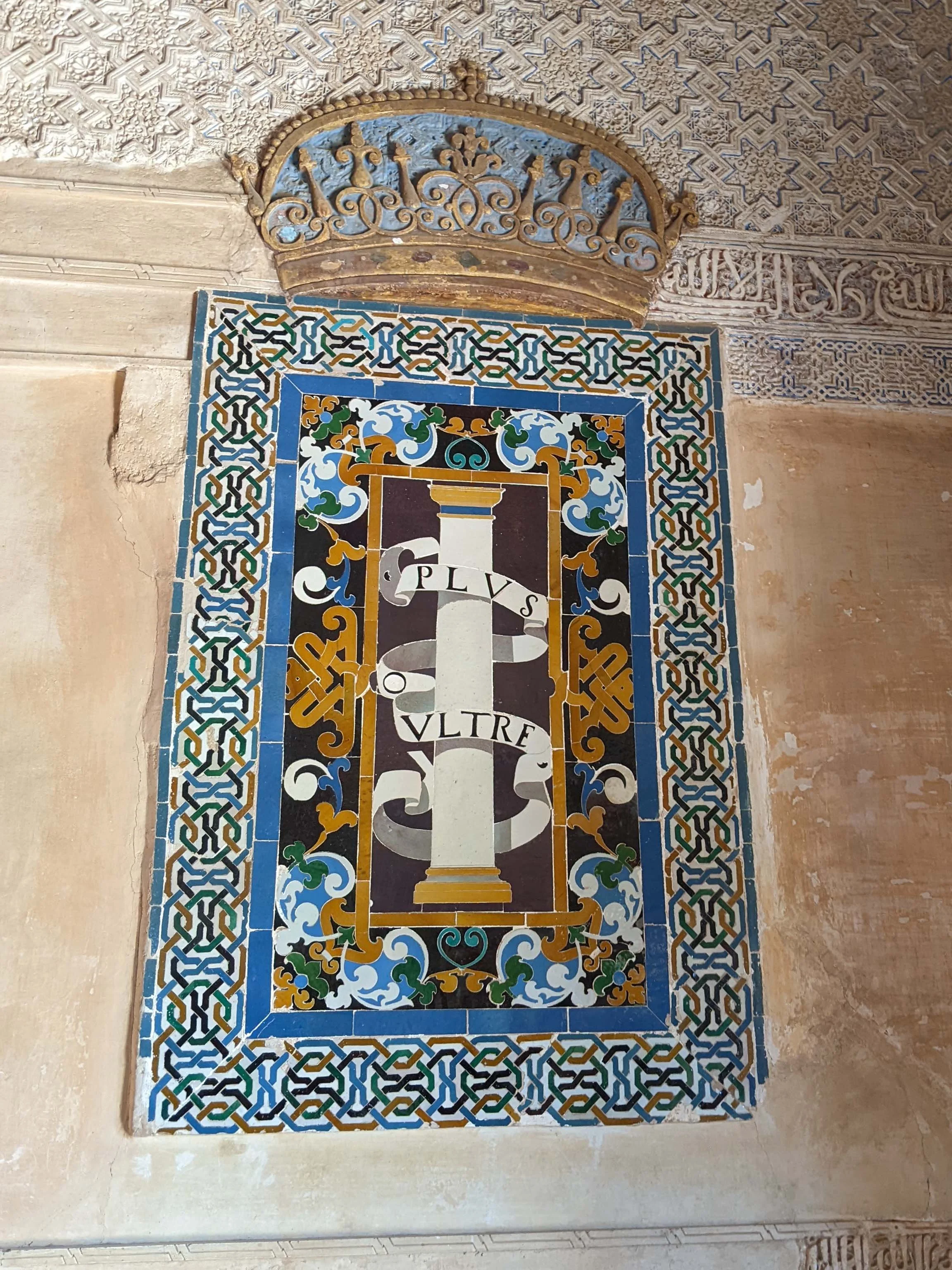
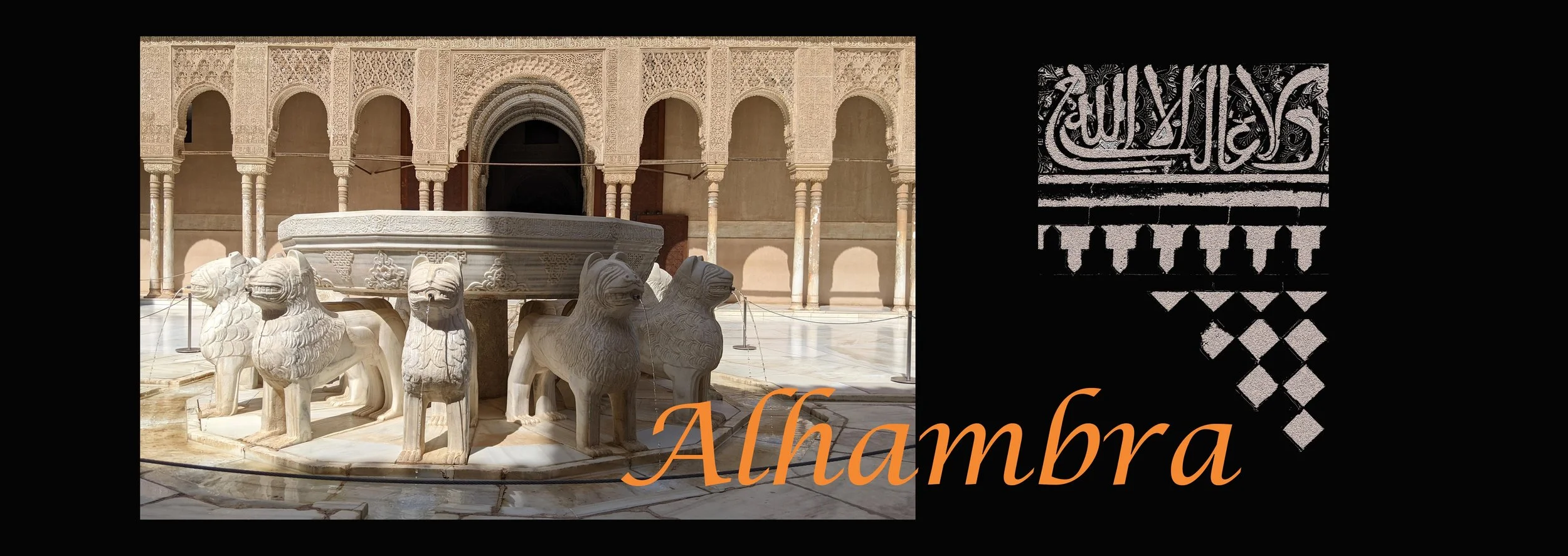
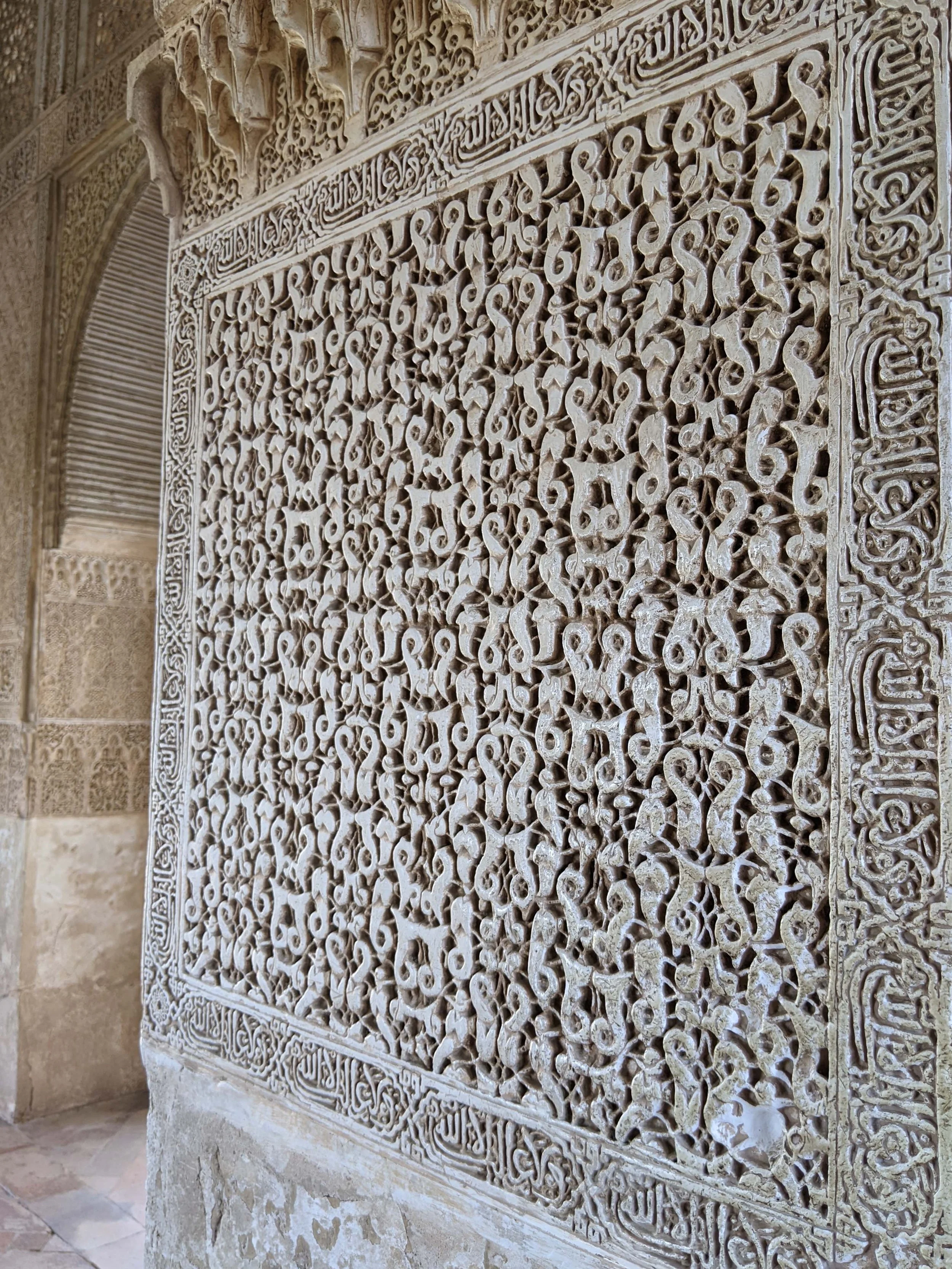
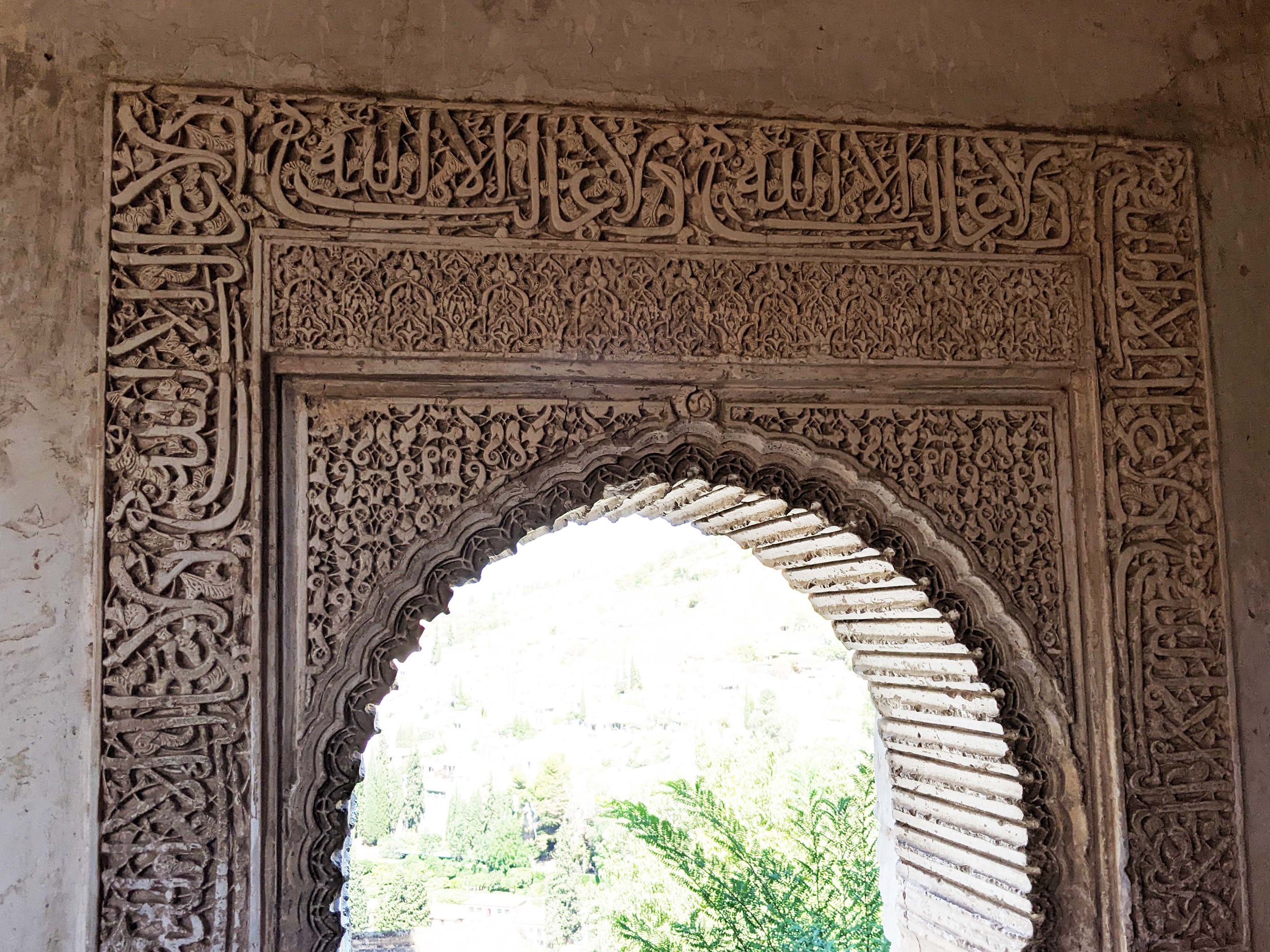
A testament to this continuous thread of Islamic architectural tradition lies in the stucco inscriptions on the wall “There is no victor but Allah” which is repeated on all palaces. After the departure of the Muslims, King Charles V, ordered the destruction of part of the complex and built a renaissance-style palace within the complex and build a church on the site of the royal mosque. Even some of the stucco tiles were defaced and replaced with Charles V own motto “Plus Ultra’ (further beyond). In 1812, some of the fortress towers were blown up by the French troops. Despite of these occurrences the complex retains its ‘Moorish’ character and is the most important surviving remnant of the period of Islamic rule in the region.

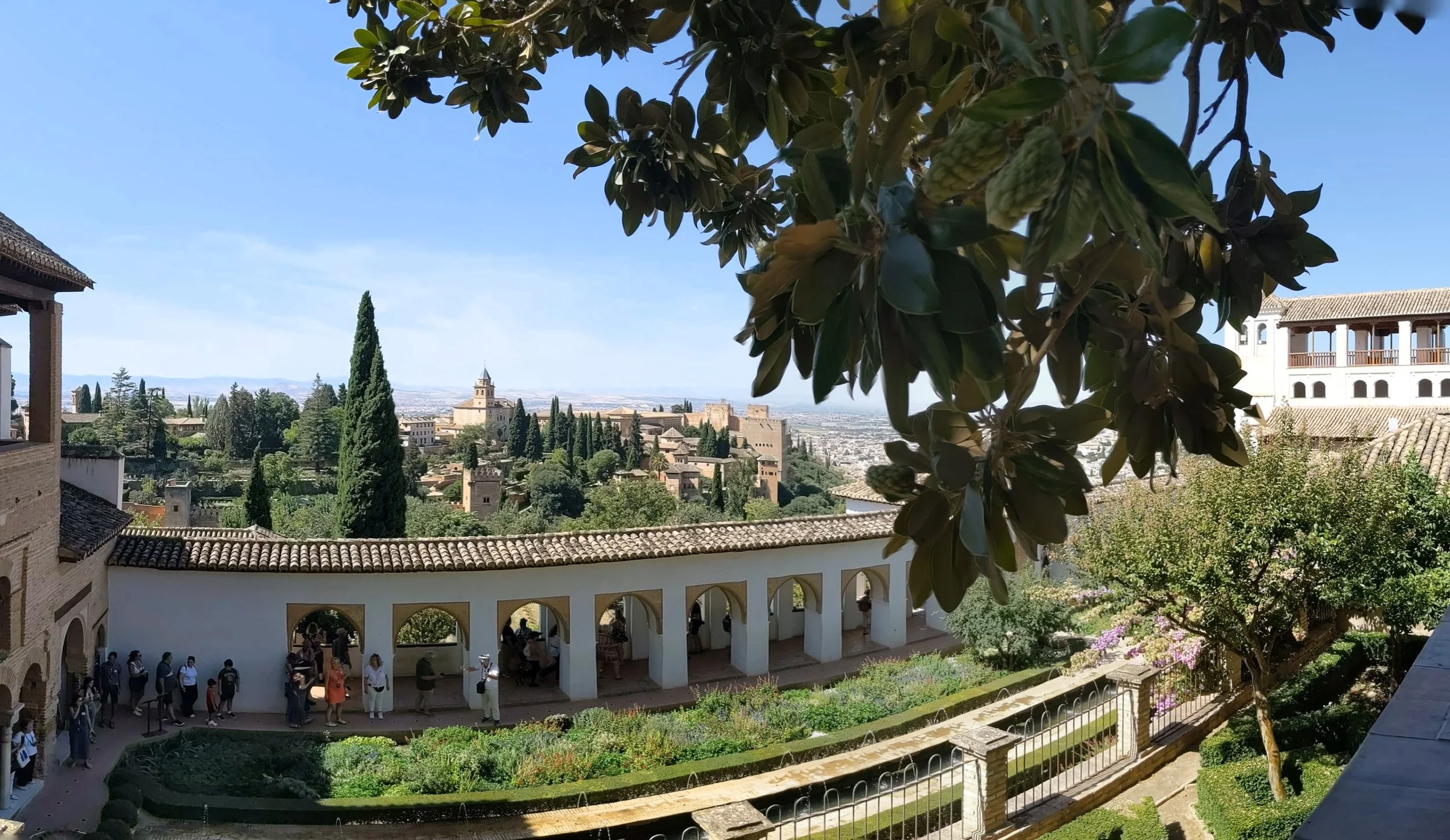
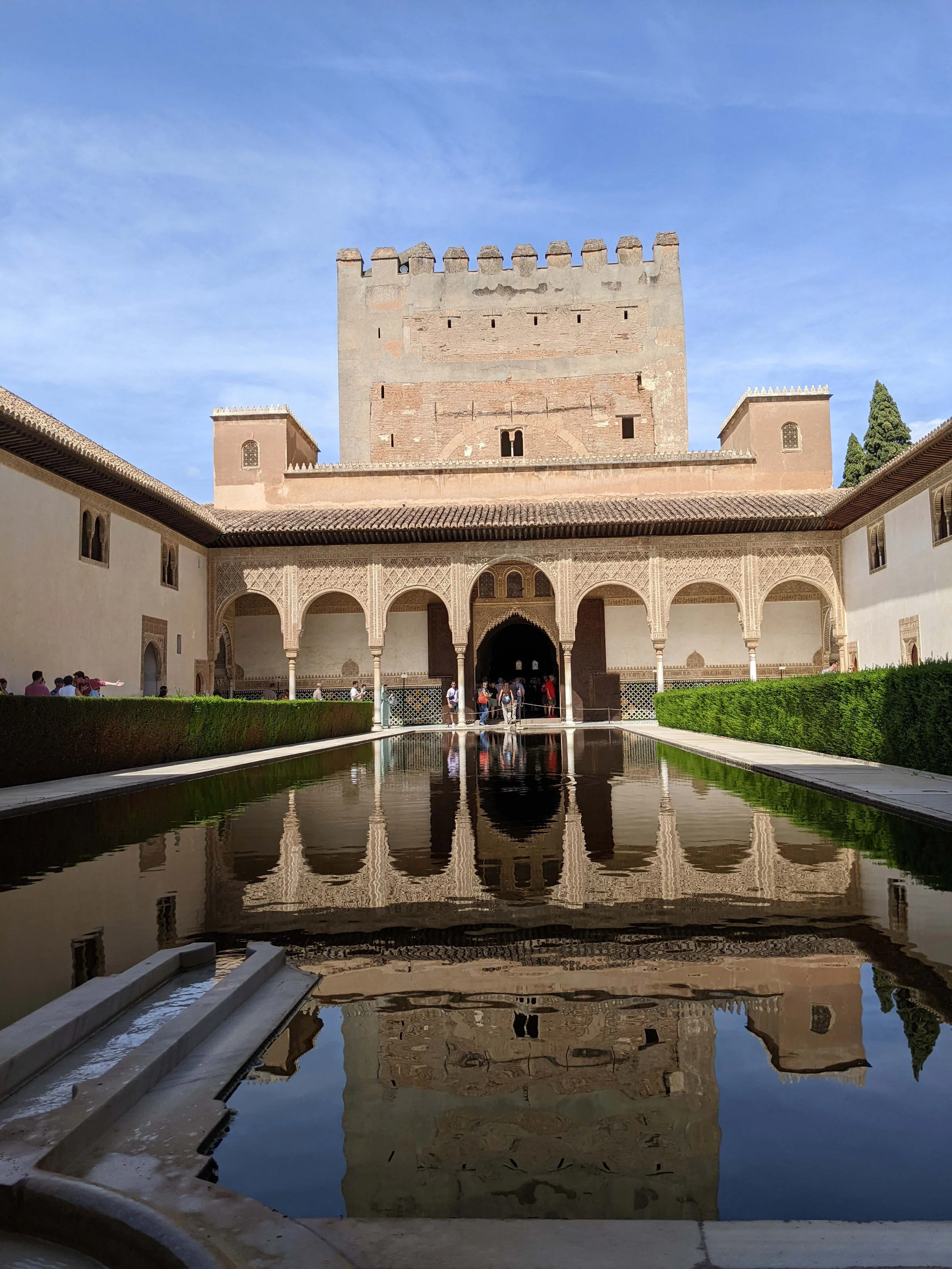
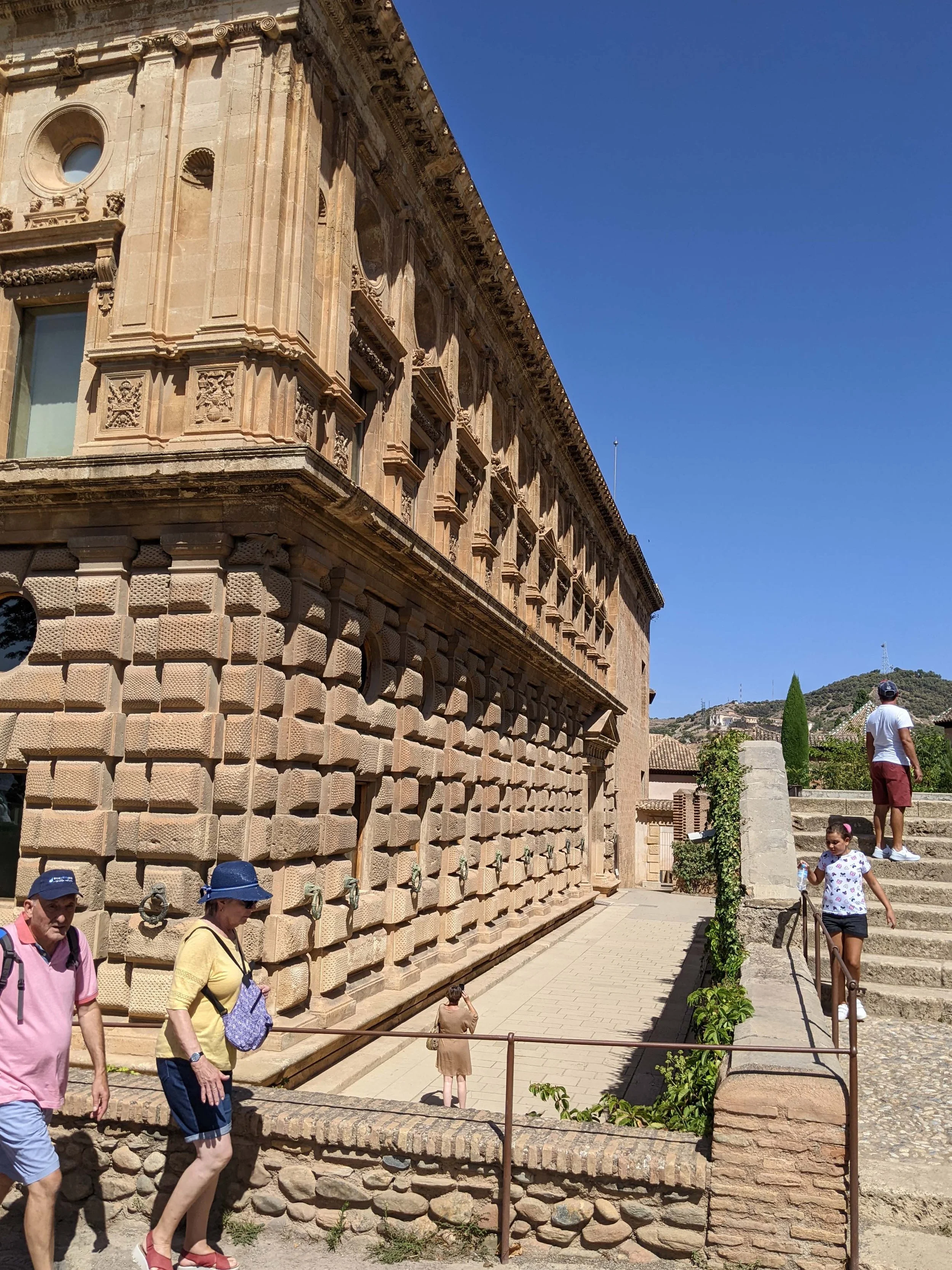
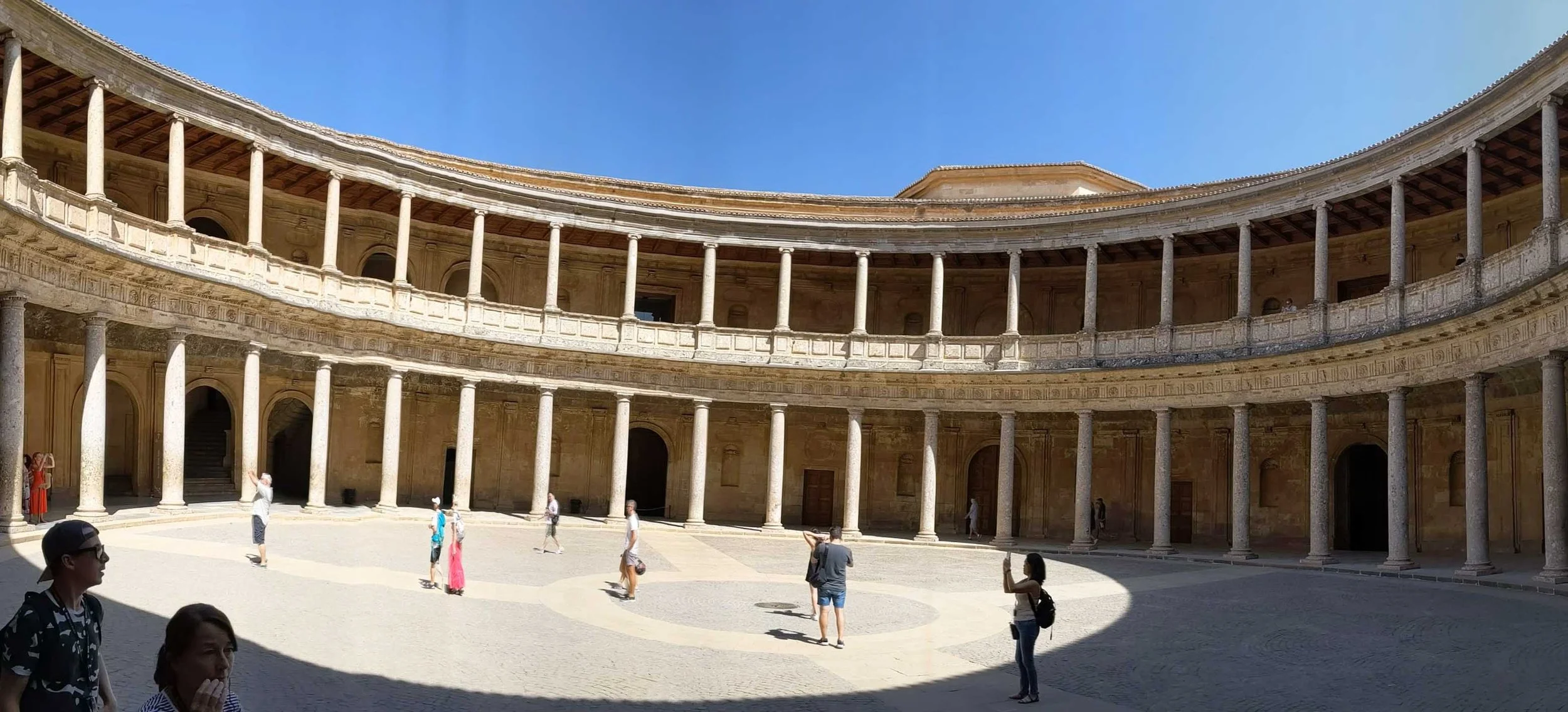
The castle estate of Alhambra is divided into three main sections, the Generalife (palace gardens), Alcazaba  (fortress), and the palaces (Nasrid Palaces and Charles V Palace).

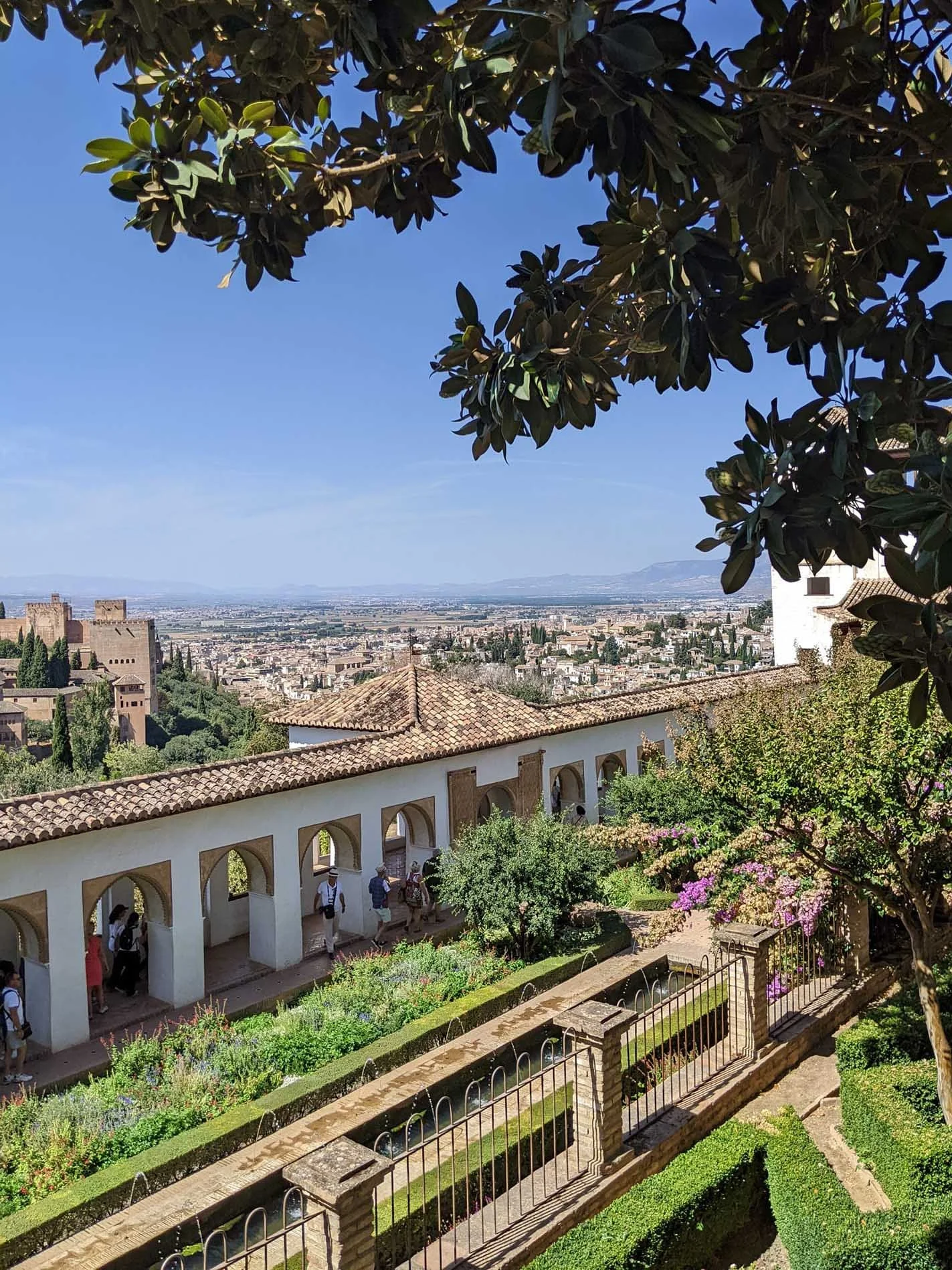
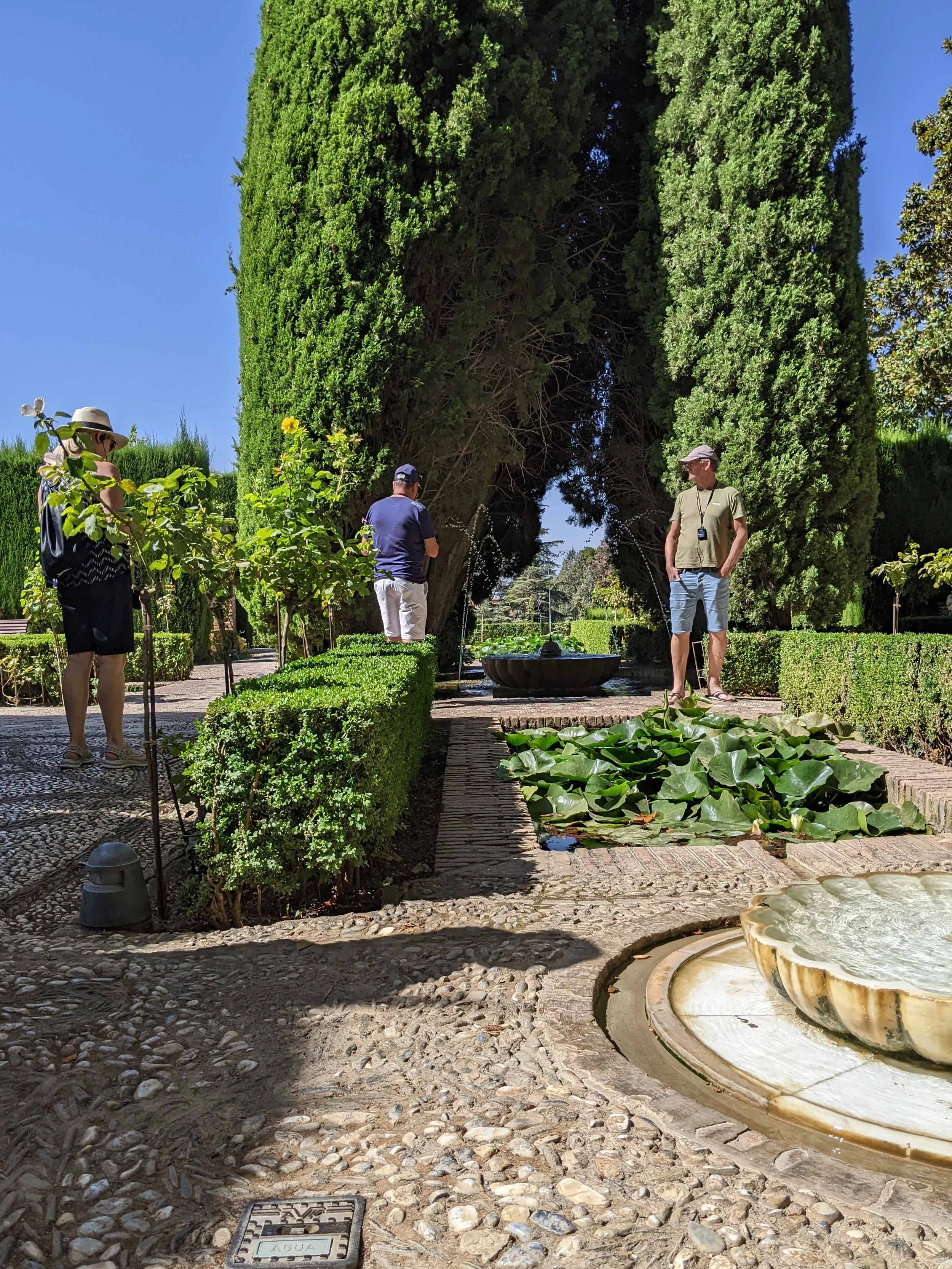
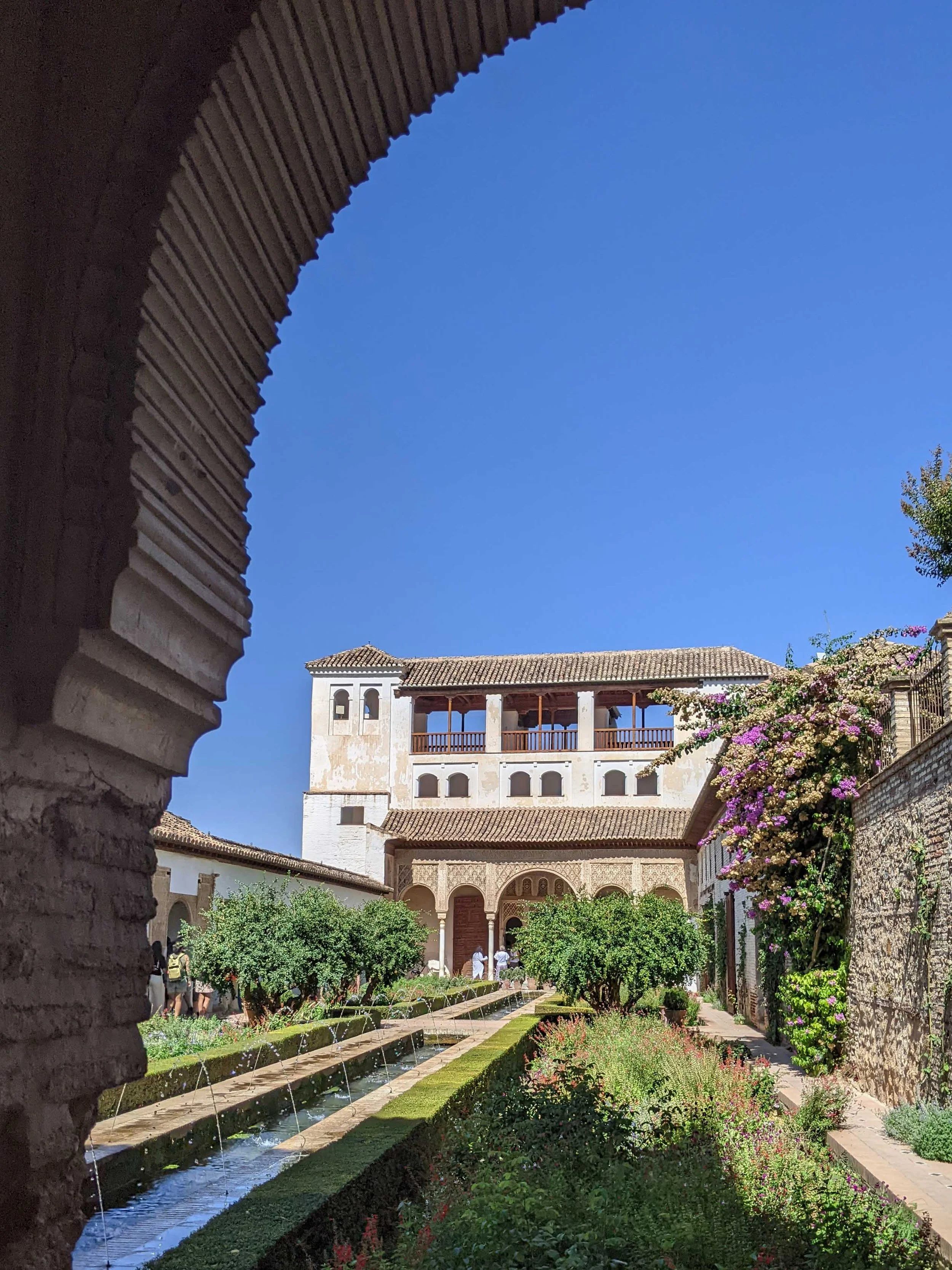
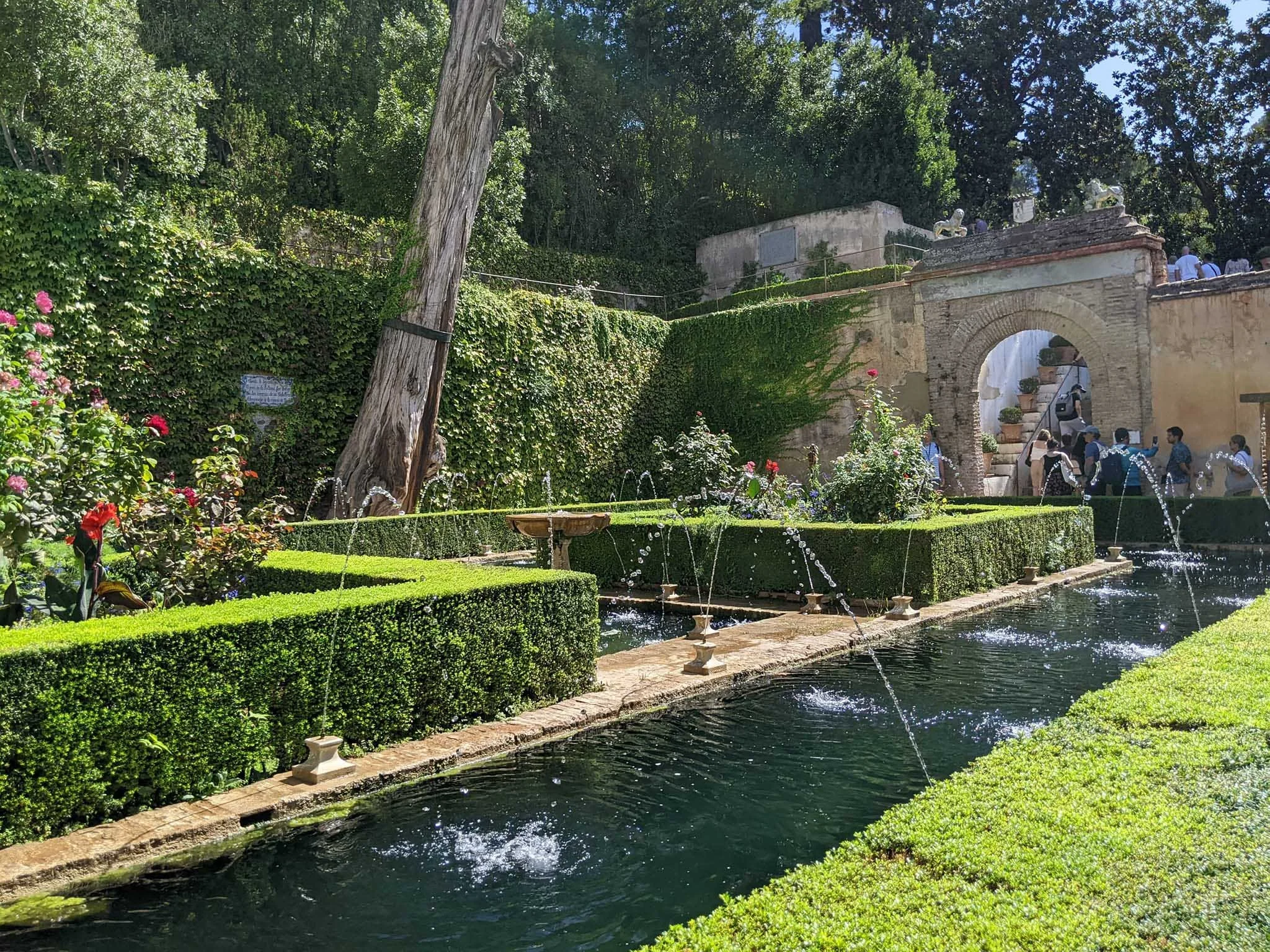
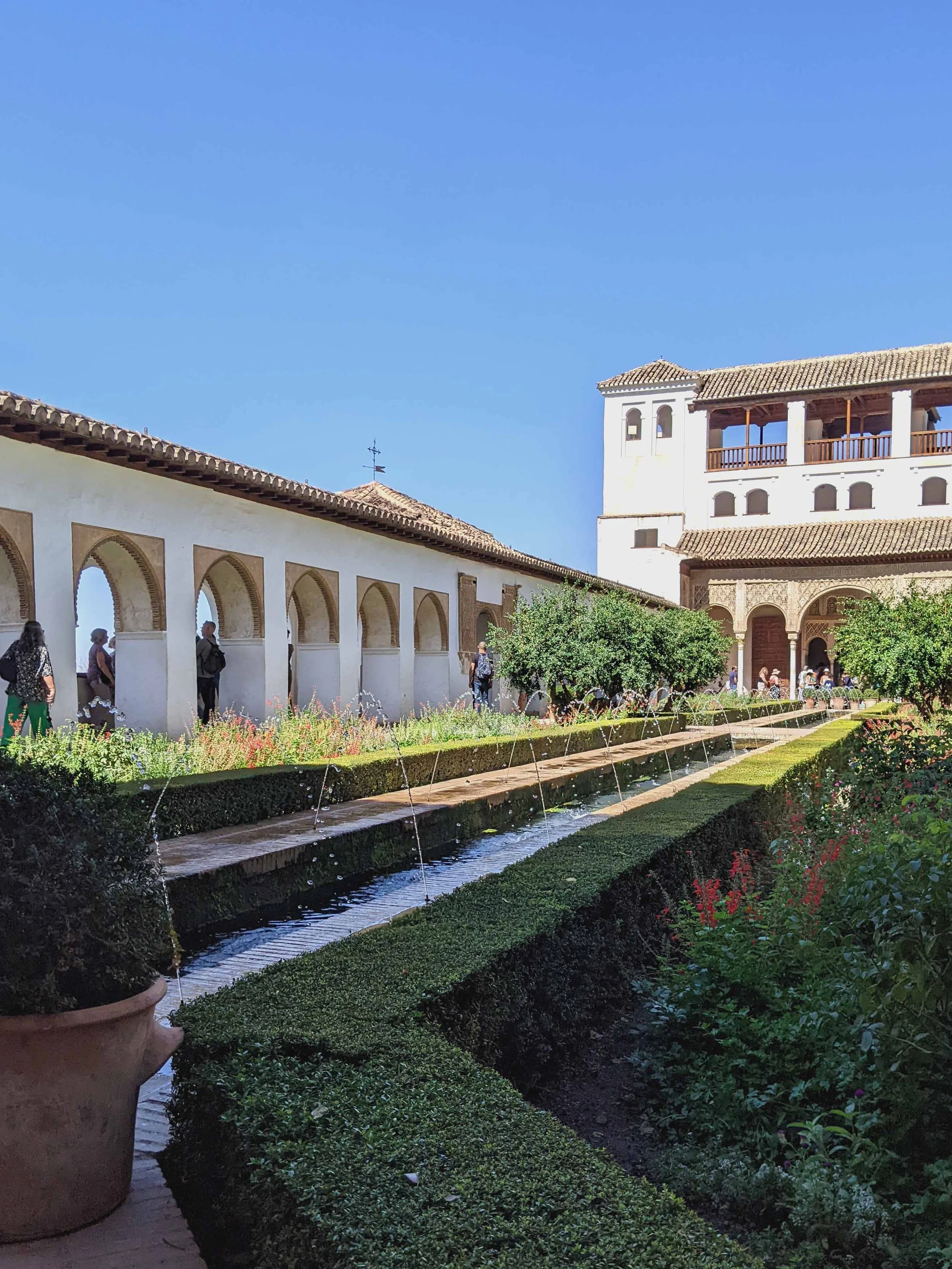
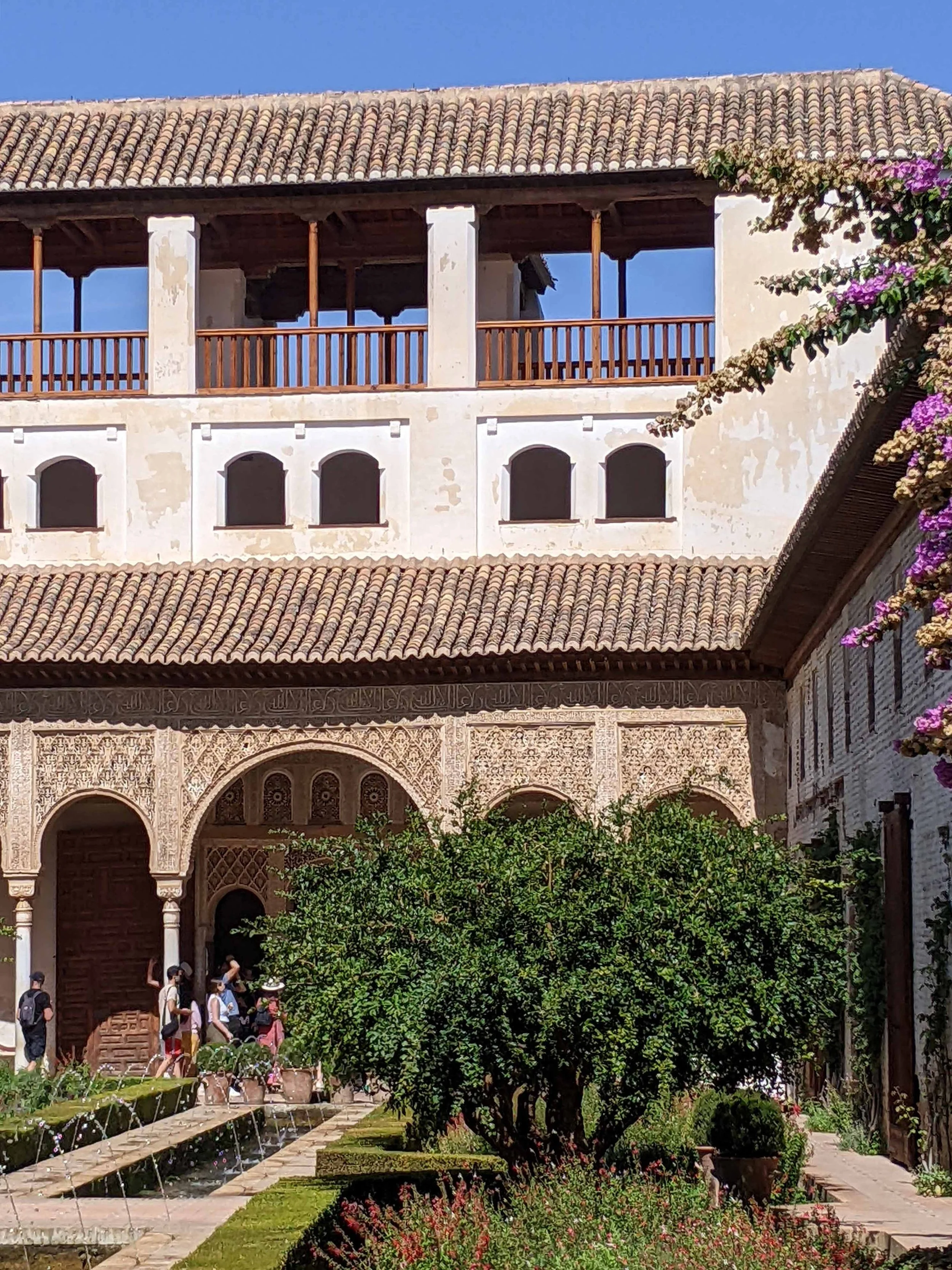
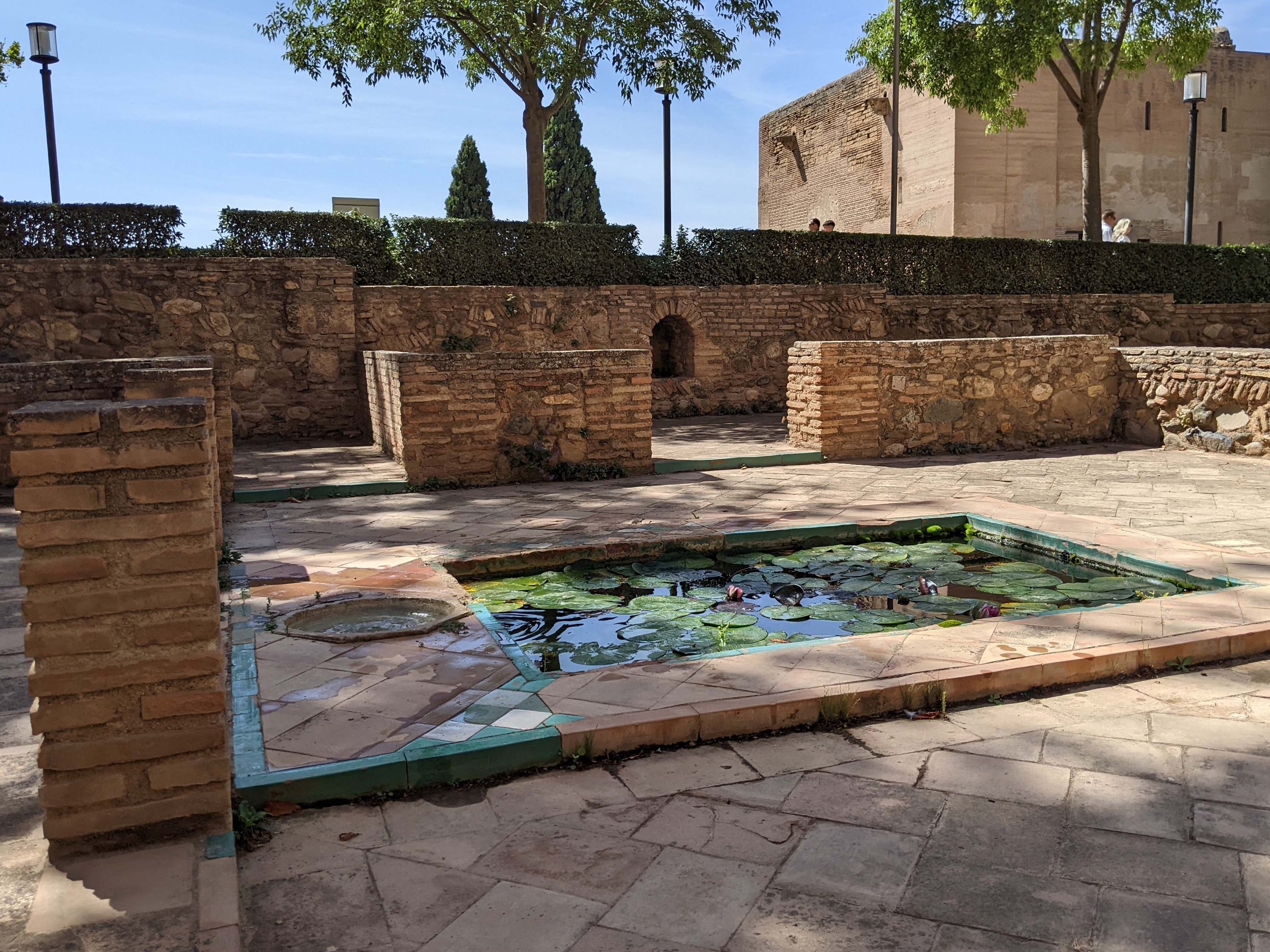
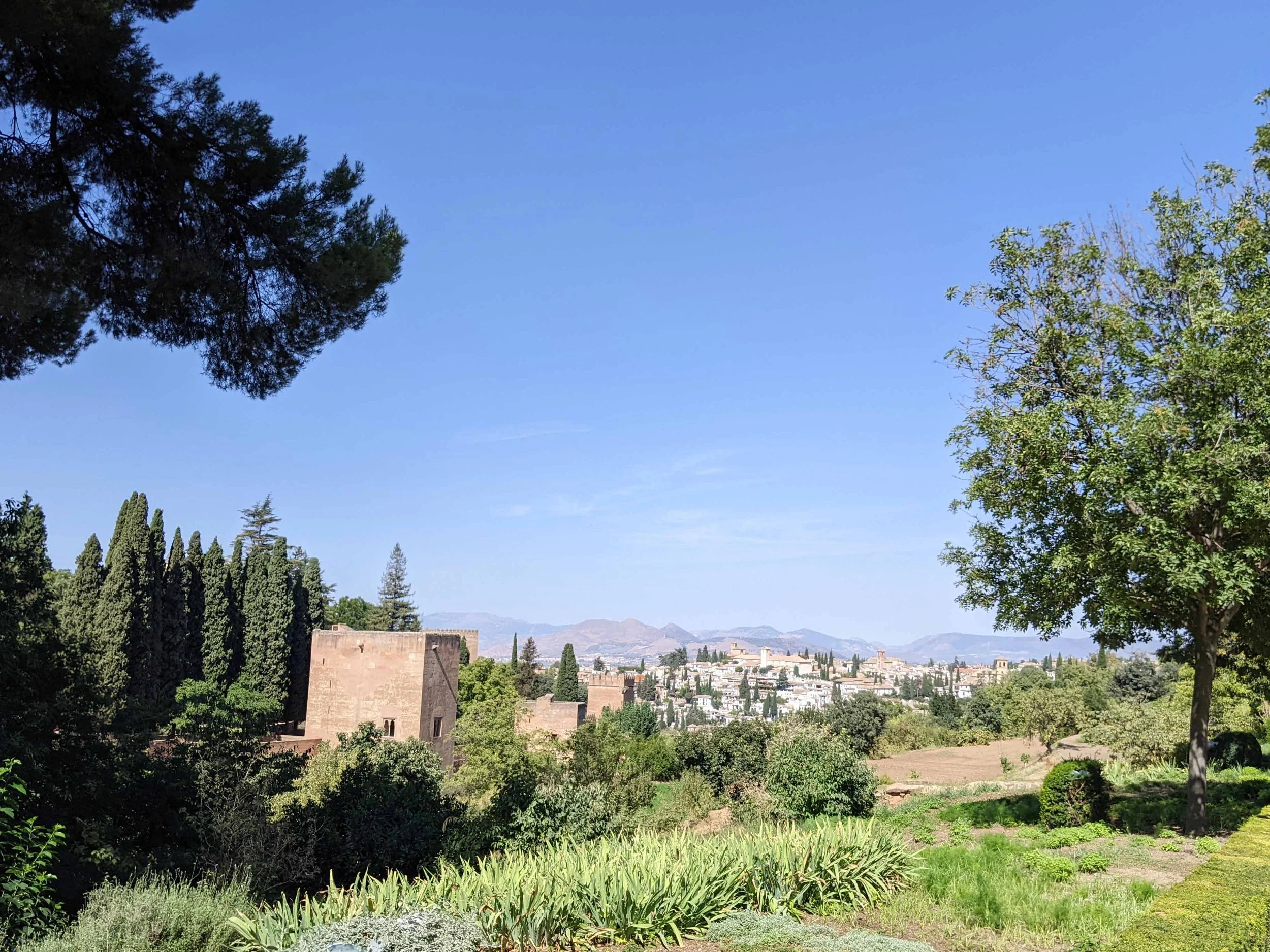
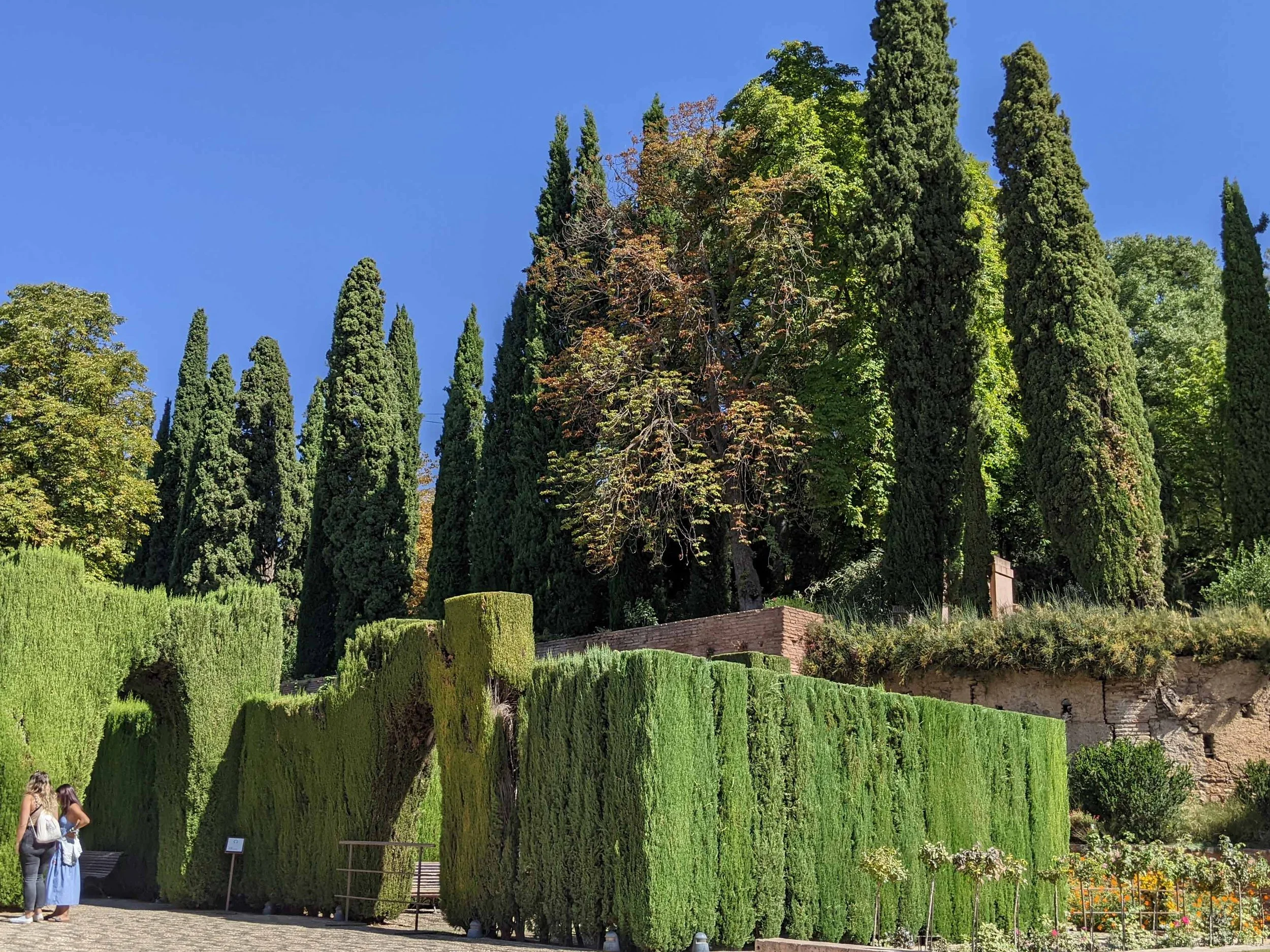
The Generalife (from the Arabic word Jannat al-Arifa, or paradise by association) lies beyond the walls of the castle. The gardens are built to reflect the theme of paradise as stated in the Koran, with water channels, fountains, and greenery. The estate did not have a source of water and water for the fountains and the castle was harvested from a nearby Darro River 6 km away and transported to the castle via irrigation aqueducts which are the evidence of the great engineering skills of the Nasrids. Surrounded by intricate gardens, the Generalife also contains a palace (summer house) that has similar decorations as the building within the castle.
View fullsize 1a.jpg
View fullsize 2.jpg
View fullsize 2a.jpg
View fullsize 3.jpg
View fullsize 3a.jpg
View fullsize 3b.jpg
View fullsize 3d.jpg
View fullsize 3f.jpg
View fullsize 4.jpg
View fullsize 4a.jpg
View fullsize 4b.jpg
View fullsize 5.jpg
View fullsize 6.jpg
View fullsize 6a.jpg
View fullsize 7.jpg
View fullsize PXL_20220918_110416722.PANO.jpg

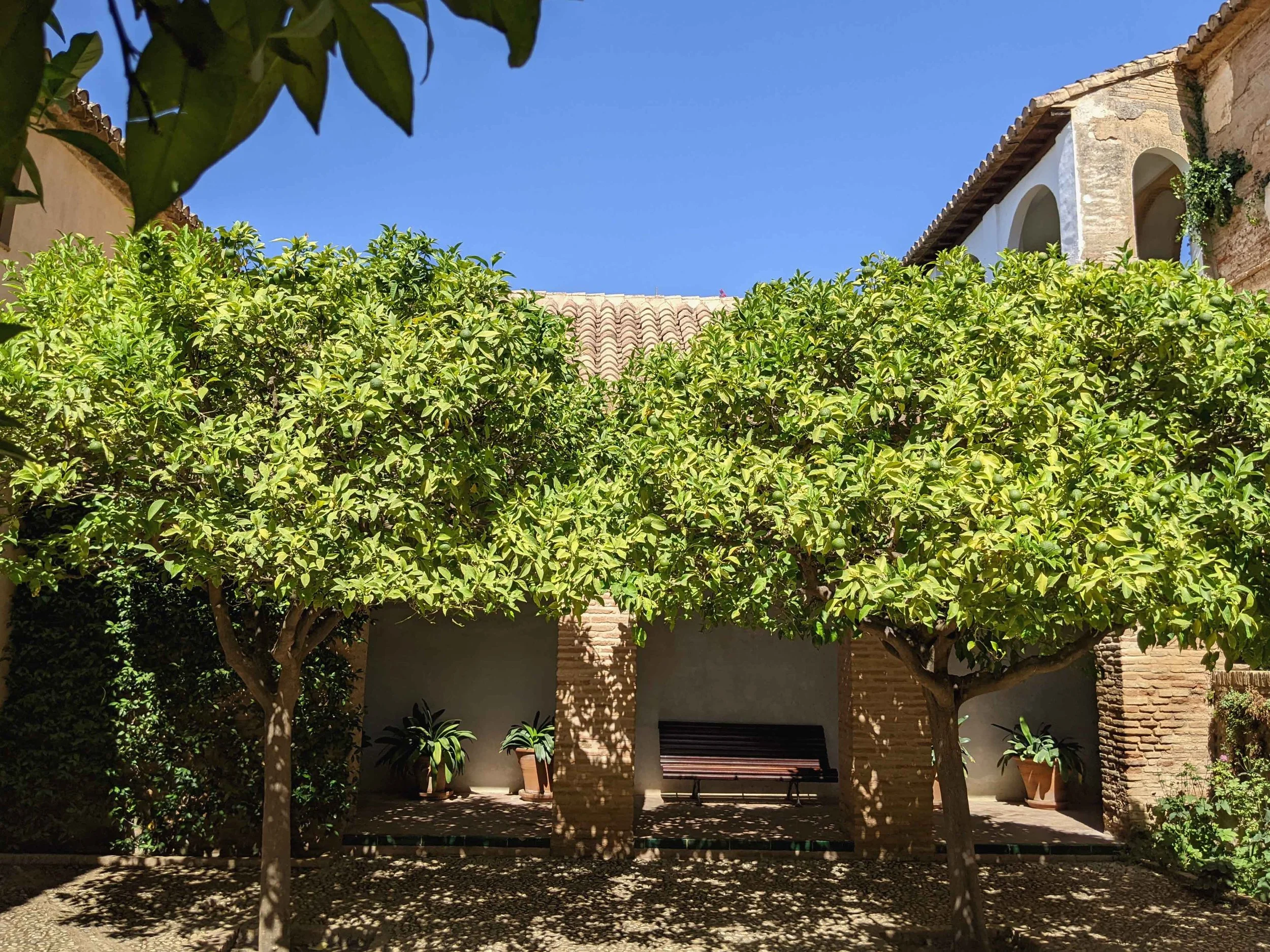
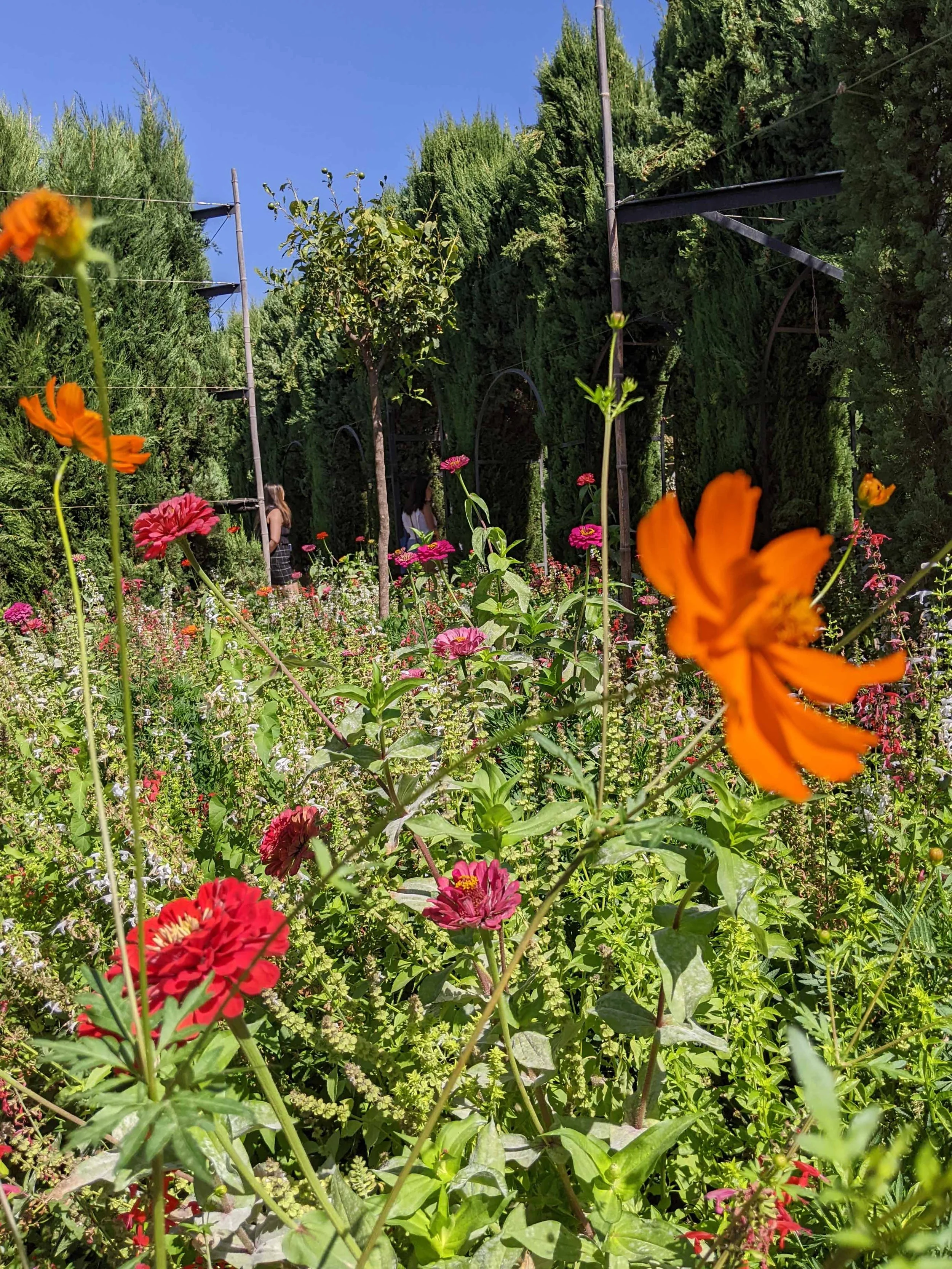
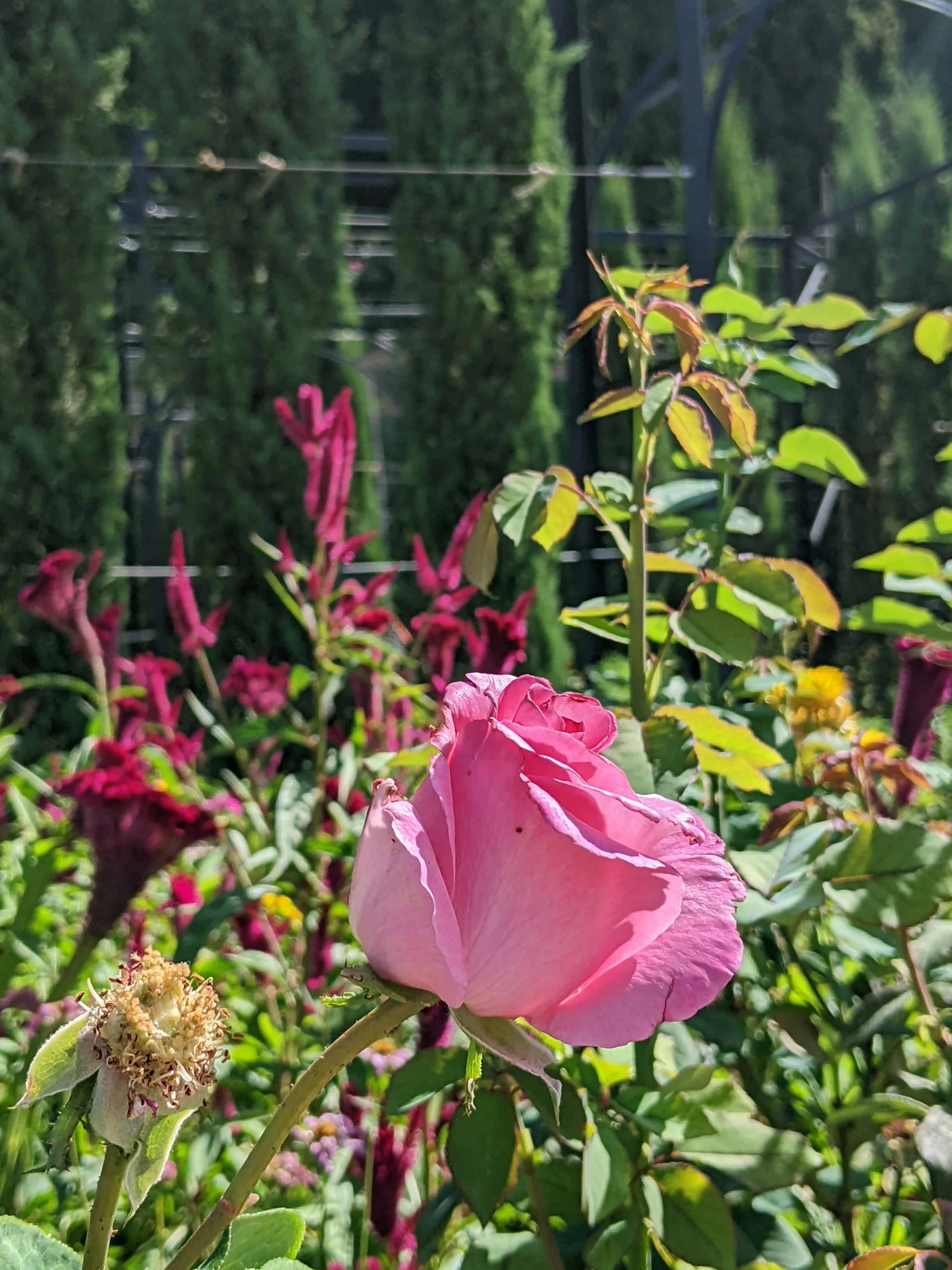
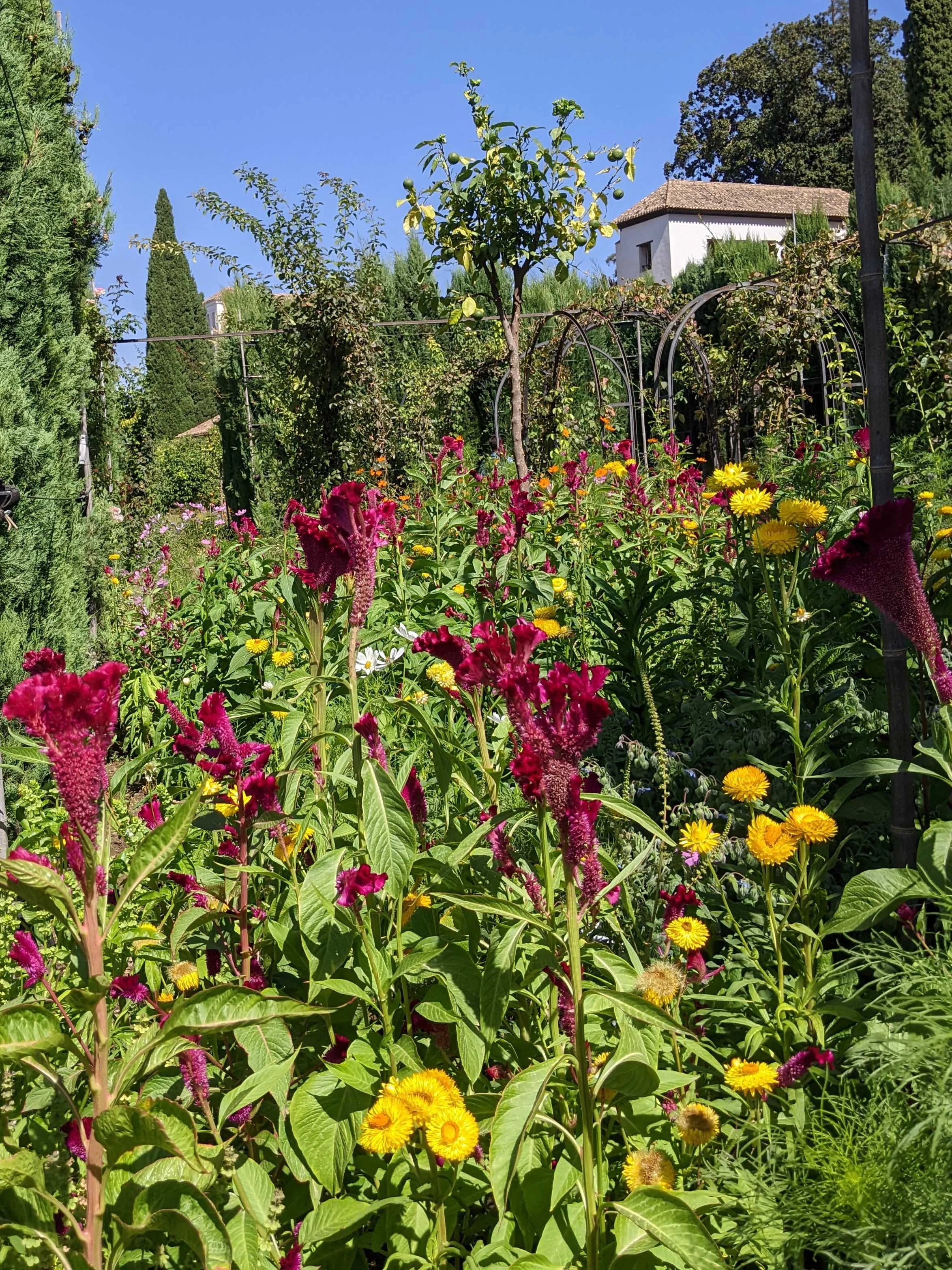
While to some untrained eyes, these gardens are just green spaces around a building which one might see around modern-day suburbs, the gardens of Alhambra are a prime example of the East Mediterranean (Persian) tradition of garden making of the period. The garden design created an atmosphere of sensuality and was aimed to bring pleasure to all five senses, Colour, light, aromatic plants, sweet fruits, and the murmur of water.

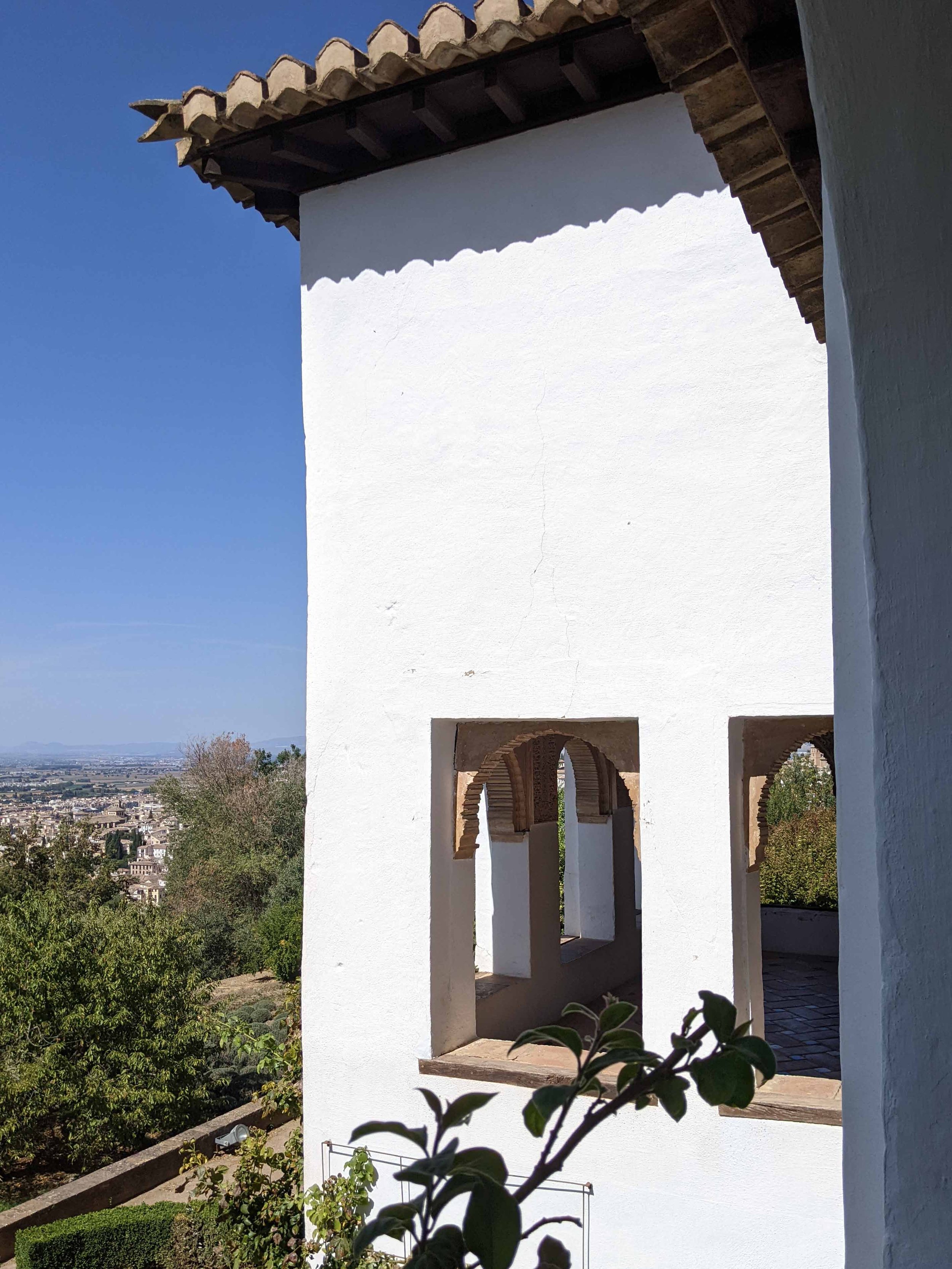
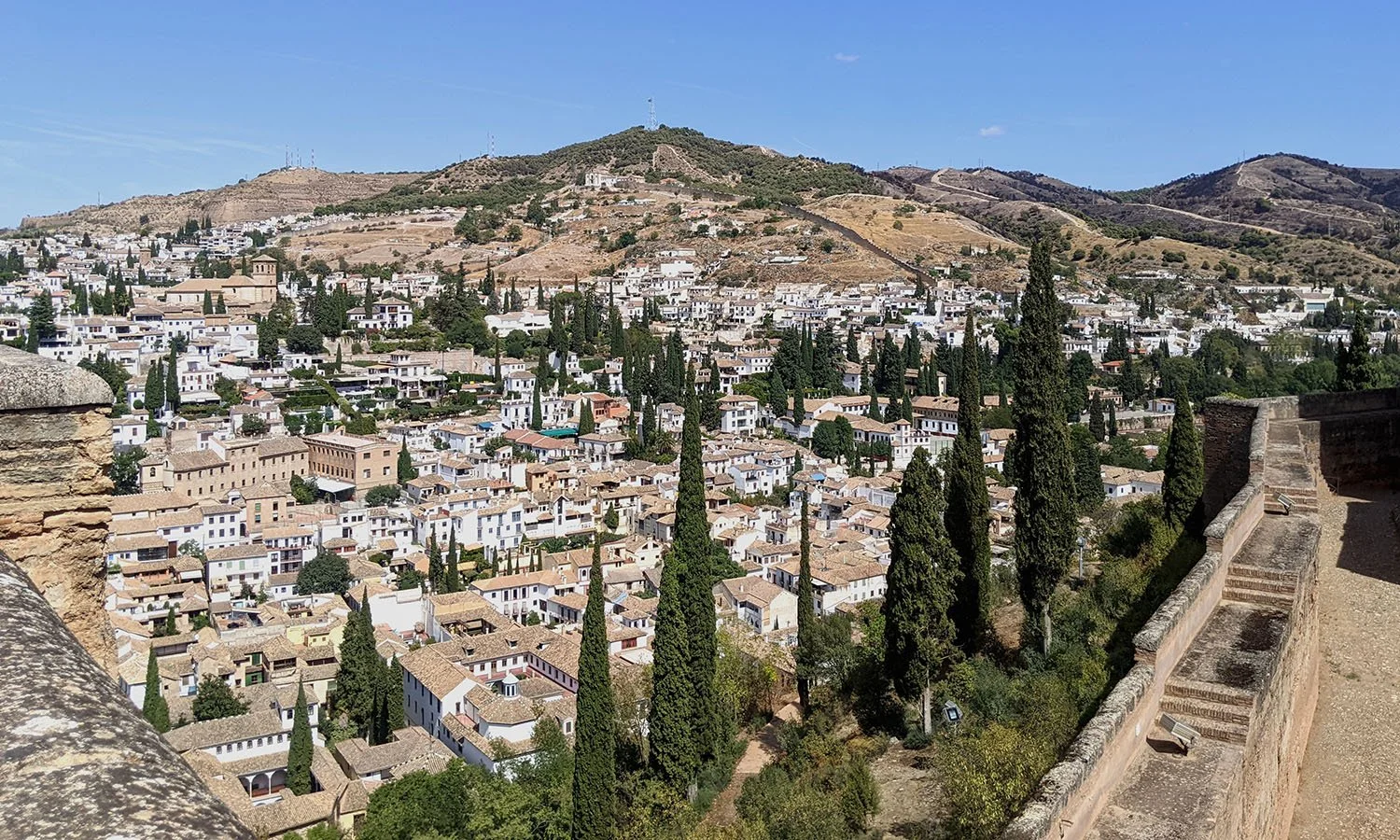
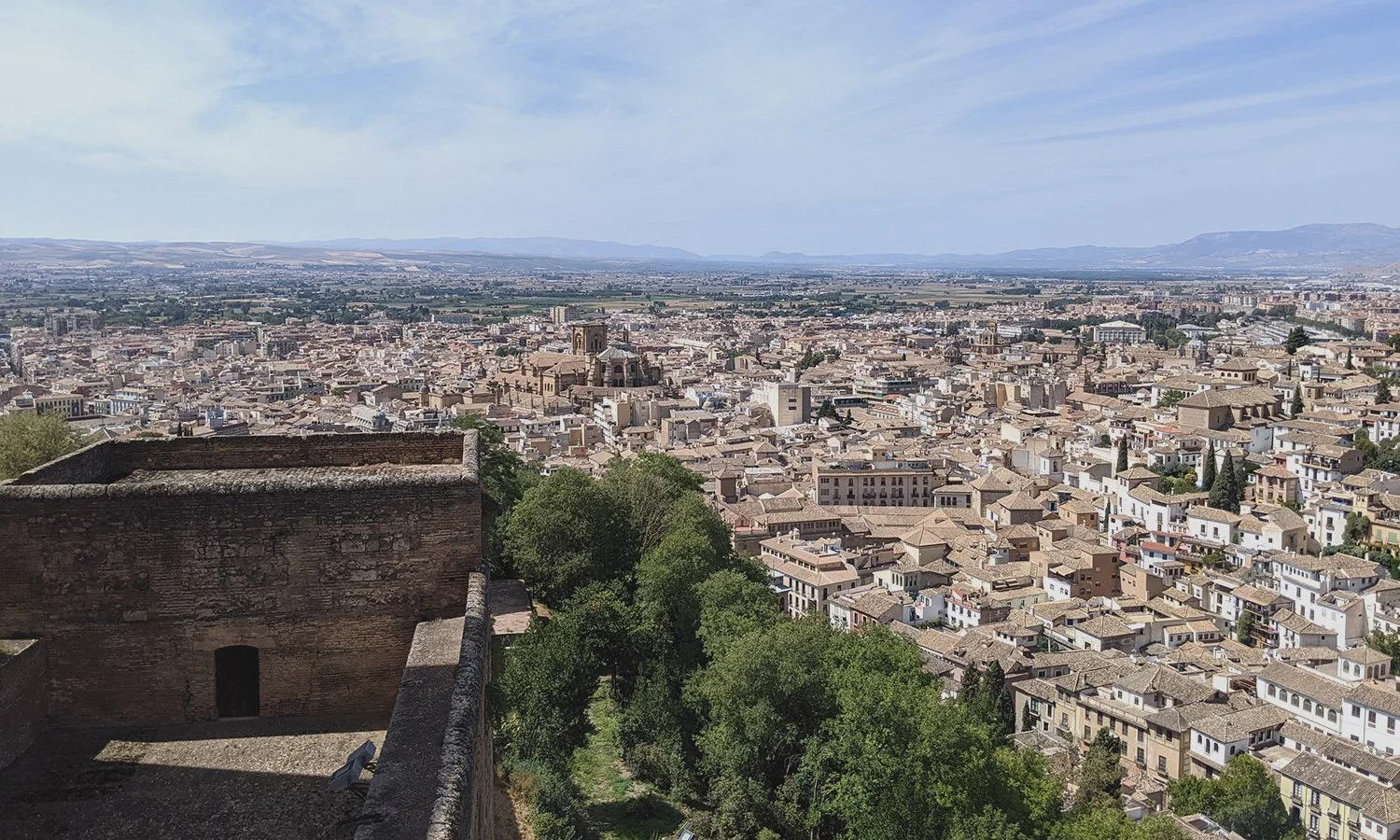
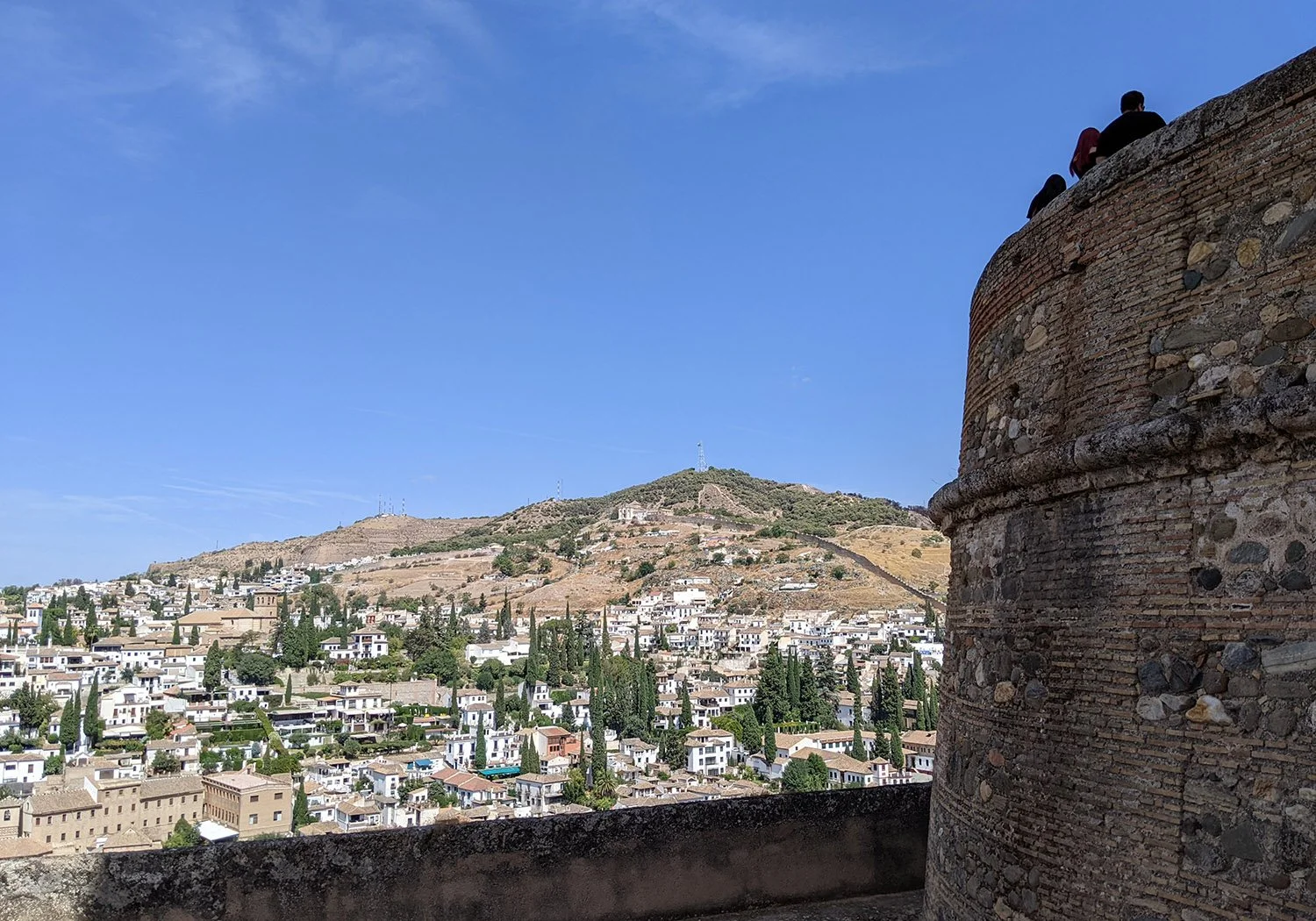
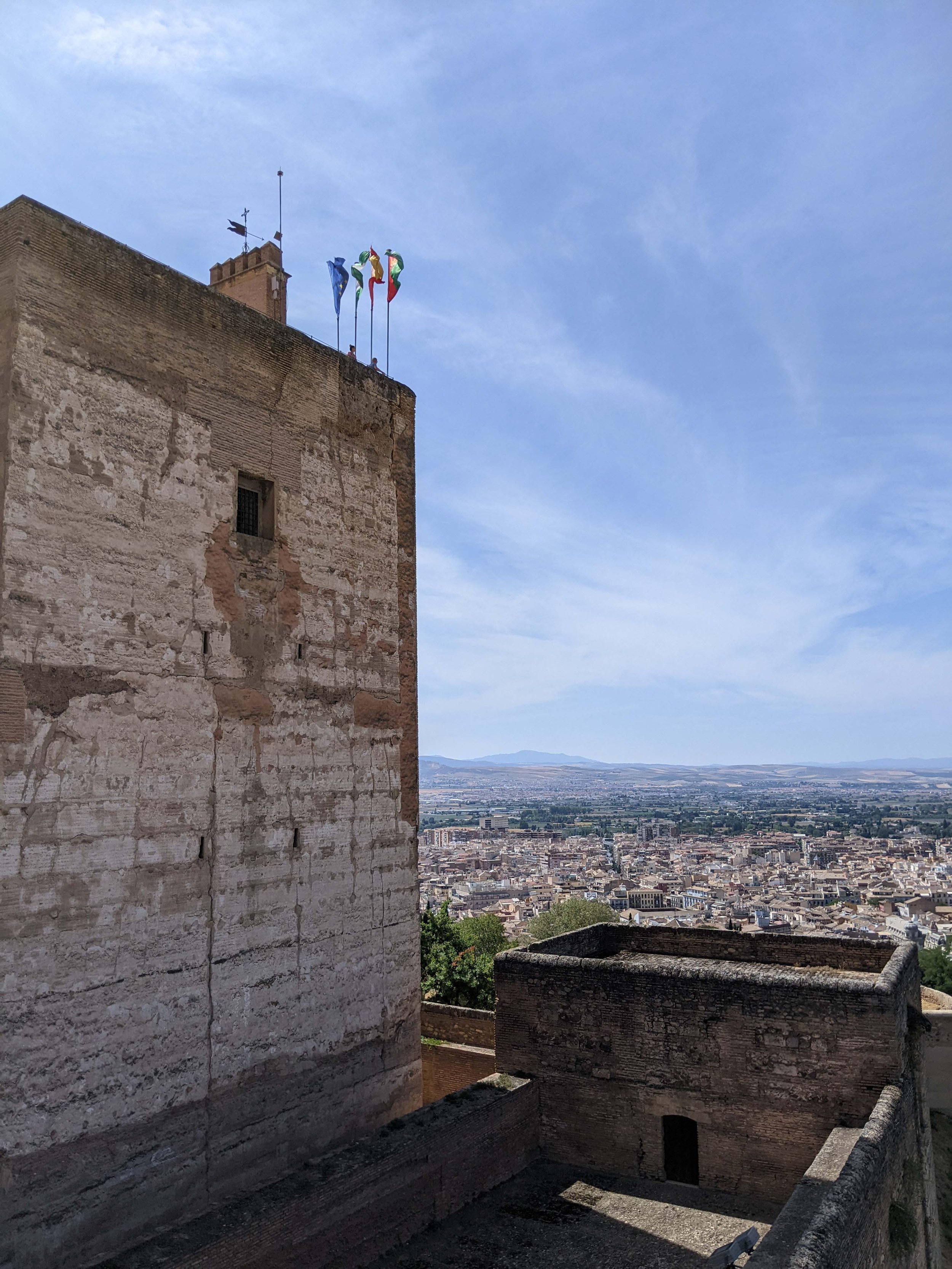
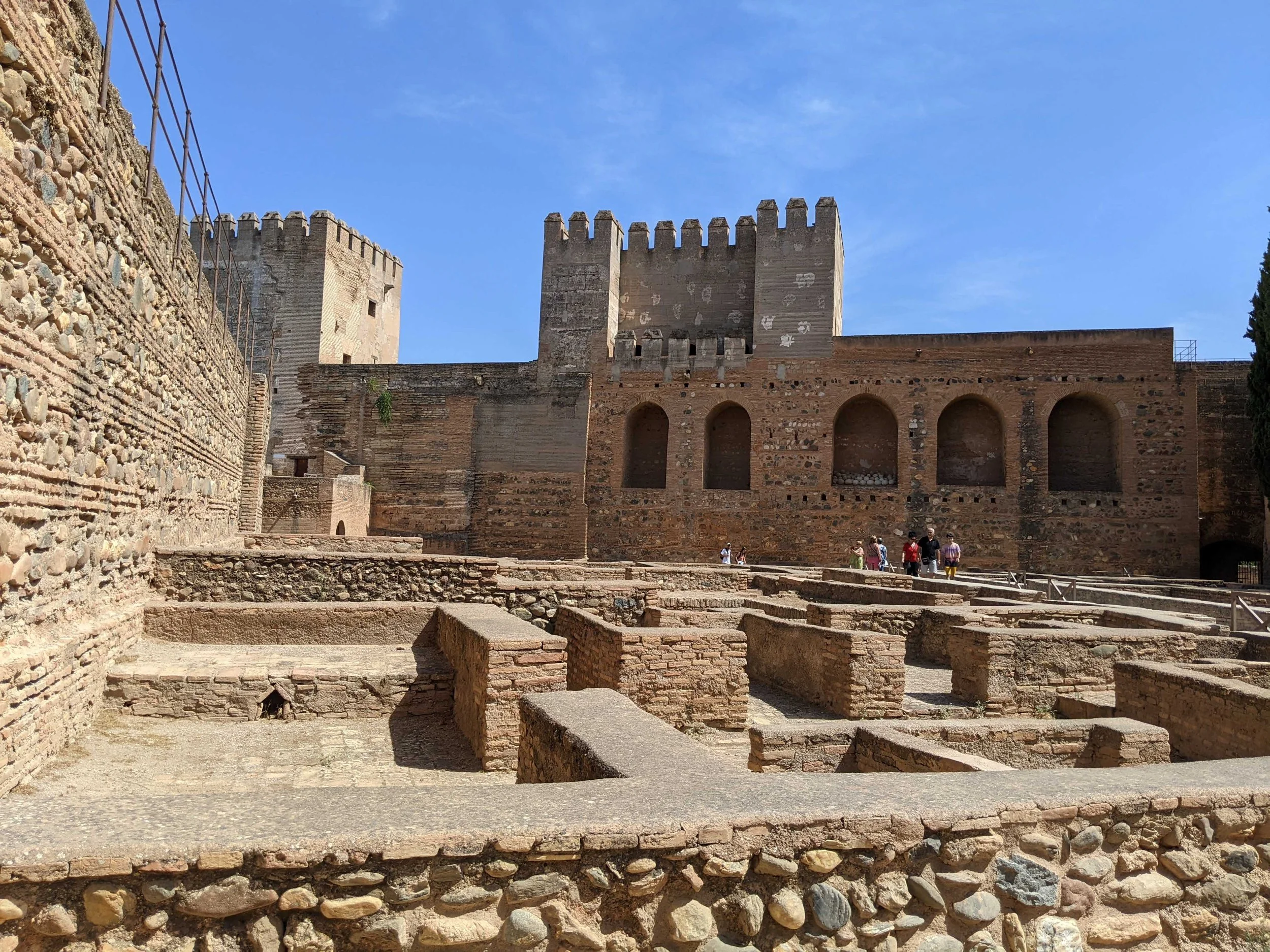
Alcazaba (fortress) or walled city overlooks Spain's Sierra Nevada Mountain range. The fortress not only served as a warning to potential enemies but with the water system and plethora of bath houses was one of the few (perhaps the only) cities that avoided the black death plague of Europe and North Africa from 1346 to 1353 which claimed millions of lives. Historic refresher for all, remember Covid and emphases on cleanliness and washing hands!
e.jpg
b.jpg
A.jpg
c.jpg
d.jpg
f.jpg

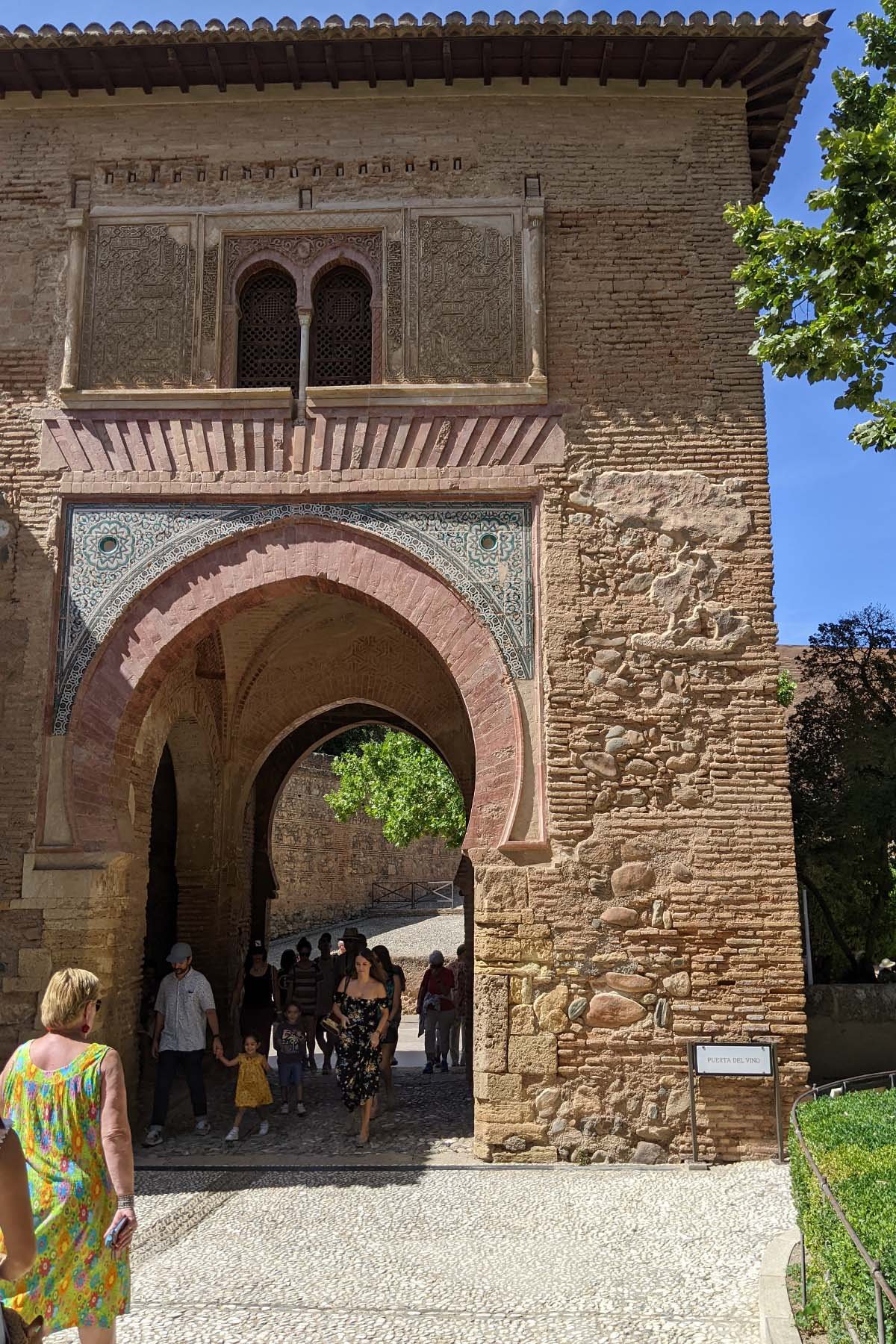
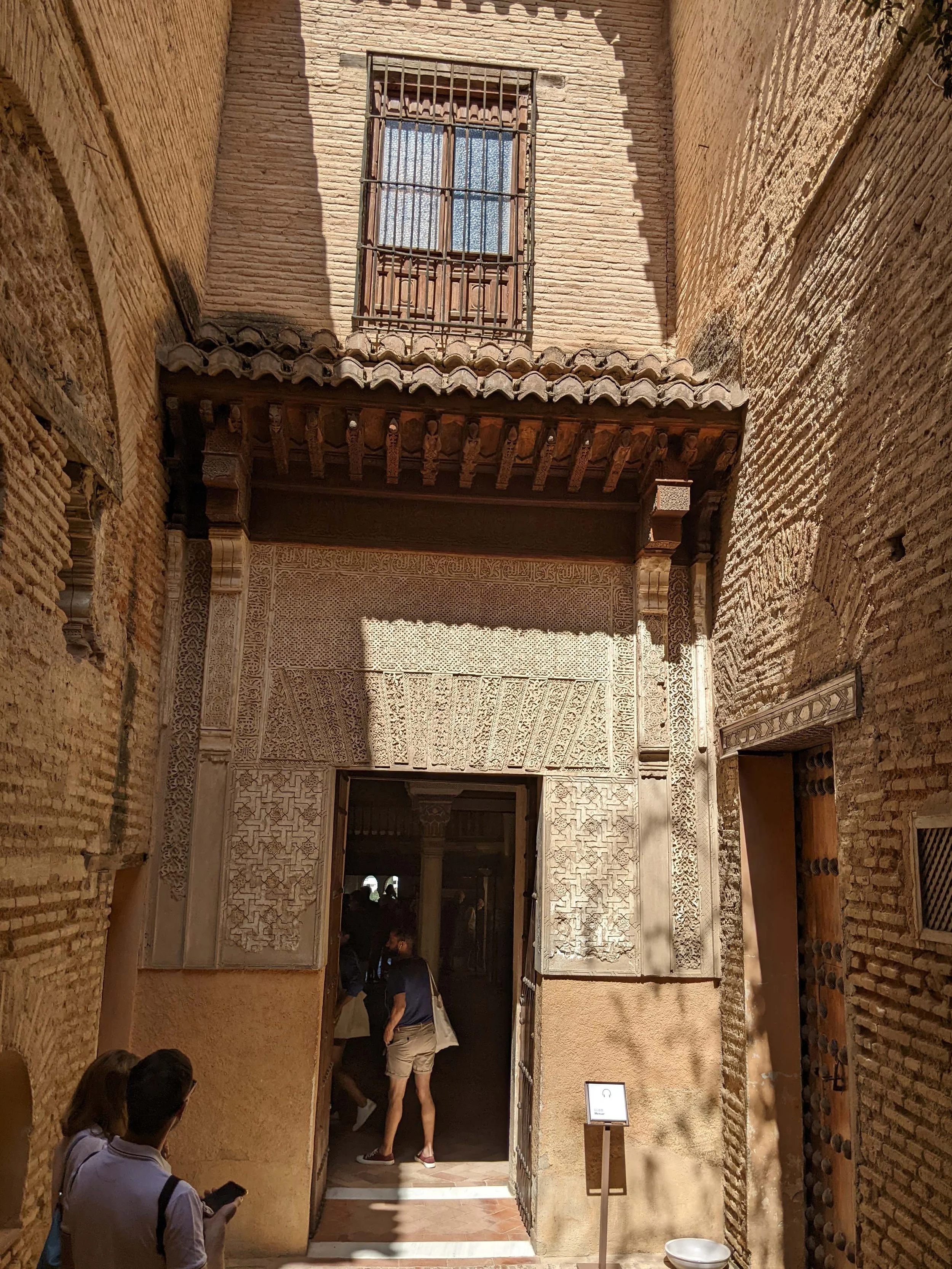
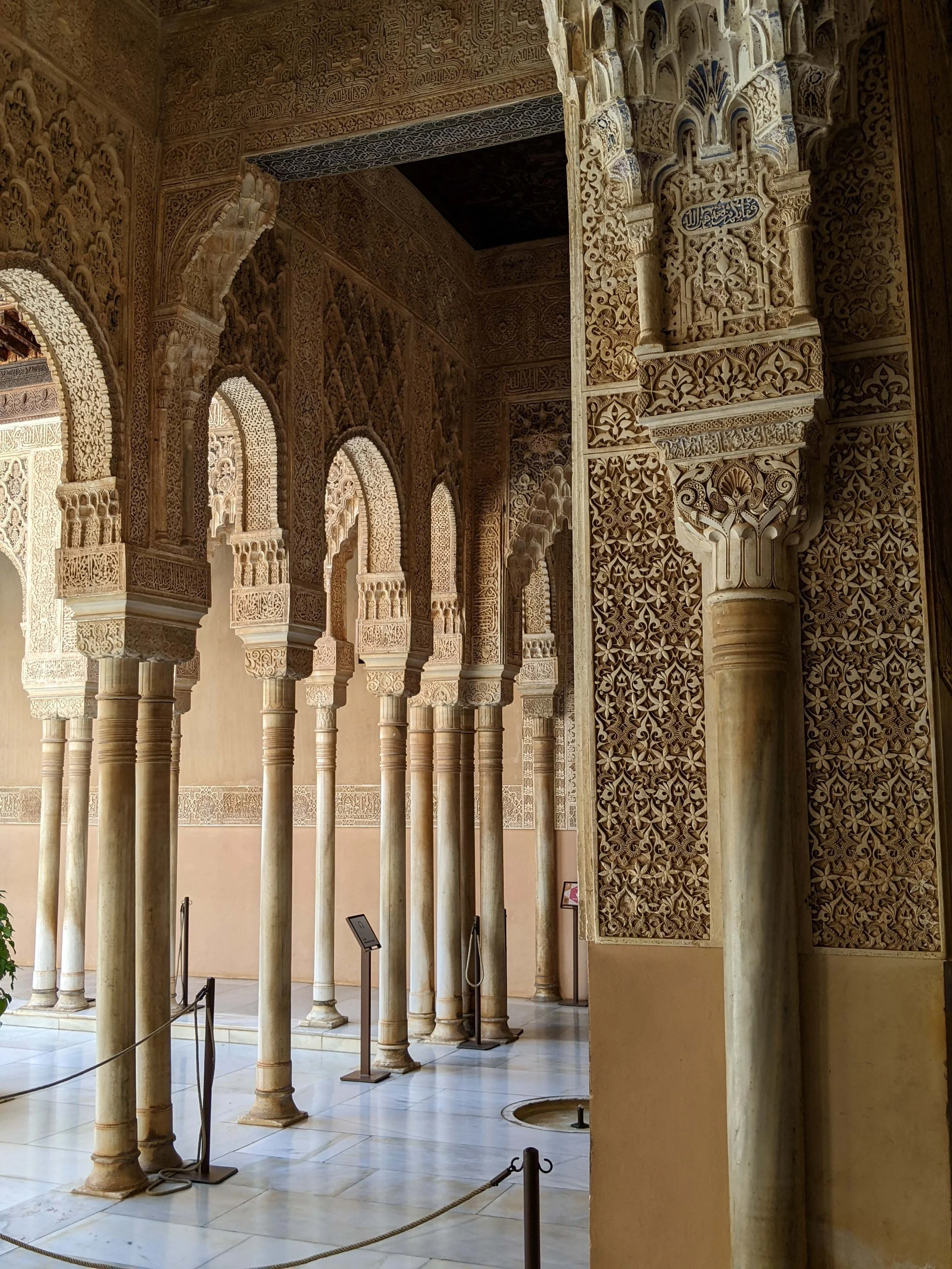
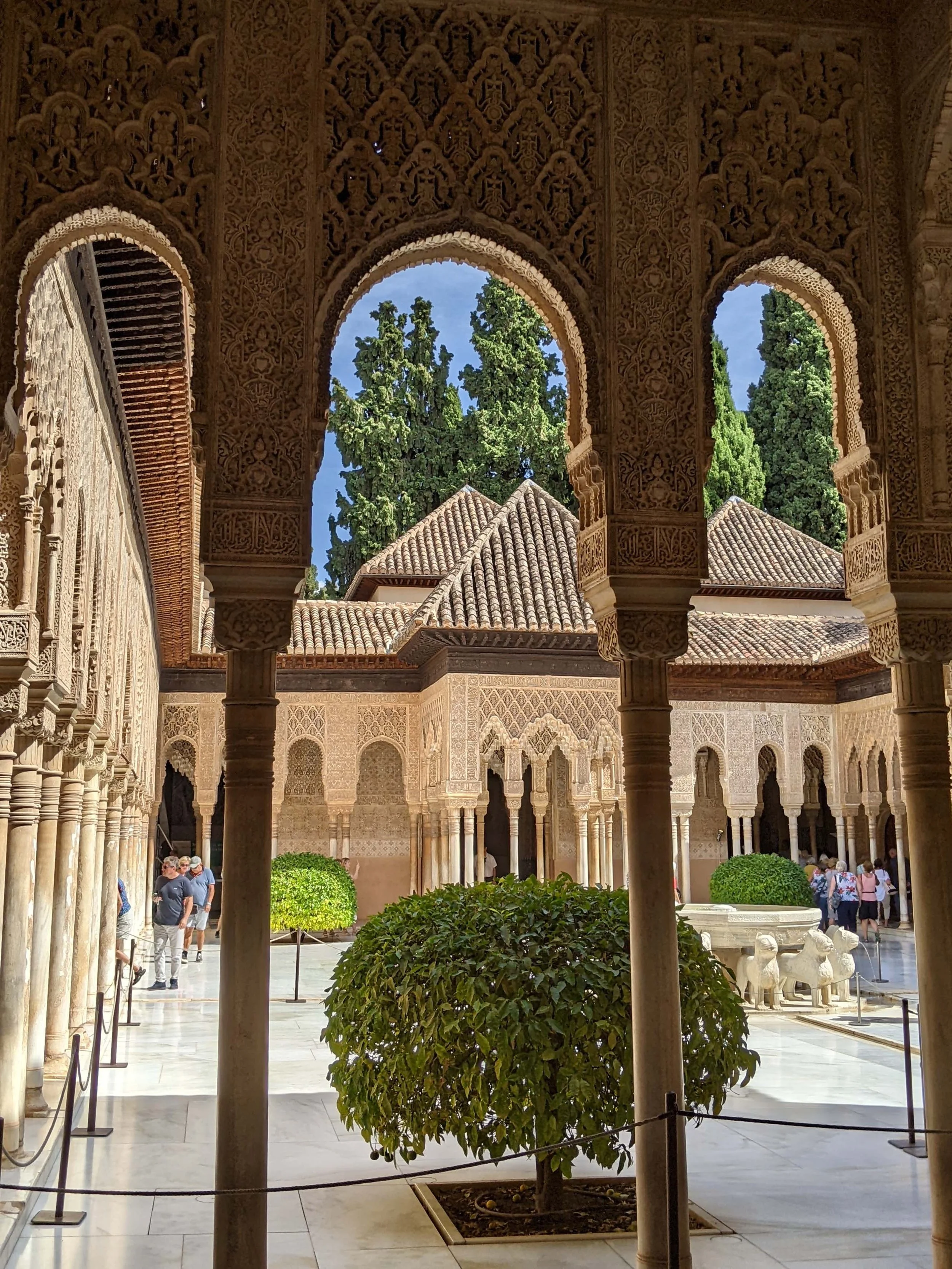
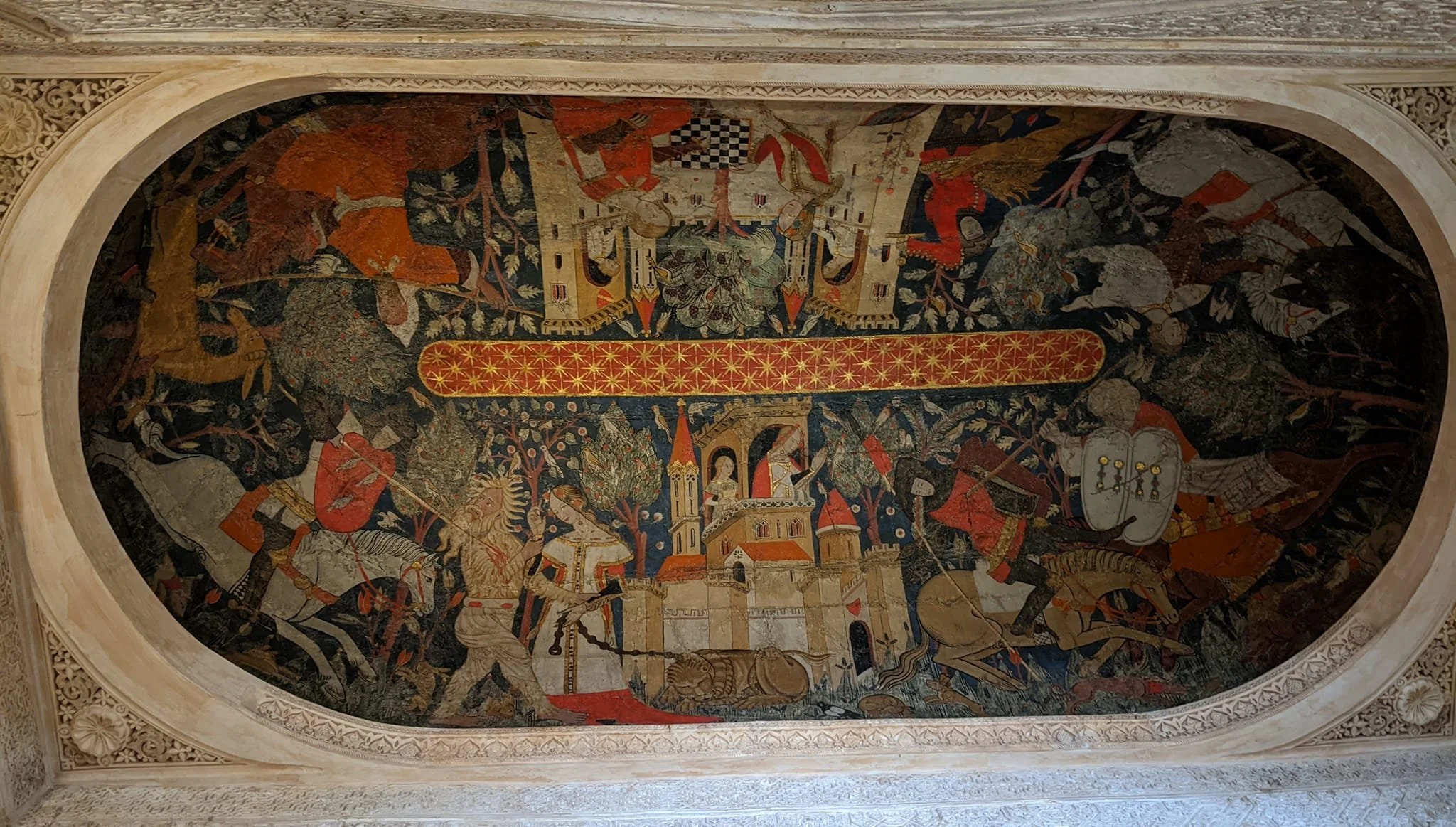
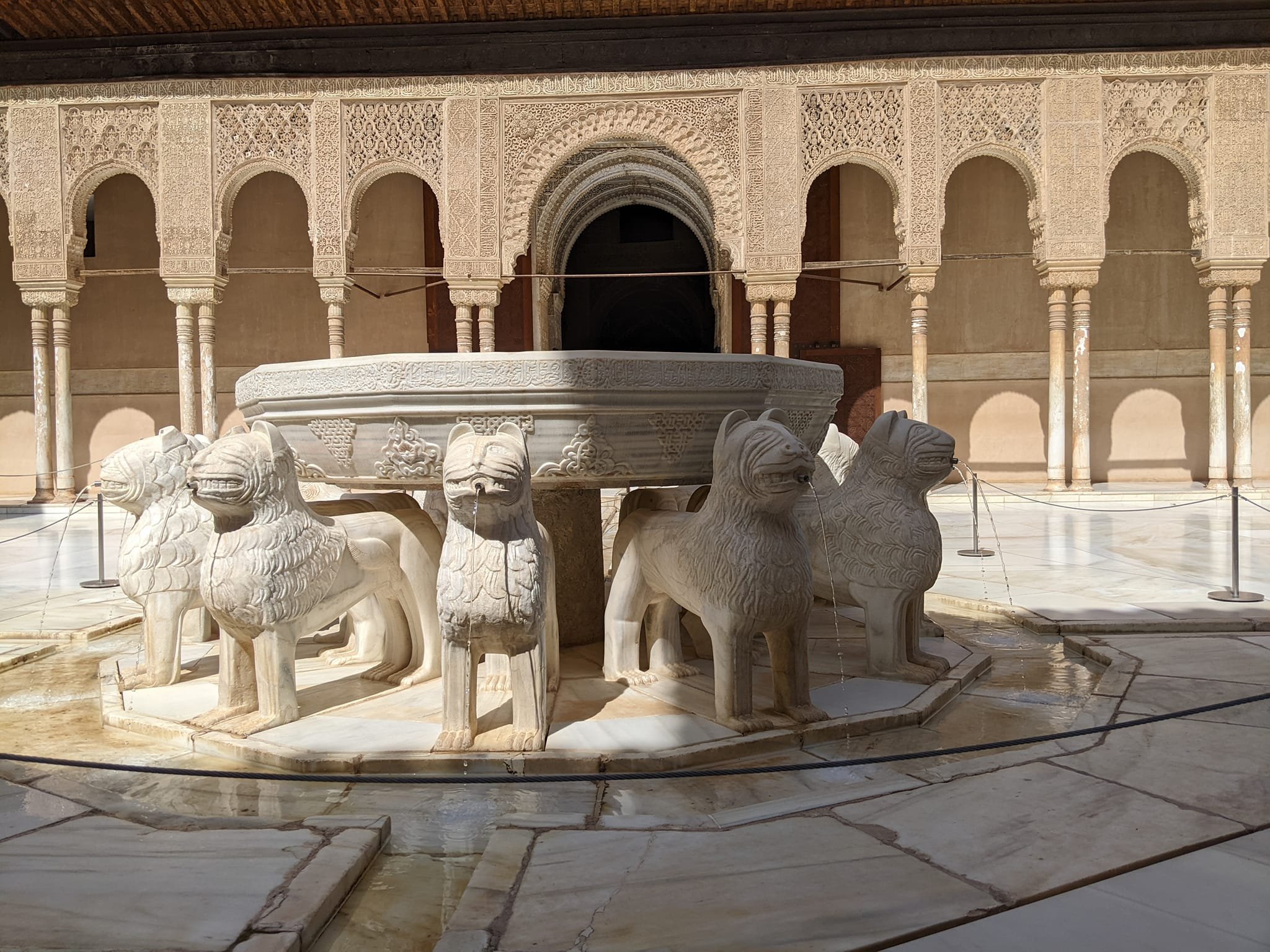
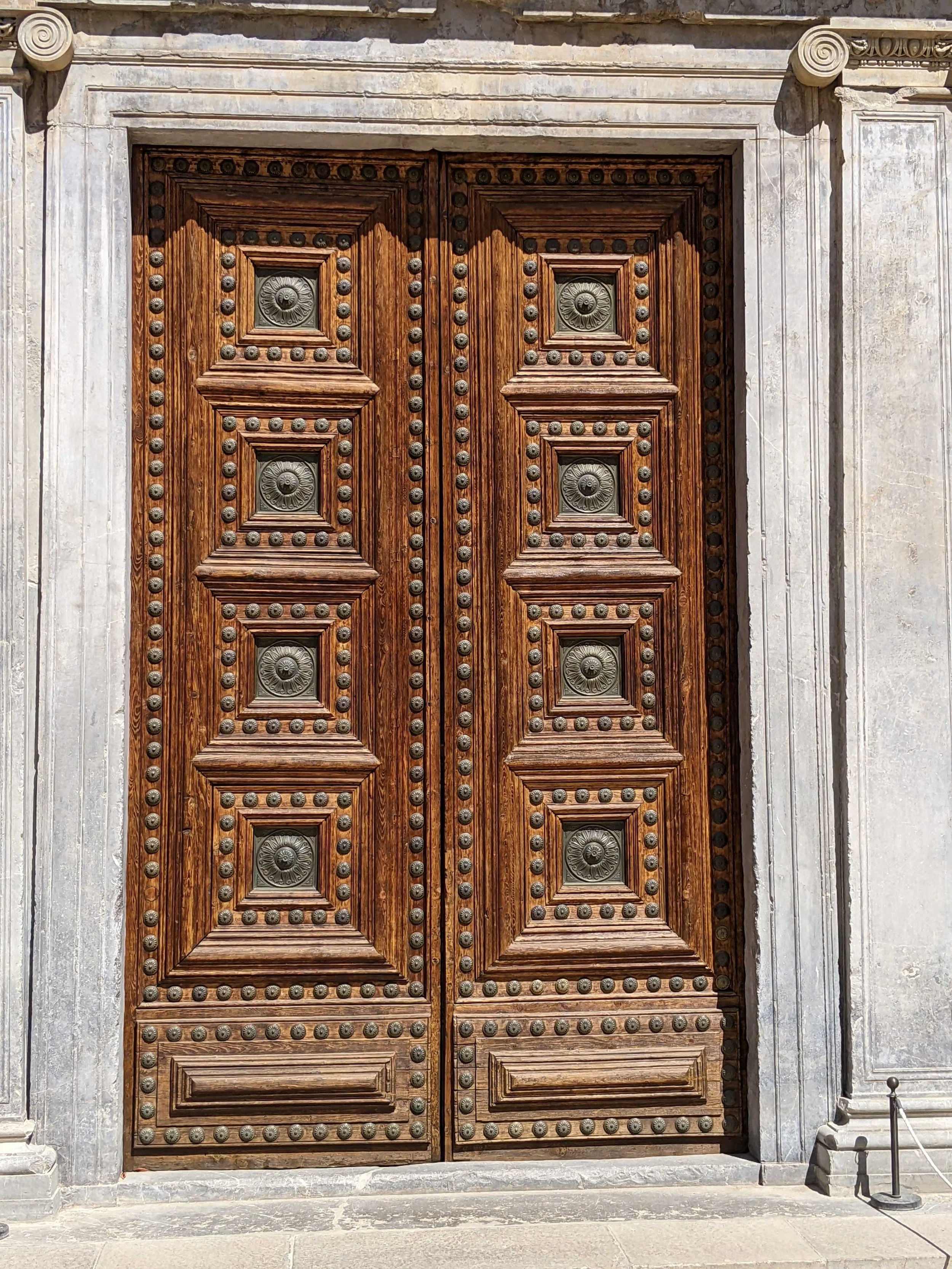
The Palaces, Comares Palace, Palace of the Lions, and the Partal Palace were built by the Nasrid’s and the Charles V palace was built by King Charles after the fall of Alhambra. The Alhambra architecture is all-inclusive and features the Muslim, Christian, and Jewish faiths. It is this intermixing of styles, associated with centuries of multi-cultural and religious coexistence of people in Spain, that has made Alhambra so fascinating, mysterious, and architecturally iconic.

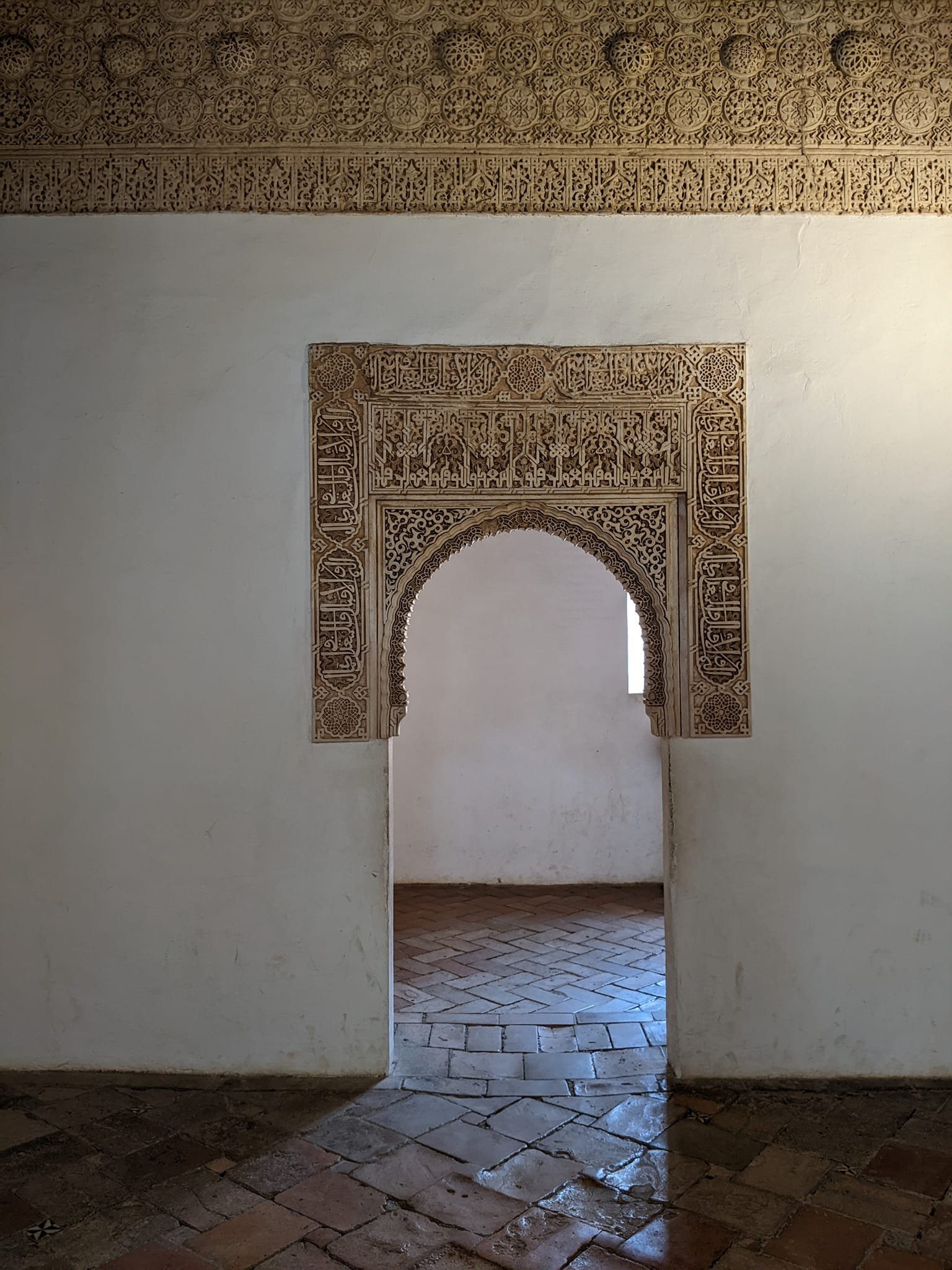
The palace walls are decorated with Arabic inscriptions, Koranic verses, and poems written in praise of the palace, touching upon the religious, poetic, and political world of the Nasrid’s period.

Exploring this feature further, Washington Irving quotes the story told by his Guide and writes “When the Moors held Granada, they were a gayer people than they are nowadays. They thought only of love, music, and poetry. They made stanzas upon every occasion and set them all to music. He who could make the best verses, and she who had the most tuneful voice, might be sure of favour and preferment. In those days, if anyone asked for bread, the reply was, make me a couplet; and the poorest beggar, if he begged in rhyme, would often be rewarded with a piece of gold.”

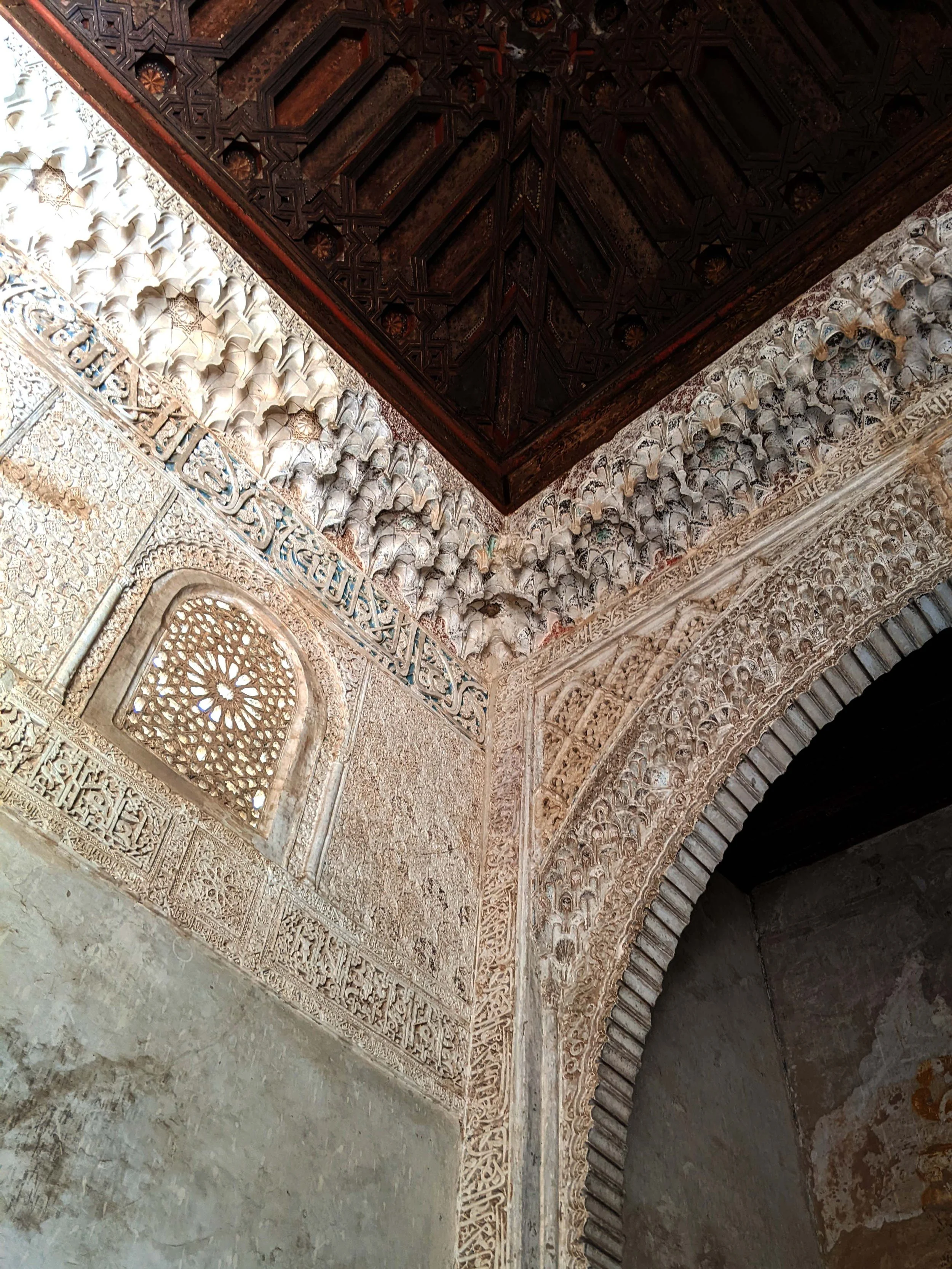
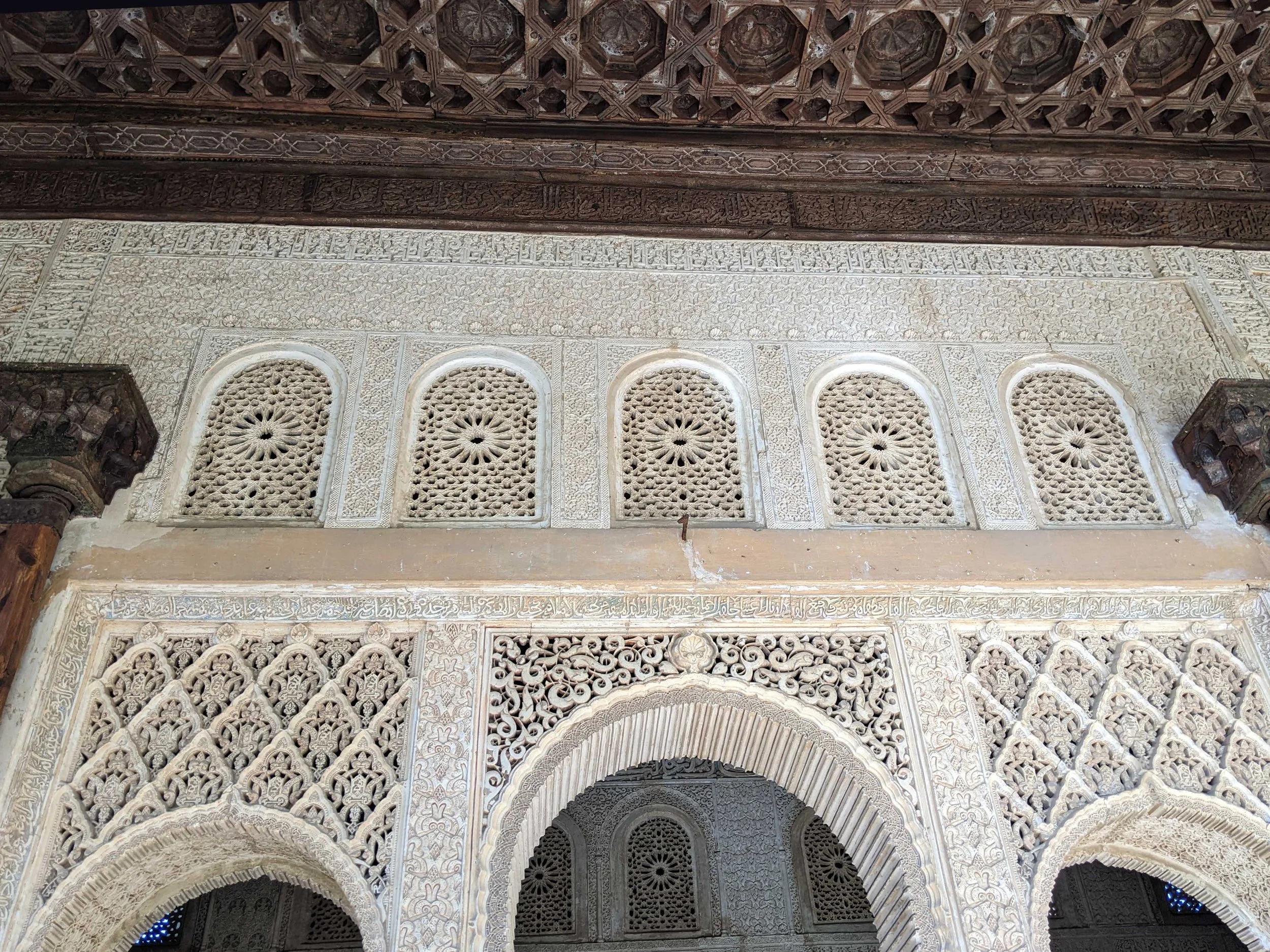
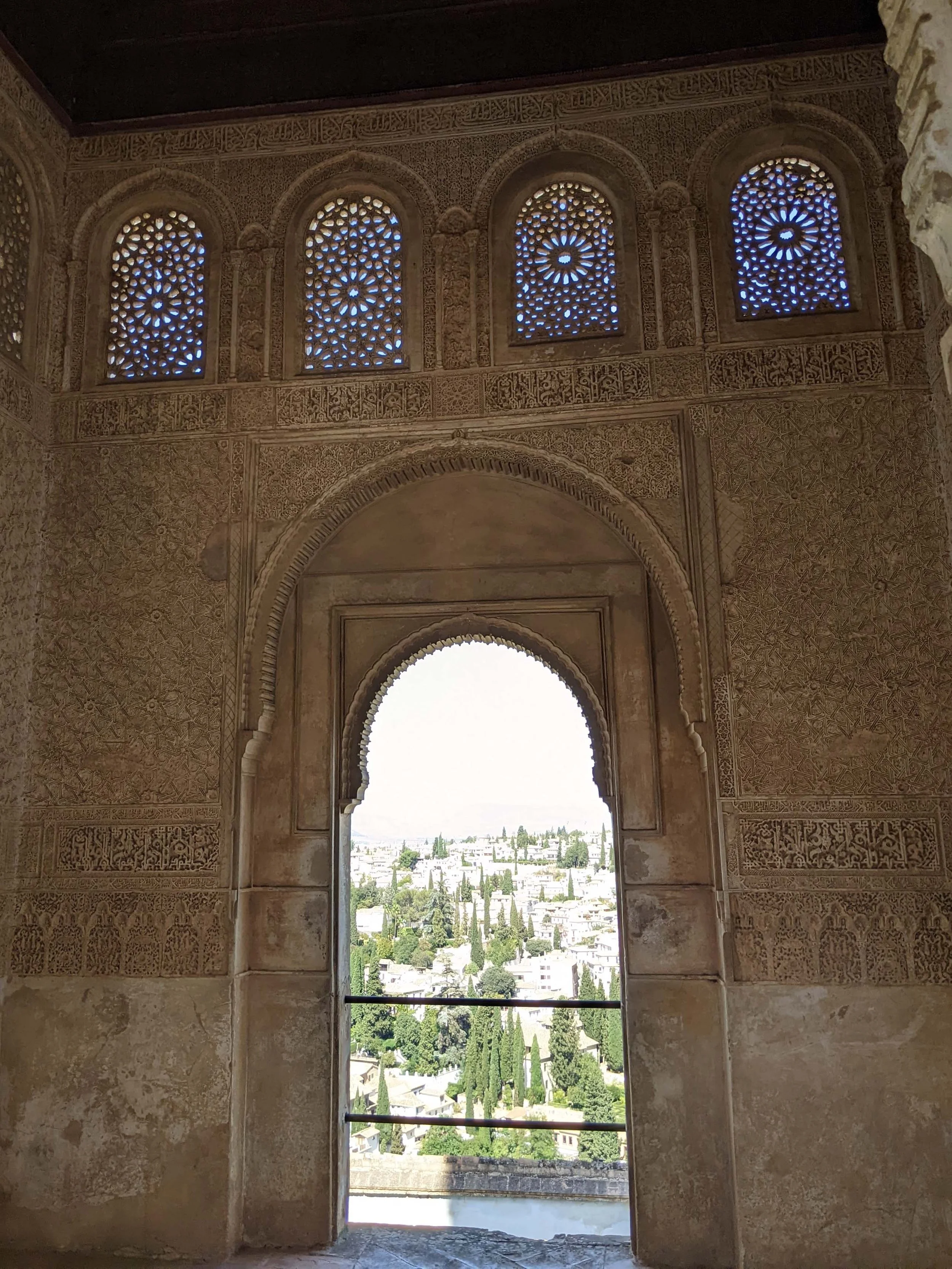
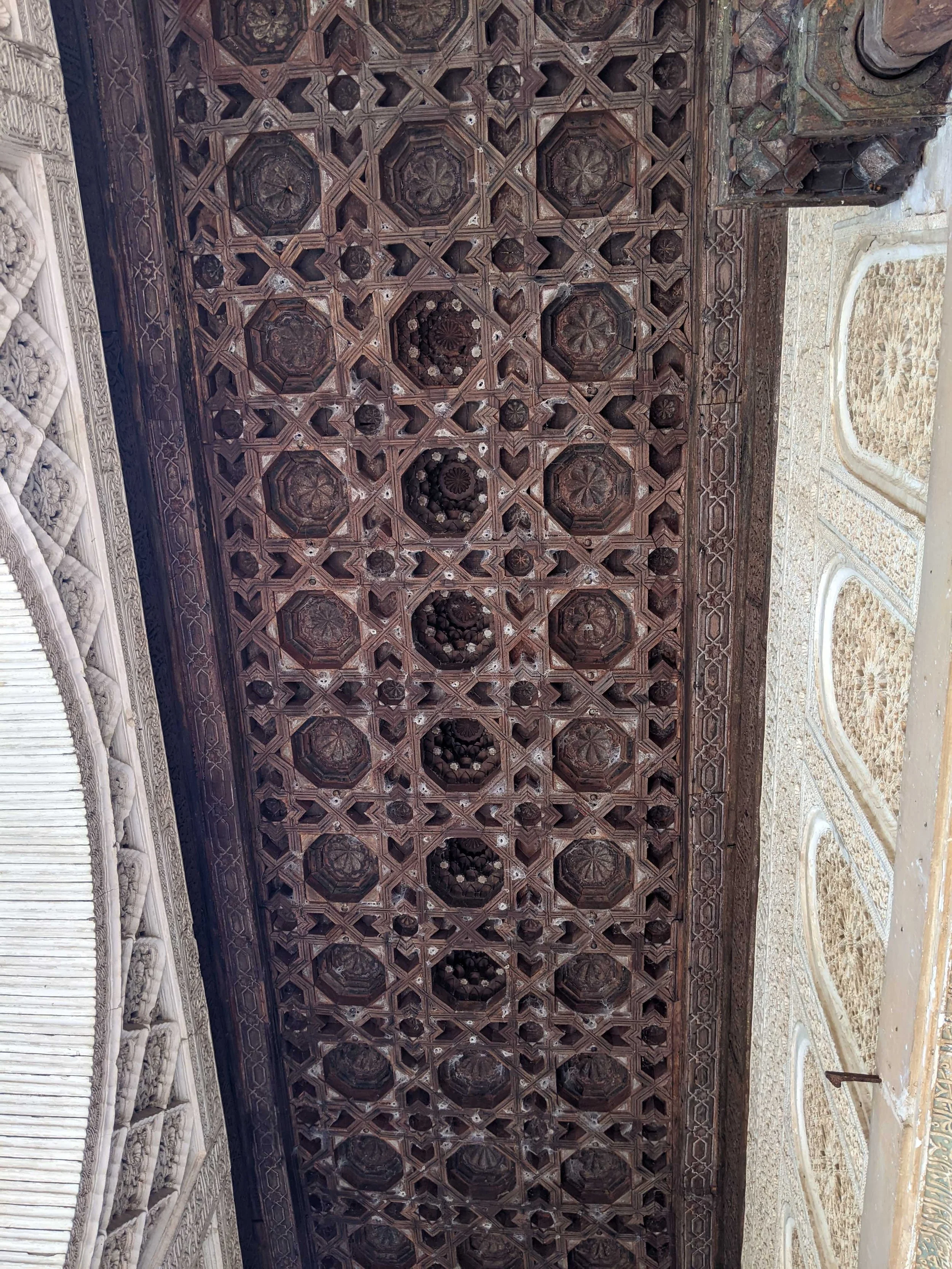
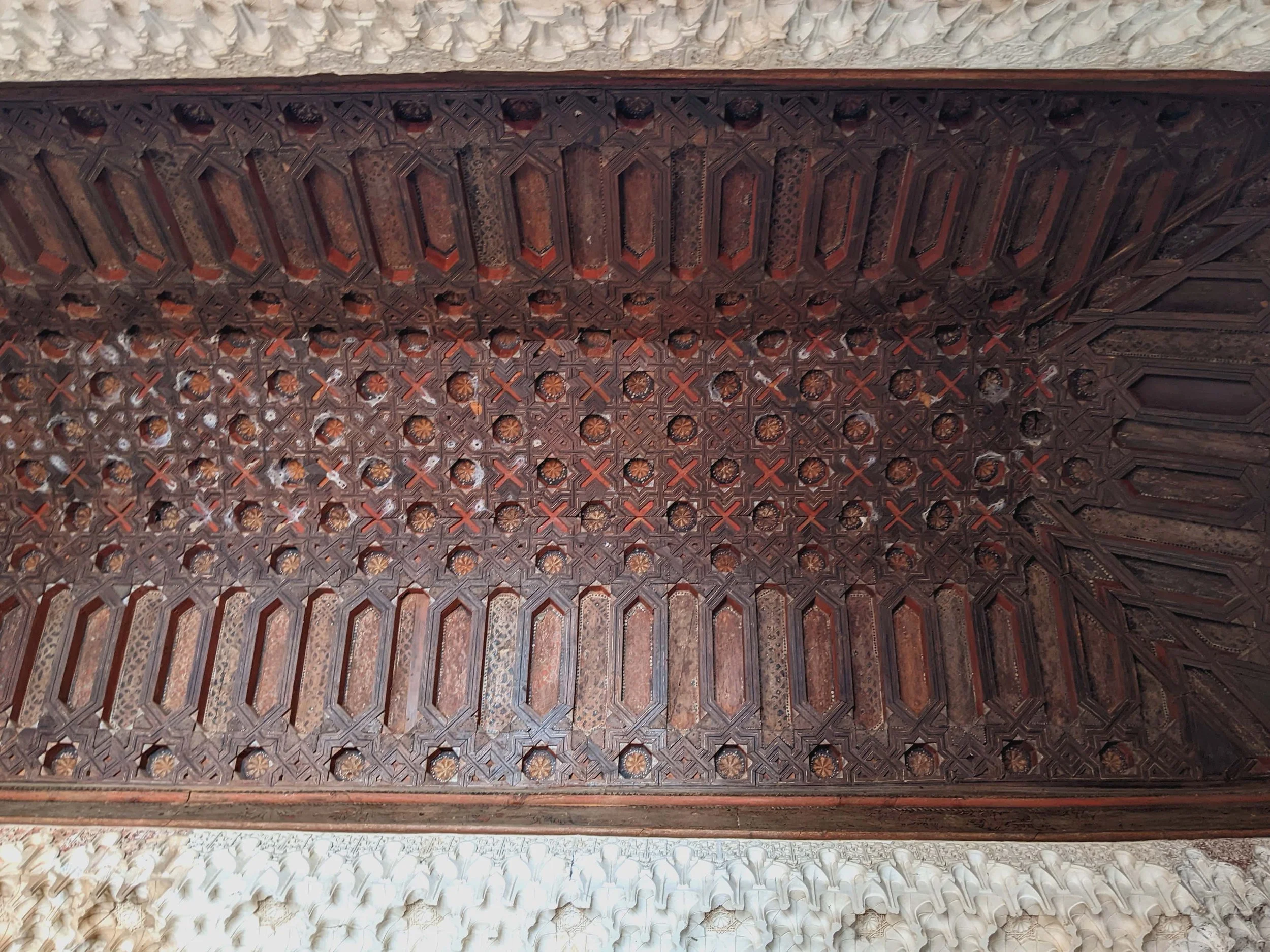
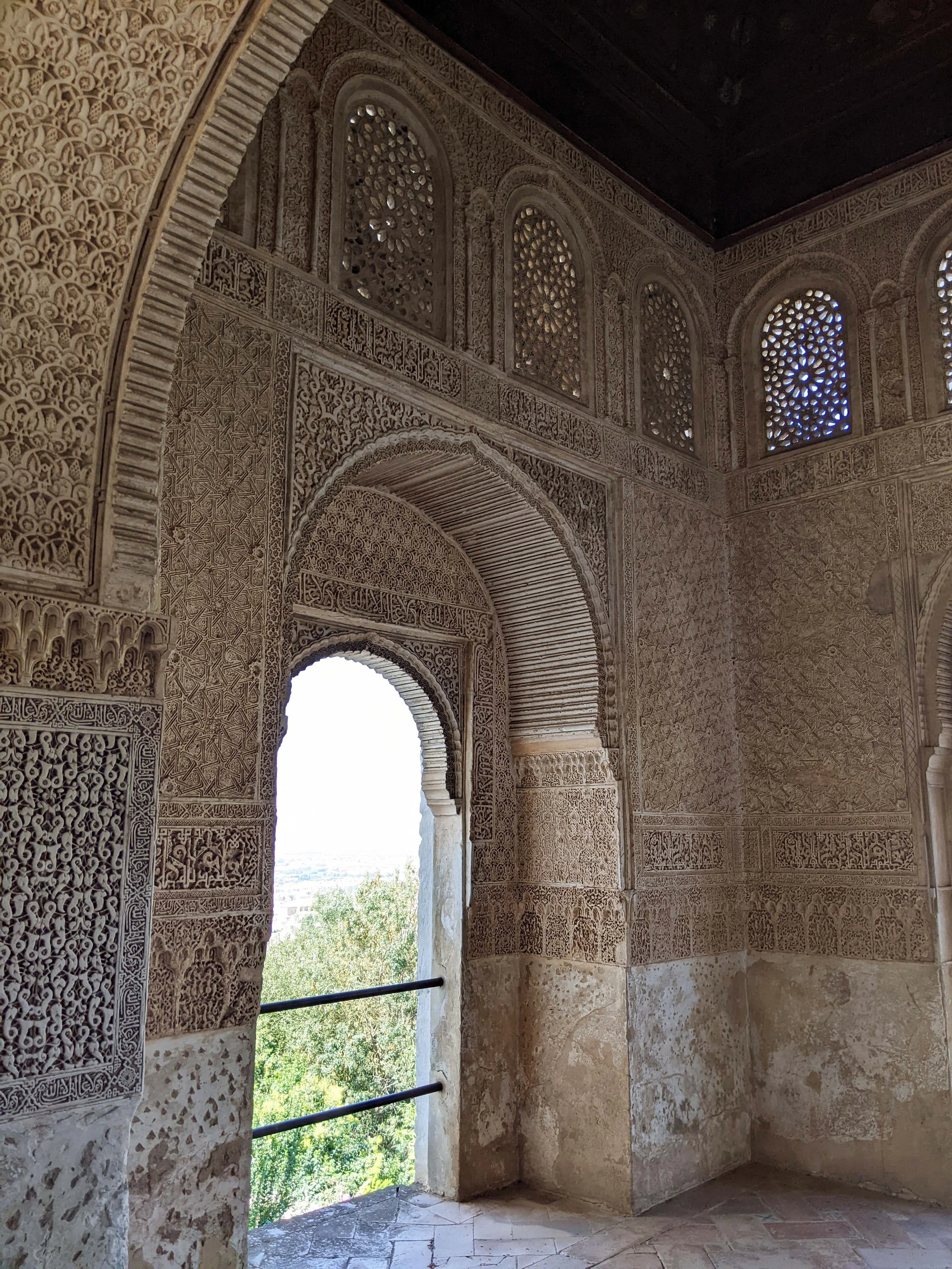
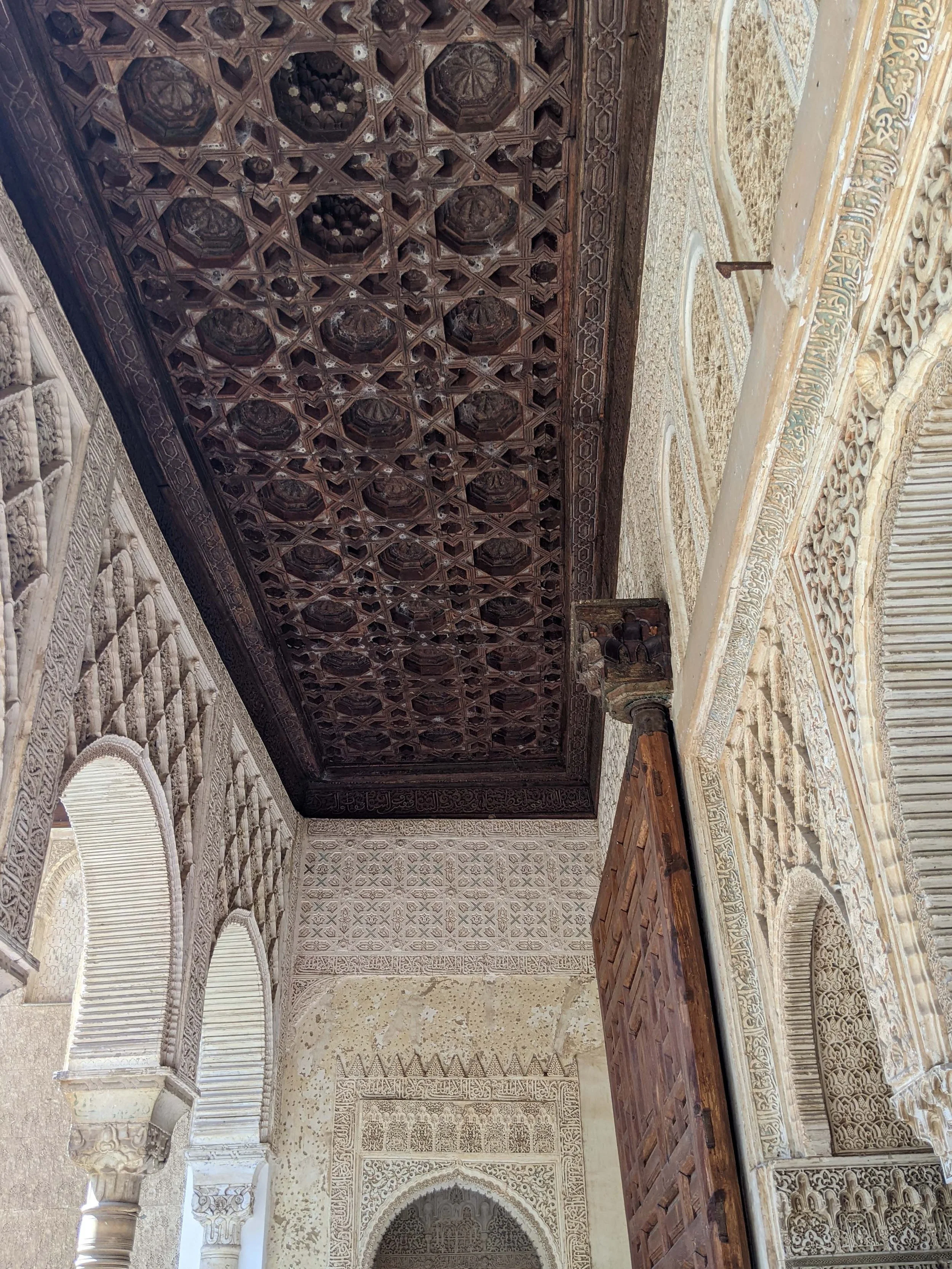
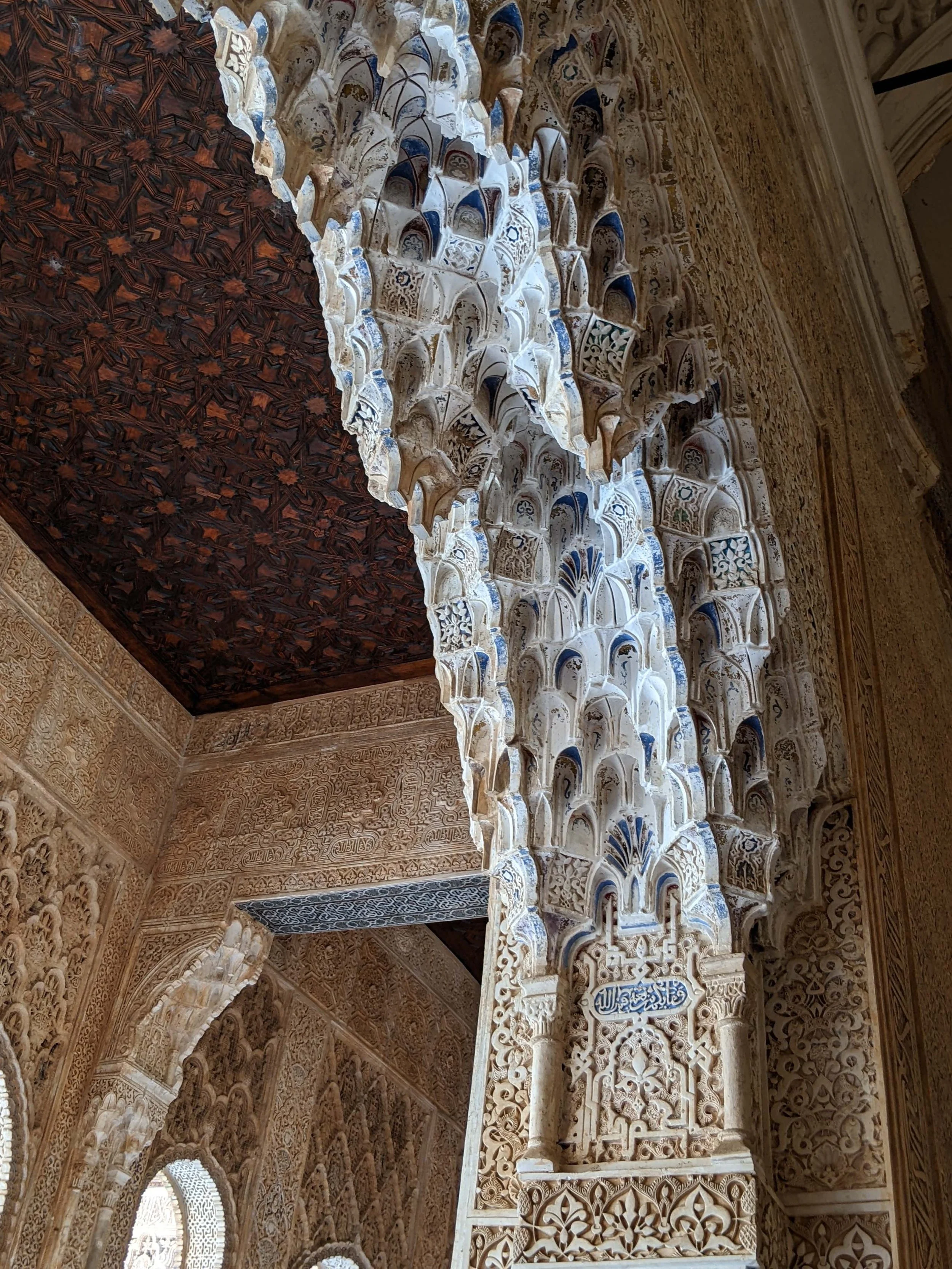
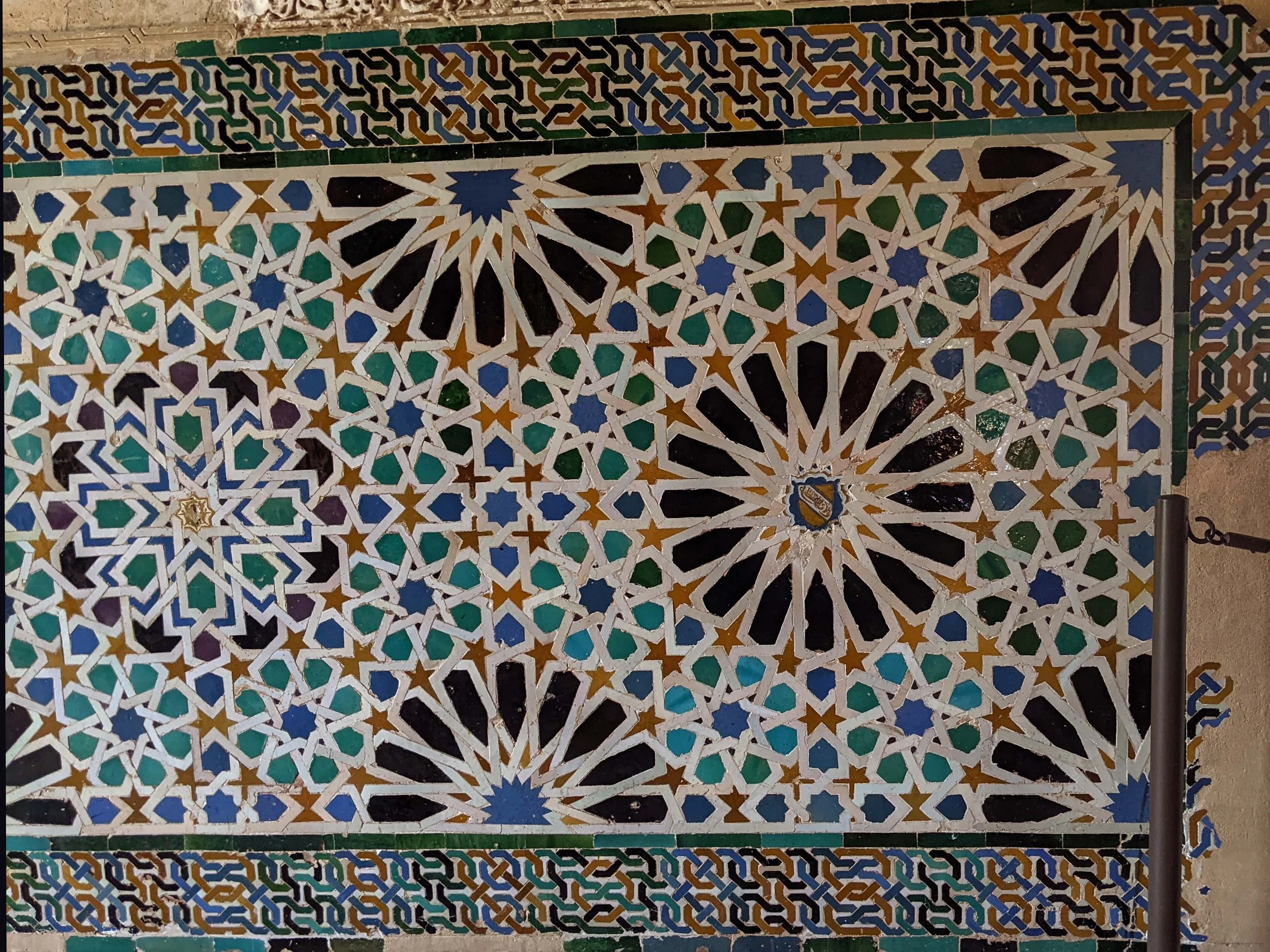
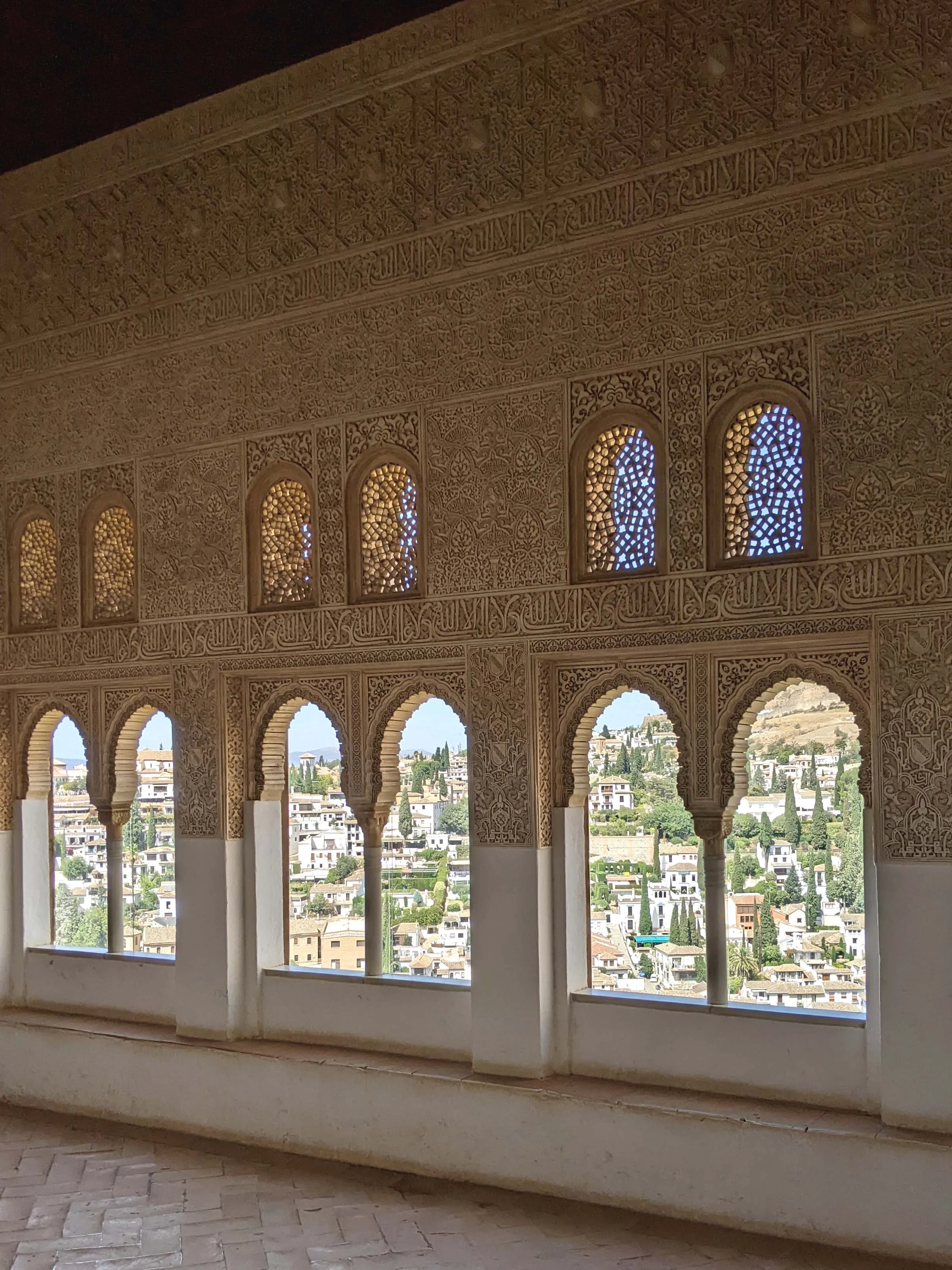
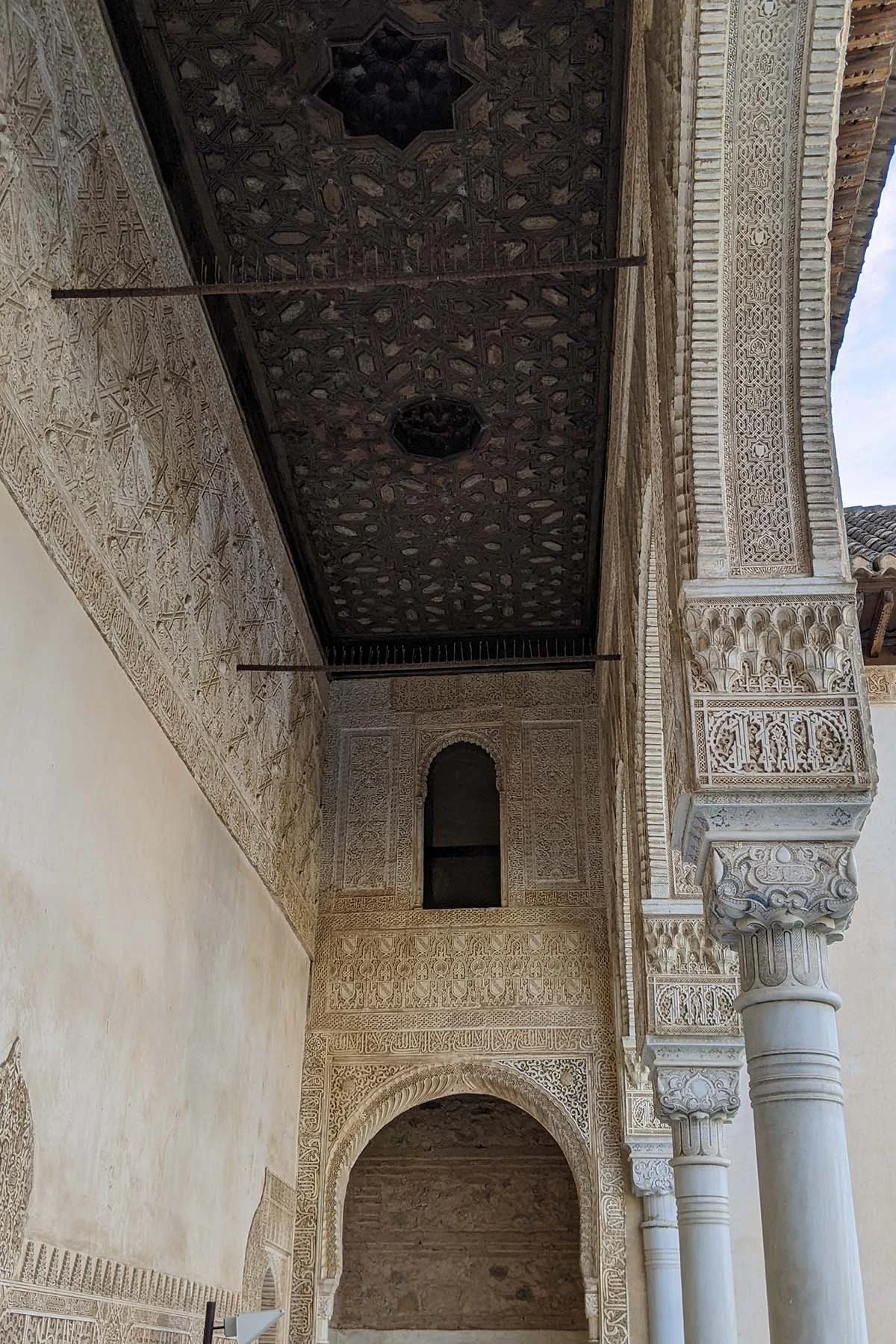
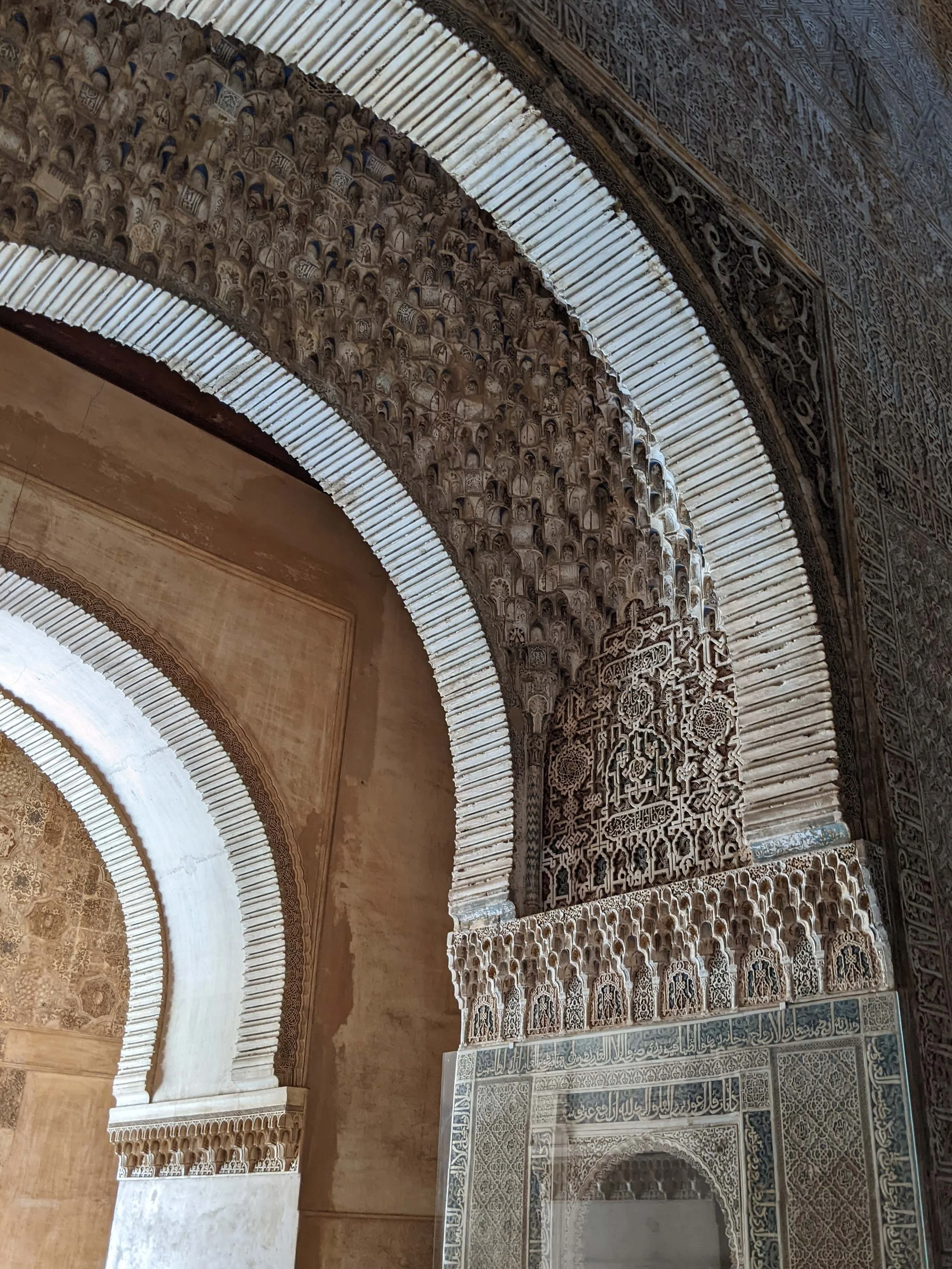
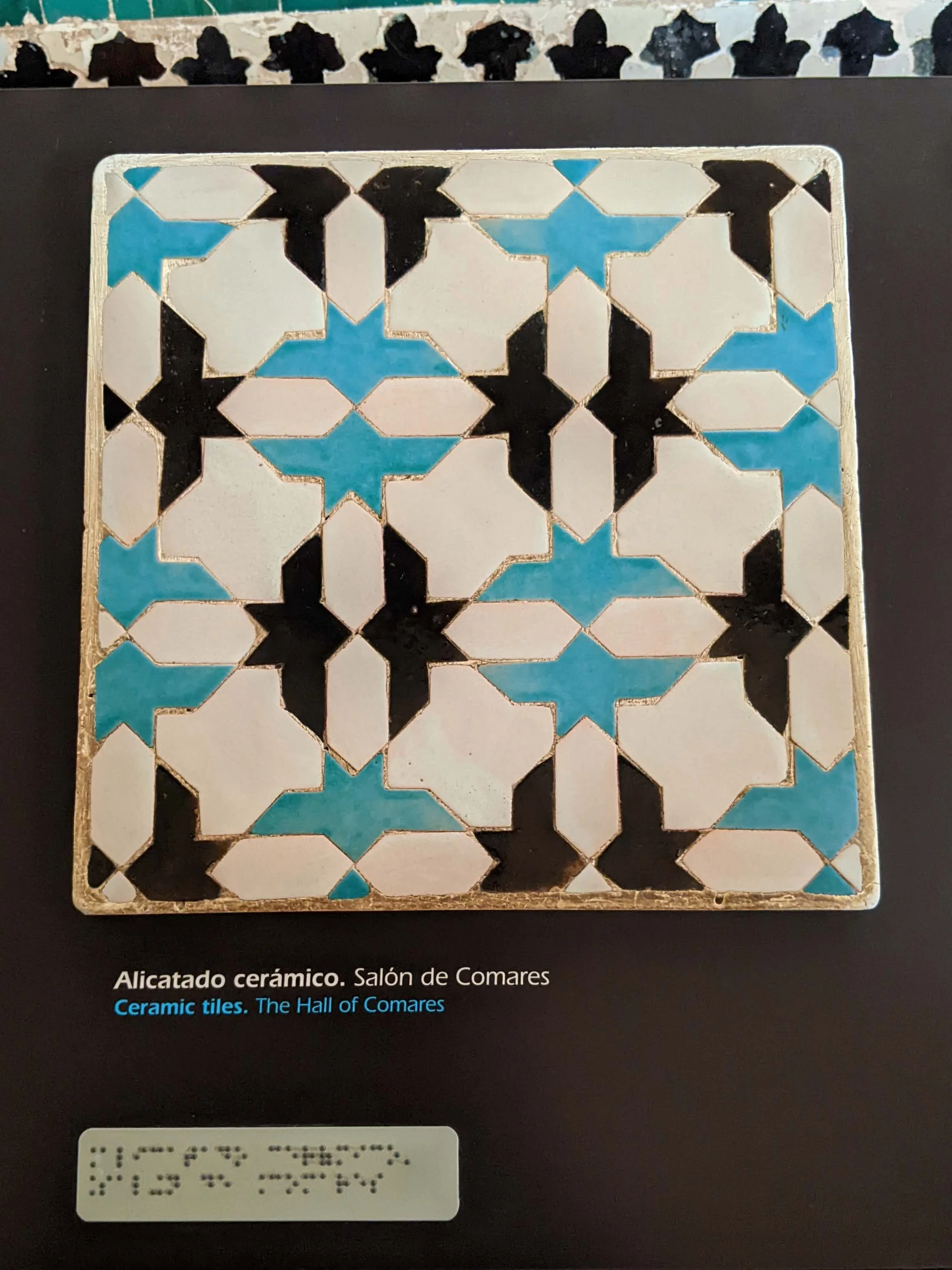
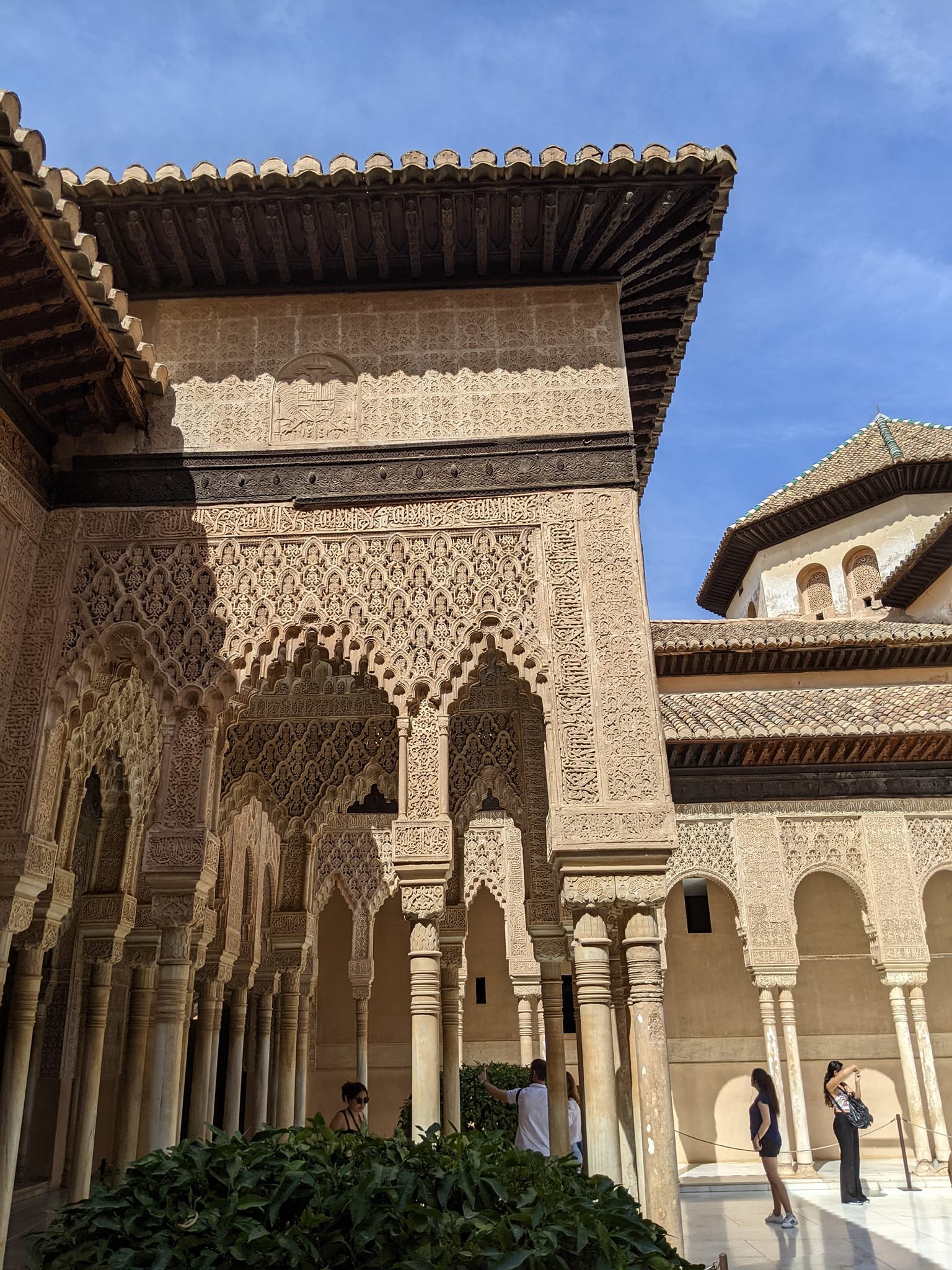
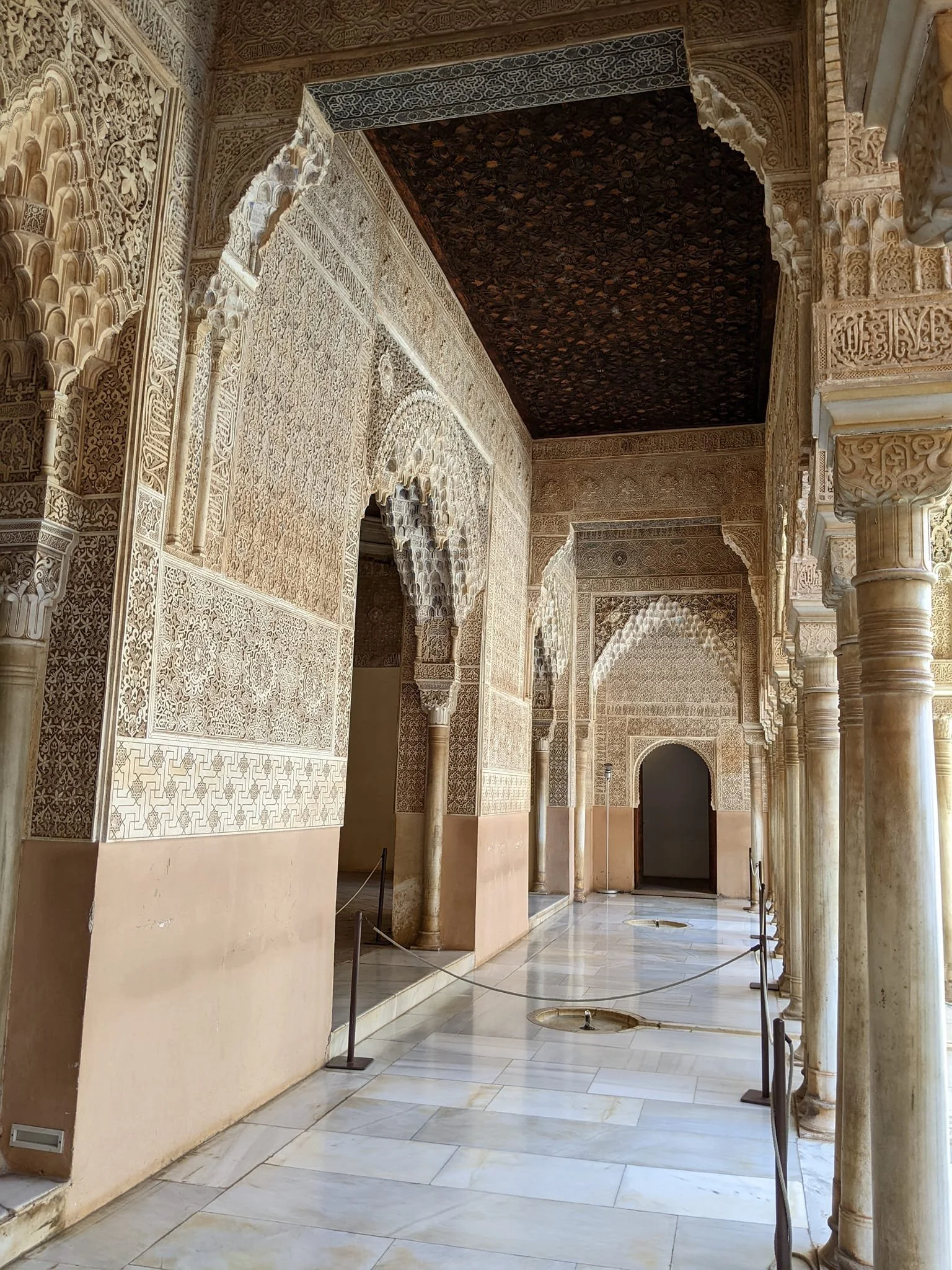
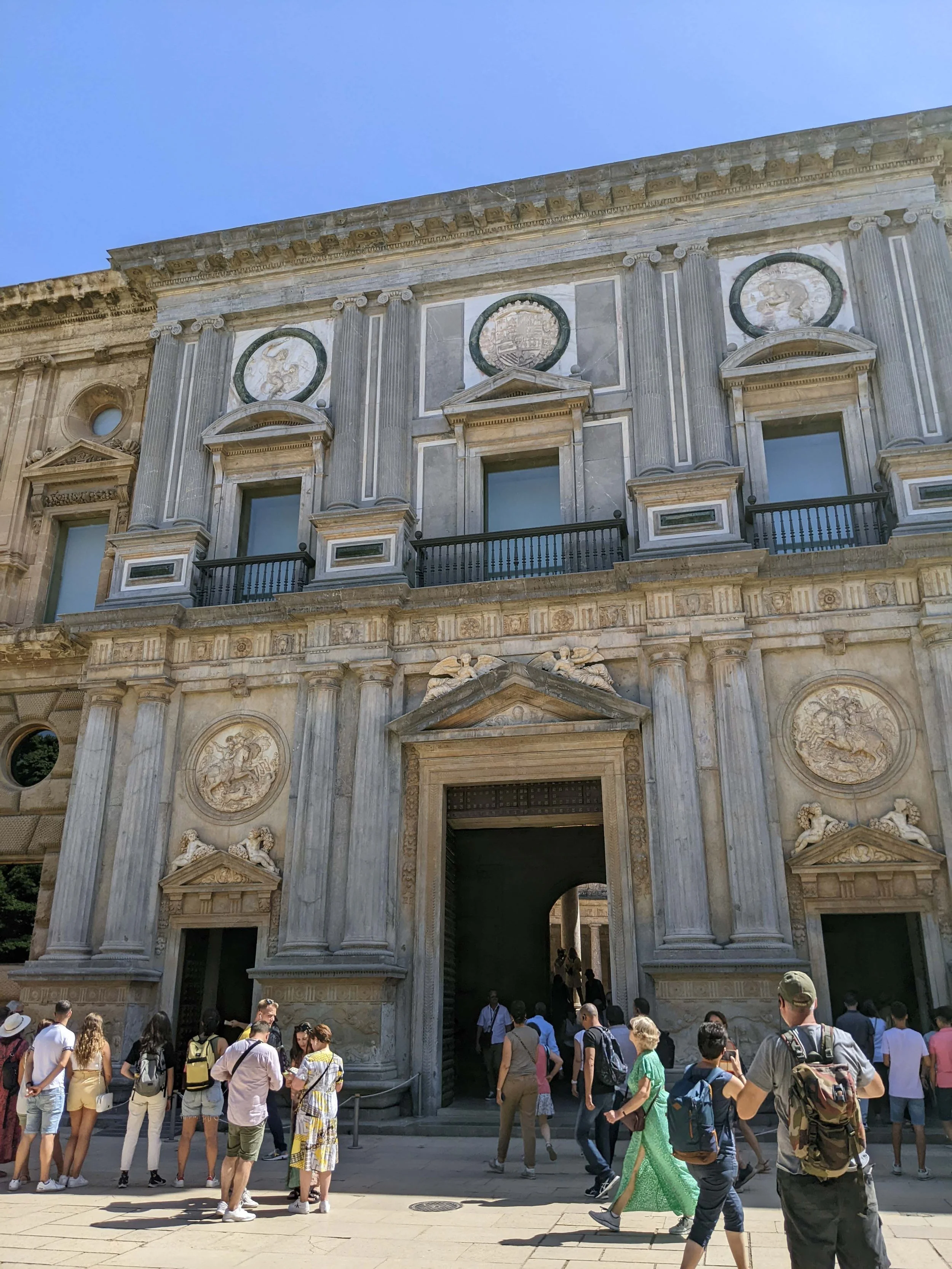
The designers of the Alhambra have covered each space (irrespective of its size), with decoration. Some of the building elements such as the interior arches are false arches, with no structural attributes; they are there only to decorate. Similarly, walls are covered with beautiful and extremely rich ceramics and (Stucco) plasterwork comprising of stylized vegetal forms, interlacing decoration, and the nets of rhombuses.
View fullsize 7.jpg
View fullsize 4.jpg
View fullsize 3.jpg
View fullsize 5.jpg
View fullsize 11.jpg
View fullsize 8.jpg
View fullsize 9.jpg
View fullsize 54.jpg
View fullsize 10.jpg
View fullsize 6.jpg
View fullsize 12.jpg
View fullsize 33.jpg
View fullsize 43.jpg
View fullsize 55.jpg
View fullsize z.jpg

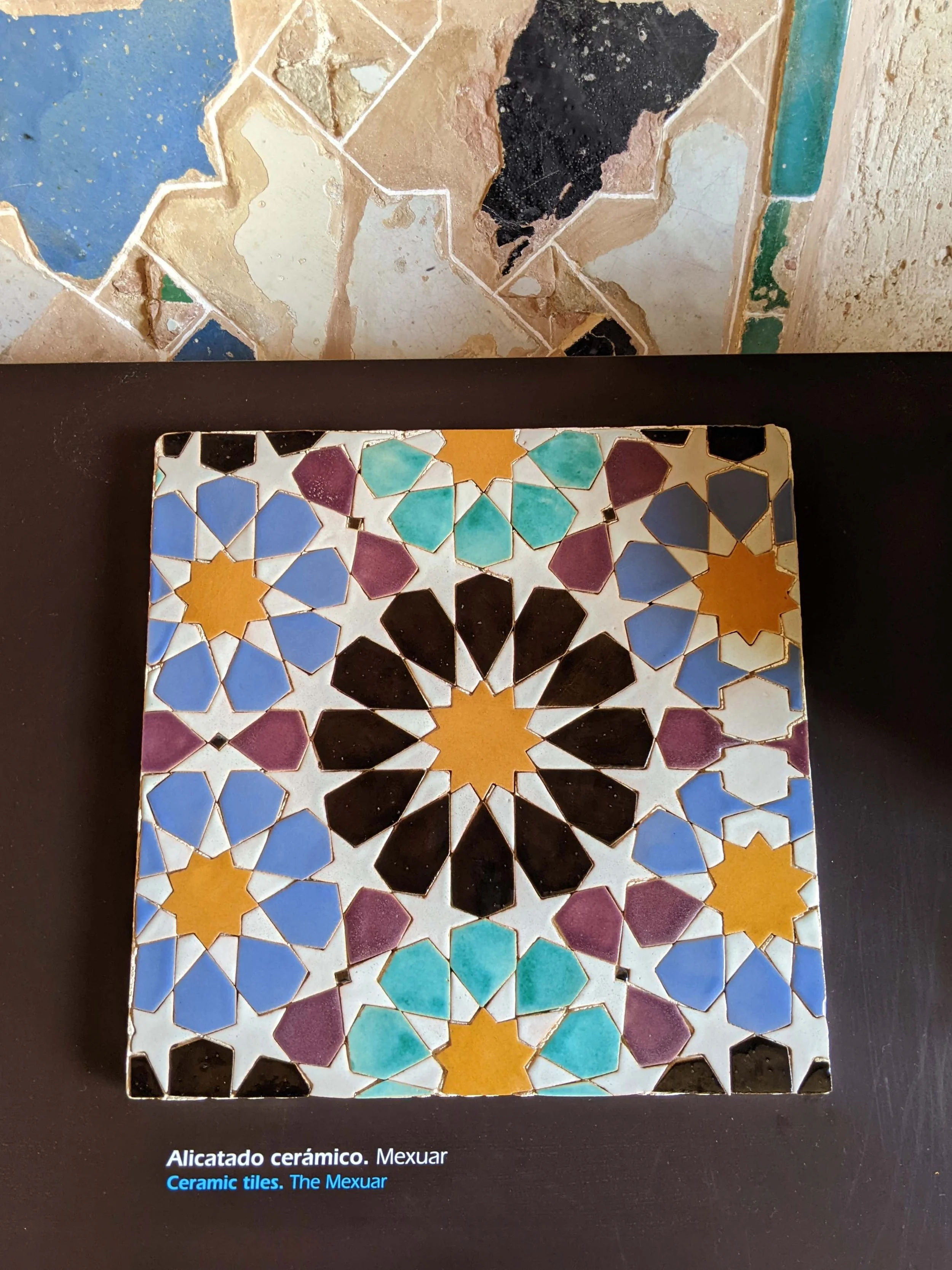
Patterns and colors adorn most of the walls. The decorative tile mosaics originate from the basic shapes (circle and square) and form complex mathematical patterns, as they are layered and duplicated and wind around the pillars, walls, and ceilings symbolizing order and unity.
View fullsize 40.jpg
View fullsize 38.jpg
View fullsize 37.jpg
View fullsize 36.jpg
View fullsize 32.jpg
View fullsize 35.jpg
View fullsize 41.jpg
View fullsize 42.jpg
View fullsize 48.jpg
View fullsize 44.jpg
View fullsize 46.jpg
View fullsize 45.jpg
View fullsize 47.jpg
View fullsize 49.jpg
View fullsize 50.jpg
View fullsize 51.jpg
View fullsize 52.jpg
View fullsize 55.jpg
View fullsize 56.jpg
View fullsize 306139142_10226852686895739_731278858576346088_n.jpg
View fullsize 306513756_10226852686575731_3487413193813940614_n.jpg
View fullsize 306541507_10226852687495754_4942568587293603516_n.jpg
View fullsize 306848651_10226852675535455_6112464501661322520_n.jpg
View fullsize 307697543_10226852685135695_2178254683871926464_n.jpg
View fullsize 307757310_10226852687935765_4648802927776298703_n.jpg

In Washington Irving’s words, "The architecture, like that of all the other parts of the palace, is characterized by elegance rather than grandeur, bespeaking a delicate and graceful taste and a disposition to indolent enjoyment.”
View fullsize 18.jpg
View fullsize 20.jpg
View fullsize 17.jpg
View fullsize 13.jpg
View fullsize 11.jpg
View fullsize 14.jpg
View fullsize 16.jpg
View fullsize 15.jpg
View fullsize 19.jpg
View fullsize 21.jpg

While the components of this architectural style would be a relatively common occurrence in the middle east, the decorative beauty of Alhambra seemed out of this place in this hilly backyard of Southern Spain and perhaps it is this contradictory nature of its existence that drives tourist to the site making Alhambra the most-visited tourist attractions in Europe.

And yes, post-Covid, they are droves of them! Impromptu visits to the location may not be possible and tickets need to be purchased months in advance as only a certain number of visitors per day are allowed in. I would strongly recommend a tour guide and an allowance of at least half a day for your visit to do justice to the trip. In hindsight, doing my research for this piece, I noted that we should have allocated half a day more to explore the surrounding city of Granada (lesson learned, but albeit too late!).

Other than the beauty of its architecture, the palace is host to many legends and anecdotes, although our guide mentioned a few during our tour, I gain a better appreciation of these stories when I listen to Irving Washington’s The Tale of The Alhambra’. While these stories may be difficult to comprehend in this day and age, they could make your visit more entertaining.
In Islamic Arts, Multicultural, Travel Tags spain, Spain, Alhambra, alhambra, Muslim, andalucia, Granada, alhambragranada, alhambrapalace, travel, granadaspain, travelphotography
2 Comments
chapter 2.jpg

The Rumi Chronicles

November 24, 2017

Chapter 2 -The Building Blocks

It is difficult to describe the creative process that goes into any artwork, let alone one which embodies a range of subjects such as SalamMobile- Rumi.  Though it has been a short while since I have finished the project, it is difficult to trace ones footstep and identify the first motif or design that started the journey.  I can’t exactly recall why I made one choice over the other and neither can I claim that all my choices have been correct or whether on hindsight, if given an opportunity again; I would not design things differently.

The purpose of these notes is to provide a glimpse of the thought process; and to describe the aspirations and emotions behind the design. I hope that armed with this background information; the viewer would have a better appreciation of the overall design concept.

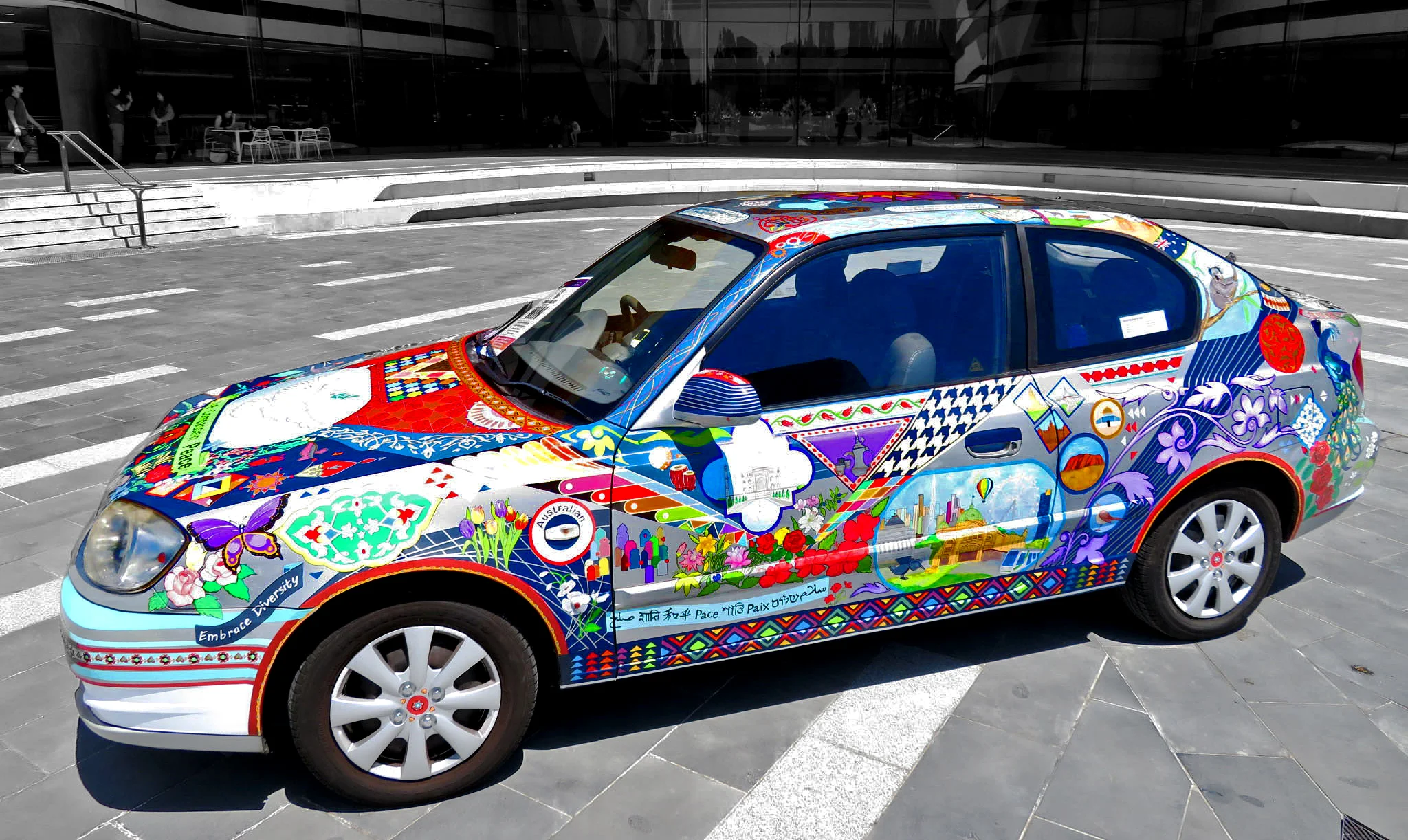
Rumi draws its inspiration from Truck Art. Originating in south east Asia, the truck art is an indigenous art form in which vehicles are decorated with complex floral patterns, graphic designs, portraits and poetic calligraphy, in the most radiant and innovative manner.

The history of decorating carriages in the sub-continent goes back hundreds of years when the people of stature decorated their ‘howdah’for travel. These ornate carriages or mobile thrones were positioned on the back of elephants or camels and were decorated with precious metals and jewels. Howdahs were designed to project power and wealth, and the motifs comprised of floral patterns, peacock symbols to signify royalty..

The restrained version of “Truck art” as we know it today, first appeared in the subcontinent in the early 1940's when Sikh Lorry drivers started painting their trucks with the portrait of their Gurus for good luck. After the partition in 1947, truck decorations in Pakistan evolved further, initially with the introduction of religious symbols and calligraphy followed by political slogans and then in the 1970's as full-fledged ‘pop art’ movement where the images and calligraphy started engulfing the whole vehicle. Today ‘Truck art’ is an established art genre in Pakistan and has evolved beyond the trucks into furniture, fashion-pretty much everything or anything which is paintable.

While the car is painted in truck art style, Rumi's design is intended to evoke inquiry and transcends beyond mere visual aesthetics; which is a hall mark of truck art, to a role of a storyteller.

The motifs are designed to send the viewers into different trajectories by providing them with small snippets of information and inciting them to explore the topic further.  I would hope that in today’s technology savvy world, this would not be difficult task.

From my prospective, if at the end of the day; I am able to prompt 10% of the viewer to explore the concepts further and assimilate what is being said, my work will be done.


Flowering-up

“Raise your words, not voice.It is rain that grows flowers, not thunder”
— Rumi

Flowers are symbols of love and serenity across the world and historically different traditions and cultures have associated different meaning to different types and colours of flowers.

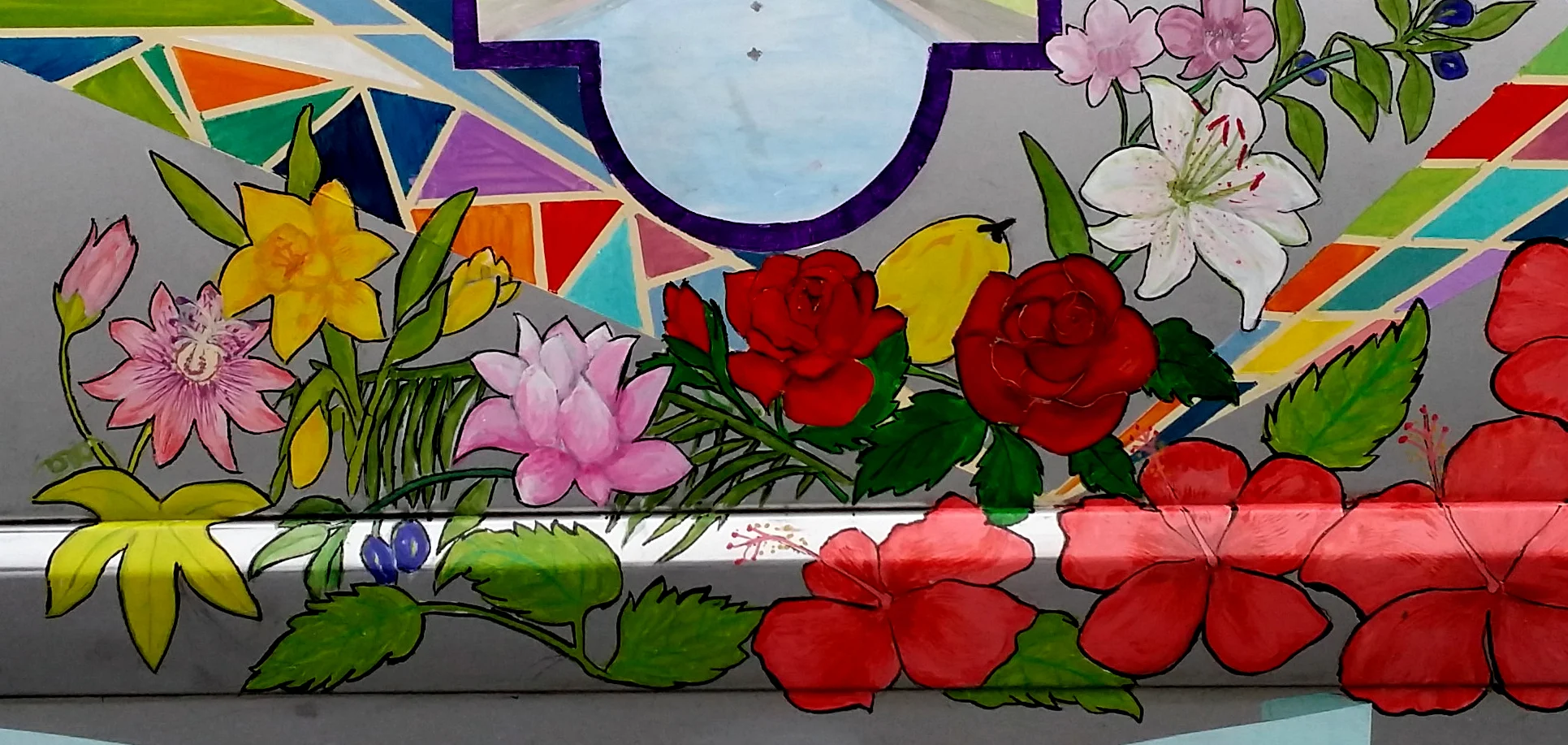
Flowers and floral design form a key component of truck art painting; but most of this floral imagery is emblematic and with the exception of the roses have little resemblance to nature. This notion works well in the traditional scheme as the main aim of floral illustrations is to generate aesthetic appeal and use the flowers as space fillers between the main motifs being painted on the vehicle’s surface.

My aspirations for Rumi’s design were not as simple, I wanted to use the flowers not only as  design building blocks but to go further; and use this traditional concept to represent the people of different regions, cultures and faiths.

Researching around (courtesy Dr Google) I found that some of the Muslim countries have adopted flowers as emblems to represent the uniqueness about their nation, and to reflect the different aspects of their cultural life and history. I therefore, used the images of these national flowers to represent these countries.

bangladesh national flower.jpg
national flower of malysia.jpg
cedar tree.jpg

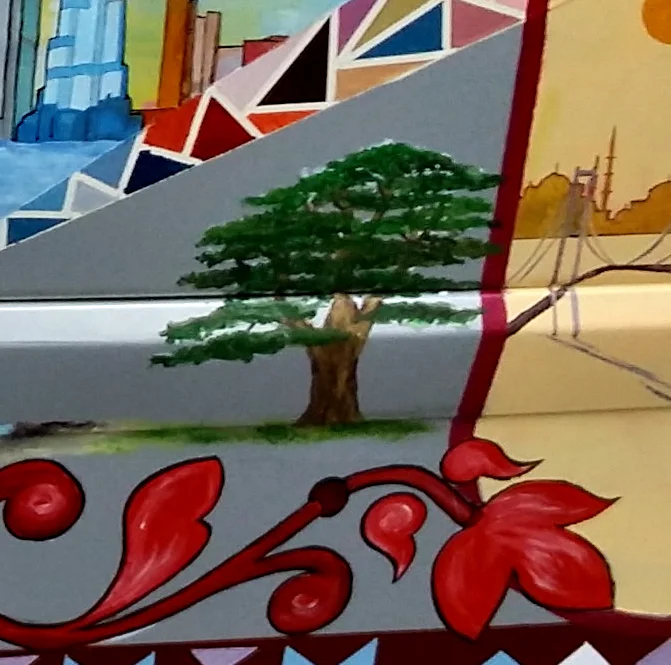
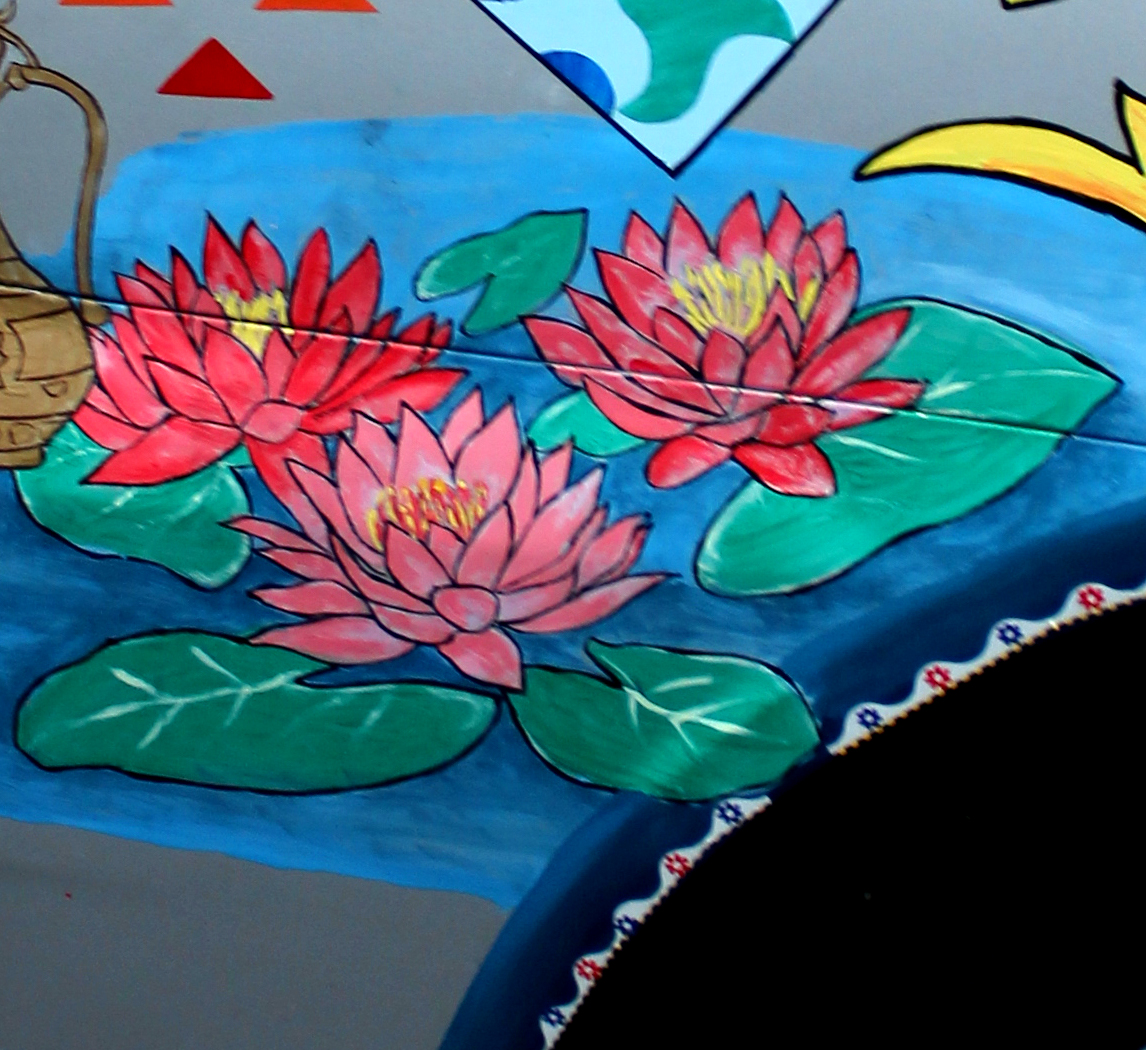
Bangladesh has adopted Water Lilly as its national flower, and is representative of the many rivers that run through the country. Cedar tree is symbolic of Lebanon; and quite literary has its roots in history and faith; the tree has been mentioned in Bible on several occasions and before Christianity the tree has been used by Phoenicians, Egyptians, Romans for trade and construction.

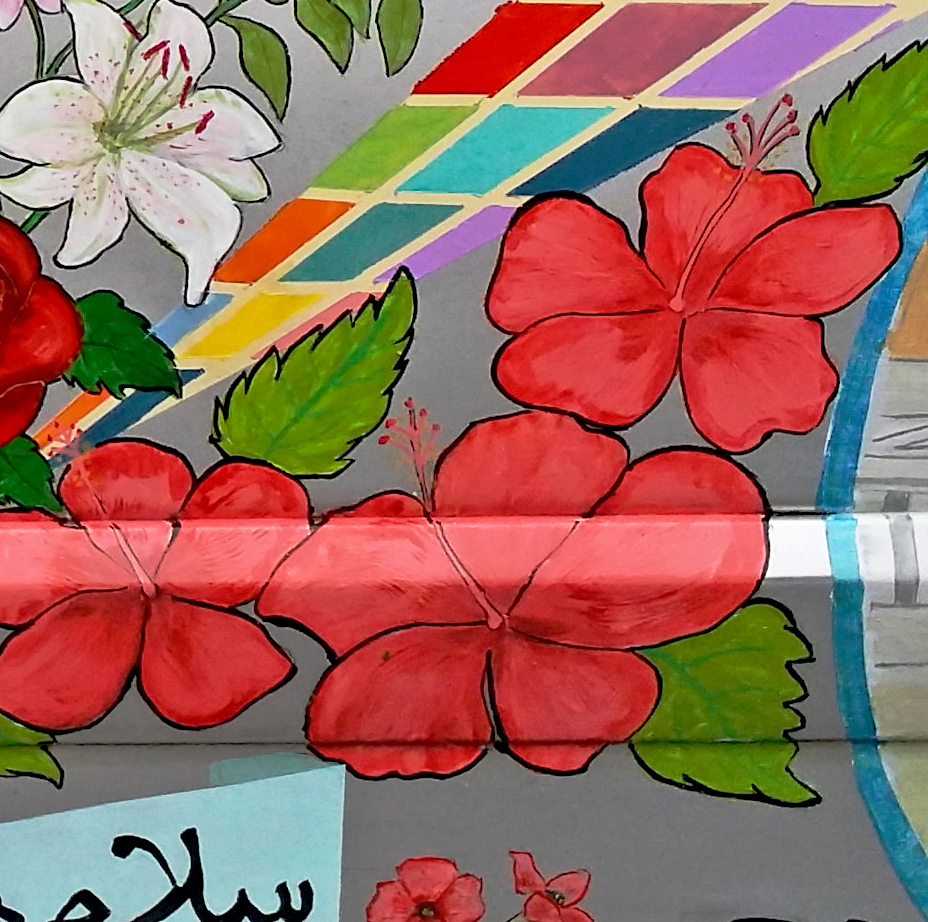
Malaysia adopted Hibiscus as its national flower in 1960, to Malaysians the red of the petals symbolize courage, life, and rapid growth of the country, and the five petals represent the five guiding principles of Malaysian governance which are aimed at developing racial balance and cohesion in its society.

indonesia.jpg
national flower of brunai.jpg
National flower of pakistan.jpg

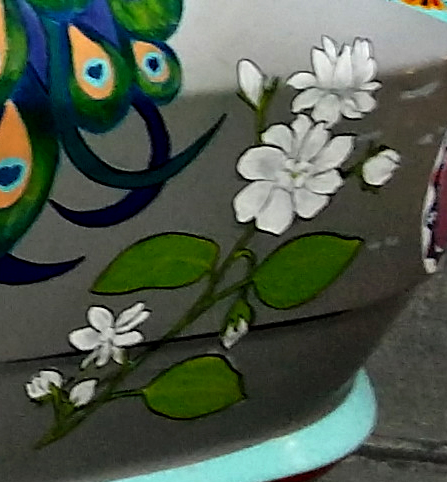
Jasmine is a common plant in Pakistan and because of its attractive scent is a common feature of Pakistani gardens. The white jasmine is the national flower of Pakistan, it symbolizes attachment, amiability and modesty.

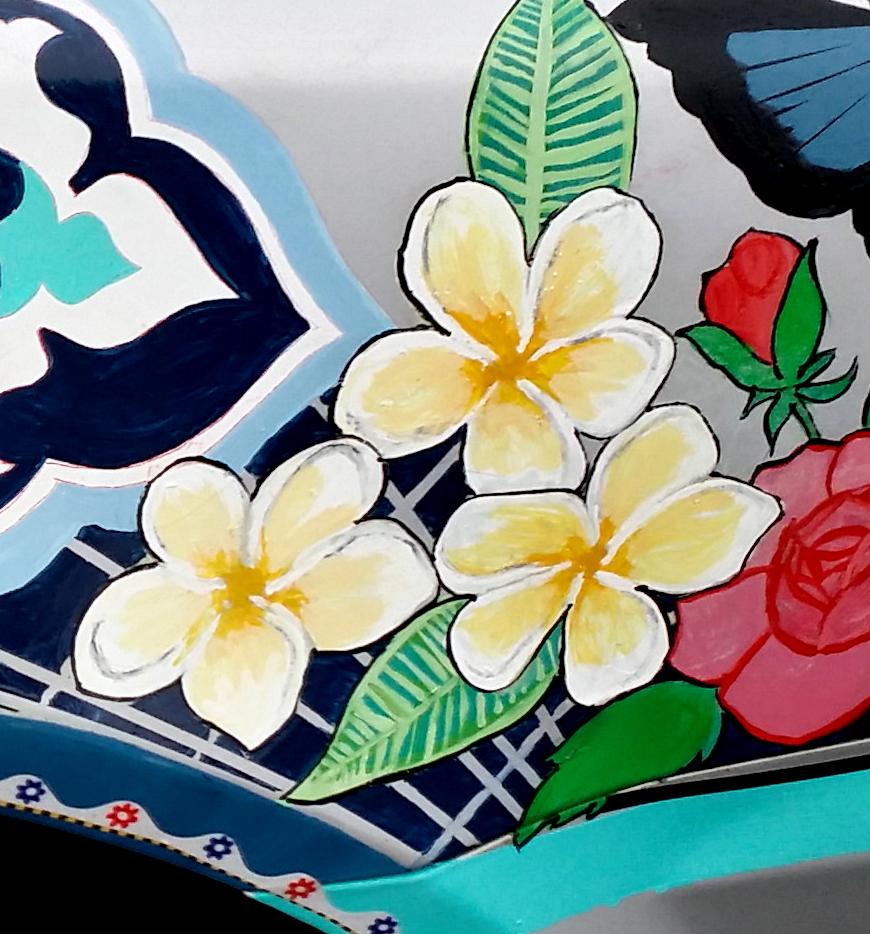
Plumeria, also known as ‘Frangipani’ is a signature flower of Balinese culture and represents our neighbouring country Indonesia. The delicate look of the flower makes it a symbol of grace, wealth, and perfection across Asia and Americas and different cultures in the region have assign different meaning to this flower.

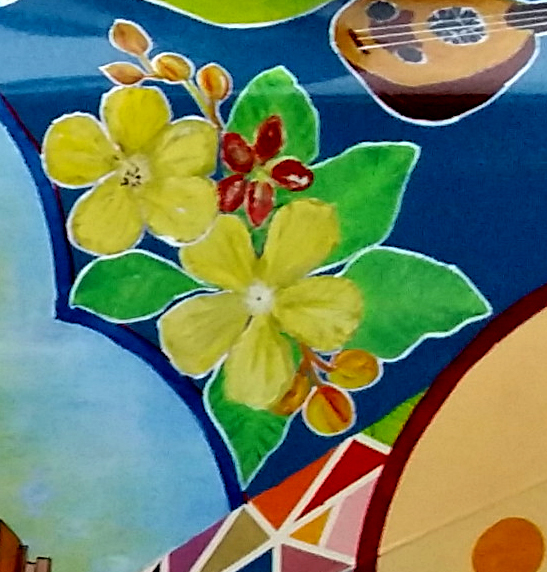
Simpoh, the national flower of Brunei, can grow in white sands and its root are able to reach deep down for the underground water and in addition, the plants large leaves provide shade and protection for the other plant species to thrive. For Brunei, the unique blossoming of the flower and the green colour of its leaves symbolizes the economic growth and development of the country.

national flower of iran.jpg
national flower of turkey.jpg
Libya national flower.jpg

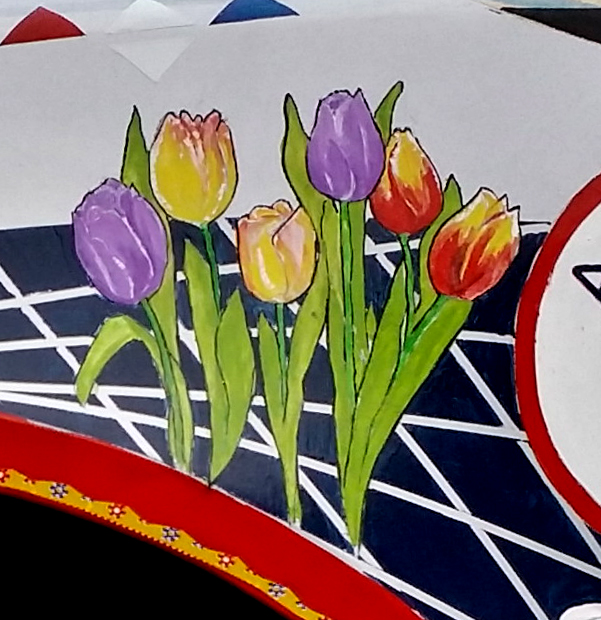
It is interesting to note how one’s preconceived notions are changed, when you embark on the journey of discovery. I had always attributed Tulips with Netherlands, and was surprised to find out that the flower originated from Central Asia and Turkey and were actually brought to Holland from Turkey in the sixteenth century.

The botanical name for tulip is Tulipa, which is derived from the Turkish word "tulbend" or "turban", which the flower resembles. Tulips were the most prized flower of the Ottomans, and that is why tulip adorns the walls of many Turkish mosques as well as being embroidered on handmade textile clothing, carpets, tiles, and miniatures from this period.

The popularity of the tulip in Islamic art also has a lot to do with its shape; as the word “Allah” (God) written in Arabic script resembles the tulip shape.

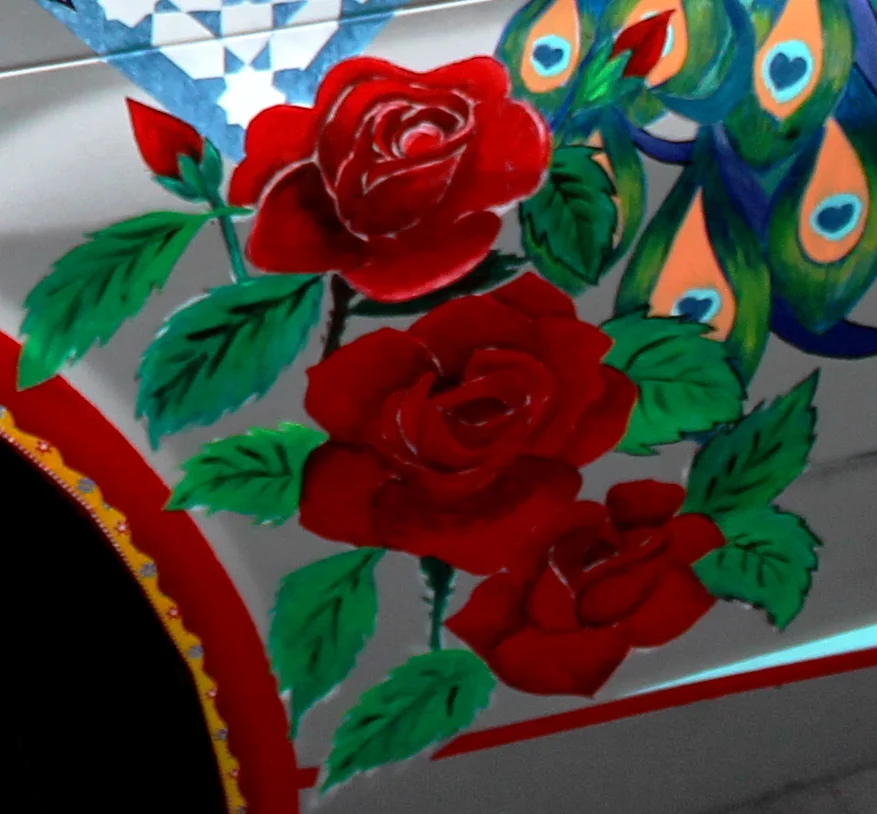
The ever popular rose is believed to be the native of central Asia and has been adopted by Iran and Iraq as its national emblems. Rose symbolizes beauty in Persian literature and the great Persian Sufi scholar and poet Rumi used the “rose and nightingale” metaphor to symbolize and explain the central theme of Sufism: Divine Love. (Sufi loves God as a nightingale loves a rose).

The Bouquet of Faiths 

The Bouquet of Faiths 

Love, peace, forgiveness and tolerance are the common traits of all religions and I wanted to use a floral arrangement to direct the viewer to focus on the commonality of the message instead of the differences. Although; flowers and plants have been embodied in various religious traditions, finding the right flower or plant to represent various faiths proved to be more difficult then I initially expected and my SalamFest team colleagues and I had to get in touch with friends and heads of various religions to get the appropriate answers.

Passion flower symbolizes Christ’s Passion and the Cross, whilst white Lilies symbolize chastity and virtue which is symbolic of the Virgin Mary’s purity in Christianity.

Etrog, palm leaves and olive branches have relevance to the Jewish festival of harvest-Sukkot, whilst Daffodils are the symbol of new beginnings, rebirth and the coming of spring and symbolize good fortune in Chinese culture.

Lotus flower is associated with purity and beauty in the religions of Buddhism and Hinduism respectively. Similarly, Roses take prominence in Islam as the fragrance of a rose represents the sacredness of people's souls.

Message.jpg

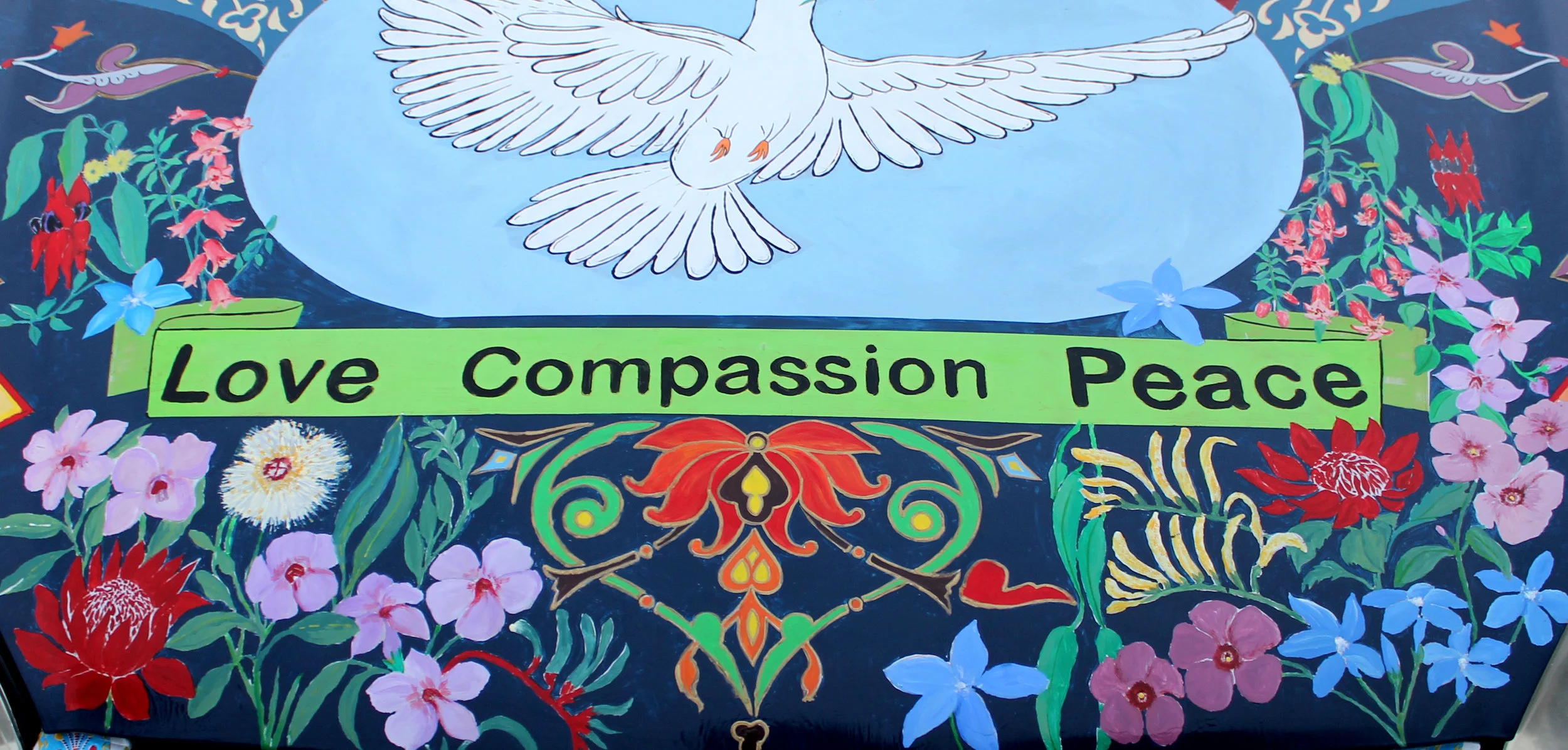
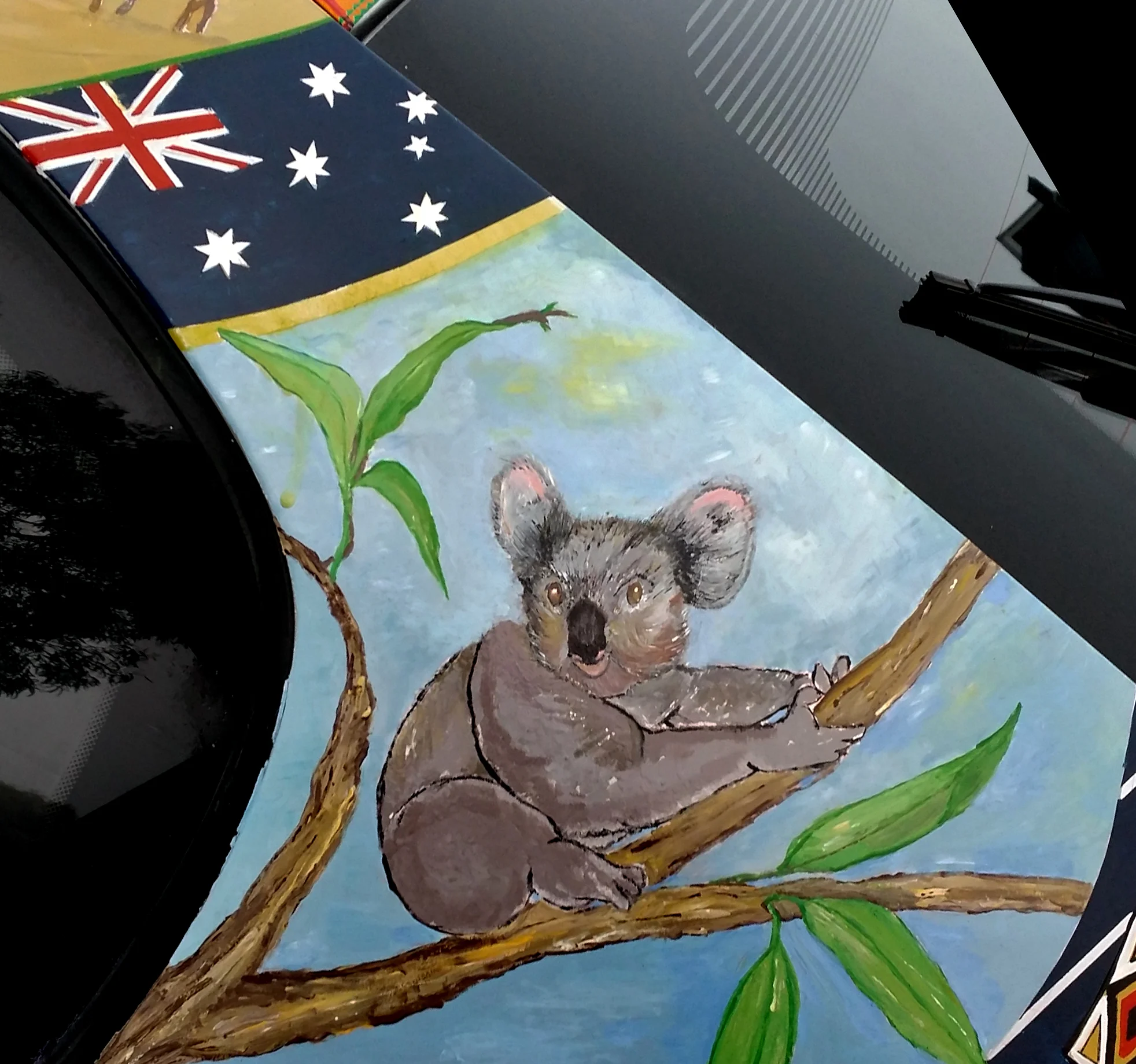
This scheme of using flowers to represent people of different regions, cultures and faiths needed to be underpinned locally. I therefore decided to use the state floral emblems (ACT’s Royal blue bell, New South Wales Waratah, Northern Territories’ Sturt’s Desert Rose, Queensland’s Cooktown Orchid’ South Australia’s Sturt's Desert Pea, Tasmanian Blue Gum, Victoria’s Pink Heath, Western Australia’s Red and Green Kangaroo Paw) to develop this connection.

Set against the main SalamFest slogans of ‘Peace, Love and Compassion’ this bouquet of state national flower emphases the importance of the key message for all communities living in Australia regardless of their color, ethnicity and heritage.


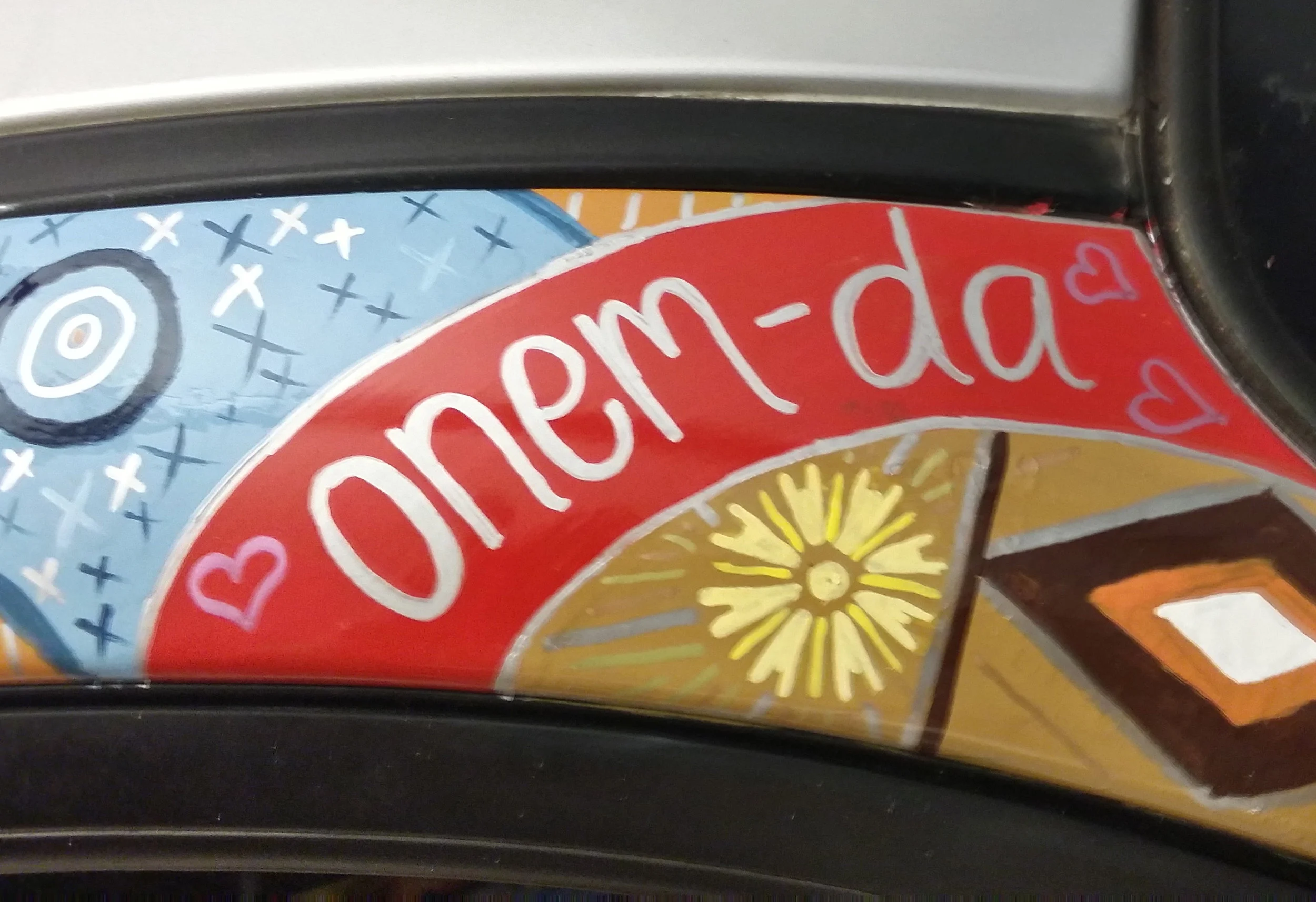
Onem-da

As an artist I have greatest of admiration for the indigenous art and artist. I always wanted to incorporate the spirit of their designs into my work; and working on Rumi had given me an opportunity to explore this avenue further.

My initial thoughts were to represent the historic interaction between the first people and Makassan fisherman with typical icons for campfire, water and night sky; and overlaying this with aboriginal iconic dot painting. My story-line was simple and represented the interaction of the two communities as people sitting in front of a campfire and sharing stories and food.
SalamFest seeks to build bridges between various communities and we always wanted to involve the aboriginal artist in this project but were unable to locate someone who could contribute. I therefore initially started to work on the indigenous section of the car panel with the above story-line without seeking guidance or involving any indigenous artist to confirm my concept. This lack of consultation was creating uneasiness in the team and therefore; I decided to suspend works on the indigenous section until we got a resolution on the design. A renewed effort was made by the SalamFest team to get in touch with the local elders to locate an artist who would be willing to help. Eventually; we were successful and we got in touch with Brooke Wandin.

Brooke Wandin

Brooke Wandin

Brooke Wandin is a Wurundjeri educator who visit schools to talk about local Aboriginal history and culture.  She weaves in honour of her great grandmother and through her work; celebrates her female ancestors who have contributed to successful and sustainable agriculture that flourished in the country for generations. Her work highlights the deep connection that Aboriginal people have to the country and challenge the many stereo types placed upon her community.

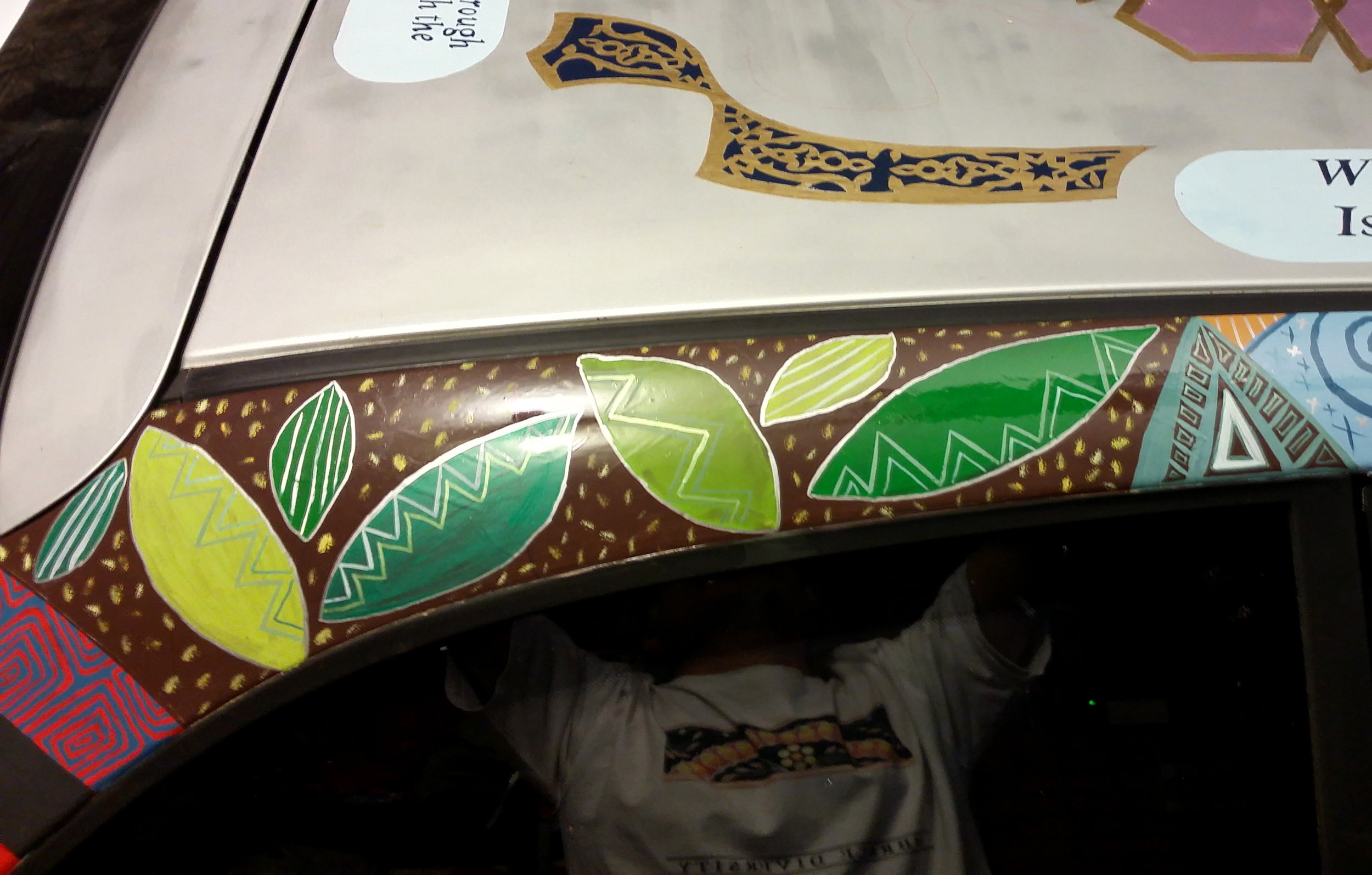
Brooke has been phenomenal, she has an inspiring personality and open to conversation about her designs and heritage. Her commitment to her work can be gauged by the fact that, although she lives in Healesville nearly an hour plus ride away from my house, she agreed to help out and work on the car. When I first met her, I explained to her my concepts in greater detail. She took up the theme of the story and tried to accommodateher design to suit what was already there and suggested a few changes to the panel to make it more relevant with the aspirations of the local indigenous people.

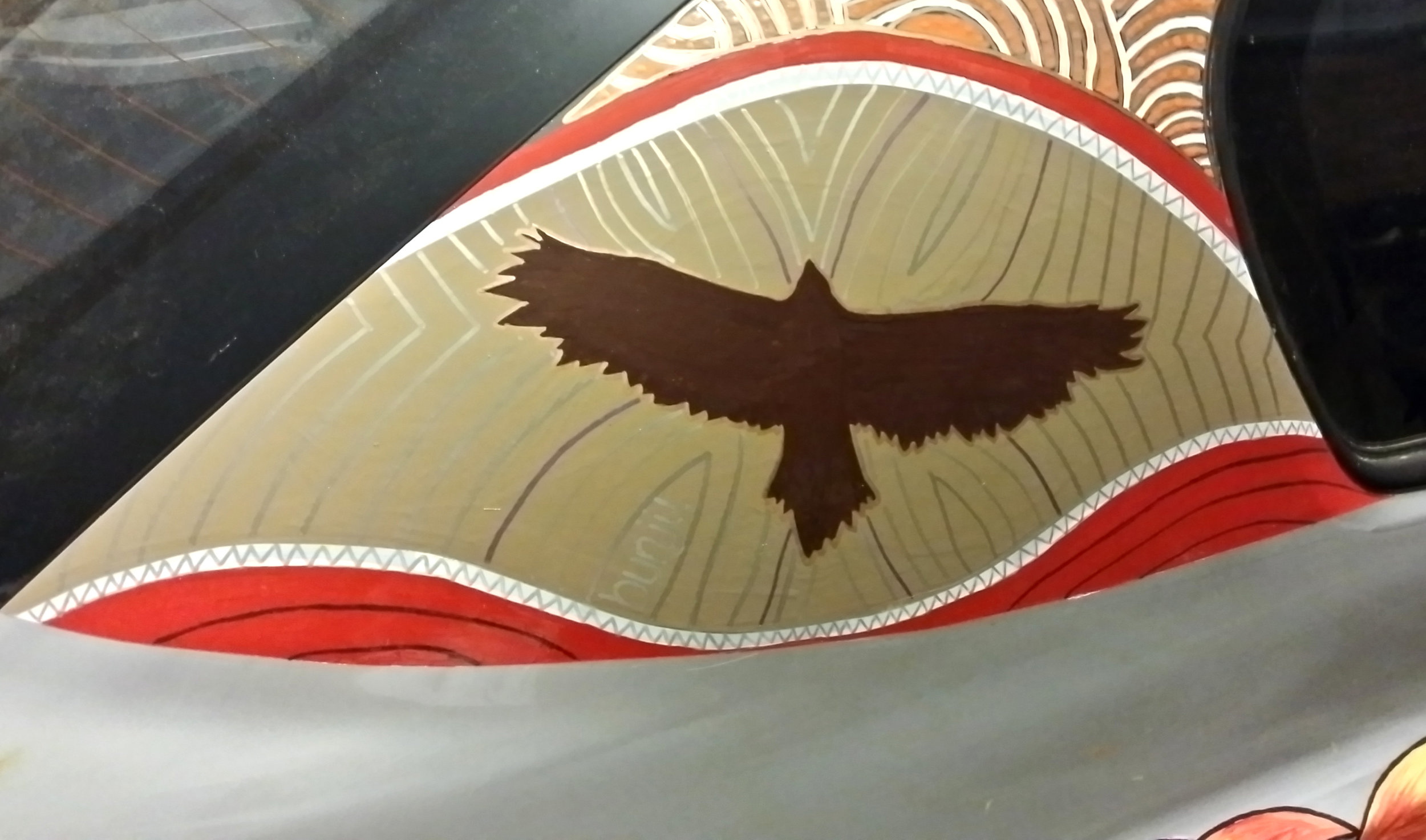
Brooke’s work provided a much needed connection to the country. She belongs to Wurundjeri people of the Kulin Nation of Central Victoria who are the traditional owners of the land from Mount Baw Baw in the east to Mount Macedon, Sunbury and Gisborne in the west. Their relationship with the land extends back tens of thousands of years to when their creator spirit ‘Bunjil’ formed their people, the land and all living things.The Wurundjeri’s connection to land is underpinned by cultural and spiritual values different to those of the Europeans. The Wurundjeri did not ‘own’ the land in the European sense of the word, but belonged to, or were ‘owned by’ the land. The land provided all that the Wurundjeri needed – food, water, medicine, shelter – and they treated their provider with respect.

bunjil.jpg
indegenous art and abroginal flag.jpg
sustainable agriculture.jpg
seek.jpg
Onemda.jpg
diamonds.jpg
“We are all indigenous to one place or another. We should be proud of who we are and where we are from!”
— Brooke Wandin

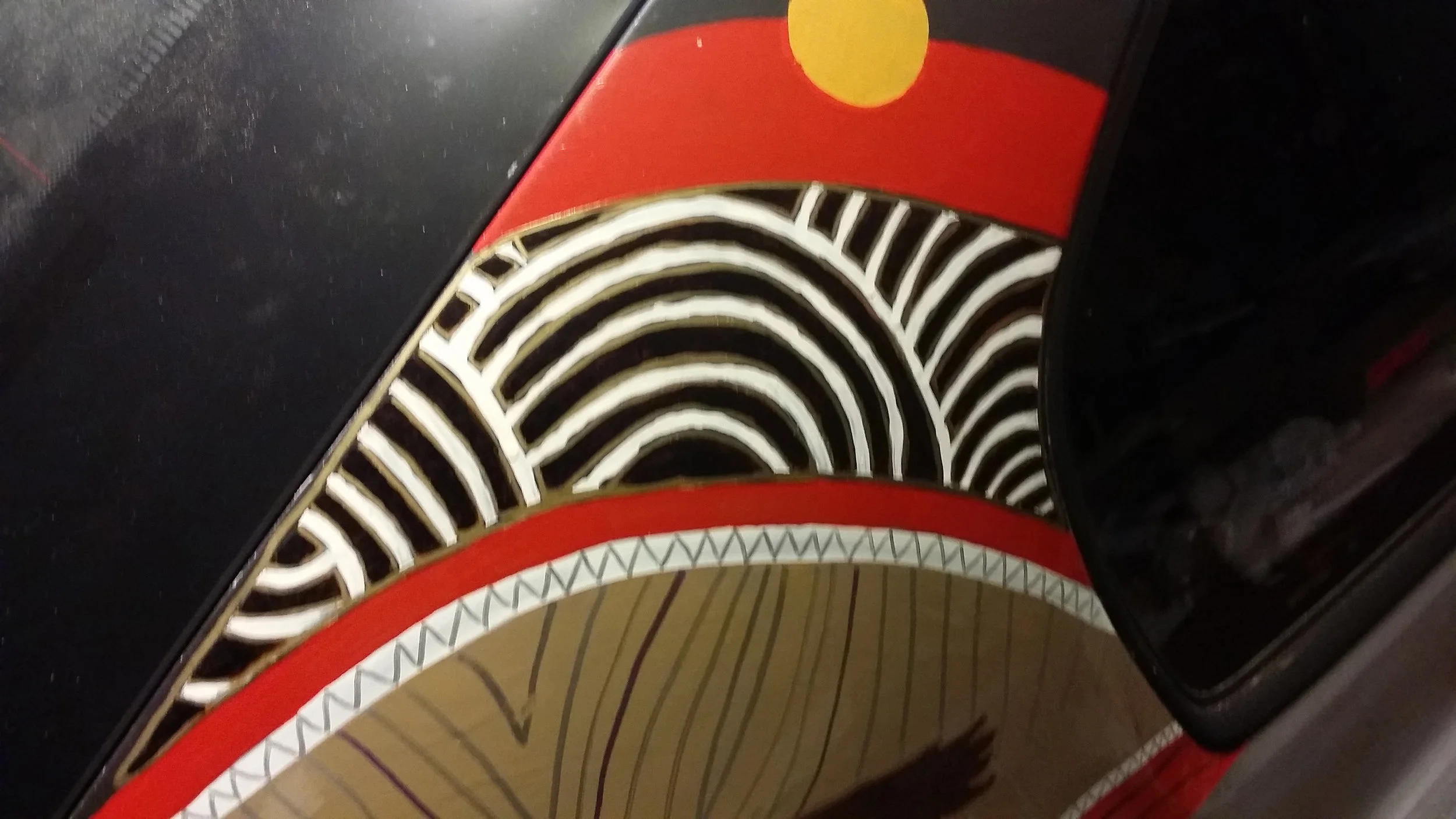
Brooke’s design explored this relationship further.  She explained her design as ”Bunjil, created the landscape, the rocks, the rivers, the people.  He gave us lore and taught us how to live in harmony.  While the mountains around Healesville make me feel safe and content, they also lend themselves to layering and to a depth of knowledge.

Murnong was once a staple food for my people. My people had ingenious sustainable agricultural methods which provided food and nutrients regardless of the climate. The leaves reminded me of the deep and intimate connection of my female ancestors to Country, and a complete understanding of how to keep their families healthy and happy.

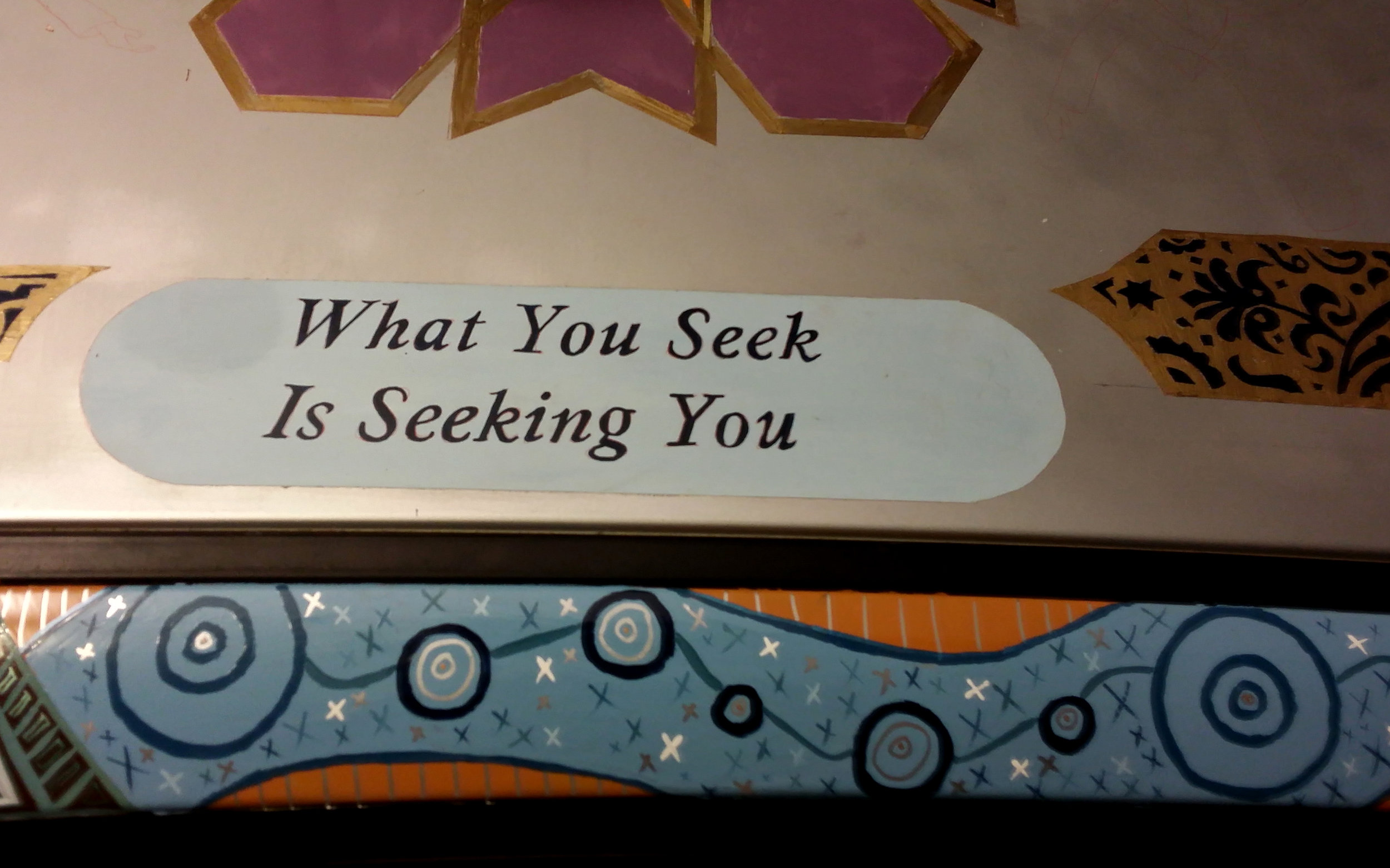
Water, the most precious resource.  Waterways link us all. Water is the lifeblood of my country.  Imagine hovering over Healesville.  The rivers and creeks would look like arteries and veins running through a body. While painting this I was thinking of the reflection of the stars on the water.  These stars are my ancestors watching over me, protecting me, guiding me.

Onem-da.  Love.  We should love one another for our similarities and our differences.  I am Indigenous to this Country.  We are all Indigenous to one place or another.  We should be proud of who we are and where we are from!

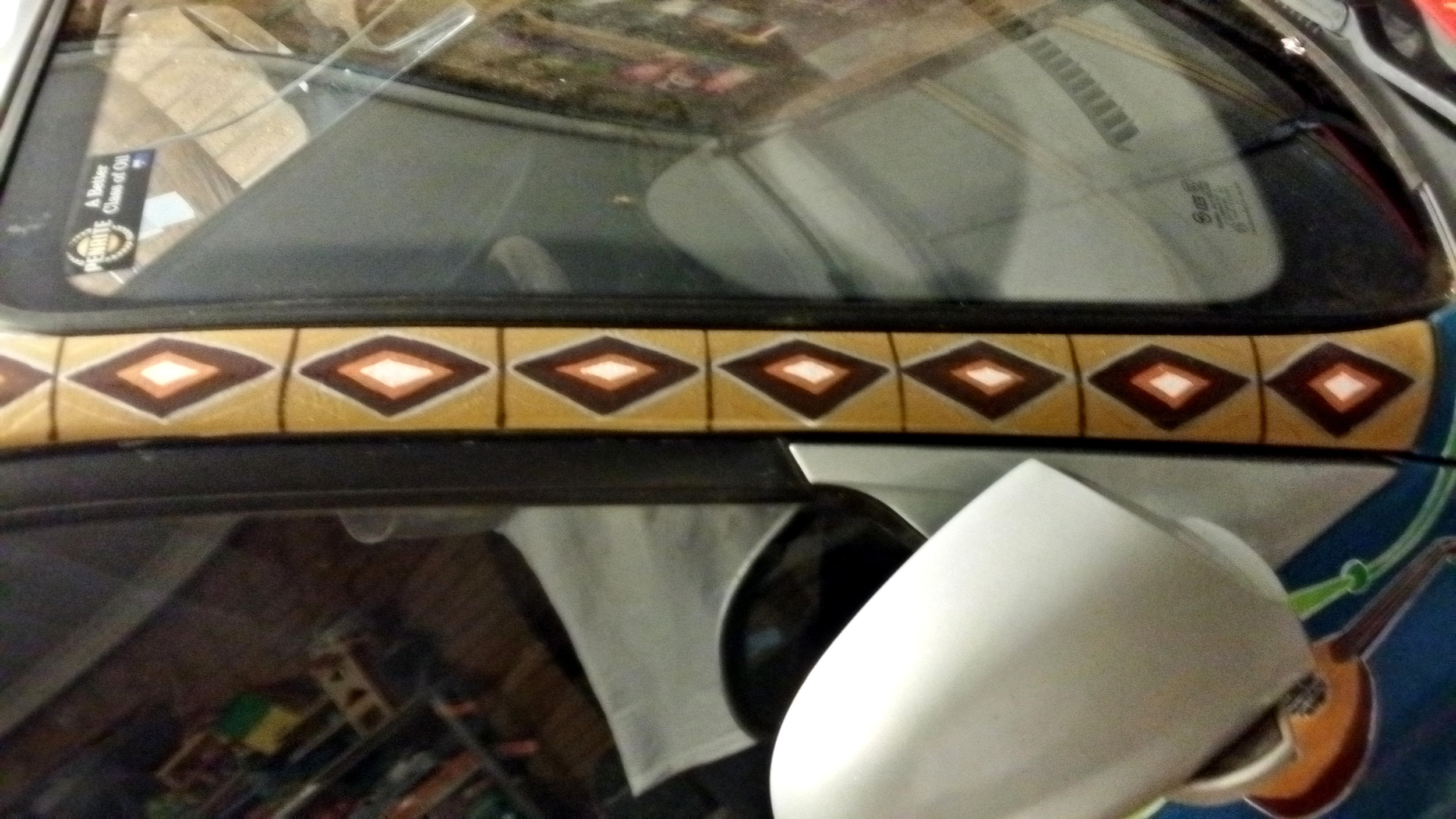
The diamonds represent the many generations that have lived here since time began and remind me to never take for granted the deep spiritual and physical connection that I have to this most wonderful place.”

Working with Brooke Wandin has been one of the highlight of this project and I will always cherish the experience and I sincerely hope that in future I will get more opportunities to work and learn from her and other indigenous artist about the first people and their culture and contribute towards building bridges amongst the many people who call this country home.


Geometry and Patterns

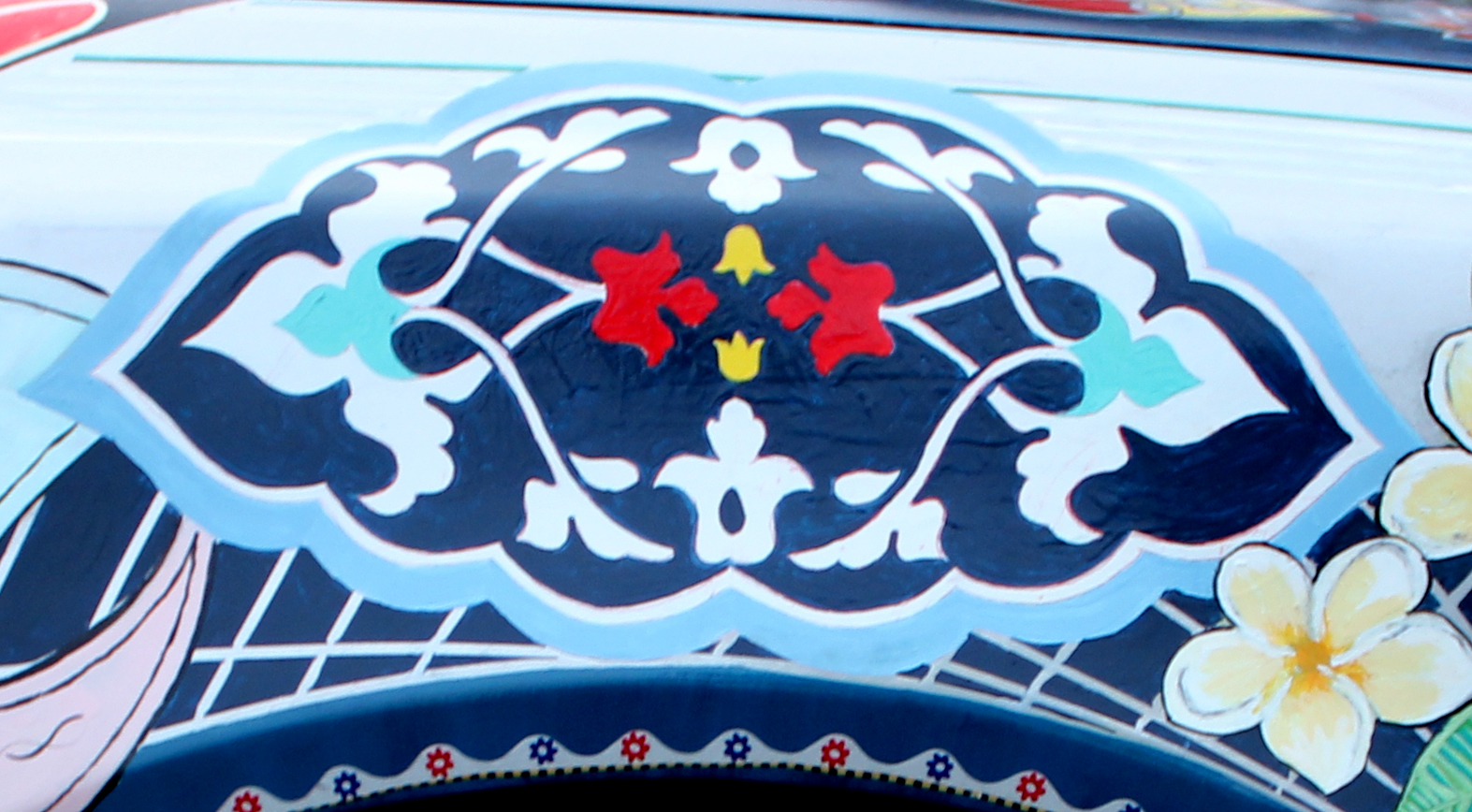
Traditionally, Islamic art focused on the spiritual representation of objects and beings and not their physical characteristics. Instead of attempting to replicate nature, the traditional Muslim artist tried to express what it represented. Geometric patterns were used to represent the infinite nature of the universe and reflect upon life and the greatness of creation.

geometry.jpg
Alhamra.jpg
arabasque.jpg
arabasque2.jpg
arabasque3.jpg
scrolls.jpg

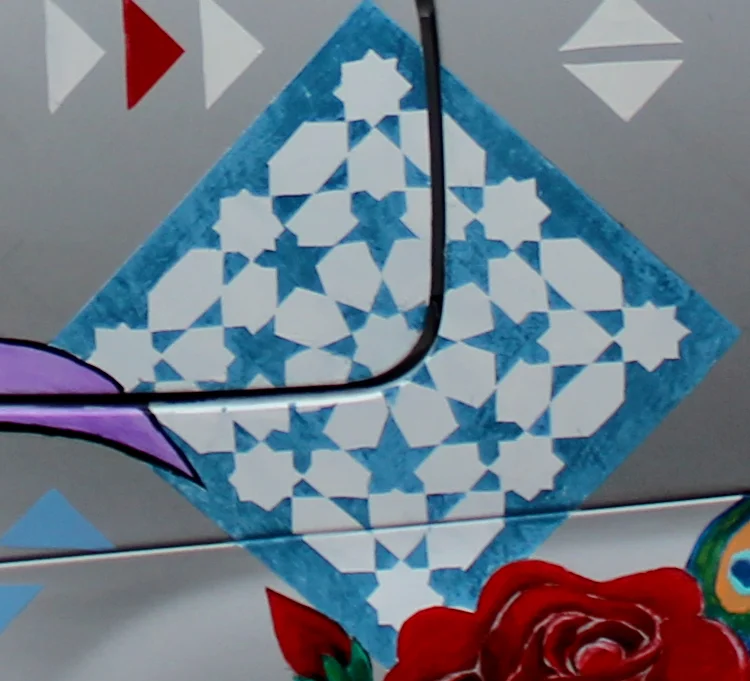
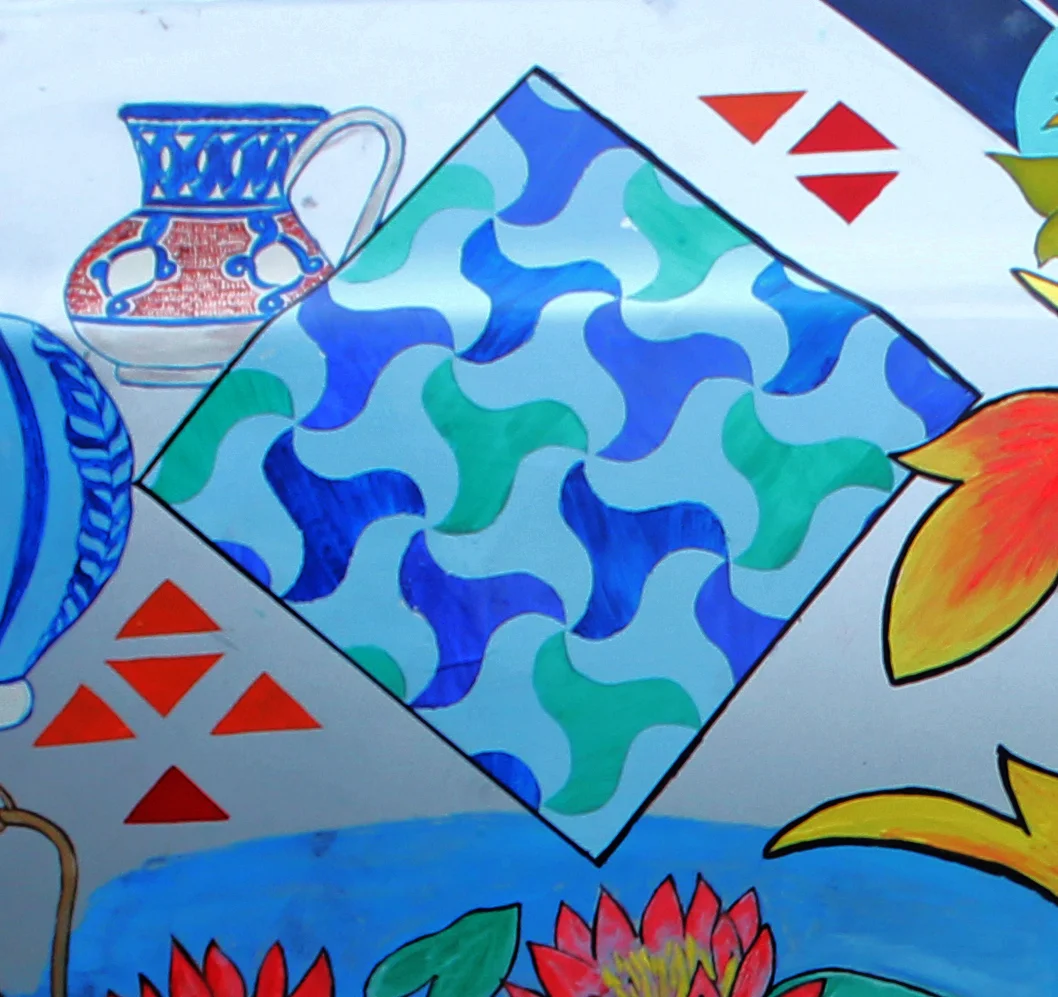
The basic geometric shapes or repeat patterns used in Islamic designs were squares, circles, 8-pointed star and multisided polygons such as pentagons and octagons.

These basic shapes are combined and reworked to form complicated patterns and can be seen as mathematical tessellations, which can extend indefinitely and thus suggest infinity.

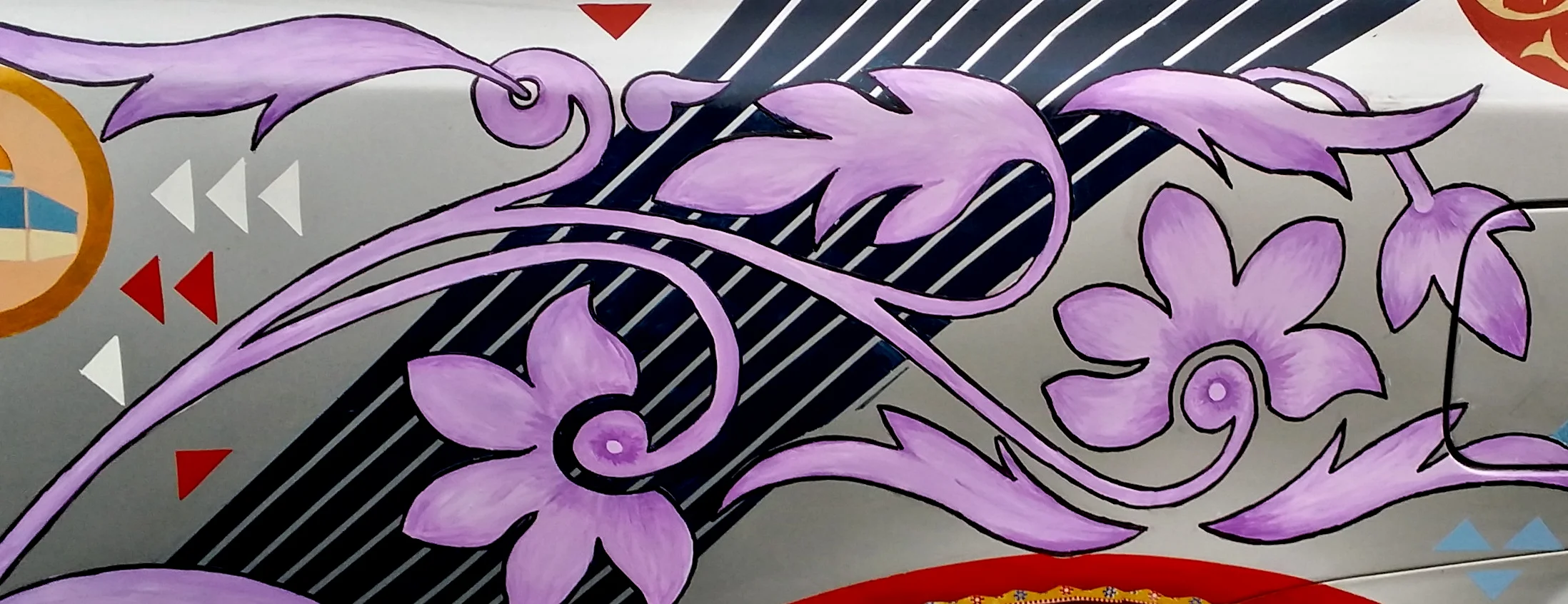
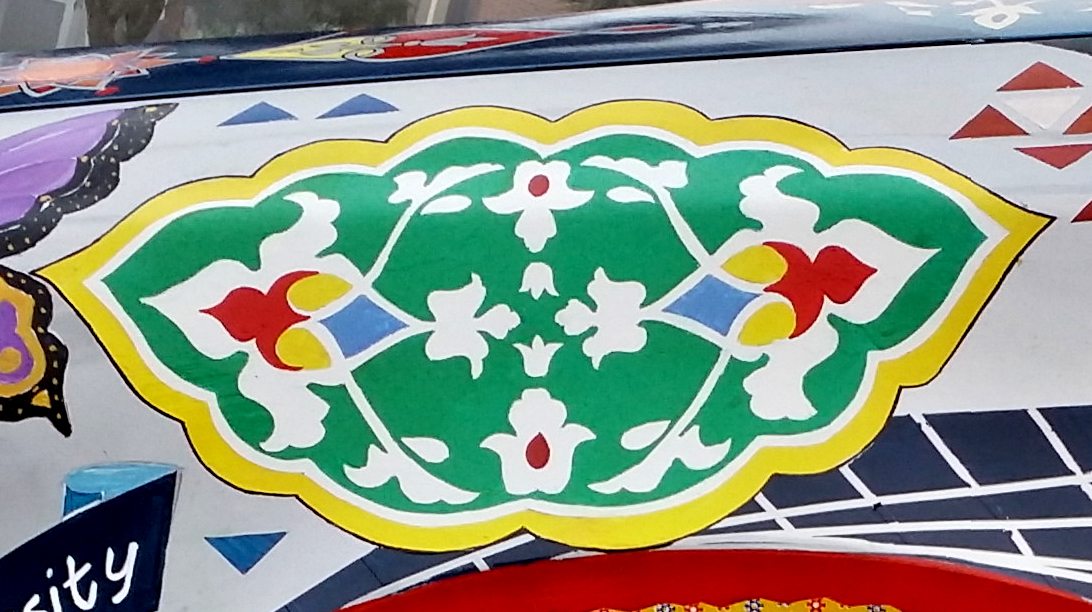
Biomorphic art such as arabesque is another fundamental component of Islamic art and is based on rhythmic linear patterns of scrolling and interlacing foliage, tendrils or plain lines. Typically, it consists of using leaves, vegetal patterns, spirals and rolling circular motifs either on their own or in combination with calligraphy, geometric patterns and figural representations.

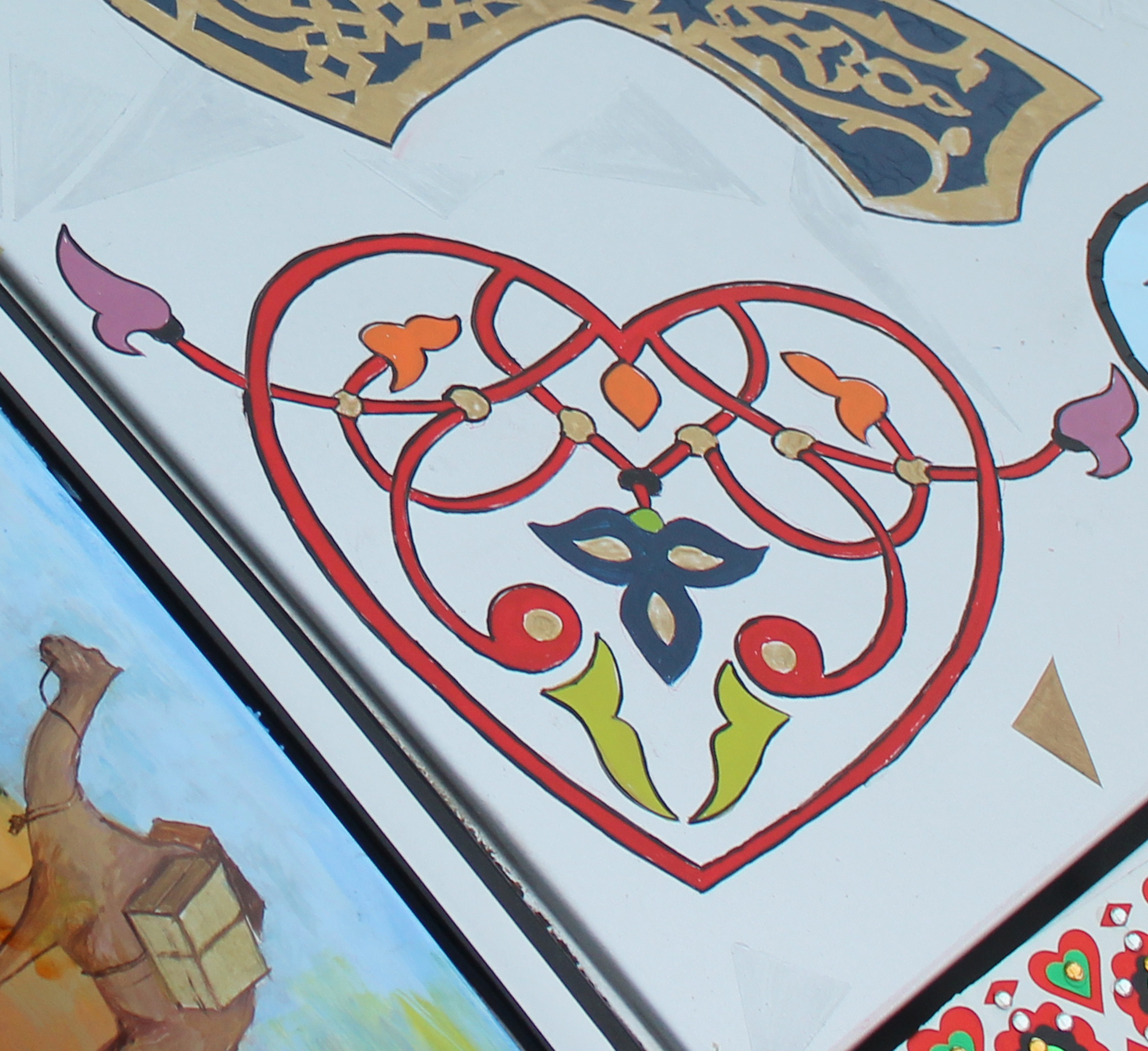
Traditionally, scrolling lines and floral pattern are used in truck art as fillers and for framing central motifs and quotes. Similarly geometric patterns mostly evolved  by putting together a collage of basic shapes such as circles, rhombuses, ellipses and ovals cut-outs from reflective tapes.  

I have sought inspiration from this conventional truck art design approach and added traditional Islamic arabesque and geometric patterns as part of Rumi’s design to showcase the Islamic art connection of the piece.


Metal and Clay

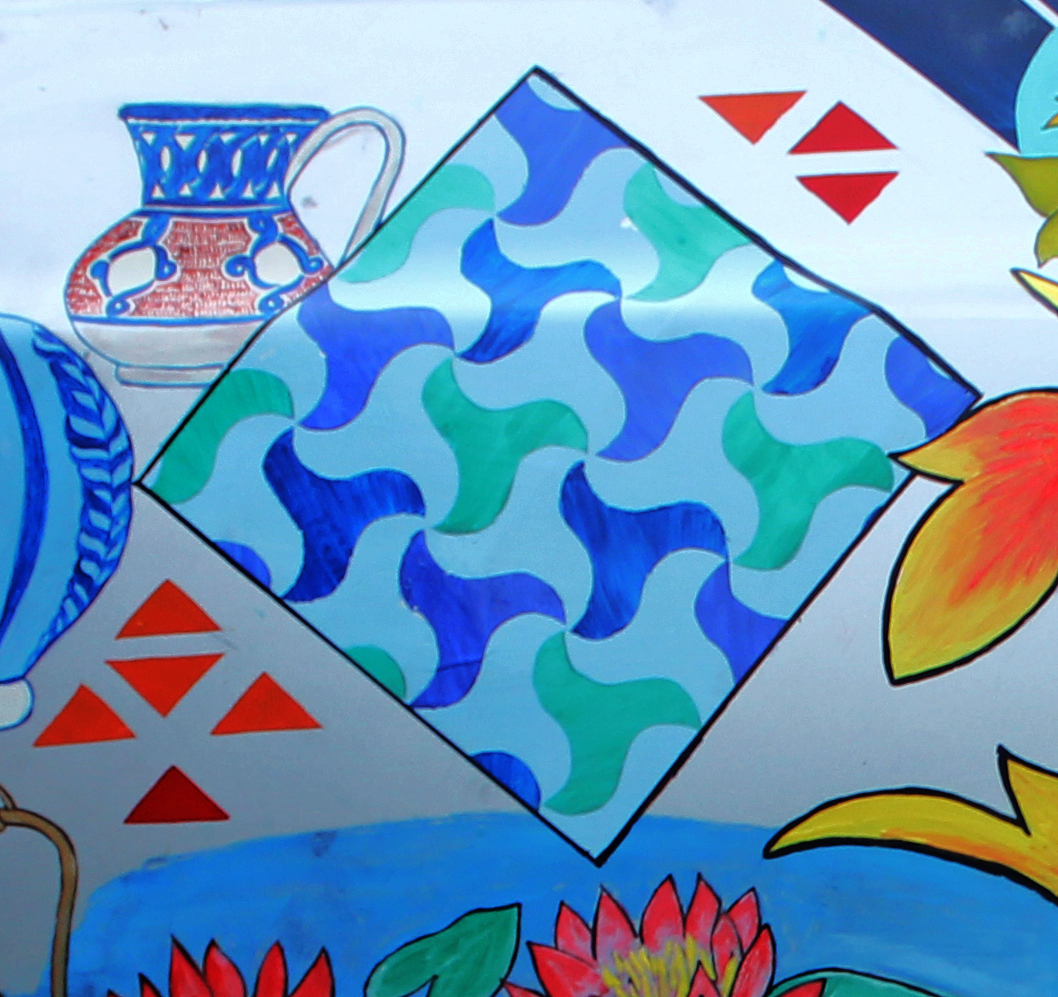
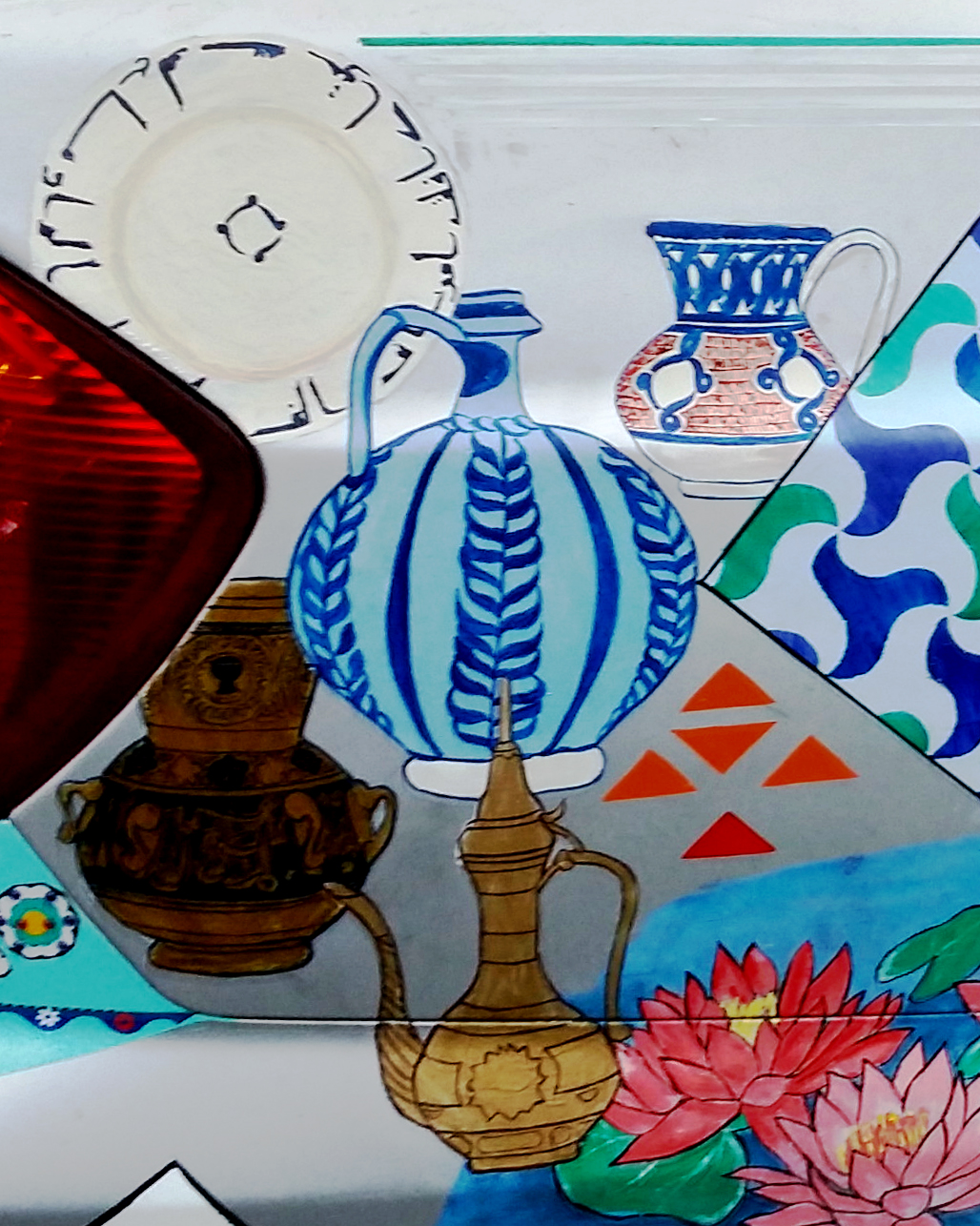
Unlike the ancient Roman and Persian cultures, Islamic traditions discouraged the use of precious metals such as gold and silver in eating and drinking vessels. Similarly, aniconism and figurative painting was also discouraged. This resulted in the development of pottery and glassware for tableware with designs dominated by Islamic geometric patterns, calligraphy and arabesque.

Of these, Iznik ceramics which were produced in western Anatolia, Turkey take prominence. These designs combined traditional Ottoman arabesque pattern with Chinese elements and was a result of active intervention and patronage by the Ottoman court in Istanbul who greatly valued Chinese blue-and-white porcelain.

Pottery.jpg
iznik 1.jpg
iznik3.jpg
iznik2.jpg

From between the eighth and eighteenth centuries, some of the finest wares were produced in the region extending from Spain to the borders of China. During this period Muslim potters displayed an innovative sense of design and colour, and mastered the craft to develop new techniques and adopt old ones for new uses.

Like pottery, the art of metal engraving also took prominence during this period.Artisans used brass, bronze tin and steel to make a large variety of items such as vessels, lamps, armor, inkwells and incense burners  by casting or working metal into intricate shapes of all sizes. Most of the time, these items were decorated with engraved inscriptions and occasionally inlayed with gold, silver and precious stones.

My choice of painting motifs around Iznik patterns, pottery and metal engraving on ‘Rumi’s was not only driven by finding a suitable filler for the overall design scheme but also to acknowledge and highlight the contributions of bygone Muslim ceramics and metal artisans whose ingenuity, inventiveness, originality and ability to create new shapes, new techniques, new forms of decoration was unmatched; and elevated their status to one of the greatest craftsman of their time.


Textile Prints

Clothing and textile have a deep connection with history and evolved around the materials and technologies available in particular region at a given time. I have used textile prints in my design scheme to represent Muslims of different regions and countries.

Kalim Design.jpg
kufiya1.jpg
kufiya2.jpg
africa.jpg

Kufiya or keffiyeh essentially means “from the city of Kufa” (present day Najaf). It is a Middle Eastern headdress, fashioned from a square scarf and is traditionally worn by Arab people, however its designs and styling varies with different regions and countries.

As a headgear, it is commonly worn by Nomadic people in arid regions as it provides protection from sunburn, dust and sand.

The Palestinian keffiyeh is gender neutral (typically black and white) scarf usually made of cotton and worn around the neck or head. The scarf has become a symbol of Palestinian nationalism and dates back to the 1936 Arab revolt in Palestine.

Kilim, is a flat tapestry rug and is produced in countries from the Balkans to Pakistan. Cheaper then carpet, relatively less fragile, these rugs have been used as prayer mats and home decorations for hundreds of years. Traditionally woven by nomadic Turks, Kilim patterns comprise of messages and stories relating to the cultural, religious beliefs and social life of the weaver.

Similarly, I have used the bold prints of African Kente and Mudcloth to represent the people of the region. However, unlike the original version of the textile, where each colour is given a special meaning, I have selected colours that suited my design scheme.


Diversity With-In

As Islam spread beyond Arabia into many different regions and cultures, it came to be interpreted in different ways. Although, the world’s 1.6 billion Muslims are united in their belief about the central tenants of Islam and key religious practices, beyond these central pillars, Muslims worldwide differ significantly by country and region in levels of religious commitment and convictions. This diversity is the result of the core set of religious beliefs interacting in complex ways with the many different social contexts in which Muslims lived such as history, cultural traditions, economics, political structures, geography and physical location in the world.

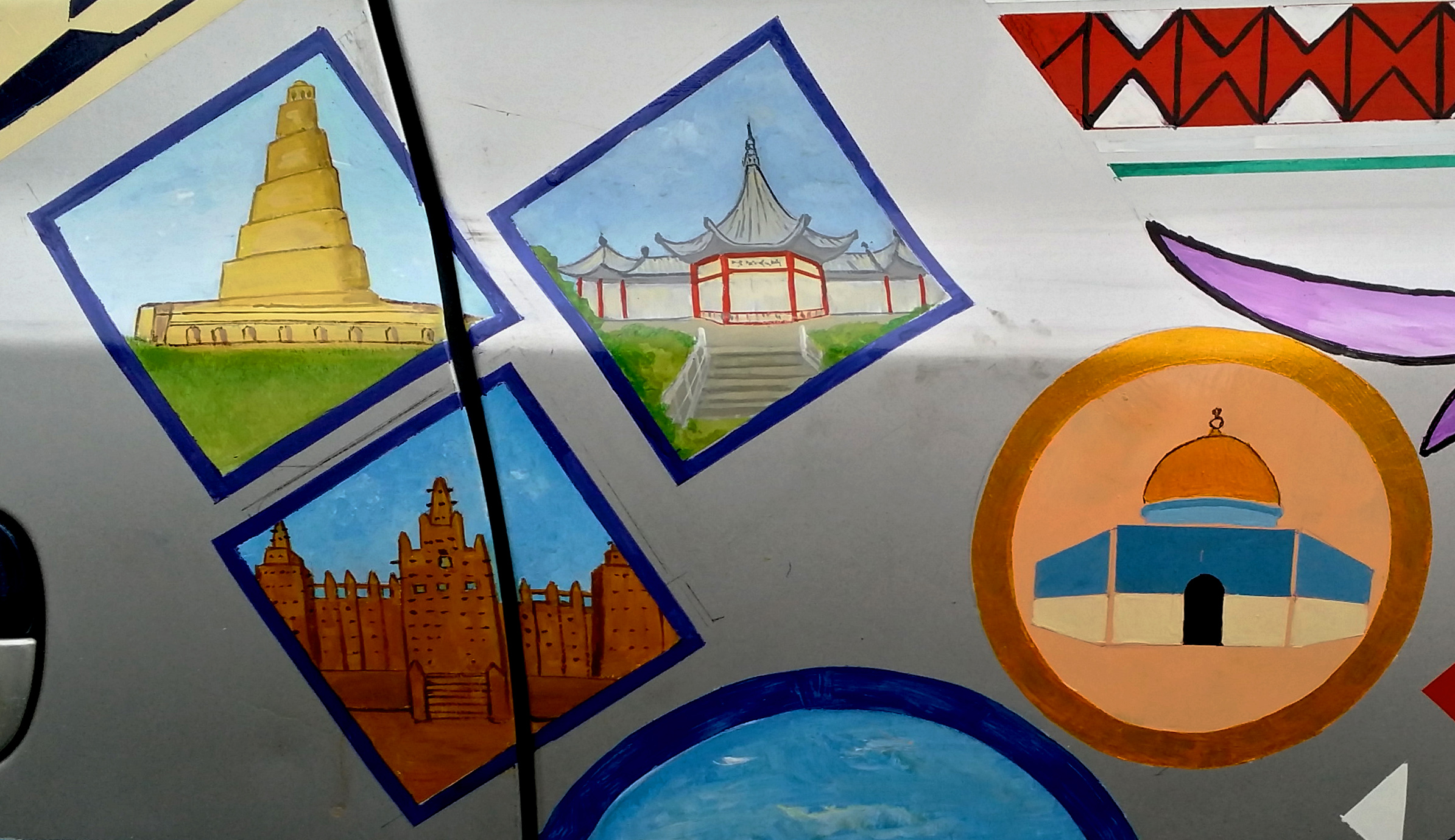
There is a tendency in the ‘west’ to brand ‘Islam’ and ‘Muslims’ as single cohort. I wanted to showcase the diversity with-in Islam and acknowledge that like any other religion, Islam is a living and dynamic tradition that evolved according to context and circumstance of its adherents. This diversity is perhaps best represented by ‘Islamic architecture’ which evolved by absorbing a variety of local artistic traditions. As Islam expanded over large territories, the converts from other religions and culture redefined their knowledge and experience in arts and industry to conform to Islamic values and injected them into their new world. Muslims not only adopted local styles but instead of copying these blindly, modified and evolved them further.

Diversity Within.jpg

The Dome of the Rock in Jerusalem (Israel) is the oldest Islamic monument and is sacred to both Judaism and Islam. Built in 691–692, the structure consists of a gilded wooden dome sitting atop an octagonal base, with the interior richly decorated with marble, mosaics, and metal plaques. As an architectural monument, the Dome of the Rock is a classic example of cross cultural interaction and historic interface of Islamic and Byzantine architecture.

Samarra Mosque (Iraq) was built around 850 and in its time it was probably the largest mosque in the world, with a total area of nearly 42 acres. The striking feature of the mosque is the minaret with the spiraling ramp that leads to the top.

Djenné Mosque (Mali) is a famous landmark in Africa. The mosque was first built in the 13th century and is the largest mud-built structure in the world. The walls of the Great Mosque are made of sun-baked earth bricks, sand and earth based mortar.

Xi'an Mosque (China) was built during the early Ming dynasty and the mosque's architecture combines traditional Chinese architectural (fengshui) form with Islamic functionality.

tajmahal.jpg

Similarly, Mughal architecture of the sub-continents is an amalgamation of Islamic, Persian, Turkic and Indian architecture. One of the wonders of the world, the Taj Mahal is the finest and most sophisticated example of Mughal architecture. The Mughal emperor Shah Jahan ordered to build this beautiful building as a memorial to his beloved wife, Mumtaz Mahal. The Taj is famous for its stunning gardens, lavish ornamentation, and its overt use of white marble and is considered the ultimate symbol of love.

From the outset, the Taj was conceived of as a building that would be remembered for its magnificence for ages to come, and to that end, the best material and skills were employed. Shah Jahan made sure that the principles of Mughal architecture were incorporated into the design throughout the building process.

Going further west, Alhambra presents another variation in Islamic architecture. Alhambra is located on the left bank of the river Darro, in the city of Granada, Spain and is one of the most visited monuments in the world

Alhamra.jpg

First constructed in the 9th century, the site is famous for its tile patterns, curved stucco and wooden ceilings. Since its initial inception, successive Muslim rulers extended this site; however each extension followed the consistent theme of wanting to create a "paradise on earth".

Alhambra is distinctive among medieval palaces for its sophisticated planning, complex decorative schemes, and its many enchanting gardens and fountains.


The Alphabets

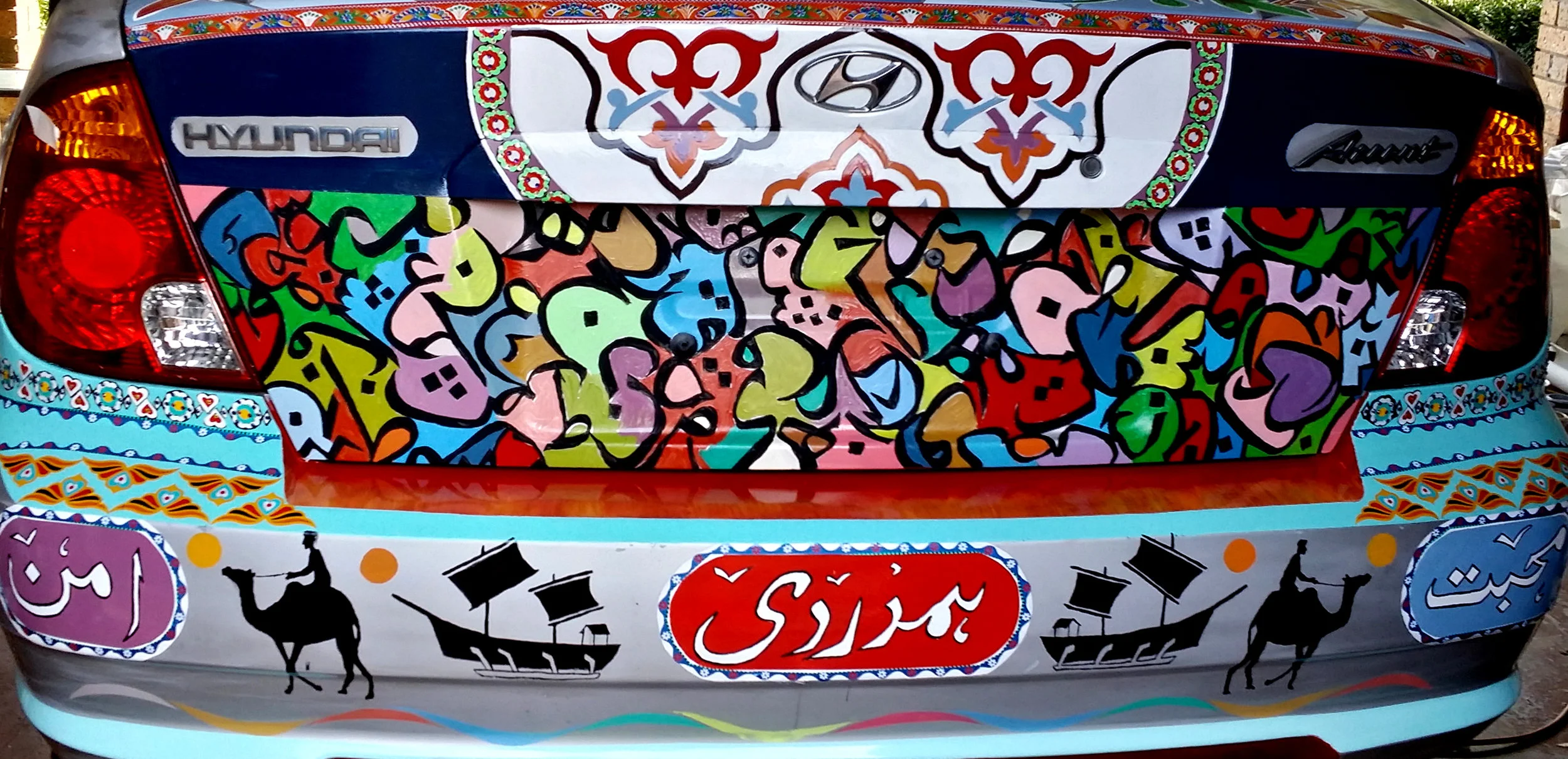
The basic Arabic alphabet contains 28 letters; however other languages such as Urdu, Persian, Sindhi, Pushto, Persian etc. have adopted the script by adding and removing some letters.

alphabets.jpg

Arabic is not a native language for most of the Muslim world, yet Muslims read Arabic in their daily prayers and when reading the Quran or use Arabic words in simple conversations with each other. Arabic thus forms the common link between the diverse communities of believers.

The motif at the back end of the car is based on the alphabets of Arabic language and the various infill colours represent the diversity of the people speaking the language. The design is strategically placed on the rear panel spanning along both sides to represent the common feature between the diverse communities of the Muslim world.


What You Seek Is Seeking You

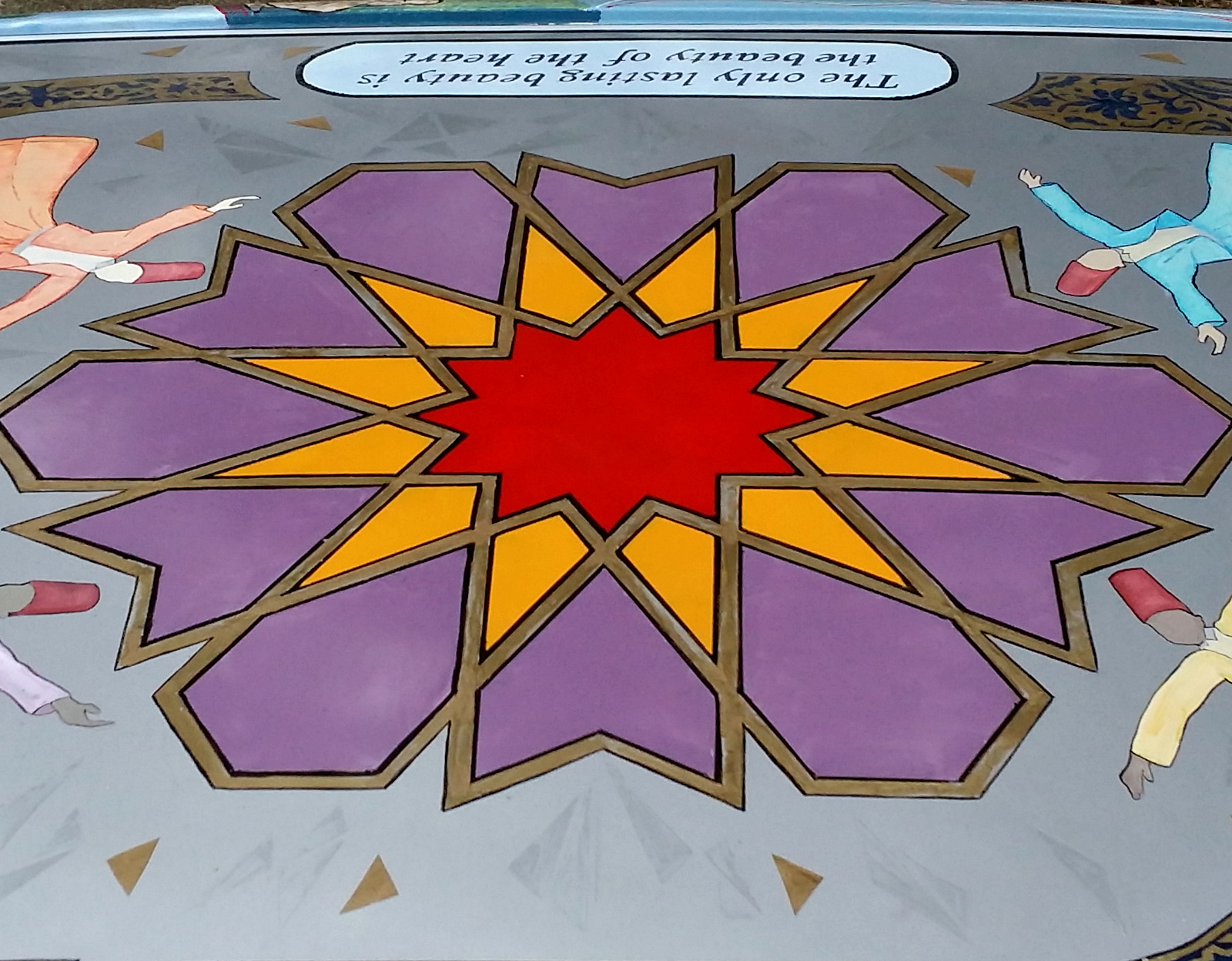
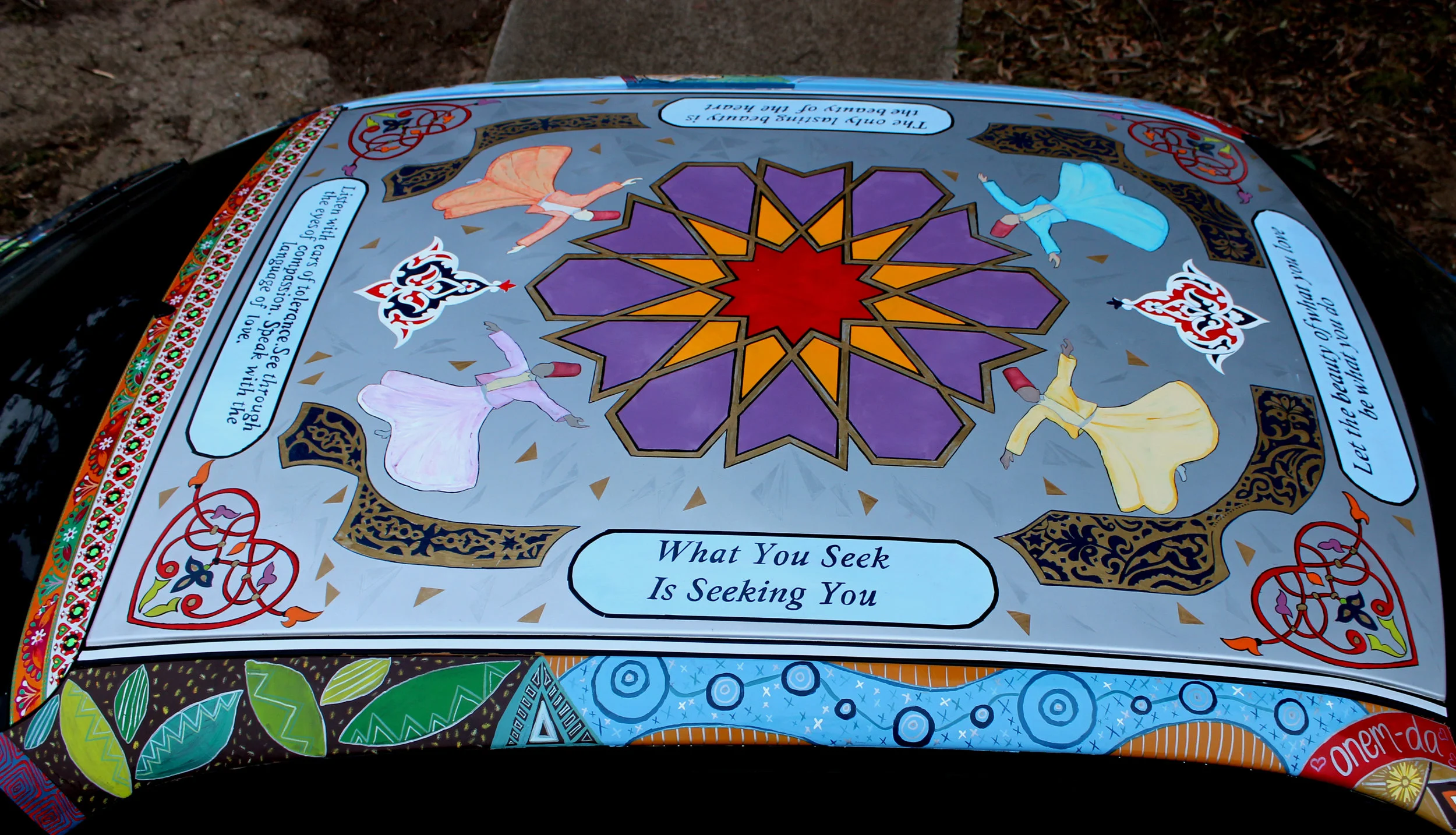
Jalāl ad-Dīn Muhammad Rūmī was a 13th-century Persian Muslim poet, jurist, Islamic scholar, and Sufi mystic . Rumi’s thoughts and practices revolved around humanity, love, compassion, tolerance, and respect for others and their beliefs. He is perhaps one of the most quoted poets in the West and his works have been widely translated into many of the world's languages. After his death in 1273, his followers founded the ‘Mevlevi Order’, which is also known as the Order of the Whirling Dervishes, famous for its Sufi dance.

Rumi.jpg

Rumi, the poet, emerged in a time of social and political turmoil, not too dissimilar to what we face today. I personally believe that some of the anarchy in today’s world can be eliminated if we learn to understand and appreciate the differences amongst us. Rumi recognised that the world was a global village and empathy was fundamental for coexistence in this village. His influence transcends national borders, varying languages and ethnic divisions, and thus he provides the inspiration for this artwork.

The design on the roof acknowledges Rumi’s global message with four whirling dervishes showcasing the cardinal directions North, South, East and West. The skin colour and the cloak of the dervishes (traditionally white); have been intentionally varied to signify universality of his message irrespective of sect, skin colour and background. The composition is surrounded by four popular quotes from Rumi’s which reiterate his message of tolerance and love.


On Peace and Doves

“Peace cannot be kept by force; it can only be acheived by understanding”
— Albert Einstein

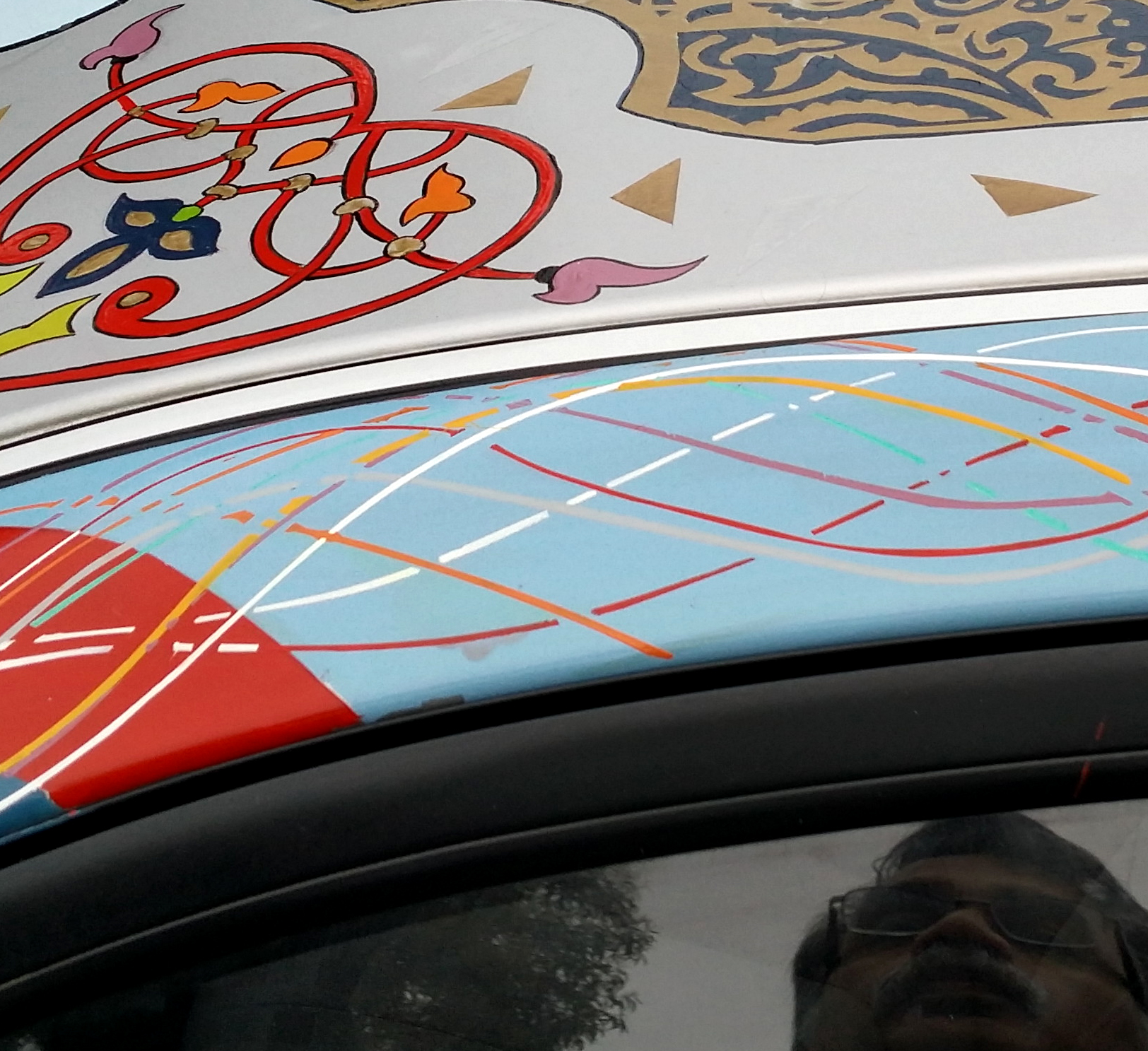
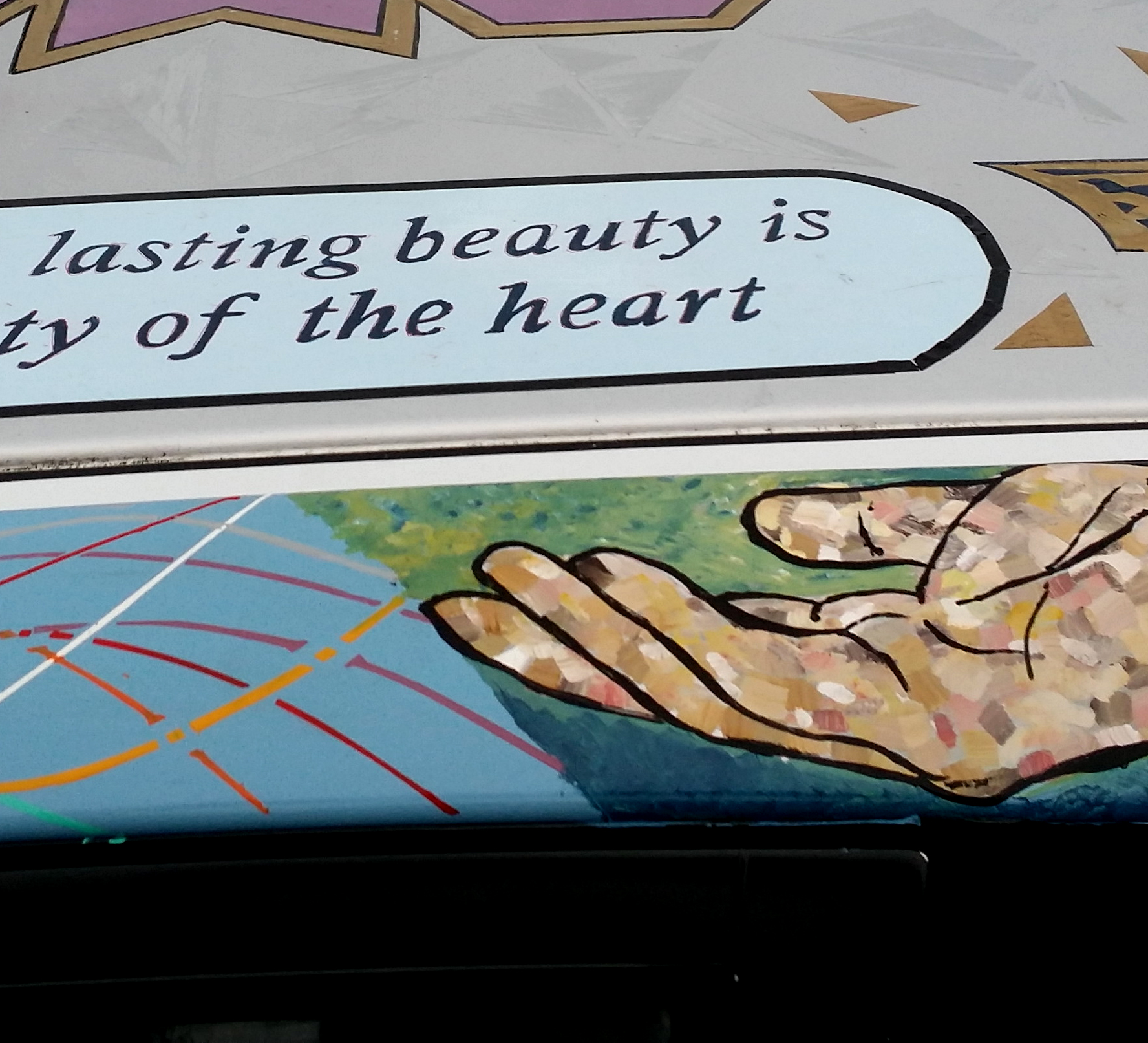
Love, Peace and Compassion are the cornerstones of Salamfest and guiding principle of Rumi’s graphic designs. I therefore used; a white dove with an olive branch which is the universal symbol of peace, humanity, and love, to showcase this key message. While the peace dove takes a central position on the front hood of the car, the trajectory of adjoining pattern continues further and extends towards the side panels to resemble stretched wings to signify flight and to high light the message and the messenger.

peace dove.jpg

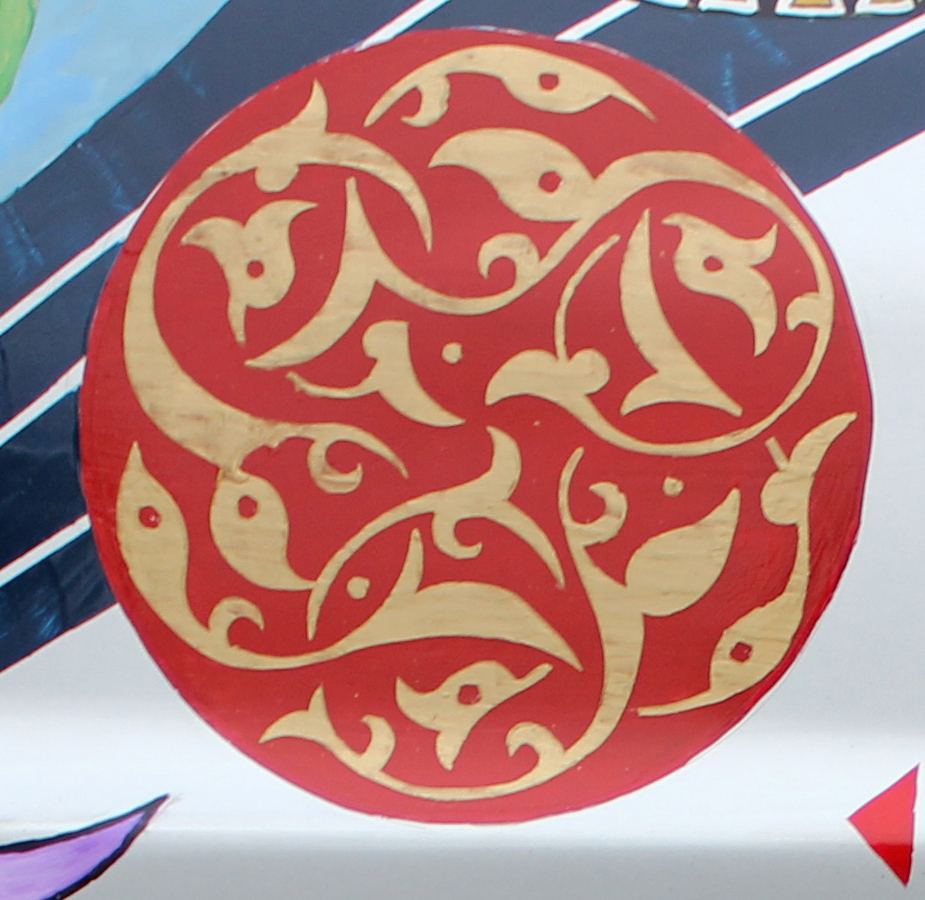
Unfortunately, the path to peace has not always been smooth and often many lives are lost as ‘collateral damage’ in this ultimate quest. I have acknowledged this fact by painting geometric pattern from the tomb of Jalal-al Din -Uzgen, Kyrgyzstan, in (unconventional) red as a background to the dove symbol.

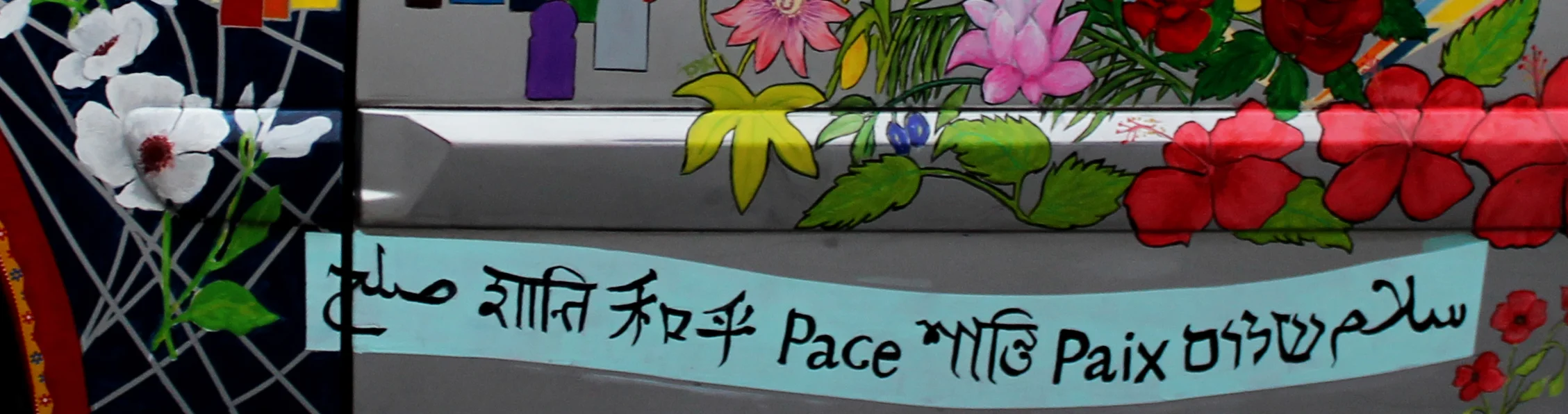
During the First World War, red poppies were among the first plants to spring up in the devastated battlefields and there is soldiers' folklore that the vivid red of the poppy came from the blood of their comrades soaking the ground. Red poppies are therefore used as a symbol of immeasurable sacrifices made during conflicts and are used to commemorate Remembrance Day.

Peace.jpg

Similarly, white Poppies represent a commitment to peace and challenge the attempts to glamorise or celebrate war.

The banner has ‘Peace’ written in Persian, Hindi, Chinese, Italian, Bengali, French, Hebrew and Arabic.

The use of white and red poppies as a backdrop around the peace banner recognises that war is an unnecessary evil and reminds us that conflicts can be resolved without bloodshed.

‘Lest we forget’.


Home Is Here

For centuries people have moved from countries of their birth to other countries. This movement occurred for all sorts of reasons; at times people were drawn to new places by ‘pull ‘factors such as better job and education opportunities, economic stability, improved human rights and religious freedom, while at other times, people were compelled to migrate because of ‘push’ factors such as poverty, high unemployment rates, lack of career opportunities, natural disasters, internal conflicts and war, prosecution and lack of human rights.

Whether, migrations is driven by push factors or pull factors, for most people migration is a major step and is not taken lightly. As people move, they leave behind their families and friends, cultural ties and traditions and venture into a completely foreign environment with diverse ethos and social value system.

The new migrants face a number of challenges as they rebuilt their lives from scratch and adopt to the environment of the host country. While the immigrants benefit from this enterprise, these new citizens bring energy and innovation as they offer their skills; and bring color and cultural enrichment to their adopted homeland.

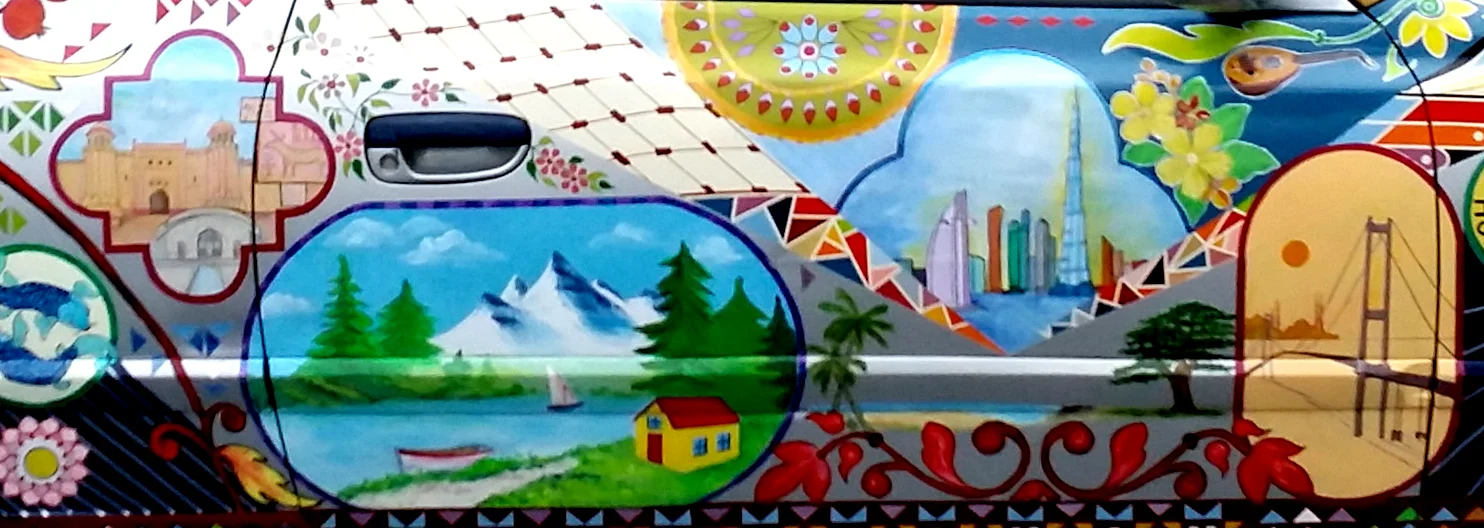
I wanted to showcase the various aspects of this journey and highlight this collaborative relationship between the immigrant and the host country through my motifs. I have used seals from ancient civilization of Mohenjodaro, Lahore’s Red fort and the Shalimar gardens to emphasis the significance of heritage and cultural linkage in the immigration story. The scenery depicting a boat facing the mountains identifies with the difficult journeys (whether by boat or air) taken by people to travel in search of a better future.The cityscape of Dubai with all its glitter and glamour represents the new techno-dynamic world of the host nation.

imigration Story.jpg

I have used the symbol of Turkey’s iconic Bosphorus Bridge which spans between Asia (East) and Europe (West) to indicates the reaching out by the new immigrants to the people of the host countries and symbolize the dialogue and communication between the people. This discourse can be used to alleviate any concerns that may perpetuate in the host community due to unfamiliarity with the new cultures and customs of the arriving people and help to ‘span’ across the apparent differences and to promote cohesion in the society.

The backdrop of Ankara’s (Turkey) cityscape and the rising sun symbolizes the offerings of the new emigrants to their adopted homeland. Recognizing the differences is a first step in reconciliation. We are naturally afraid of the unknown, but by developing an understanding of the differences, this fear is removed and we recognize that the world is a global village and empathy for others is fundamental for coexistence in this village.

affirmation 2.jpg
affirmation.jpg

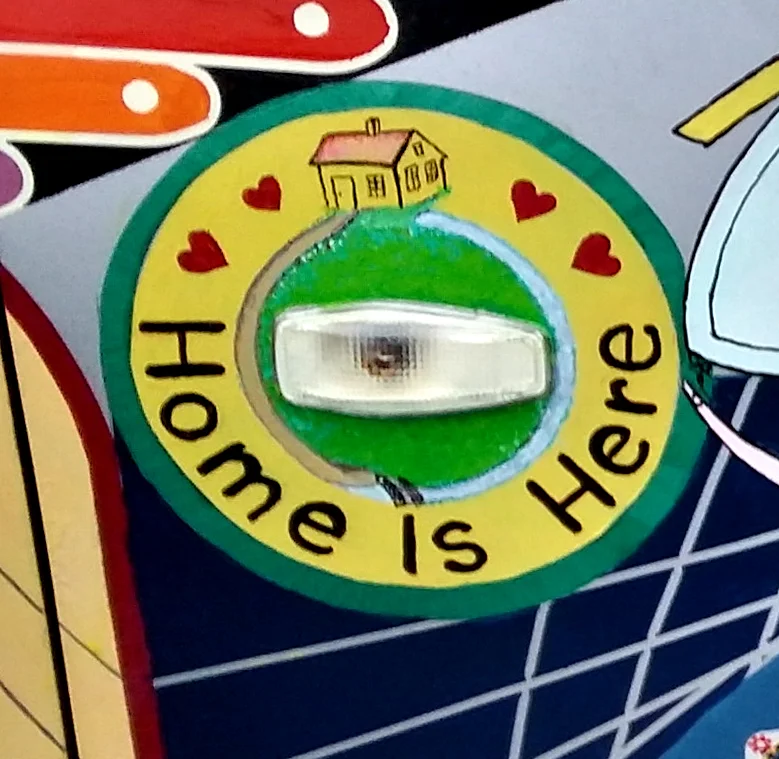
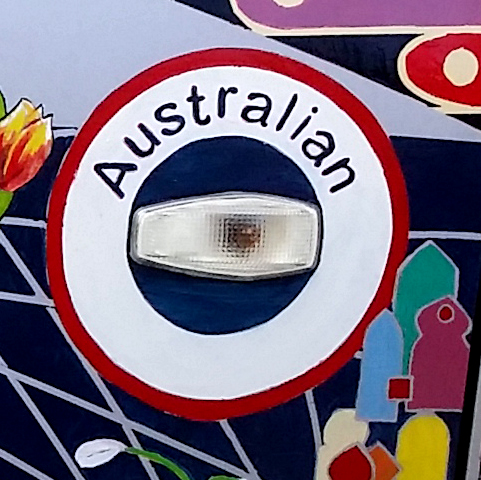
Assimilation and integration with the new environment and respecting the rules and regulation of the host country by the new immigrants is equally important. I have emphasised this thought and reaffirm the allegiance of the new Australians with the country by strategically placing the slogans ‘ ‘Home Is Here’ and ‘Australian’ around the indicator lights.


 Coffee Anyone

The word "coffee" entered the English language via the Dutch koffie, which borrowed it from the Turkish kahve and in turn borrowed from the Arabic qahwah.

While the origin of coffee is thought to be from Ethiopia, the earliest substantiated evidence of either coffee drinking or knowledge of the coffee tree is from the Sufi monasteries of Yemen who used the beverage as an aid to concentration as they chanted the name of God.

With this humble beginning in Yemen, by the early 16th century, coffee had made inroads to the rest of the Middle East,  India , Persia, Turkey, Northern Africa and then to the Balkans, Italy and to the rest of Europe and America.

coffee any one.jpg

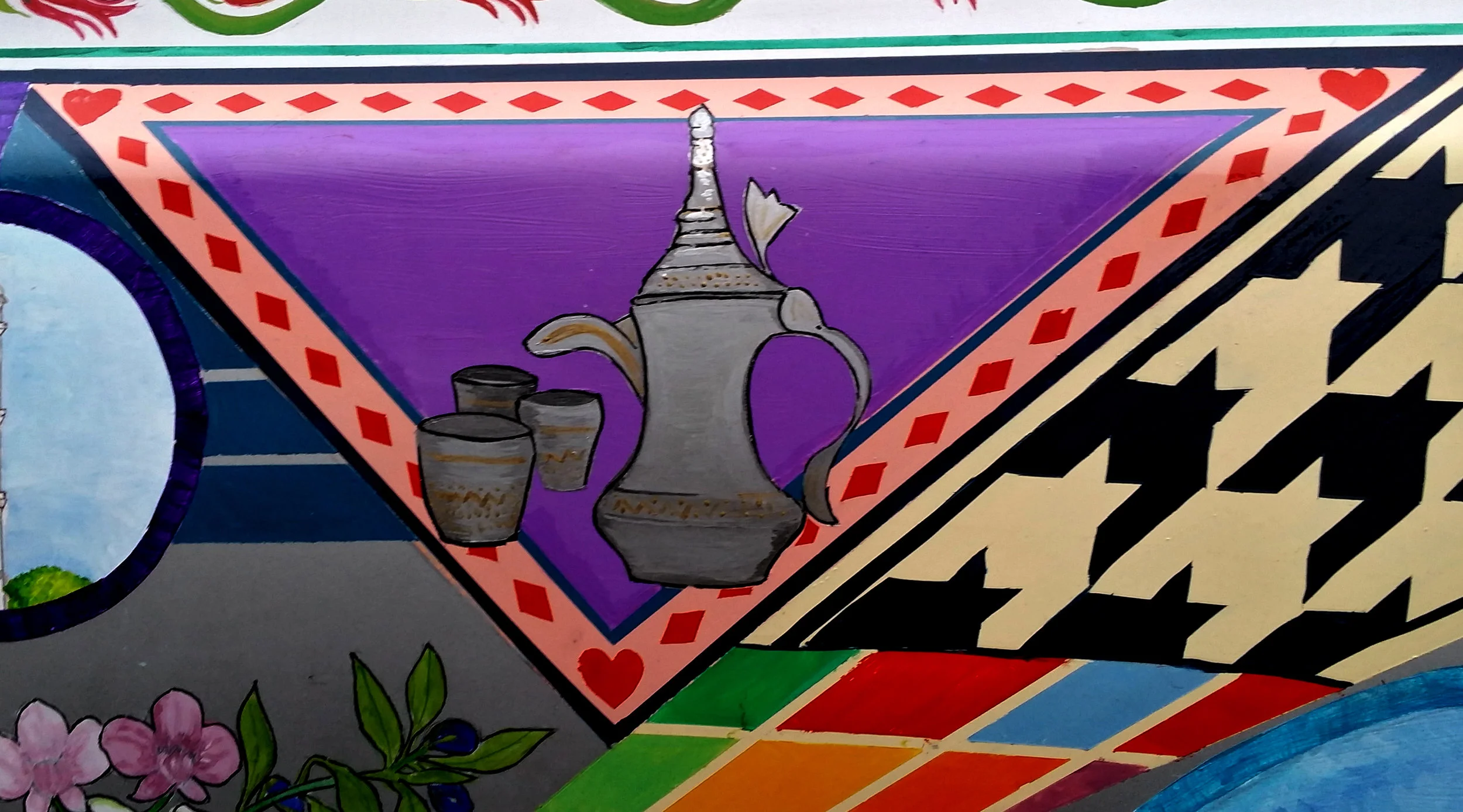
The motif represents dallah which is a traditional Arabic coffee pot used for centuries to brew and serve Qahwah -so coffee anyone!


The Australian Muslim Story

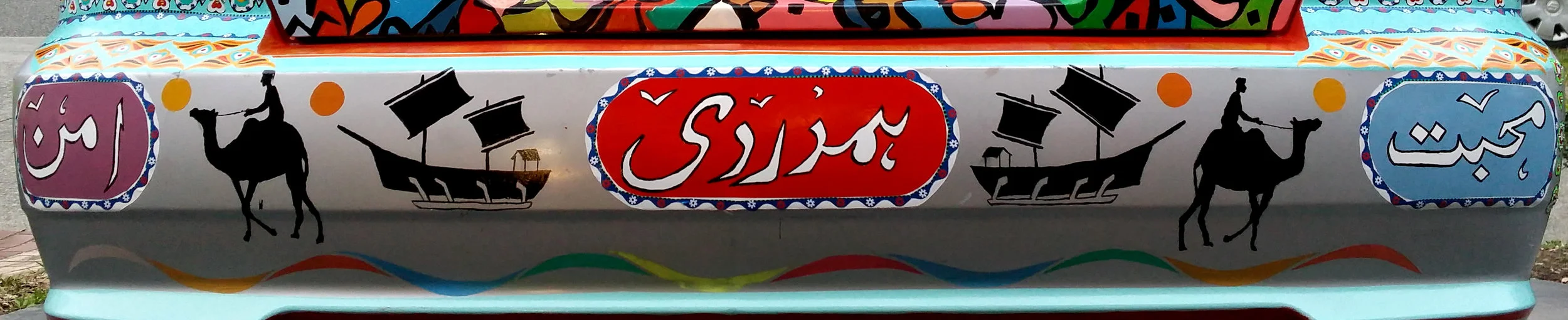
I wanted to showcase the past and present Muslim interaction with Australia and therefore dedicated a section of the car panel to narrate this story.

Based on rock art paintings at Arnhem land, the first contact between the Muslims and the Indigenous population occurred somewhere between late 1500s to early 1600s when Macassan fisherman from Indonesia began visiting the coast of northern Australia in their wooden boats ‘Perahu’.

muslimstory.jpg

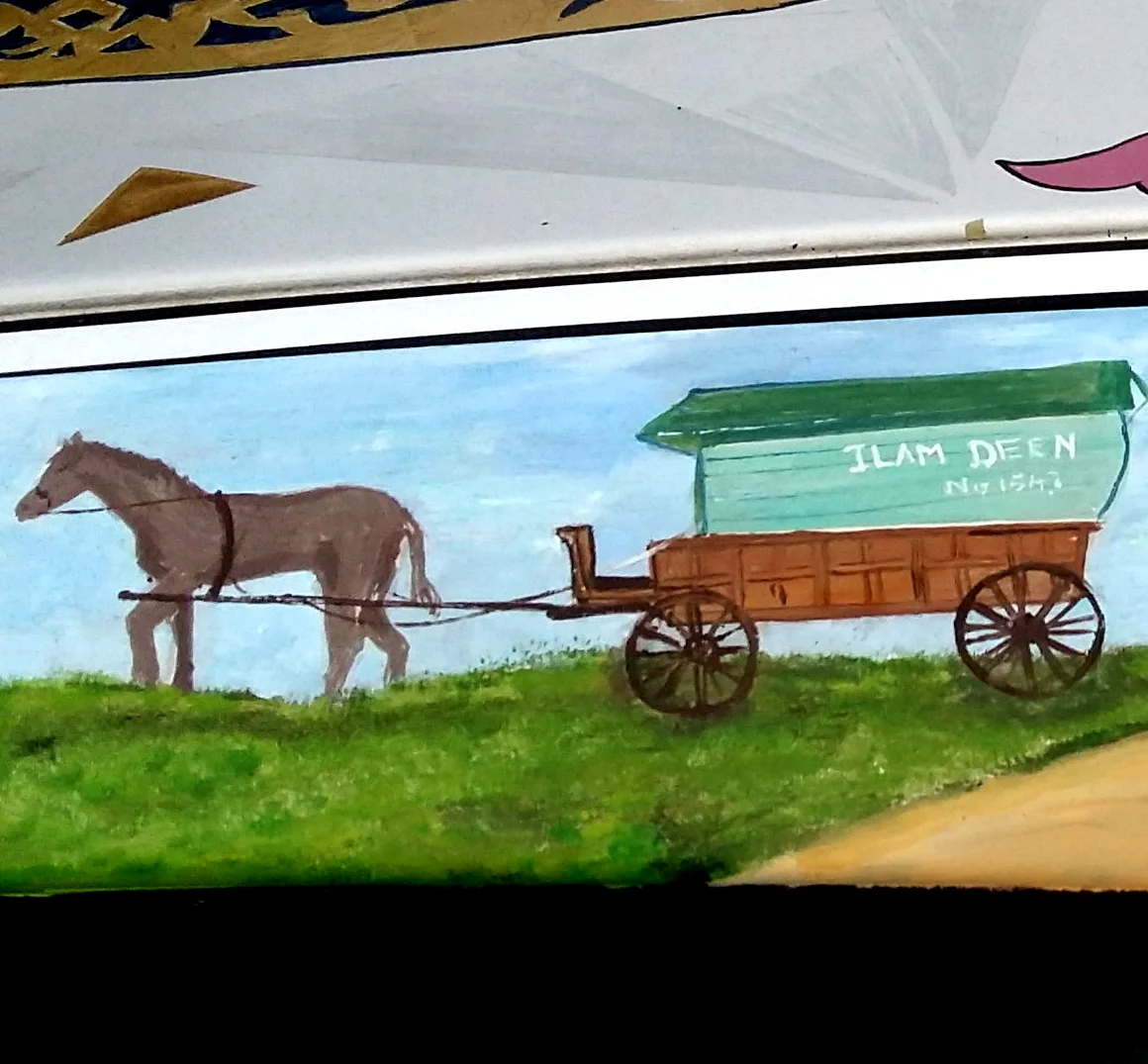
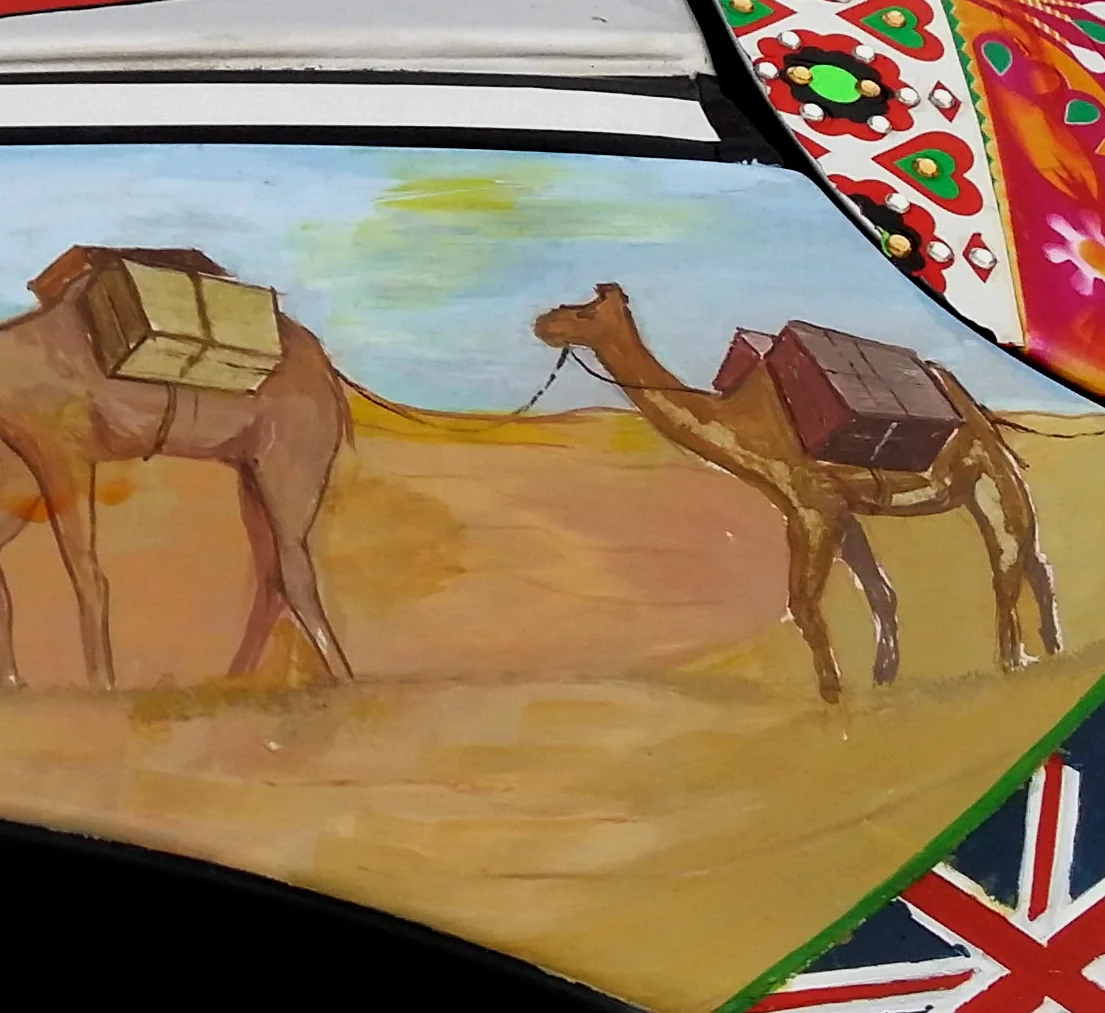
Under the British, in the 1800's when the exploration in Australia was at full boom, camels and their drivers were imported from the sub-continent to help in the exploration and development of the mainland.

Between the 1860s to the early 1900s, these Cameleers and their 'ships of the desert' became the backbone of the Australian economy. This was followed by Indian hawkers and merchants who arrived from Karachi, Peshawar, Baluchistan, the Punjab and Bengal, and travelled across the Australian countryside, offering their merchandise for sale to remote settlers.

aust 3.jpg
cogs2.jpg
aust 4.jpg
aust 2.jpg
aust 1.jpg
australian story.jpg

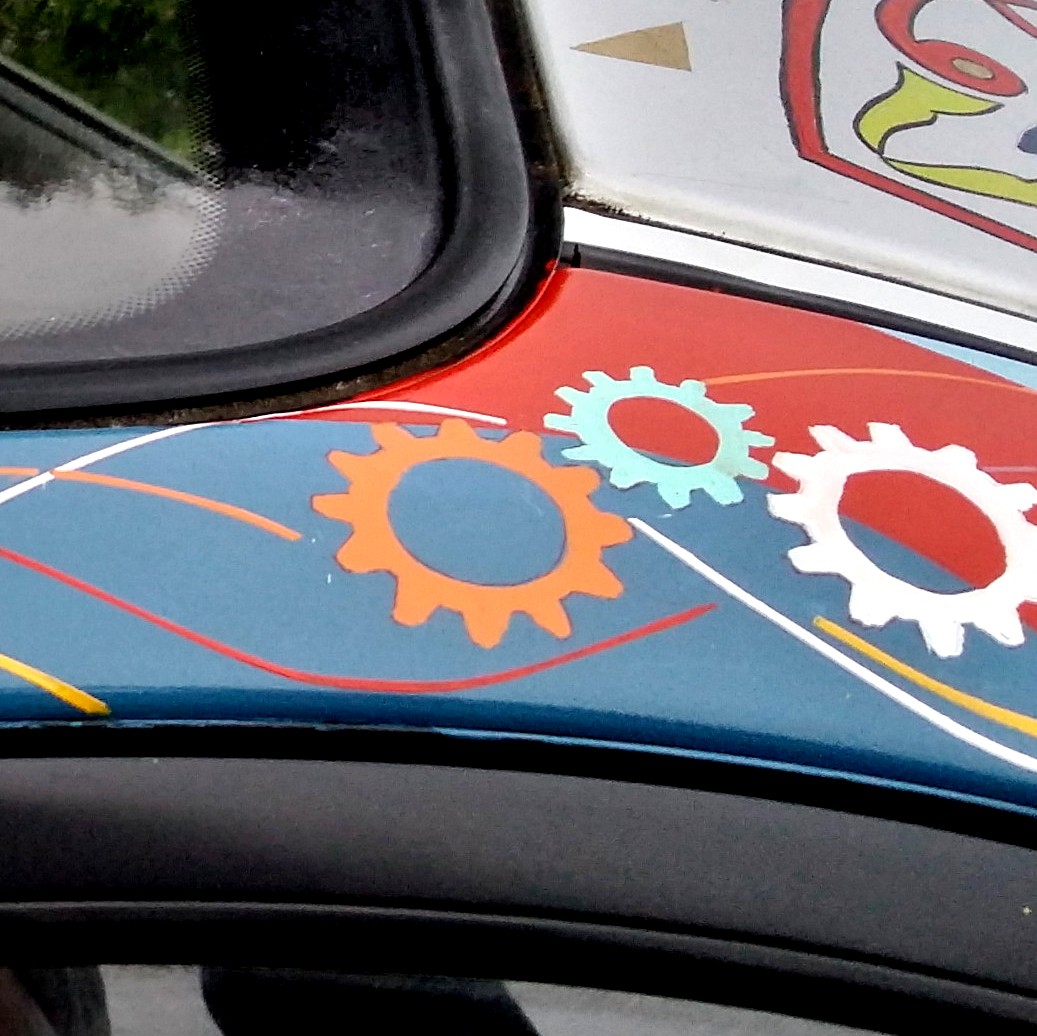
From these humble beginning to the present, Muslims have, and are contributing towards the development of the country. From highest echelon of professionals to ordinary citizens, Muslim contribution is apparent in all walks of life. I represented this achievement with swirling lines and cogs to emphasise that Muslims are part of the modern Australian DNA and are an equal contributors to the economic development of this country and needed to be recognised as such.

In Abstract, truck art, car painting Tags SalamMobile:Rumi, SalamFest, SalamFeast, rumi, truck art, Pakistani, Muslim, festival, state library of victoria, SLV
2 Comments

Latest AND THE Greatest


TOGETHER

INTERACTIVE ART PROJECT

Powered by Squarespace